The School Bell Rings Differently Across America
The school year can begin a month apart, phone rules change at state lines, and career programs vary by community. Yet American schools still share one difficult assignment: preparing children for a future adults cannot fully predict.
The school year can begin a month apart, phone rules change at state lines, and career programs vary by community. Yet American schools still share one difficult assignment: preparing children for a future adults cannot fully predict.
From August start dates and phone rules to artificial intelligence, trades and college prep, American classrooms can look remarkably different. The assignment is still the same: prepare children for a life no one can fully predict.
On Monday morning, August 10, students in Houston Independent School District headed back to class. In New York City, the first day of the 2026-27 school year will not arrive until September 10. Same country. Same season. Same familiar mix of backpacks, buses, nervous parents and children who suddenly seem to have grown three inches over the summer. But even the starting bell can ring a month apart.
That is a small example of something much larger. There is no single American classroom. The National Center for Education Statistics counted 99,073 operating public elementary and secondary schools serving about 49.3 million students in the 2024-25 school year. Those schools sit in giant cities, fast-growing suburbs, small towns and rural communities where the next campus may be many miles down the road.
American education is built to reflect those differences. The U.S. Department of Education itself describes education as primarily a state and local responsibility. States set standards and graduation requirements. Districts and schools make thousands of decisions about schedules, programs, technology, discipline and what preparation for life should look like in their community.
That can make the system look inconsistent from one state line to the next. It can also be one of its most revealing features. Different communities are often trying to solve the same problem with different tools.
The Phone May Stop at the Classroom Door
Cellphones are a good place to see that happening in real time.
Texas now requires public school systems to prohibit students from using personal communication devices on school property during the school day. The law reaches beyond phones to devices such as tablets and smartwatches, while allowing exceptions for certain medical, educational and safety needs. Districts can decide how the rule works on the ground, including whether devices are kept off campus or stored during the day.
New York took a bell-to-bell approach. Its statewide policy restricts unsanctioned use of smartphones and other internet-enabled personal devices for the entire school day, including lunch and study halls. California chose another path: by July 1, 2026, school districts, county offices of education and charter schools were required to adopt policies that limit or prohibit smartphone use, with local stakeholder participation built into the process.
The details differ. The objective is familiar: give teachers a better chance to teach and students a better chance to pay attention.
That does not settle every argument. Parents reasonably think about emergencies and staying connected to their children. Schools have to account for health needs, disabilities and legitimate educational uses. Students are also growing up in a world where the phone is not merely a toy; it is a camera, map, calculator, library, social network and workplace tool rolled into one.
So the question is becoming more useful than simply asking whether technology belongs in school. The better question may be: which technology, at what time, and for what purpose?
Put the Phone Away. Open the Laptop.
That question gets more interesting when artificial intelligence enters the room.

While states are tightening rules on personal devices, schools are also trying to decide how students should learn to use powerful digital tools responsibly. Federal education guidance has explicitly discussed expanding artificial intelligence and computer science education and using AI to support instruction and personalized learning.
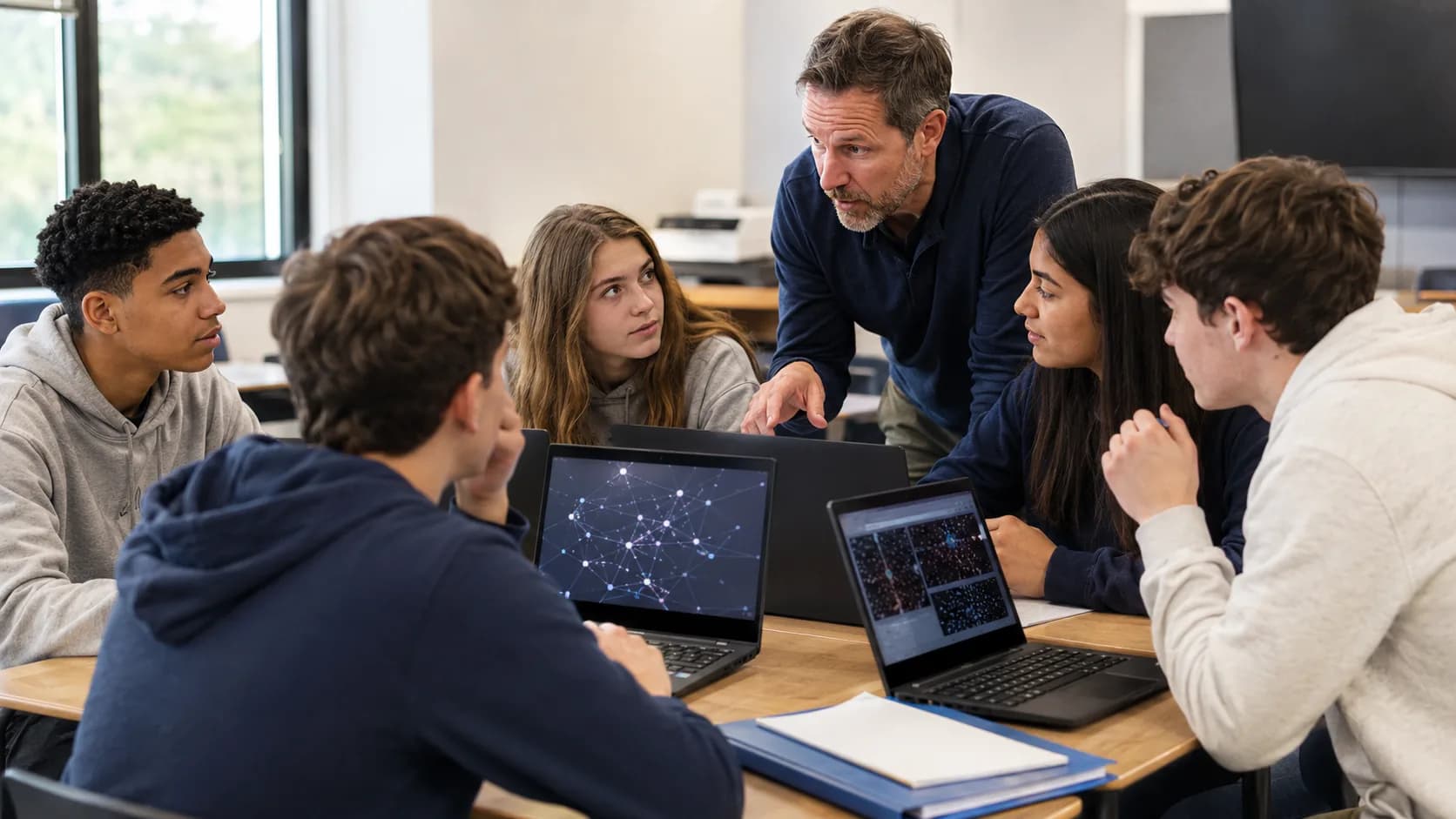
That can produce a scene that would have sounded strange only a few years ago: a student may be told to put a smartphone away, open a school-issued computer and learn how to work with artificial intelligence.
There is no contradiction if the purpose is clear. One device may be an uncontrolled distraction in the middle of a lesson. Another may be the lesson. The harder part is teaching a child the difference.
Schools also face a problem adults are still working through themselves. AI can answer questions, summarize information, generate images, write computer code and produce a respectable-looking essay in seconds. But a student still has to learn how to read closely, recognize a weak source, spot an incorrect answer, form an argument and decide when a machine should not be doing the thinking.
Preparing children for a technological future cannot mean teaching them to surrender judgment to technology. It has to include teaching them how to use a tool without becoming helpless without it.
College Is One Road, Not the Only Road
The differences among American schools show up just as clearly in what happens after the basic academic day.

A high school in an agricultural community may have strong programs tied to agriculture, mechanics or natural resources. Another may emphasize health science, information technology, advanced manufacturing, construction or transportation. A large suburban campus may offer a long menu of Advanced Placement courses. A smaller rural district may lean heavily on dual-enrollment partnerships that allow students to earn college credit while still in high school.
Those numbers are not a scoreboard. They are a reminder that preparation for adulthood does not have to look identical everywhere.
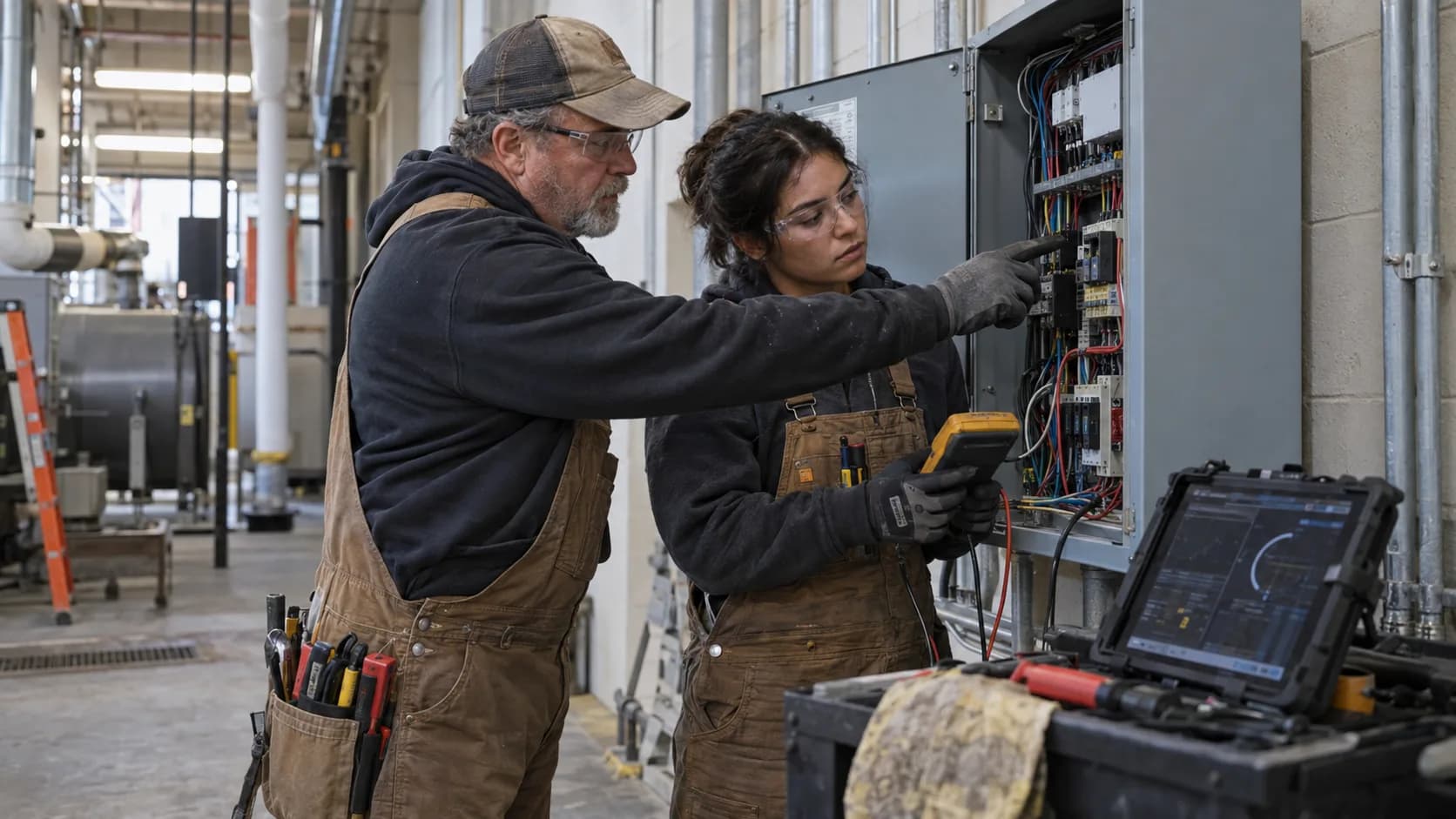
A student headed toward engineering needs strong mathematics. A future nurse needs science and communication. A welder, electrician or machinist needs technical knowledge, precision and the ability to solve problems when the drawing and the real world do not quite agree. A small-business owner will eventually discover that arithmetic, writing, technology and people skills all show up on the same day.
The old argument that children must choose between being 'college ready' and 'career ready' may be increasingly outdated. Life has a habit of requiring both kinds of learning.
Different Communities, Same Assignment
A school cannot completely separate itself from the place around it. Geography, local employers, population growth, transportation, language, family income and available teachers all shape what a district can offer and what its students may need.
That means fairness in education does not necessarily mean every school looking exactly the same. A remote rural district and a school serving thousands of students in a major city can have different problems without either problem being less important. Local flexibility can help schools respond to those realities, while common expectations in reading, mathematics, science, history and civic knowledge help keep geography from becoming destiny.
And beneath all the arguments about phones, AI, testing, school calendars, college and the trades sits a much older responsibility.
A child entering school today will probably work in jobs that change repeatedly during his or her lifetime. Some occupations will disappear. Others will be created. Tools will change. Employers will change. The technology students use at age 16 may look primitive by the time they are 36.
No school board can write a curriculum that predicts all of that correctly.
What schools can do is give students something more durable: the ability to read and understand, write and communicate, use mathematics, work with other people, question information, learn a new skill, recover from a mistake and adapt when the world does not follow the lesson plan.
Those abilities matter in New York and Texas. They matter in California, a Midwestern town, a mountain community and a farming county. They matter whether the student eventually walks into a university lecture hall, a welding shop, a hospital, an office, a construction site or a business of his or her own.
The Bell Is Still Doing Its Job
There will always be arguments about how schools should do their work. There should be. Parents, teachers, employers, communities and students all have a stake in the answer.

But August offers a useful reminder before those arguments become louder than the children they are supposed to serve.
The bell rings at different times. The phone goes in different places. The course catalog changes with the ZIP code. A classroom in one part of America may look nothing like a classroom a thousand miles away.
The assignment, though, is remarkably old-fashioned: take a child who knows only part of the world and give that child enough knowledge, judgment, confidence and adaptability to make a life in the rest of it.
Maybe the schools that prepare children best will not be the ones that guessed the future correctly. They will be the ones that taught children how to meet it when it arrives.