The Small Towns Didn’t Disappear. Their Residents Just Stopped Going Into Them.
Willis, Conroe, Magnolia and Montgomery are growing quickly. But when ordinary errands become an ordeal, longtime residents begin withdrawing from the towns they helped build.
A strange question comes to mind while sitting in Willis traffic at ten o’clock on a weekday morning:
Where is everybody going?
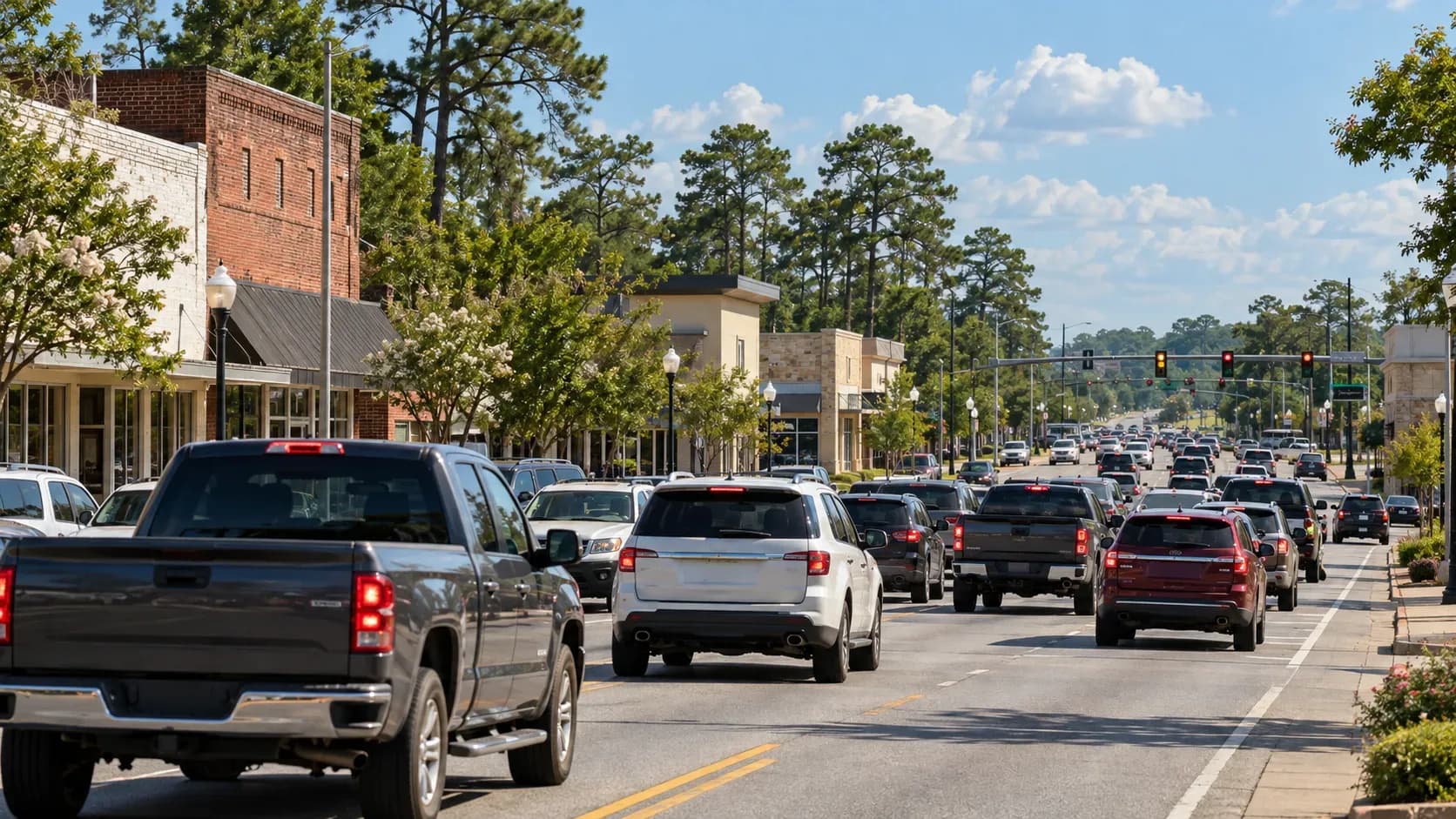
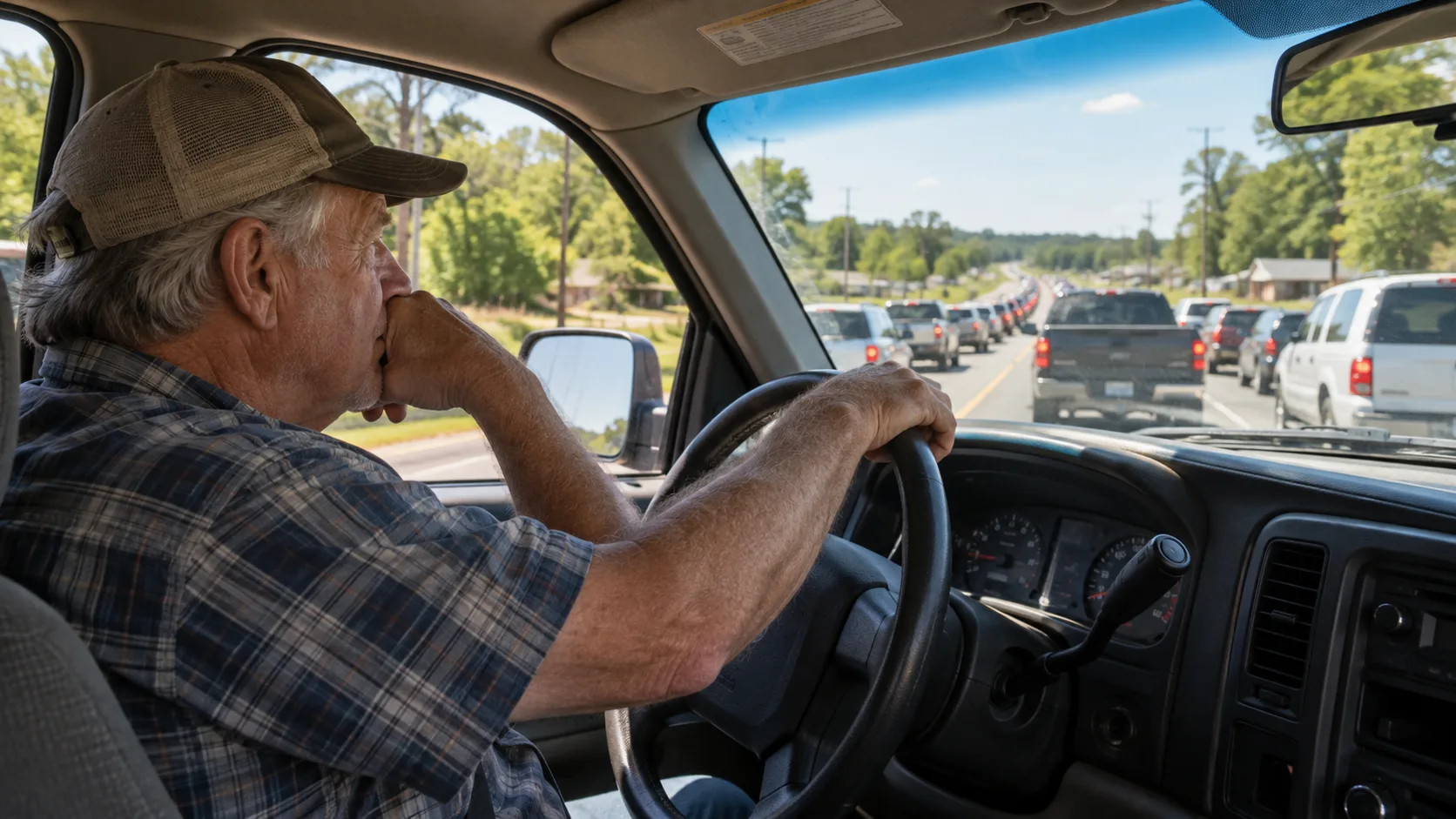
It is not the traditional rush hour. School has started. Most people with conventional jobs should already be at work. Yet the turn lanes are full, the traffic lights cycle more than once and a short trip across town feels like an expedition.
The same question can be asked in Conroe, Magnolia and Montgomery. Roads that once carried local residents to the grocery store, bank or doctor now serve thousands of subdivision homes, construction crews, delivery vehicles, medical offices, restaurants and commuters moving between communities.
Growth is usually reported in permits, rooftops and tax revenue. The people who already lived here experience it in minutes.
The traffic is no longer confined to rush hour
Small-town traffic once had a rhythm. There was a morning commute, an afternoon school rush and a trip home around five. Residents learned when to go and when to wait.
That rhythm has broken apart.
Remote and flexible work schedules put people on the road throughout the day. Retirees, medical appointments, service businesses, delivery traffic and construction activity add more vehicles between the old peak periods. New neighborhoods spread people across a wider area, but most drivers still funnel toward the same highways, grocery stores and commercial intersections.
The result is not always spectacular gridlock. It is something more persistent: ordinary friction. A five-minute errand becomes twenty. Turning left requires patience and nerve. Residents begin choosing when—and whether—to leave home based upon traffic that used to be predictable.
The numbers explain the feeling
Montgomery County had 455,746 residents in 2010. By the 2020 census, it had 620,443. The Census Bureau estimated 781,194 residents in July 2025.
That is an increase of more than 325,000 people in 15 years, including approximately 161,000 added since 2020.
The cities tell the same story at different scales.
Conroe grew from 56,207 residents in 2010 to an estimated 119,564 in 2025—more than doubling in 15 years. Willis increased from 5,662 to an estimated 7,652 during the same period. Magnolia’s estimate reached 8,095 in 2025, compared with a 2020 estimates base of 3,003. Changes to municipal boundaries may account for part of Magnolia’s extraordinary percentage increase, but they do not erase the development visible around the city.
The incorporated populations also understate what drivers encounter. Many people carrying a Willis, Magnolia, Montgomery or Conroe mailing address live outside those city limits. Their homes may not count toward a city’s population, but their vehicles still use its roads and businesses.
Growth brought things people needed
This is not an argument against new residents.
People moved here for many of the same reasons longtime residents stayed: room to live, comparatively affordable homes, strong schools, trees, lakes and communities that did not feel like Houston.
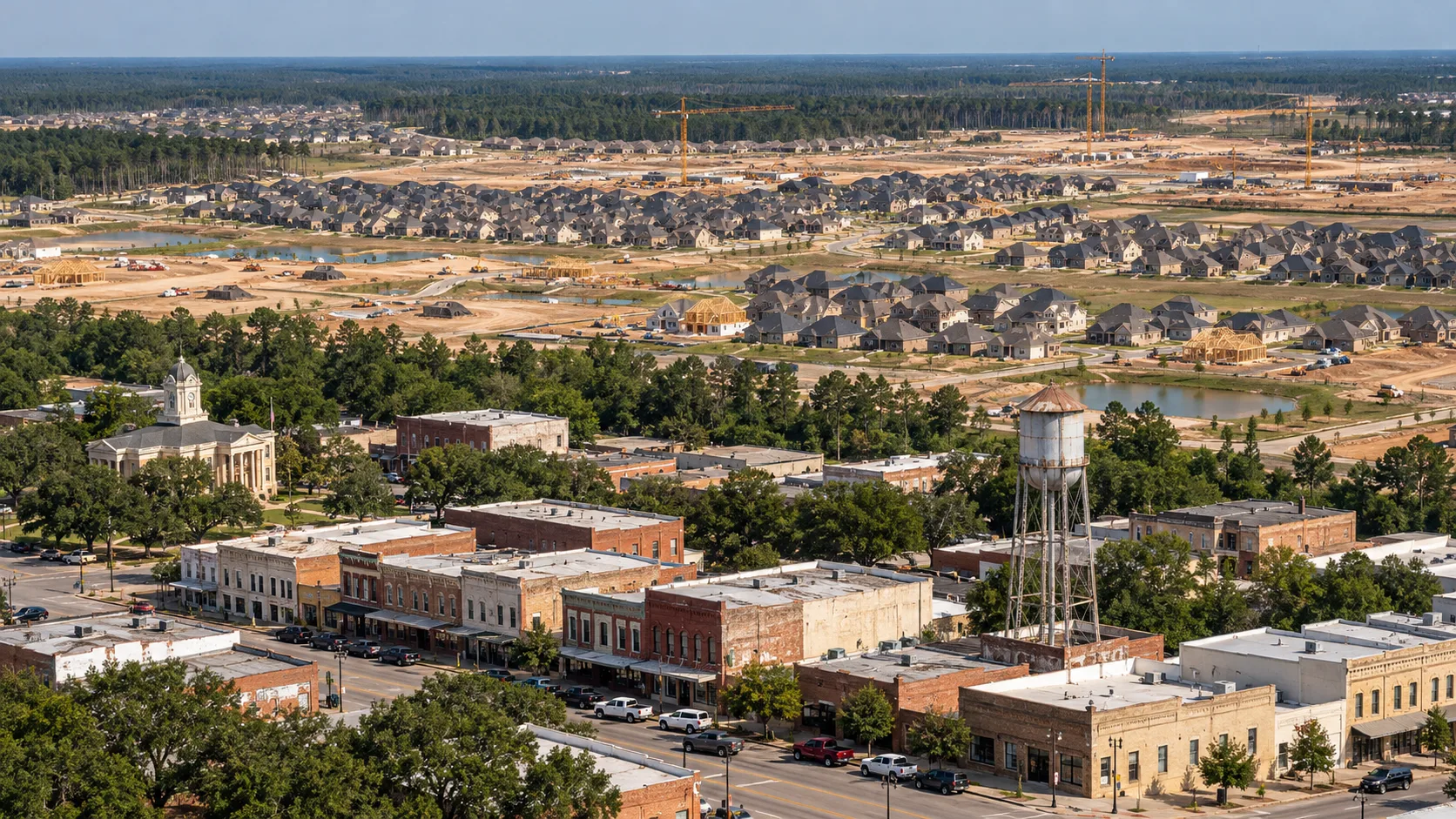
Growth also brought medical care, restaurants, shopping, jobs and services that once required a longer drive. It increased property values for many owners and created opportunities for local businesses.
The contradiction is that each new convenience attracts more vehicles, while each new neighborhood depends upon roads that may have been designed when the surrounding land held timber, cattle or a few hundred homes.
Nobody has to be the villain for the result to be exhausting.
The price nobody puts in a development brochure
New subdivisions advertise square footage, trails, pools and access to major roads. They do not advertise the time every existing resident will eventually surrender at traffic lights.
That lost time is a tax without a bill.
It appears when someone stops making a quick trip because getting through town is not worth the trouble. It appears when an older driver avoids a difficult intersection, when a family plans dinner around traffic or when a longtime customer replaces a familiar local business with delivery.
Some of the people who remember these towns before the expansion have moved away. Some have died. Others simply stay home more often.
That last group is easy to miss. Traffic counts measure the vehicles passing a point. Population estimates measure the people living inside a boundary. Neither number measures the resident who no longer goes downtown, attends an event or visits a business because navigating the town has become too aggravating.
The town remains on the map. The resident’s relationship with it quietly disappears.
Road construction is chasing the houses
Local and regional planners are not pretending the problem does not exist.
The Houston-Galveston Area Council and Montgomery County are conducting an 18-month countywide mobility plan. The project’s own description says Montgomery County is projected to exceed 1.2 million residents by 2045 and warns that, without proactive planning, growth will produce congested roads and reduce quality of life.
An earlier mobility study for Precinct 2—the Magnolia and west Montgomery County area—listed traffic congestion, inadequate road connections, intersection design and the fast pace of development among its central problems. Its combined short- and long-term recommendations included 283.7 miles of new, widened or realigned roads.
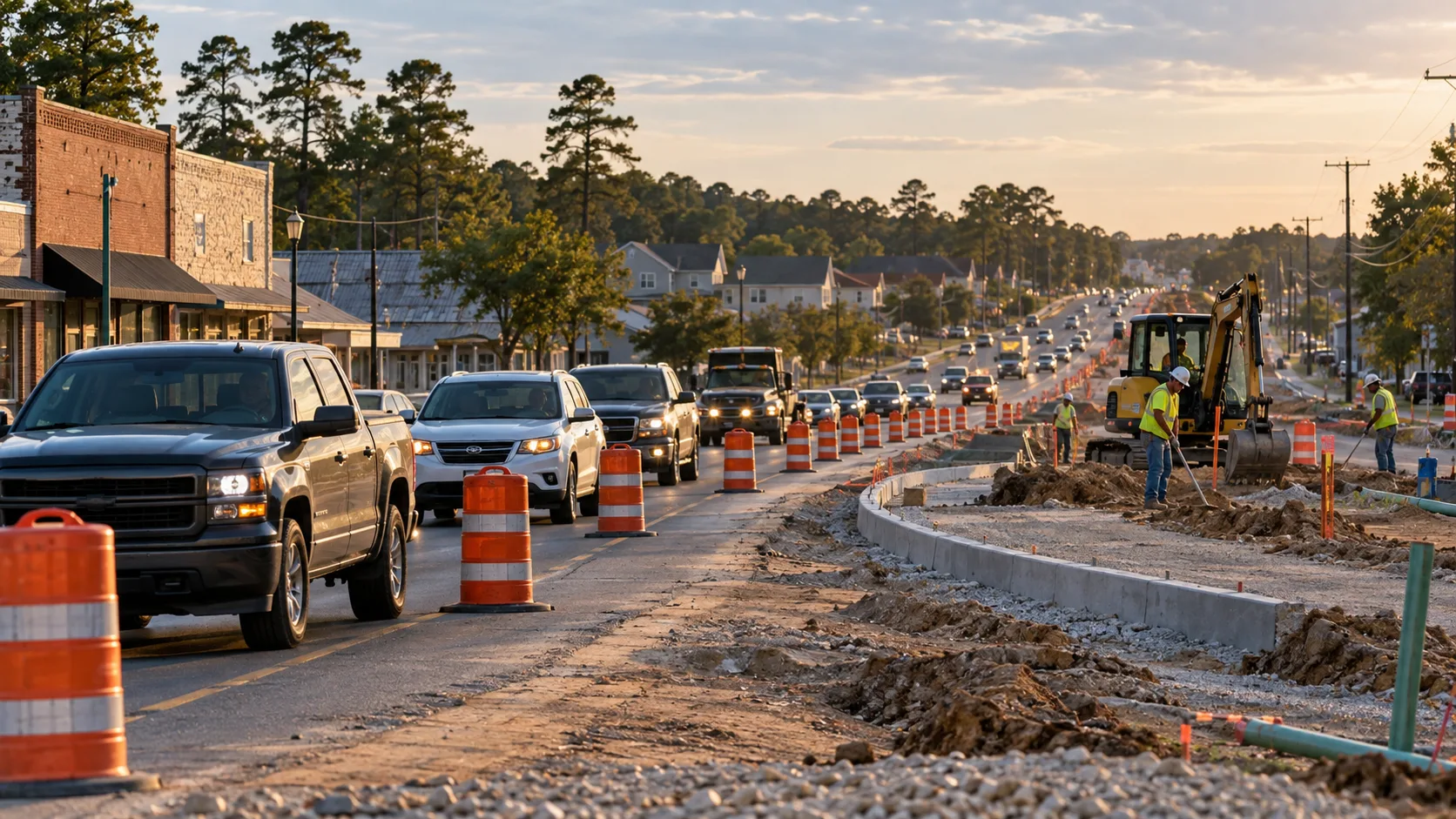
Work is occurring. FM 1488 through Magnolia is being widened in a project expected to continue into 2027. TxDOT is planning or advancing multiple improvements along SH 105. County projects are adding turn lanes, extensions and new connections.
But roads take years to study, fund, design, acquire and construct. A subdivision can begin adding vehicles long before the regional solution reaches the pavement.
The residents most affected may be the least visible
Public meetings naturally attract people opposing a particular subdivision, intersection or road design. Those disputes matter, but they capture only the residents who are still willing and able to participate.
The quieter response to growth is withdrawal.
People shop earlier. They combine errands. They avoid certain roads. They stop attending events. Eventually, they describe a place they have lived for decades as somewhere they hate going.
That is not merely nostalgia. It is a warning about accessibility and belonging.
A community is not only a collection of houses located near one another. It is the repeated interaction among people who use the same businesses, institutions, streets and public spaces. If growth makes those interactions too difficult, a town can gain population while losing part of its community life.
A successful town must still be usable
Montgomery County will continue growing. The remaining question is whether growth will be managed as a count of new rooftops or as a change in the daily lives of people who are already here.
Transportation planning must ask more than how many vehicles a road can carry at peak hour. It should ask whether an older resident can safely make a left turn, whether a five-mile trip still feels local and whether people can reach the places that connect them to their community.
New residents deserve functioning roads. Longtime residents deserve not to be designed out of their own towns.
Willis, Conroe, Magnolia and Montgomery have not disappeared. Their names remain on signs, maps and mailing addresses.
But if the people who remember what made them livable increasingly choose to stay home, something important has already gone missing.