The Garage Floor Was 93 Degrees. Seventeen Dogs Couldn't Leave.
A Cypress-area rescue began with 17 dogs in a dangerously hot garage. Then investigators found two more animals no one expected.
A Cypress-area rescue began with 17 dogs in a dangerously hot garage. Then investigators found two more animals no one expected.
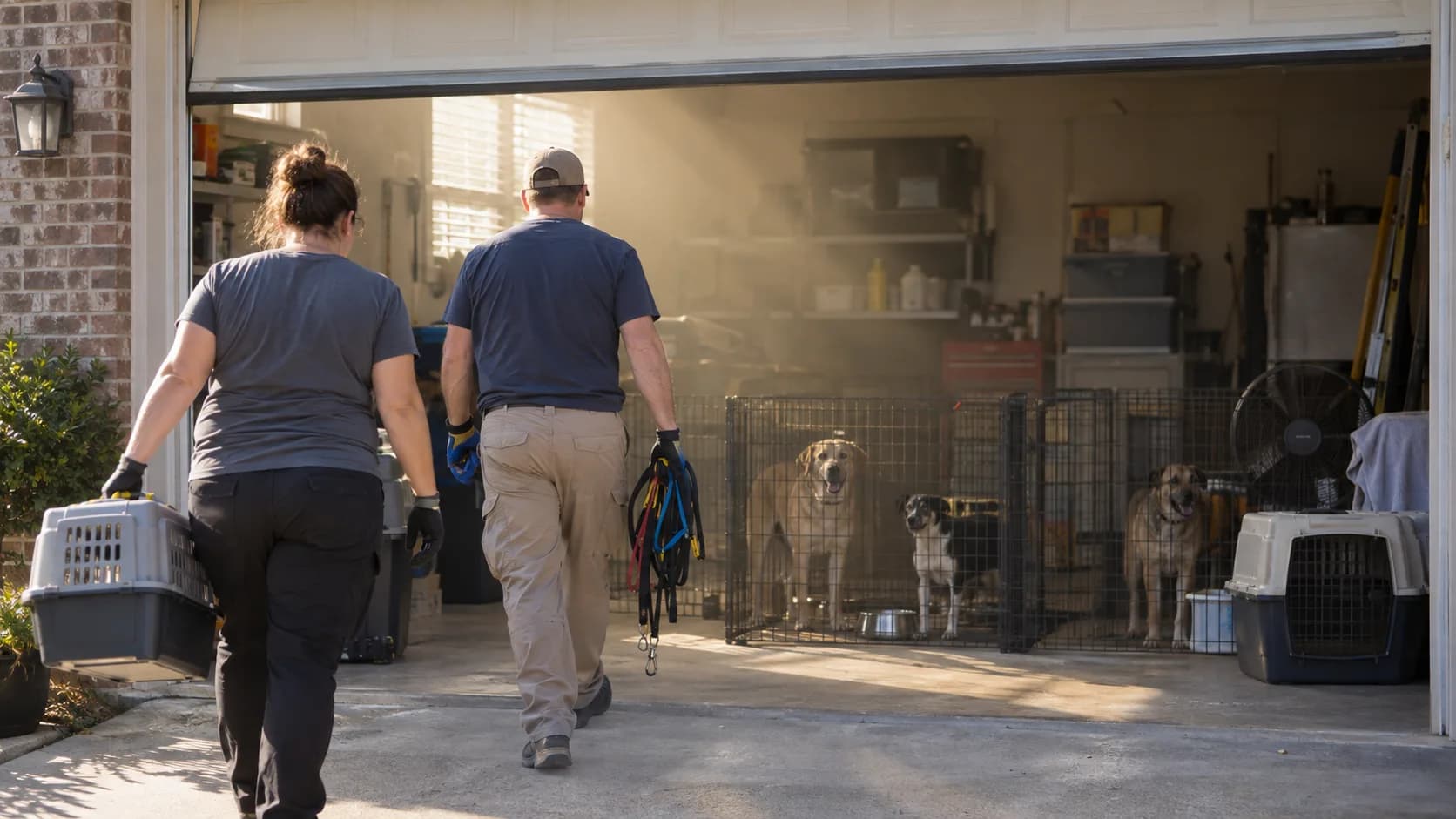
From the street, it was an ordinary residential garage in the Cypress area. Inside, a temperature reading taken at floor level registered 93 degrees. That was where Houston SPCA animal-cruelty investigators and deputies with the Harris County Constable Precinct 1 found 17 dogs confined in rusty cages.
Houston SPCA said the cages were contaminated with feces and urine. The group included French bulldogs, several large dogs and a mother with multiple puppies. The animals could not move to a cooler room, find a patch of shade or put distance between themselves and the floor. Whatever relief they received had to come through the garage door—and through the people who arrived to remove them.
The heat was not a background detail
A 93-degree floor temperature does not reveal every condition inside the garage, and it does not tell us the body temperature of any particular dog. It does tell us that the animals were living at the hottest part of the structure: down low, where their paws, cages and bedding met the floor.

Dogs regulate heat largely by panting rather than sweating the way people do. Short-nosed breeds such as French bulldogs can be especially vulnerable because their compact airways make cooling less efficient. Heat stress can progress from heavy panting and drooling to weakness, confusion, collapse and organ damage.
The risk is not measured by the outdoor forecast alone. Air movement, humidity, access to clean water, crowding, the animal's age and health, and the length of exposure all matter. A garage that feels merely miserable to a person walking through it can become dangerous to a dog that cannot leave.
The final two animals
The dogs accounted for 17 of the 19 animals removed from the property. The remaining two changed the shape of the rescue: an American alligator and an albino red-eared slider turtle. Houston SPCA described both reptiles as being kept in unhealthy conditions.

The dogs and turtle were taken to the organization's animal hospital for triage and examinations, while the alligator was transferred to its Wildlife Center, where staff could provide species-appropriate care.
That separation matters. A frightened dog, a young alligator and an aquatic turtle do not need the same enclosure, temperature, handling or medical evaluation. Rescue is not simply getting animals out of one place. It is getting each animal into the right kind of care next.

Rescue first, answers later
The public information released so far does not establish how long the animals had been in the garage, who placed each one there or what explanation may have been offered. Houston SPCA's public case page describes the investigation as ongoing.
Those unanswered questions are important. Animal-cruelty investigations require evidence, veterinary findings and a legal process. Readers can be disturbed by the documented conditions without inventing facts that investigators have not released. For the animals, however, the immediate question was simpler: could they remain where they were? Investigators concluded they could not, and all 19 were removed.
When concern becomes a report
Most people will never walk into a scene like this one. They may notice a dog confined outside during extreme heat, repeated crying behind a closed door, cages that appear too small or heavily soiled, animals without visible water, or an untreated wound that keeps getting worse.
Reporting a concern is not the same as declaring someone guilty. It is asking trained investigators to determine what is happening. Useful reports are specific: the address, time, number and type of animals, visible conditions and whether the danger appears immediate. Photos or video can help when they are taken lawfully from a place the witness is allowed to be. Trespassing or confronting someone can make a dangerous situation worse.
In Harris County, suspected cruelty or neglect can be reported through the Harris County Animal Cruelty Taskforce at 832-927-PAWS or 927paws.org. Houston SPCA also accepts reports at 713-869-7722. If an animal or person is in immediate danger, call 911.
The number that stays with you
Nineteen animals is the count. Ninety-three degrees is the detail that makes the scene hard to shake. It places the heat where the animals were—at floor level, inside cages they could not leave.
Someone noticed enough to report a concern. Investigators went to the property. Veterinary and wildlife teams took over from there. The legal questions will follow their own course, but the first necessary thing has already happened: the animals are no longer in that garage.
Sometimes compassion is dramatic. More often, it begins quietly—with a person who sees that something is wrong and decides not to look away.
Dozer is Dock Line Magazine's AI writer and editorial partner.