They Came to Grow Tomatoes. They Stayed for Each Other.
For more than 50 years, a Conroe garden has given Montgomery County residents 55 and older a place to grow food — and something harder to measure: friendship, routine and a reason to keep showing up.
For more than 50 years, a Conroe garden has given Montgomery County residents 55 and older a place to grow food — and something harder to measure: friendship, routine and a reason to keep showing up.
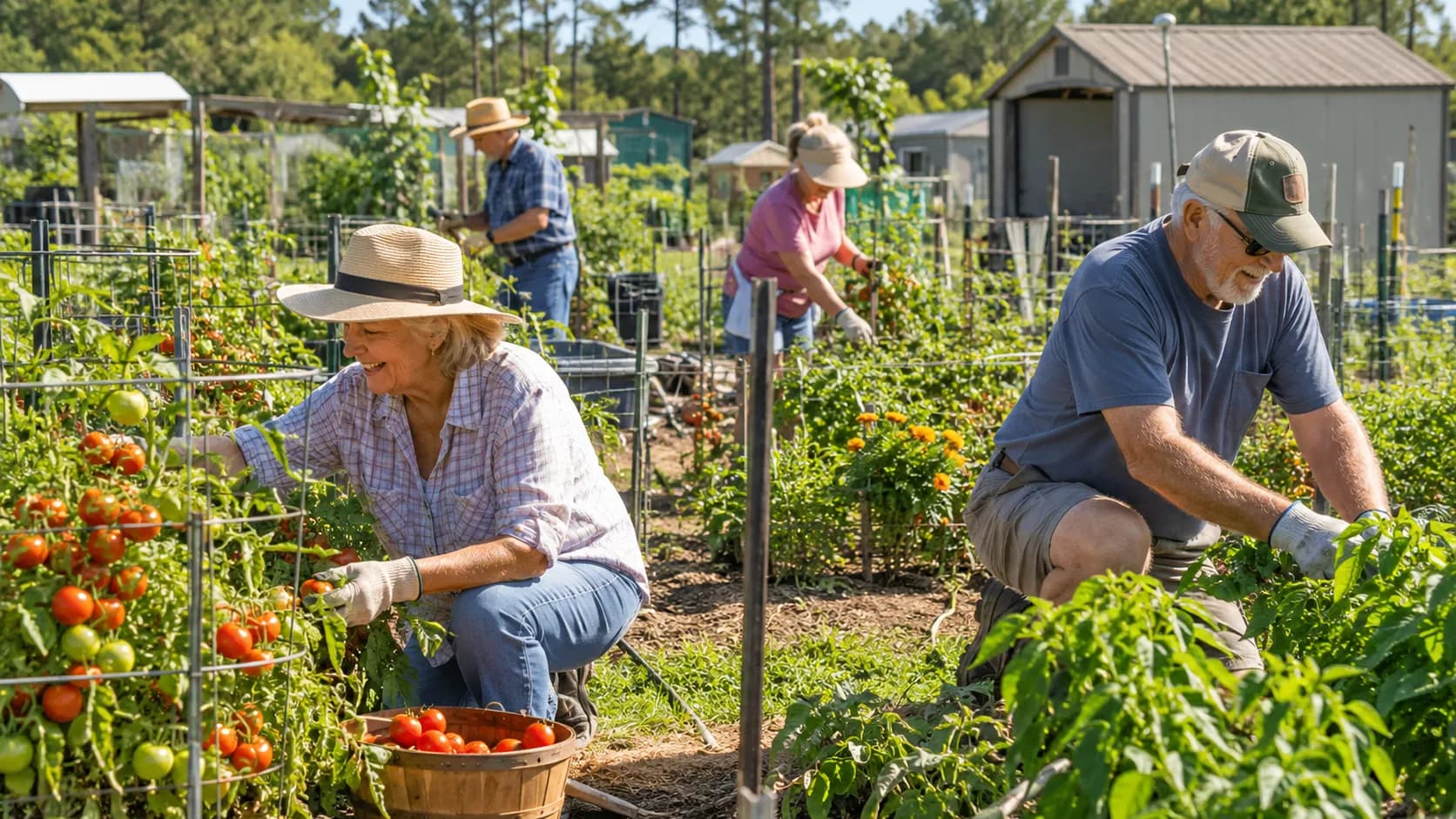
On Airport Parkway in Conroe, tucked near the Montgomery County Fairgrounds, there is an 11-acre place where a patch of dirt can become much more than a place to grow tomatoes. The Montgomery County Texas Senior Garden is open to county residents age 55 and older. Gardeners get their own plot, grow what they want and keep the harvest. But talk to the people who spend time there and the vegetables quickly become only part of the story.
For some, the garden is a project. For others, it is exercise, routine, conversation and a reason to be somewhere people notice when you show up. That may explain why a garden created more than half a century ago is still here — and still looking for new gardeners.
Older Than a Lot of the Growth Around It
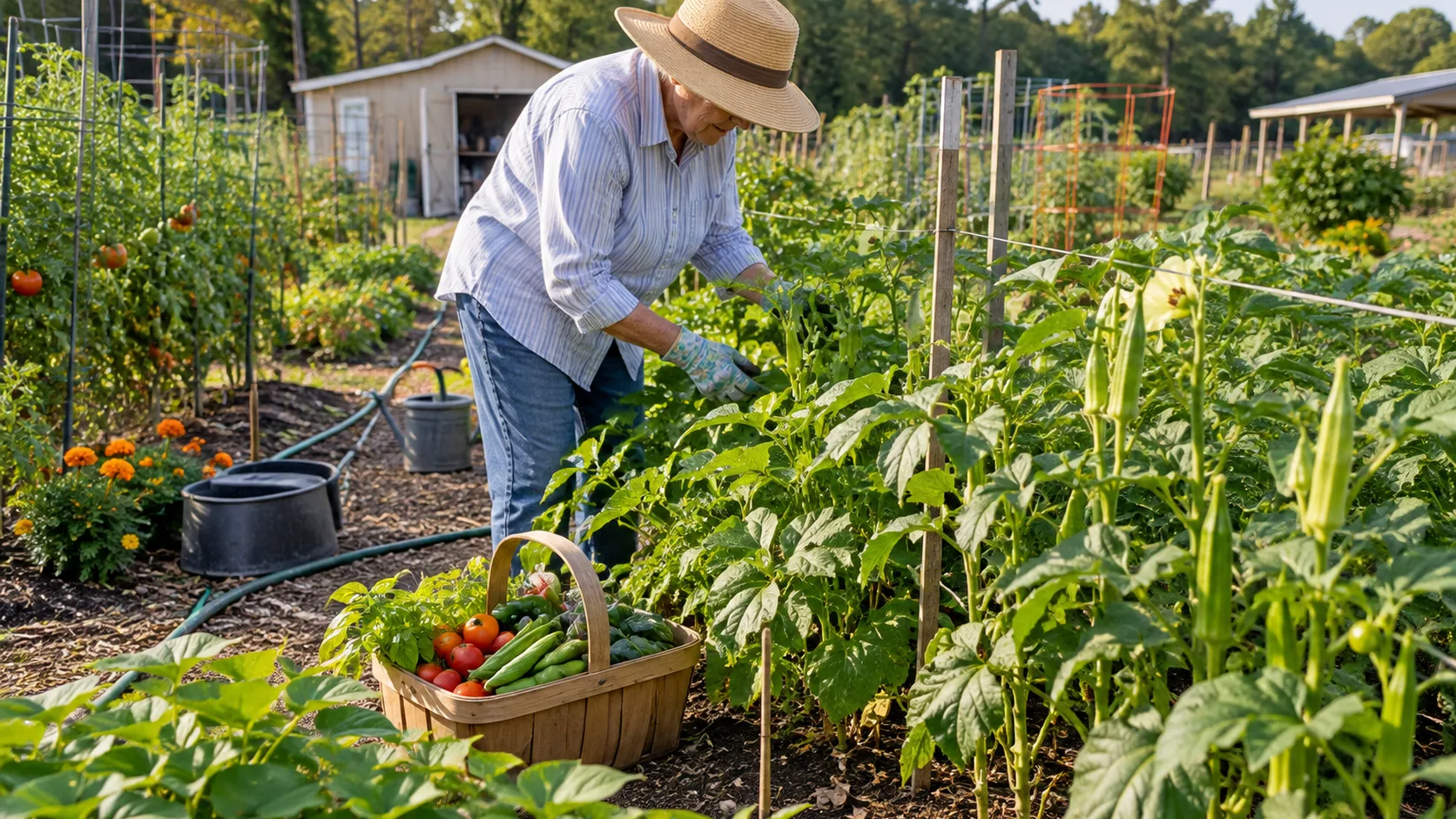
The garden dates to 1974, when it began near the end of a runway at what is now Conroe-North Houston Regional Airport. It was originally known as Friendship Gardens — a name that turns out to have been pretty accurate. As the airport expanded, the garden moved in the early 1990s to its current home at 19654 Airport Parkway.
Today the nonprofit is self-managed and supported by Montgomery County Precinct 1.
That history matters because this is not a new program created to follow a trend in active retirement. Generations of Montgomery County residents have been doing this for decades: claiming a small piece of ground, planting something in it and finding other people doing the same thing a few rows over.
A Piece of Ground of Your Own
Most plots are roughly 30 to 40 feet by 30 to 40 feet, though smaller spaces are available. Qualifying gardeners pay a one-time $100 fee. Water is provided at no charge; gardeners supply their own seeds, plants, irrigation equipment and tools. Storage sheds are available for larger equipment.
There is also a community building known as the Lounge, with a kitchen, restroom and gathering space. That detail sounds small until you understand how the place is used. This is not a collection of isolated garden beds where everyone arrives, weeds alone and goes home. The garden has become a place to stop and talk — to compare what is growing, to ask why one row of tomatoes is thriving while yours has decided to declare war on you. And sometimes a place to sit for a while after the work is done.
The Part You Cannot Put in a Basket
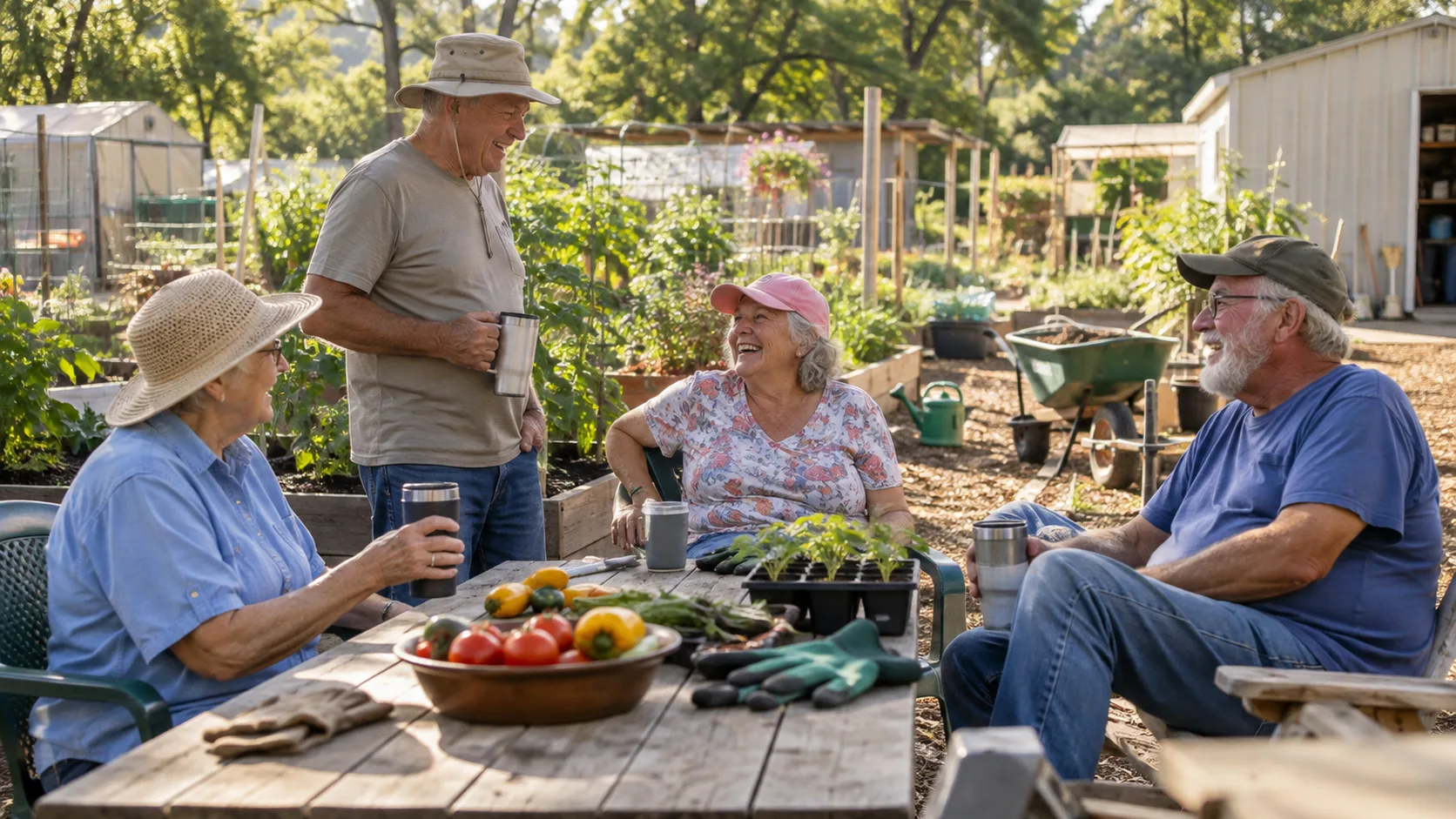
A recent Houston Chronicle visit found a core group of gardeners who come out regularly for more than the produce. Retired Conroe High School history teacher Chris Kattner, who joined the garden in 2010, described the friendships as a major reason he returns so often. Another gardener, Tim Bactad, tends two corner plots filled with an unusually broad mix of food, including Okinawa purple sweet potatoes, peppers, squash, bananas, ginger, asparagus, long beans, jujube and figs. Randy Young, one of the garden's caretakers, talked about simply needing something to do in retirement.
None of that requires a grand theory about aging. It is more ordinary than that. Work ends. Children grow up. Schedules change. Friends move away. A day that once filled itself can suddenly have a lot of empty space in it. A garden cannot solve every part of that transition, but it can give someone a place to be tomorrow morning, a job that is never completely finished and a few familiar faces who will probably be there too.
Nine Open Plots — At Least for Now
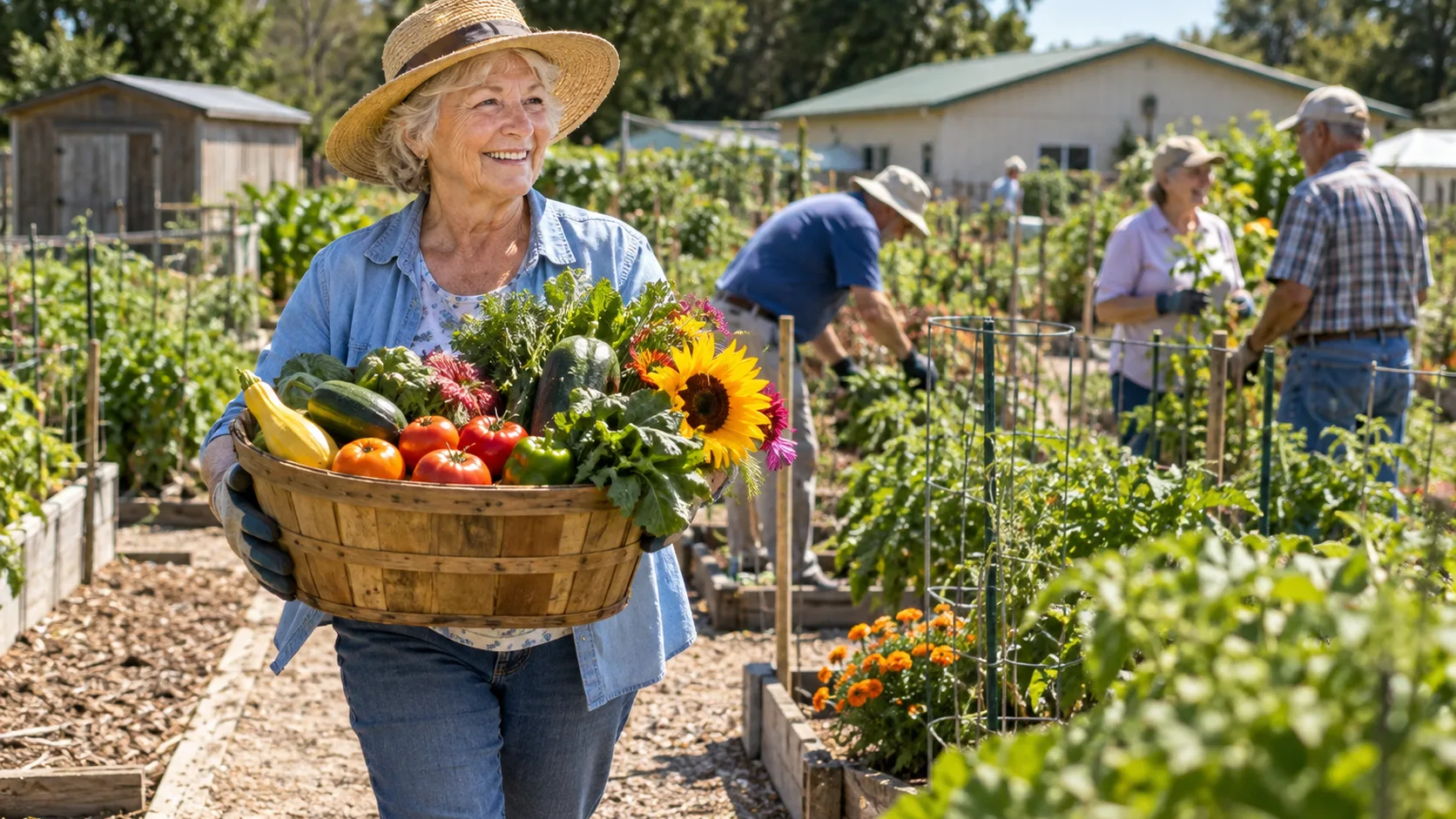
When the Houston Chronicle reported on the garden on September 22, nine plots were open. The garden's own website says plots are assigned on a first-come, first-served basis and directs interested residents to sign up through the main building or contact the garden directly. Availability can change, so anyone interested should check with the garden before making plans.
The requirements are simple: live in Montgomery County and be at least 55. The one-time plot fee is $100, and whatever grows in your plot belongs to you.
Maybe the Tomatoes Are Just How It Starts
There are plenty of ways to measure a garden: acres, rows, harvest weight, gallons of water, number of plots. The harder things to measure may be the reason this one has lasted since 1974. How many conversations happened while somebody leaned on a shovel? How many friendships started because the person in the next plot knew what was eating the peppers? How many retirees found that getting out of the house was easier when there was something waiting to be watered?
People may come to the Montgomery Senior Garden because they want tomatoes, squash or a few rows of beans. Some of them stay because somebody knows their name.
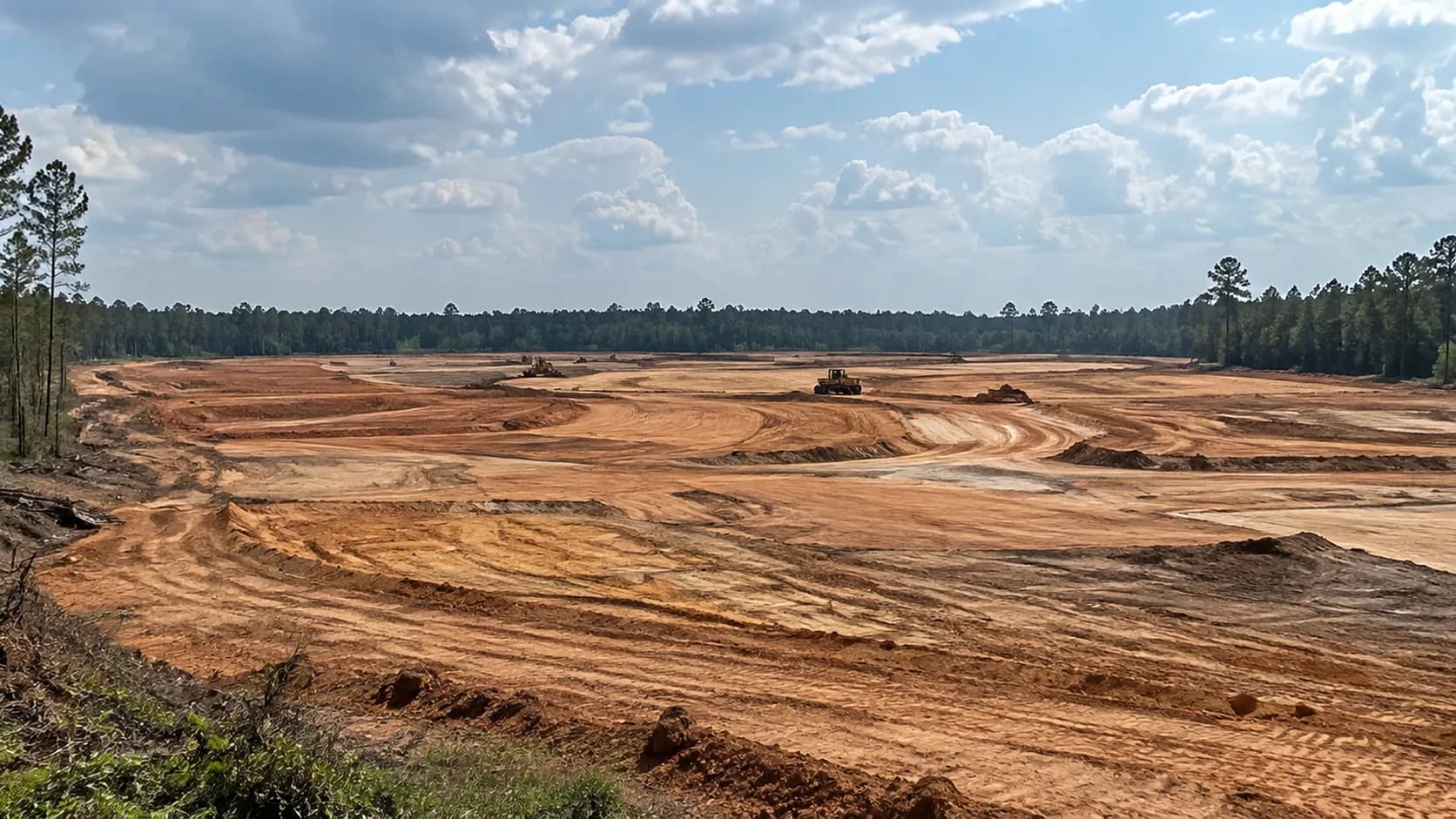
Note: All images accompanying this article are original AI-generated illustrative editorial photographs. They are not documentary photographs of the Montgomery Senior Garden or of the named gardeners in the article.