

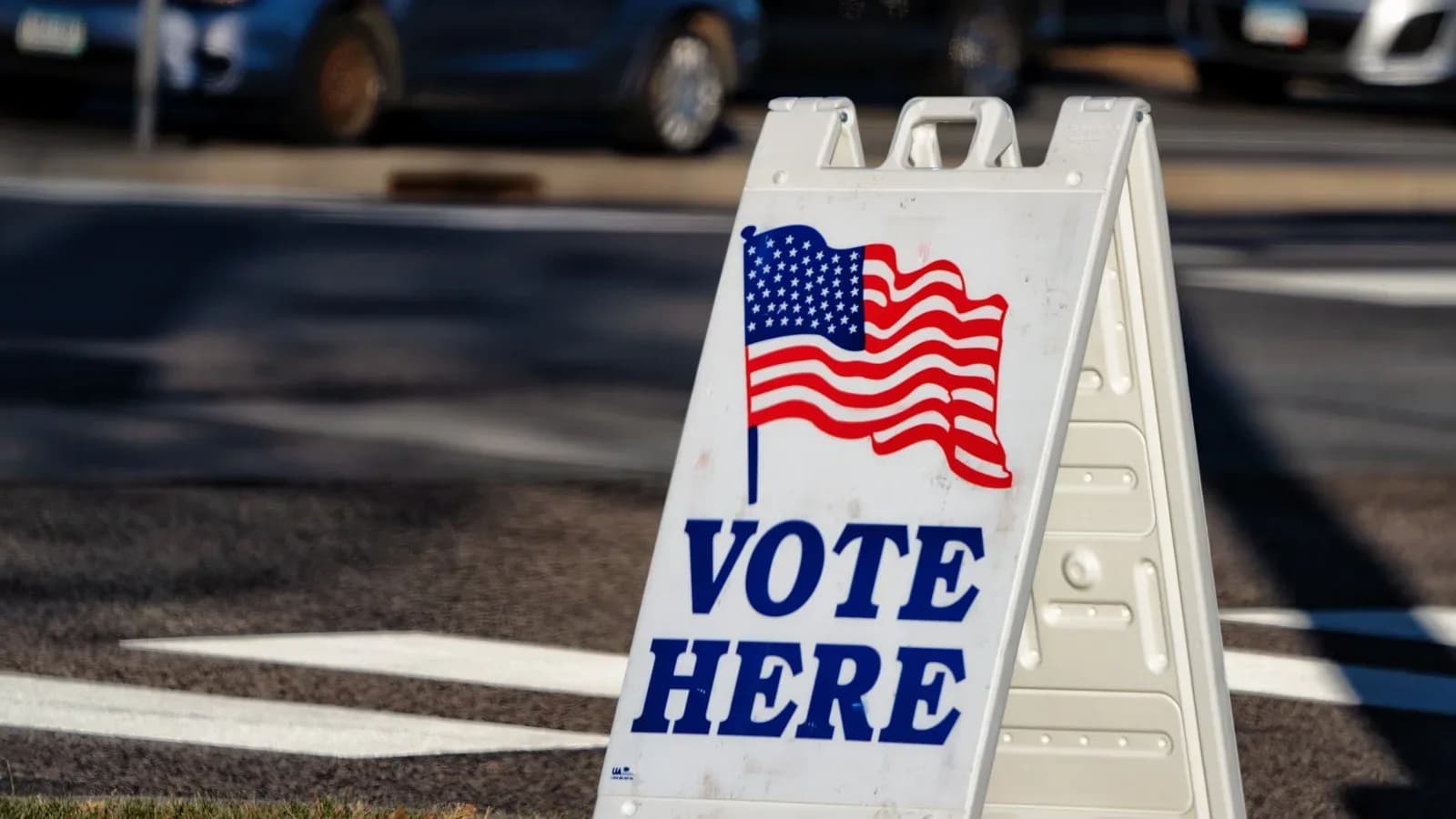
Clergy Will Stand Outside the Polls in Nine States on Election Day. Peacemakers Should Belong to No Party.
More than 1,200 clergy and lay volunteers will serve as poll chaplains outside polling places in nine states, including Texas, on Election Day.
The facts come first below. My reflection follows in the section marked as opinion.
More than 1,200 clergy members and lay volunteers have signed up to serve as "poll chaplains" and peacekeepers outside polling places in nine states on Nov. 3, according to an Associated Press report published by the National Catholic Reporter. They will deploy to Arizona, Michigan, Georgia, Ohio, Pennsylvania, North Carolina, Wisconsin, Virginia and Texas, where contentious races are expected to raise political tensions.
Who they are and what they will do
The effort is organized by a nonpartisan coalition of interfaith and secular partners known as Faiths United to Save Democracy. Co-founder Barbara Williams-Skinner told the AP that as of Oct. 19, the group had recruited 1,235 poll chaplains and peacekeepers. Volunteers will wear identifying hats and vests and stay outside polling centers, with the goal of a calm, reassuring presence, the AP reported.
The coalition's own guidelines say training prepares volunteers to "de-escalate potential conflict and make vulnerable voters feel safe and supported at polling sites." The group instructs volunteers "never to put themselves in harm's way and always to follow the lawful instructions of election officials and law enforcement."
Williams-Skinner said the initiative is strongly rooted in the Black church and now includes many faiths and non-religious people. "You have white, Mainline Protestants, Quakers, traditional Baptists, Black church leaders, imams, rabbis — all kinds of people who probably would not work together or haven't worked together in the past," she said. The AP reported that most participating groups are moderate or progressive, but Williams-Skinner said the effort is strictly nonpartisan. "We don't get hung up on who's moderate or who's conservative. People just need to be able to vote, unafraid," she said.
Why organizers say this year is different
Williams-Skinner said "2026 is going to be different" because of concern that federal immigration agents could create a chilling effect. The AP reported that Department of Homeland Security officials have consistently said they have no plans to send immigration agents to the polls, although DHS Secretary Markwayne Mullin said agents could show up for a specific reason, such as arresting someone with a warrant, according to the report.
The AP cited a Pew survey taken after the assassination of conservative activist Charlie Kirk in September 2025 that found 85% of Americans, across political lines, believe political violence is on the rise. But Steven Huefner of Ohio State University's Election Law Program said that while political violence has increased, it is not widespread. "Election workers are well-trained and can run elections quite well," Huefner said.
The Rev. Steve Bland, who leads Liberty Temple Baptist Church in Detroit, described helping an elderly woman during a past election. "She left and came back with two of her grandsons who also voted," he said. "Without that intervention, three people wouldn't have voted that day," Bland told the AP.
Opinion: Blessed are the peacemakers, from every side
Christians of every political stripe should be able to agree on this much: no eligible American should be frightened away from the ballot box, and no one should be bullied at a polling place. "Blessed are the peacemakers," Jesus said. A pastor who stands calmly on a sidewalk and helps a nervous grandmother find her courage is doing good work.
But peacemaking only works if everyone trusts the peacemaker. The AP itself reported that most of the groups involved are moderate or progressive, and the coalition's name speaks of saving democracy, a phrase many conservatives hear as campaign language. That does not make the volunteers partisan. It does mean they will have to prove their neutrality in practice: treating a voter in a MAGA hat with the same warmth as anyone else, staying clear of electioneering, and deferring to election officials, as their own guidelines require.
It is also fair to keep the threat in proportion. DHS has said it has no plans to send immigration agents to the polls, and an election law scholar told the AP that political violence, while rising, is not widespread. Telling voters to be afraid can depress turnout just as surely as intimidation can.
The better answer is more peacemakers, not fewer. Conservative and evangelical churches should not leave this ground to one side. Pastors who love their neighbors can volunteer as poll workers, drive elderly members to vote, and pray for calm in their towns. Scripture tells us, "If it be possible, as much as lieth in you, live peaceably with all men."
Election Day should be the most ordinary of civic duties. If clergy from every tradition, left and right, help keep it that way, the whole country benefits. Texas is among the nine states. For more on how voting is going here, read Texas Day One Early Voting Records: What the Numbers Mean.
More Faith Stories
 Today
An Ohio Church Opens Its Stage to Survivors of 'Tranq' and Fentanyl. Hope Is Still the Best Thing It Hands Out.
 Yesterday
Pope Leo Will Return to His Wednesday Audience a Week After Cancer Surgery. Pray for Him, and for Every Patient He Named.
 Yesterday