Noah Webster Gave America Its Dictionary. He Called the Bible the Source of All That Is Good.
Noah Webster, born Oct. 16, 1758, gave America its speller and dictionary. In 1833 he also revised the King James Bible, and his preface still speaks.
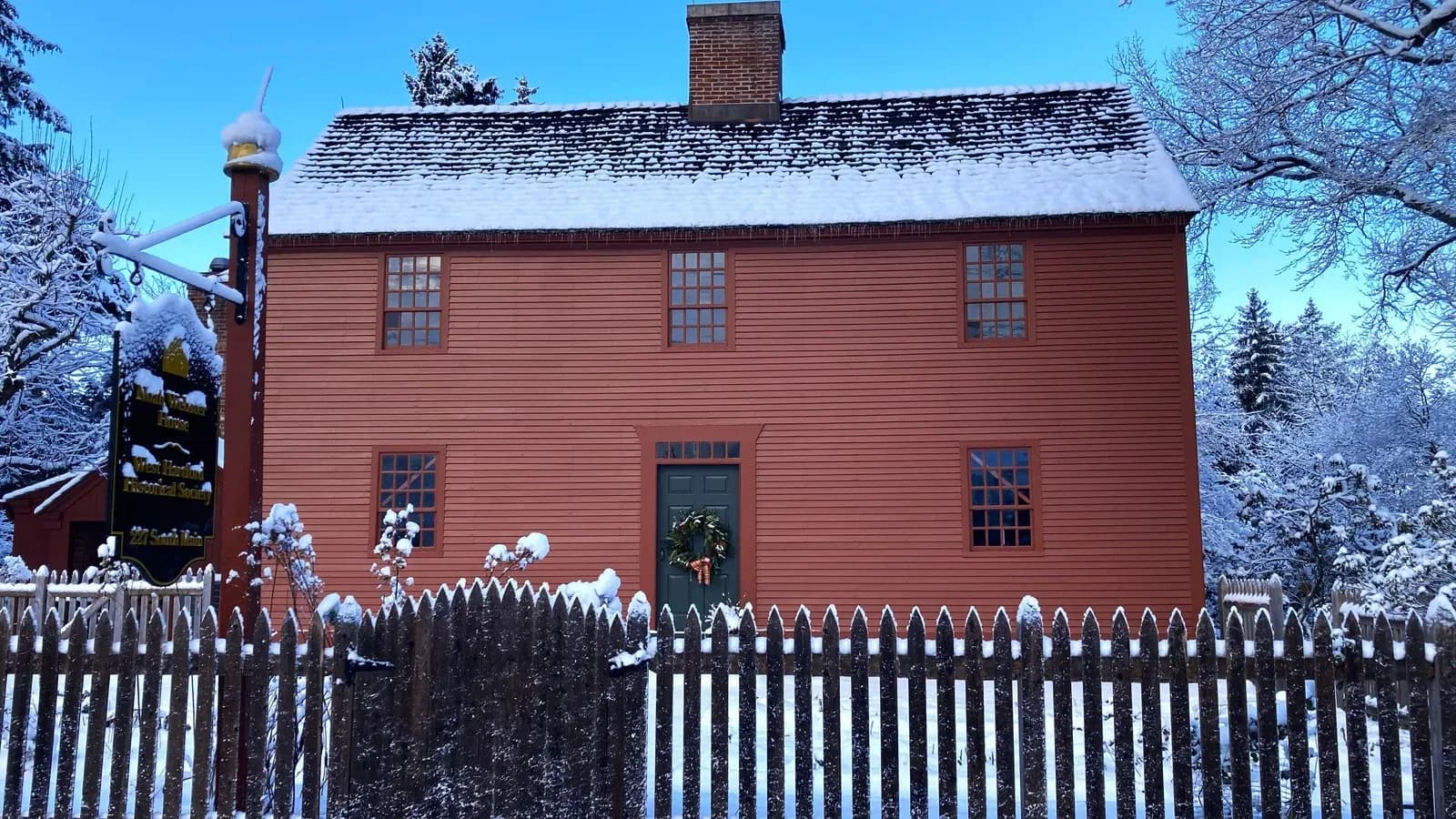
Noah Webster was born 268 years ago today, on Oct. 16, 1758, in what is now West Hartford, Connecticut. Most Americans know his name from the dictionary on the shelf. Fewer know that the man who taught a young nation how to spell also believed the Bible was the foundation of everything good in it, and that late in life he published his own revision of the King James Bible.
A farmer's son who became a teacher
Webster grew up in an ordinary family, according to the Noah Webster House, the museum at his birthplace. His father farmed and worked as a weaver. Few people went to college then, but his parents sent him to Yale. He left for New Haven in 1774 at 16 and graduated in 1778. He wanted to study law, but his parents could not afford more schooling, so he became a teacher.
What he saw in the classroom bothered him. Children of all ages were crammed into one-room schoolhouses with no desks, poor books and untrained teachers. The books came from England, and some still pledged allegiance to King George, even after the war. Webster believed American children should learn from American books.
The Blue-Backed Speller
So in 1783 he wrote one: A Grammatical Institute of the English Language. It earned its nickname, the "Blue-Backed Speller," from its blue cover. For more than 100 years it taught American children to read, spell and pronounce words, the museum says. It was the most popular American book of its time, selling nearly 100 million copies.
In 1801 he began defining the words Americans use. His first dictionary, published in 1806, offered brief definitions of about 37,000 words. It took him 22 more years to finish An American Dictionary of the English Language. When it appeared in 1828, when he was 70, it defined more than 65,000 words. He used American spellings like "color" instead of "colour" and "music" instead of "musick," and added American words English dictionaries lacked, like "skunk" and "squash."
Webster also fought for copyright laws, a strong federal government, universal education and the abolition of slavery, according to the museum. He corresponded with George Washington and Benjamin Franklin, helped found Amherst College, raised eight children with his wife, Rebecca, and celebrated 54 anniversaries with her.
His Bible
In 1833, Webster published a modernization of the King James Bible. Houston Christian University's Dunham Bible Museum has reprinted his preface, and it is worth reading today.
He did not want to replace the King James. He praised its language as "correct and perspicuous" and wrote, "In my view, the general style of the version ought not to be altered." His concern was that some words had changed meaning over two centuries. "Whenever words are understood in a sense different from that which they had when introduced," he wrote, "they do not present to the reader the Word of God."
His changes fell into three groups: replacing obsolete words, correcting grammar such as "which" for "who," and substituting gentler wording for phrases he thought could not be read aloud in mixed company. He said he had not knowingly changed any passage that different denominations relied on for their distinctive beliefs.
He knew some would call him arrogant. "I am aware of the sensitiveness of the religious public on this subject," he wrote. But he considered revision "not merely a matter of expedience, but of moral duty." He also insisted that no government should dictate which Bible Americans read: "In this country there is no legislative power which claims to have the right to proscribe what version of the scriptures shall be used in the churches, or by the people."
And he closed with a sentence that tells you who he was: "The Bible is the chief moral cause of all that is good, and the best corrector of all that is evil in human society; the best book for regulating the temporal concerns of men, and the only book that can serve as an infallible guide to future felicity."
Opinion: Words still matter
What follows is Dock Line's commentary. Webster's life makes a simple point. Words matter, and the meaning of words matters most when the Word of God is at stake. He spent decades fixing what words meant, and he revised the Bible so that ordinary readers would not get "a wrong signification or false ideas."
We live in a time when words are bent to mean their opposites, when "love" and "justice" and even "man" and "woman" are redefined to suit the moment. Webster would have recognized the danger. Christians should be people of plain, honest words, and people of the Book. Sometimes, as Dock Line noted recently, the best sermon is seven words on a roadside sign. "The words of the LORD are pure words: as silver tried in a furnace of earth, purified seven times" (Psalm 12:6).
A farmer's son who could not afford law school gave his country its speller, its dictionary and a Bible he hoped ordinary readers could understand. Not a bad legacy. Today would be a good day to open the Book he loved and read it with the care he gave every word.
Hero photo: Marty Aligata via Wikimedia Commons, CC BY-SA 4.0, cropped and resized.