

Reformation Day Is Oct. 31. Luther's First Thesis Still Calls Every Christian to Repent.
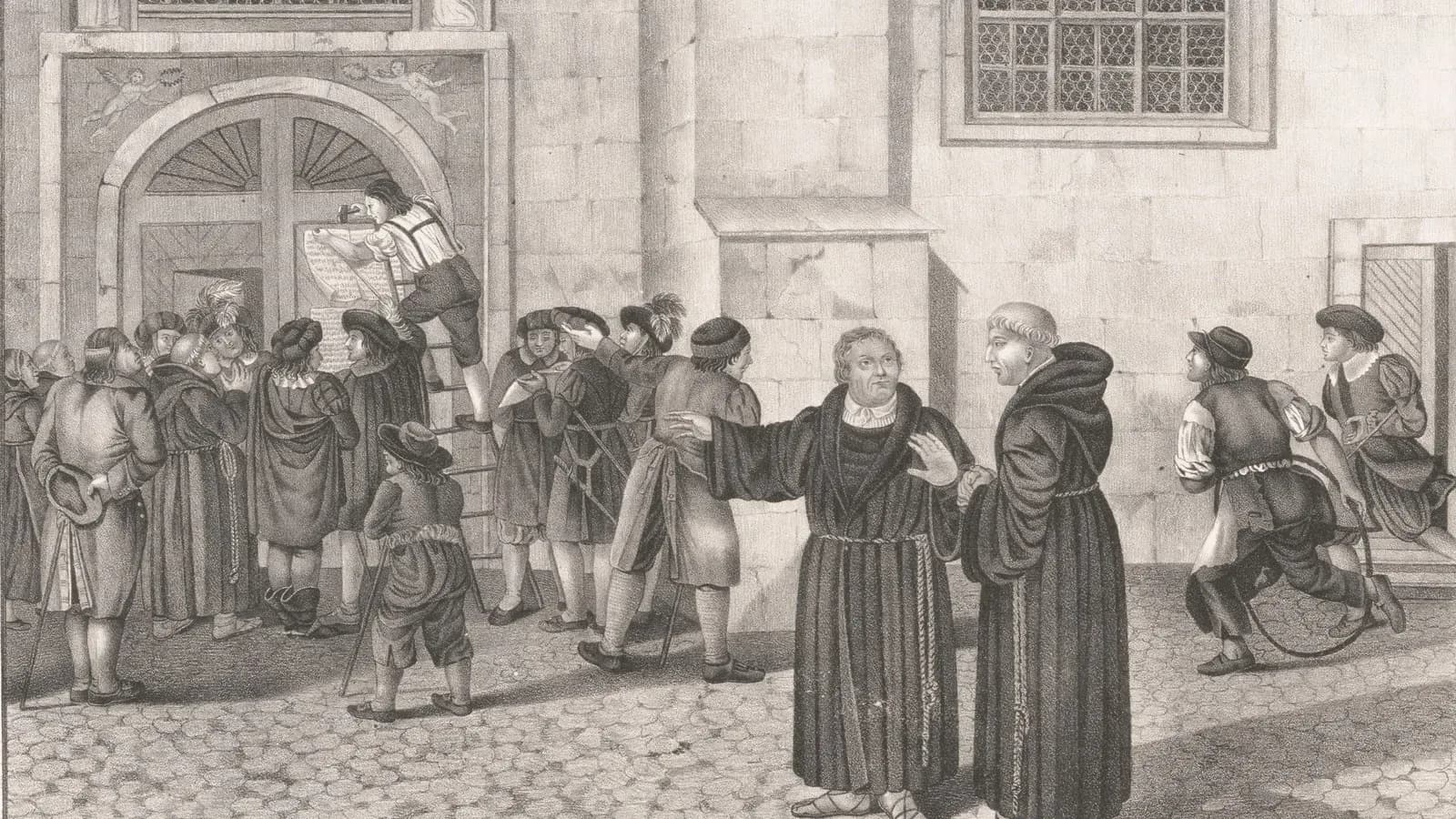
Many Protestants mark Reformation Day on Oct. 31, the traditional date Martin Luther posted his Ninety-five Theses in Wittenberg in 1517.
The facts come first below. My reflection follows in the section marked as opinion.
Next Saturday, Oct. 31, many Protestant churches will mark Reformation Day. According to tradition, on Oct. 31, 1517, an Augustinian priest and theologian named Martin Luther posted 95 propositions for debate on the door of the Castle Church in Wittenberg. The writing of those theses came to be considered the beginning of the Protestant Reformation, and Oct. 31 is celebrated each year by Lutherans and certain other Protestants as Reformation Day, according to Encyclopaedia Britannica.
What the theses were about
The Ninety-five Theses were short propositions, written in Latin, about indulgences. The immediate cause was an indulgence meant to pay for the rebuilding of St. Peter's Basilica in Rome. By a secret agreement that most Germans did not know about, half the proceeds of the German sales were to go toward a huge debt that Archbishop Albert of Mainz owed to the Fugger banking house, Britannica reports. The Dominican friar Johann Tetzel, who was selling the indulgence in Germany, made extravagant claims for it, Britannica notes.
Luther did not set out to start a new church. Britannica reports that he "originally had no intention of breaking from the Catholic Church" and assumed his call for reform would be debated through normal academic channels. But the printing press spread the theses throughout Germany within a few weeks. Luther and his followers were eventually excommunicated, according to Britannica.
A fair account of the other side
Britannica also notes something Protestants should remember. Indulgences, as the Church taught them, never meant that "divine forgiveness could be bought or sold," and the Council of Trent, which met from 1545 to 1563, "defined the doctrine and eliminated abuses," the encyclopedia reports. The scandal Luther attacked was real, but it was an abuse, and many Catholics of his day saw it as one too.
What the theses actually say
The first thesis is the one most worth remembering. It says that when Jesus told his hearers to repent, "he willed the entire life of believers to be one of repentance," according to the translation Britannica publishes. It points back to the words of Jesus himself: "Repent: for the kingdom of heaven is at hand."
Other theses turn to charity. Thesis 43 says, "Christians are to be taught that he who gives to the poor or lends to the needy does a better deed than he who buys indulgences." And Thesis 62 puts the matter at its heart: "The true treasure of the church is the most holy gospel of the glory and grace of God," as printed in the full text published by Britannica.
Opinion: Remember the reason, not just the rupture
Reformation Day is not a day for gloating. The division of Western Christianity was a tragedy as well as a turning point, and many faithful Catholics and Protestants still grieve it. Honest Protestants can admit that the abuses Luther attacked were corrected within the Catholic Church itself, and honest Catholics can admit that it took a crisis to get there.
What is worth remembering is what Luther was fighting for. He believed no one could buy peace with God, and that the treasure of the church is the gospel, not money. Paul said it plainly: "For by grace are ye saved through faith; and that not of yourselves: it is the gift of God: Not of works, lest any man should boast." That message did not belong to Luther. It belongs to every Christian.
The first thesis may be the most needed today. Luther did not say repentance is a single moment at an altar. He said Christ willed the entire life of believers to be one of repentance. In a culture that treats sin as a lifestyle and apology as weakness, that is a hard word, and a good one. Repentance is not shame for its own sake. It is turning around, again and again, toward the God who forgives.
So this Oct. 31, before the costumes and the candy, consider reading the first few theses with your family. Talk about what it means to repent, and why the gospel is free. Pray for unity among all who confess Christ. For another story of faith and history, read After Yorktown, Washington Pardoned Prisoners and Called for Worship.
More Faith Stories
 Today
Texas Baptists Will Vote in Waco on Who Counts as a Cooperating Church and Who Decides
 Yesterday
Texas Southern Baptists Will Vote Next Week on Limiting the Pastor's Office and Title to Men
 Yesterday