Greenville Gardeners Still Have Time to Plant Garlic, Greens and Roots
October is garlic month in Hunt County, and AgriLife's dates leave room for turnips, mustard, carrots, spinach and radishes into November.
Late October is not too late for a Greenville garden. It is, in fact, the right time for one crop most people never think to plant: garlic.
“The last thing to plant is garlic in October,” Hunt County Master Gardener Byron Chitwood wrote in a column for the group. “It will not be mature until the following June.” That is a long wait. But it means cloves planted this month are next summer’s harvest.
Know your region
Texas A&M AgriLife Extension’s fall vegetable guide splits the state into five growing regions, each with its own planting dates. In a Hunt County Master Gardeners article, member Karla Basallaje wrote that her Hunt County ZIP code falls in Texas gardening zone 3, USDA hardiness zone 8. She put the average first freeze there around Nov. 15. She counts back from that date using the days to harvest on the seed packet, then adds two weeks because plants grow more slowly in fall’s cooler, shorter days.
Here is what AgriLife lists for Region III that has not yet passed:
Garlic cloves: October. AgriLife recommends California Early, California White and Elephant Garlic.
Mustard, turnips and onions from seed: Nov. 1. Suggested varieties include Tendergreen and Southern Giant Curl mustard and Tokyo Cross and White Lady turnips.
Carrots: Nov. 10. Try Imperator 58, Nantes Half Long or Red Core Chantenay.
Spinach: Nov. 15. Bloomsdale, Early Hybrid and Melody are on the list.
Radishes: Nov. 25. Champion and White Icicle.
The guide’s Region III dates for beets, leaf lettuce, collards and parsley fell between Oct. 10 and Oct. 15, so those are now late. Its last recommended date for setting out broccoli, cabbage and cauliflower transplants in Region III was Sept. 20.
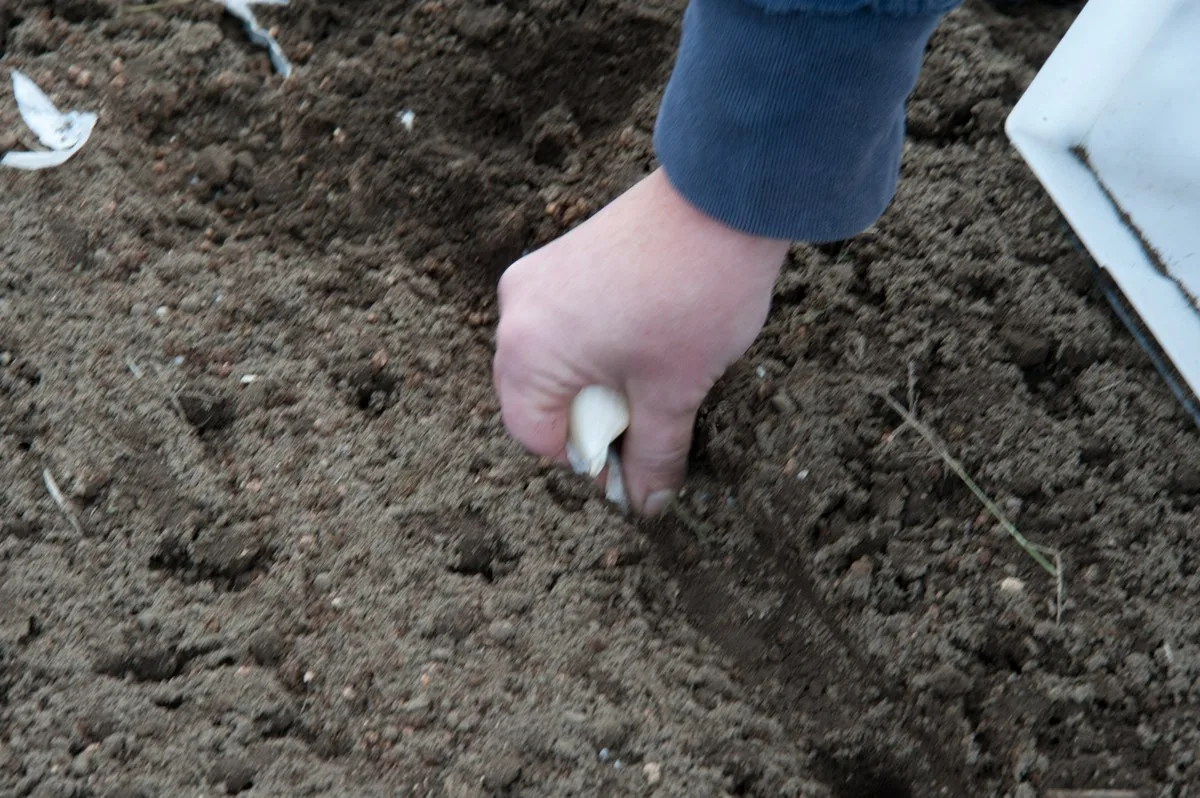
Planting garlic cloves in the fall. Photo: Dwight Sipler / Wikimedia Commons, CC BY 2.0.
Getting the bed ready
AgriLife’s advice is simple. Pick a spot with at least 8 hours of direct sun and soil that drains well. Clear out the spring crop and weeds, and keep that old plant material out of the compost bin, because it may carry insects and disease. Work in 1 pound of ammonium sulfate per 100 square feet before planting, or 2 to 3 pounds of a slow-release fertilizer. Never use poultry manure on a fall garden. Then run a sprinkler over the bed for at least two hours and let it dry for several days before planting.
Many of these crops can handle a freeze. The guide lists beets, leaf lettuce, mustard, radishes, spinach and turnips as frost-tolerant crops ready in 30 to 60 days. Chitwood wrote that in a mild winter, collards, kale and chard can survive and produce in very early spring, before anything else comes up.
Where to ask
The Hunt County Extension office is at 2217 Washington St. in Greenville and can be reached at 903-455-9885, according to the Master Gardeners. The group, now in its 30th year, maintains the Heritage Garden of Hunt County.
Plant a few cloves this week, and next June you will have a harvest you started back in the fall.
Related on Dock Line: What to Plant in Your Brazos Valley Fall Garden Right Now; Turnips Still Have Time in a Victoria Garden. Here Is How to Grow Them and Cook Them.