

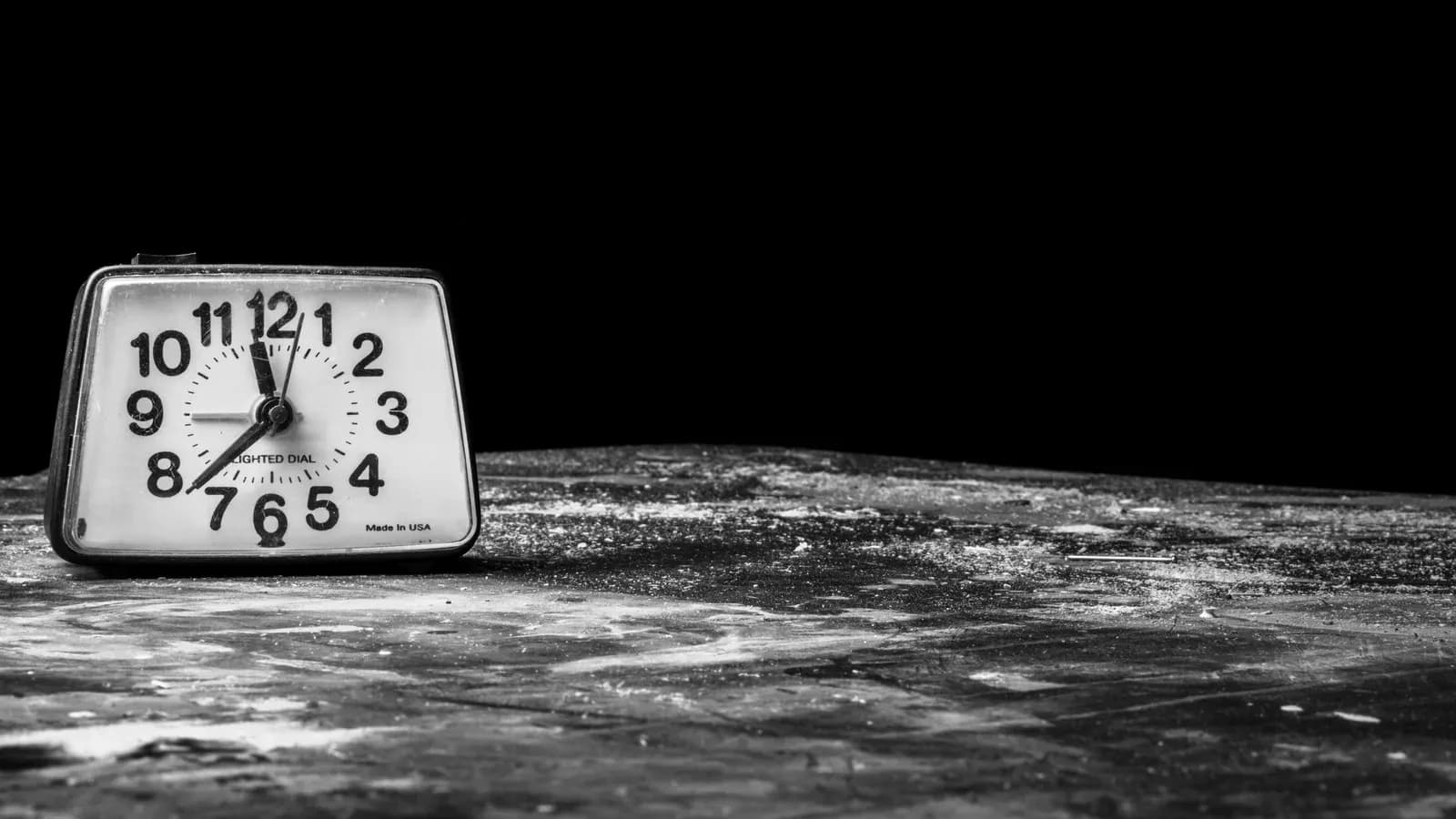
Clocks Fall Back Nov. 1. Here Is How to Use the Extra Hour Well.
Daylight saving time ends at 2 a.m. local time on Sunday, Nov. 1, as Congress has yet to pass a bill ending the twice-yearly clock change.
The facts come first below. My opinion follows in the section marked as opinion.
Daylight saving time ends at 2 a.m. local time on Sunday, Nov. 1. At that moment the clock becomes 1 a.m. and the hour repeats, giving most Americans one extra hour that day, according to the National Institute of Standards and Technology, one of the nation's official timekeepers.
The rules
Under current law, daylight saving time begins at 2 a.m. on the second Sunday of March and ends at 2 a.m. on the first Sunday of November. This year it began March 8. The rules were set by the Energy Policy Act of 2005 and took effect in 2007, stretching daylight saving time by about a month. It is now in effect for 238 days, or about 65% of the year, NIST says.
Not everyone changes clocks. Hawaii, Arizona (except the Navajo Indian Reservation), American Samoa, Guam, Puerto Rico and the Virgin Islands do not observe daylight saving time. Time zones and daylight saving time are regulated by the U.S. Department of Transportation, not NIST, the agency notes. Phones and computers should change on their own if their software is up to date. Older self-setting clocks that do not receive a time signal and were built before the 2007 rule change may switch on the wrong date and need a manual fix.
The debate in Washington
The Sunshine Protection Act, which would make daylight saving time permanent and end the twice-yearly change, has not become law. The Senate is in recess until Nov. 6, so barring action, Americans should plan to turn their clocks back Nov. 1, USA Today reported. President Trump has called the clock change "foolish, inconvenient and, in some cases, very costly," and Senate Majority Leader John Thune has questioned whether enough senators support the bill, according to the same report.
Not everyone agrees on the fix. Many sleep and health researchers argue that permanent standard time, not permanent daylight saving time, would better fit the body's natural clock. Ski resorts have raised safety worries about darker winter mornings, and some religious groups, including the Orthodox Union, have noted that prayer times tied to sunrise would be harder with later winter sunrises. A January 2025 Gallup poll found 54% of Americans wanted to end the practice, USA Today reported.
How much sleep you need
The extra hour is a good time to check your habits. "Experts recommend that adults sleep between 7 and 9 hours a night," the National Heart, Lung, and Blood Institute says. Adults who sleep less than 7 hours a night may have more health issues than those who get 7 or more. Teens 13 to 18 should sleep 8 to 10 hours a day, and children 6 to 12 should get 9 to 12, according to the institute.
Opinion: An hour is a gift. Spend it like one.
Whatever Congress does, on Nov. 1 you will be handed an hour you did not earn. Most of us will spend it scrolling. I would suggest something better.
First, sleep. The Bible does not treat rest as laziness. "It is vain for you to rise up early, to sit up late, to eat the bread of sorrows: for so he giveth his beloved sleep." A man who never rests is not proving his faith. He is often proving that he trusts himself more than God. Go to bed Saturday at your usual time, and let the extra hour be real rest, not another hour on a screen.
Second, if you are a parent, guard your children's sleep. The federal guidelines above are not hard to meet, but phones in bedrooms make them hard. The week after a time change is a fine time to set a family rule that devices sleep in the kitchen.
Third, use the hour on Sunday morning. It falls on the Lord's Day. Arrive early to church for once. Have breakfast with your family. Call your mother. Moses prayed, "So teach us to number our days, that we may apply our hearts unto wisdom." An extra hour is a small reminder that our days are counted by Someone else.
As for the policy fight, both sides have fair points. Permanent daylight saving time would give families more light in the evening. Permanent standard time may sit better with how the body works, as many sleep researchers argue, and with those whose prayers follow the sunrise. Picking one and ending the switch has broad support. Congress should settle it, but no law will make you go to bed on time. That part is up to you.
For more on your health this fall, read RFK Jr. National Kidney Plan in Fort Worth: What Texans Should Know.
More Health & Fitness Stories
 Today
Buying Your Own Health Insurance? Texas Open Enrollment Starts Nov. 1. Here Is What Changes for 2027
 Yesterday
Kennedy Unveils National Kidney Plan in Fort Worth. Most People With Kidney Disease Do Not Know They Have It
 This Week