

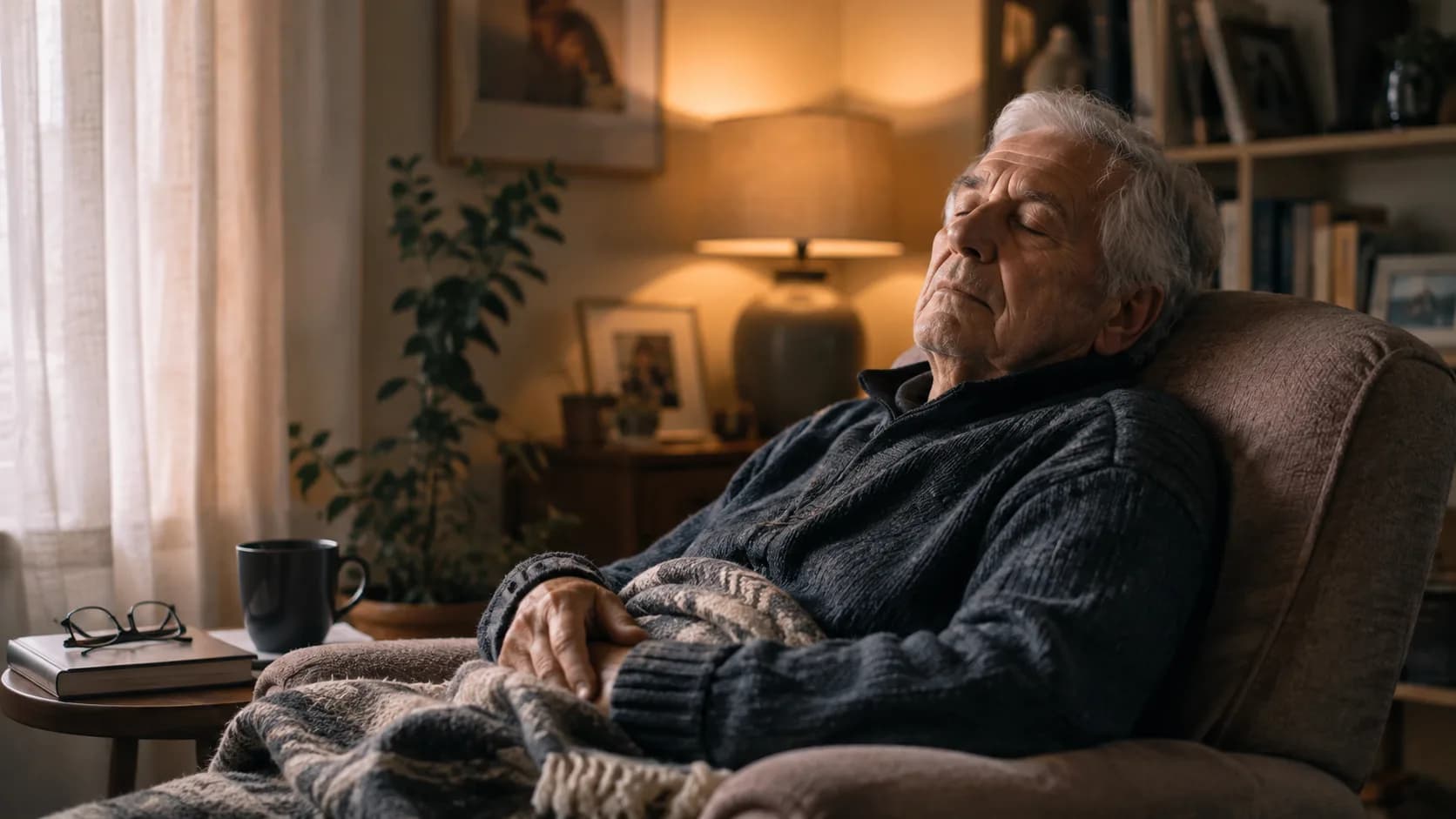
Sleep Does Not Follow One Clock
What “enough” sleep really means—and why age, biology, work, and life pull us toward different hours.
What “enough” sleep really means—and why age, biology, work, and life pull us toward different hours.
I was awakened abruptly in the middle of the night, and instead of rolling over and returning to sleep, my mind opened every drawer at once.
Thoughts arrived faster than I could sort them. One was about the strange hour. Another was about why some people can sleep through anything while others wake when the house makes a noise it has made every night for twenty years. Then came the larger question:
Who decided there was only one right sleep pattern?
We talk about sleep as though everybody should climb into bed at the same respectable hour, remain unconscious for one perfectly measured block, and wake refreshed when the alarm says the performance is over.
Real life is rarely that tidy.
Some people naturally get sleepy early. Others become most alert after the rest of the house has gone quiet. Some sleep deeply. Some wake several times and go back to sleep. Some work nights, care for family members, manage pain, take medications, or live with a dog that believes every trip to the kitchen requires supervision.
There may not be one clock that fits everybody. But that does not mean anything goes. Sleep is personal, and it is also biological. The challenge is learning the difference between a pattern that suits a person and a pattern that is quietly wearing that person down.
One Clock, Many Bodies
Human beings share the need for sleep, but we do not all feel sleepy at the same hour.

Inside the body is a roughly 24-hour timing system known as the circadian rhythm. Light, darkness, meals, activity, and routine help keep that system aligned with the outside world. Even so, people vary. Some are natural early risers. Some are natural night owls. Teenagers often drift later. Older adults often become sleepy earlier and wake earlier than they once did.
That does not make the early bird more disciplined or the night owl morally suspicious. It means the body keeps time with a little individual handwriting.
The problem comes when the schedule a person must follow fights the schedule the body naturally prefers. A night-shift worker may be trying to sleep while daylight tells the brain to wake up. A natural late sleeper may spend every weekday dragging through an alarm and every weekend trying to repay the debt. A retired person may discover that the bedtime that worked at forty no longer fits at seventy.
The clock on the wall tells us what time it is. It does not tell us what time a particular body is ready to sleep.
What Does “Enough” Actually Mean?
Most healthy adults need at least seven hours of sleep on a regular basis. The usual recommended range for older adults remains roughly seven to nine hours. Aging may change when and how people sleep, but it does not grant the body permission to operate indefinitely on four or five hours because the television schedule improved.
Those numbers are guides, not a contest. One person may feel and function well near seven hours. Another may need eight or nine. Someone recovering from illness or accumulated sleep loss may need more for a while.
The better question is not only, “How many hours was I in bed?” It is also, “Did the sleep do its job?”
Enough sleep should leave a person reasonably alert during the day, able to concentrate, manage emotions, remember things, react safely, and complete ordinary tasks without feeling as though the brain is operating through wet cement.
The latest national data show why the question matters. In 2024, about 30.5 percent of American adults reported averaging less than seven hours of sleep in a 24-hour period. That statistic cannot explain why any one person slept badly. It can tell us that the problem is not confined to one bedroom, one job, or one age group.
Statistics count the tired people. Their lives explain why they are tired.
Sleep Changes Shape With Age
People often say older adults need less sleep. That is not quite right.

Older adults generally still need about as much sleep as other adults, but sleep often becomes lighter, earlier, and more interrupted. A person may wake more often during the night or find that the body is ready for the day long before the rest of the household considers morning a reasonable idea.
Health conditions, pain, medications, reduced activity, less daylight exposure, sleep apnea, restless legs, and trips to the bathroom can all change the shape of a night. The total may also be spread differently, with a short nap becoming part of the pattern.
That does not automatically mean something is wrong. A brief awakening followed by a return to sleep can be part of normal sleep, especially with age. The concern is not simply that sleep occurred in pieces. The concern is whether those pieces add up to enough restorative sleep and whether the person can function safely and comfortably during the day.
Age may change the pattern. It does not erase the need.
Sleeping in Pieces Is Not the Same as Sleeping Poorly
There is a difference between a sleep pattern and a sleep problem.
Some people sleep in one long stretch. Others wake, read for a while, think, pray, check the house, or listen to the silence before returning to bed. Some take a short afternoon nap and still sleep well at night. Shift workers may deliberately divide sleep because life gives them no cleaner option.
The body cares about duration, quality, timing, and regularity—not whether the night looked perfect on paper.
But fragmented sleep can also be a warning when it is frequent, distressing, or leaves someone exhausted. Loud snoring, gasping, repeated pauses in breathing, persistent insomnia, restless legs, falling asleep during the day, or a sudden major change in sleep deserve attention.
“This is just how I sleep” can be true. It can also become a convenient explanation for something treatable.
The goal is not to shame people into a bedtime. The goal is to notice whether the pattern supports life or steals from it.
Smarter People Do Not Get a Pass
I once wondered whether smarter people might simply need less sleep.
Then I looked at myself and realized the theory required immediate revision.
Intelligence does not make the brain exempt from biology. Sleep deficiency can slow reaction time, weaken attention, interfere with memory, make decisions harder, and increase mistakes. Creativity and problem-solving do not improve merely because somebody stayed awake long enough to feel heroic about it.
Being awake longer does not necessarily make us smarter. It merely gives us more hours to demonstrate the condition we are in.
There are rare people who naturally function well on unusually little sleep, but they are exceptions—not proof that the rest of us can train ourselves into needing less by becoming stubborn.
Coffee can make a sleepy person feel more awake. It cannot perform the maintenance that sleep was supposed to do.

Different Does Not Mean Random
If sleep does not follow one clock, it may be tempting to conclude that schedules do not matter.
They do.
Research increasingly treats healthy sleep as more than a nightly hour total. Timing, regularity, quality, and the absence of untreated sleep disorders matter too. The body tends to function better when bedtime and wake time are reasonably consistent, even when those times differ from one person to another.
That is the balance.
A night owl may not need to become an early bird. But the night owl still benefits from enough sleep and a pattern the body can predict. An early riser does not earn bonus health points for waking before dawn if bedtime keeps arriving after midnight. Sleeping late on a day off may help repay some lost sleep, but living in permanent catch-up mode is not the same as being rested.
The healthiest clock may not be society’s favorite clock. It is still a clock.
When the Pattern Deserves a Second Look
People should pay attention when sleep changes suddenly or begins interfering with daytime life.
Always feeling sleepy, struggling to stay awake while driving, waking with headaches, snoring with choking or gasping, lying awake for long periods night after night, or sleeping far more than usual without feeling restored are not character flaws. They may be signs that a health condition, medication, stress, depression, pain, or sleep disorder is involved.
A conversation with a healthcare professional can be more useful than another lecture about putting the phone down—although putting the phone down occasionally remains a fine idea.
The point is not to turn every odd night into a diagnosis. Everybody has nights when the brain decides 3:00 a.m. is the perfect time to review every decision made since 1978.
The point is to notice the difference between an occasional bad night and a pattern that is affecting health, safety, memory, mood, or daily life.
Sleep Is Personal, but It Is Not Optional
There may be no single perfect bedtime, no universal wake-up hour, and no requirement that every healthy night look exactly the same.
Some people sleep early. Some sleep late. Some wake briefly and return. Some nap. Some work while the rest of the world sleeps and then try to convince the sun to mind its own business.
What matters is not whether a person follows somebody else’s clock. What matters is whether the body receives enough good sleep, often enough, at times that allow it to function.
The right sleep pattern is not the one that looks most respectable from the outside. It is the one that gives the body enough time to recover, fits life as closely as life allows, and leaves a person able to live the waking hours rather than merely endure them.
Sleep does not follow one clock.
But every brain eventually collects what it is owed.
Sources
CDC / NCHS — Short Sleep Duration Among Adults: United States, 2024
Sletten et al. — Importance of sleep regularity (Sleep Health, 2023)
General educational content, not medical advice. Persistent sleep problems deserve professional care.
More Health & Fitness Stories
 August 31, 2026
Gum Disease Explained: Signs, Risks, and How to Restore Your Smile After Tooth Loss
 August 30, 2026
The Future Arrived Just in Time
 August 24, 2026