UH Study Finds Everyday Driving Keeps Drivers' Hearts 'On Duty'
University of Houston researchers, with the Texas A&M Transportation Institute, found that drivers' hearts stayed above their resting baseline during nearly all recorded driving time in a one-week wearable study of 57 people.
A University of Houston study says ordinary driving keeps the heart working in a way that sitting at a desk or relaxing at home does not. In a Nov. 23 university report on research published Nov. 18 in npj Digital Public Health, investigators found that drivers' heart rates stayed above each person's resting baseline during nearly all of the driving time they recorded, returned to that baseline less often, and moved in a narrower range than during other sedentary activity.
The work was led by Ioannis Pavlidis, a computer science professor at the University of Houston and senior author of the paper, in collaboration with the Texas A&M Transportation Institute. "Driving requires continuous attention, decisions and readiness to react. The body may be sitting, but the mind is working — and the heart reflects those demands," Pavlidis said in the university report. "People need to get to work and go about their lives, but we want to understand how they can do that with less strain."
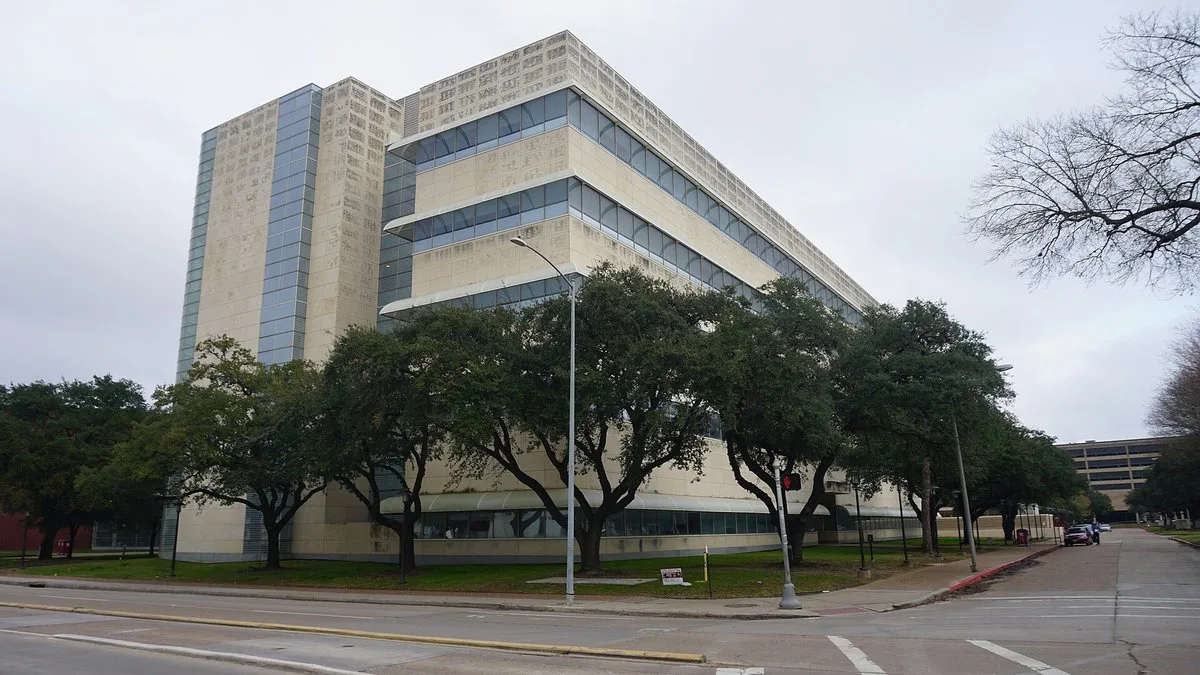
The Science and Engineering Research Center at the University of Houston, photographed Feb. 2, 2019. File photo. Photo: Michael Barera / Wikimedia Commons, CC BY-SA 4.0.
A Week of Watches, Phones and Cars
According to the journal article, 57 participants recruited in Texas were monitored continuously for one week in an IRB-approved study. The analyzed dataset covered 393 participant-days and 177,318 minute-level observations, or about 2,955 hours. The sample was about evenly split by sex, 30 men and 27 women, and consisted mostly of young adults, with a mean age of 26.2 years. Researchers used the participants' own Apple Watches and iPhones and an on-board diagnostic device in their personal vehicles, the paper said. The university report said the participants were tracked across major Texas cities, including Houston, Dallas and San Antonio, and that the team compared heart rates with weather and traffic measures.
Driving made up a small share of the recorded minutes. The paper said driving accounted for 10.4 percent of the minute-level rows, while non-driving sedentary time accounted for 86.4 percent. The main comparison was between those two settings, not between driving and exercise. The authors reported that mean baseline-referenced heart rate was similar in the two sedentary contexts. The difference they emphasize is the pattern: during driving, heart rate stayed elevated more consistently and returned to baseline less often.
The journal article put numbers on that pattern. On weekdays, heart rate stayed above baseline 93.8 percent of observed driving time, compared with 82.1 percent of other sedentary time; on weekends the figures were 94.7 percent and 78.4 percent. Returns to baseline were less frequent in both partitions. The university report summarized the same contrast as roughly 94 percent of observed driving time versus 81 percent during other sedentary activities, and said heart rate returned to baseline roughly half as often. In prose, the paper says heart rate stayed above baseline during "nearly all" observed driving time.
The university also said driving-related elevation is not a fitness benefit. "When the heart works harder during exercise, that is generally a good thing," Pavlidis said. "But when it works harder while we are sitting behind the wheel, we get none of the benefits of exercise. And when this happens for prolonged periods, day after day, we must wonder about the long-term health consequences."
What the Study Does Not Show
The paper and the university report are careful about the limits of a one-week study in a mostly young sample. The work measures a pattern of cardiac activation during everyday driving. It does not show that commuting causes heart disease, and it does not follow participants for years. The authors present an illustrative example involving trait anxiety. The university report said a comparison at the low and high ends of the study's anxiety scale predicted about one additional heartbeat per minute in the higher-anxiety case, or about 173,000 additional heartbeats over a year for someone driving eight hours every day. The journal article describes that as an illustrative, projected scenario under repeated driving schedules, not as a measured count from this sample.
Pavlidis' laboratory, the university said, aims next to identify what makes driving most demanding and to test whether changes in road design, vehicles or commuting routines could reduce the strain. The Texas A&M Transportation Institute is supporting that follow-up work through 2027, according to the university, including plans to study larger and more diverse groups, long-distance commuters and full-time drivers such as rideshare drivers, and to measure whether the heart gets a break when a person is a passenger in an autonomous vehicle.
Co-authors on the paper are Yasmine Bouzid and MD Tanim Hasan of the University of Houston's Affective and Data Computing Laboratory, and Michael Manser of the Texas A&M Transportation Institute. The article is open access. For now, the finding is a warning flag rather than a diagnosis: in this Texas sample, sitting in traffic was not the same, for the heart, as sitting still somewhere else.