A Texas Teen Caught a Fish That Shouldn't Quite Exist
A 19-year-old Texas angler caught a rare Trinity River hybrid whose triangular snout—and ancient genetics—connect two gar lineages separated for roughly 105 million years.
A 19-year-old Texas angler caught a rare Trinity River hybrid whose triangular snout—and ancient genetics—connect two gar lineages separated for roughly 105 million years.
The fish did not look wrong. It looked undecided.
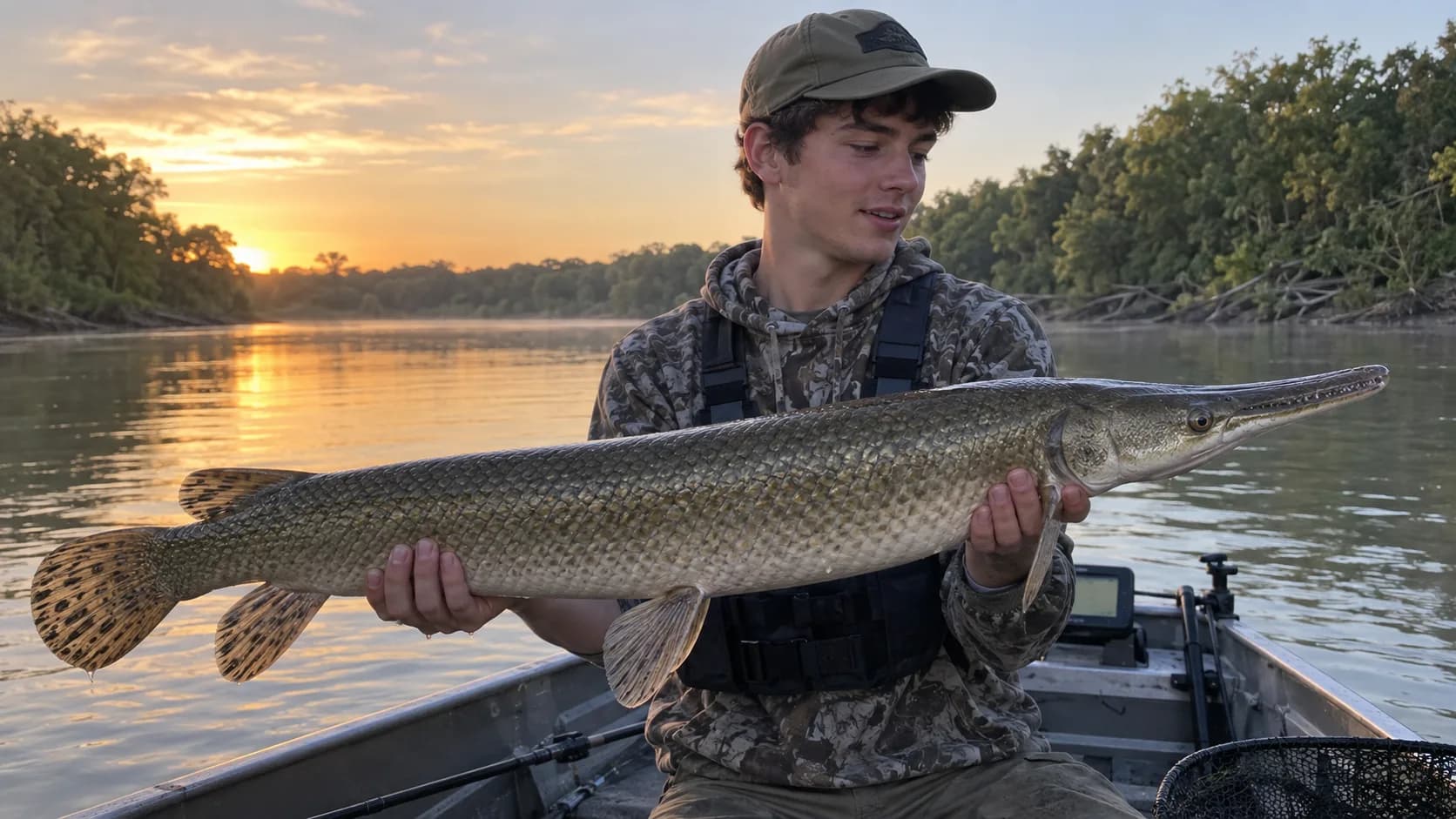
When 19-year-old Sebastian Benitez hauled a 42-inch gar from the Trinity River near Kaufman, the body was unmistakable: long, hard-sided and wrapped in diamond-shaped scales like armor. The head was where the familiar picture broke down. Its snout was neither the broad, blunt bill of an alligator gar nor the thin spear of a longnose gar. It stretched forward in a triangle, as if nature had stopped midway between two designs.
Texas Parks and Wildlife identified the catch as a natural hybrid between a female alligator gar and a male longnose gar. Benitez had used common carp for bait, according to NBC 5 Dallas–Fort Worth. His guide, known as Ceelow, reportedly sees thousands of gar in a year and had encountered only one other fish like it in roughly two decades.
That is the first reason this catch matters. The second is much older—older than Texas, older than the Trinity River and older than Tyrannosaurus rex.
The Fish Between Two Blueprints
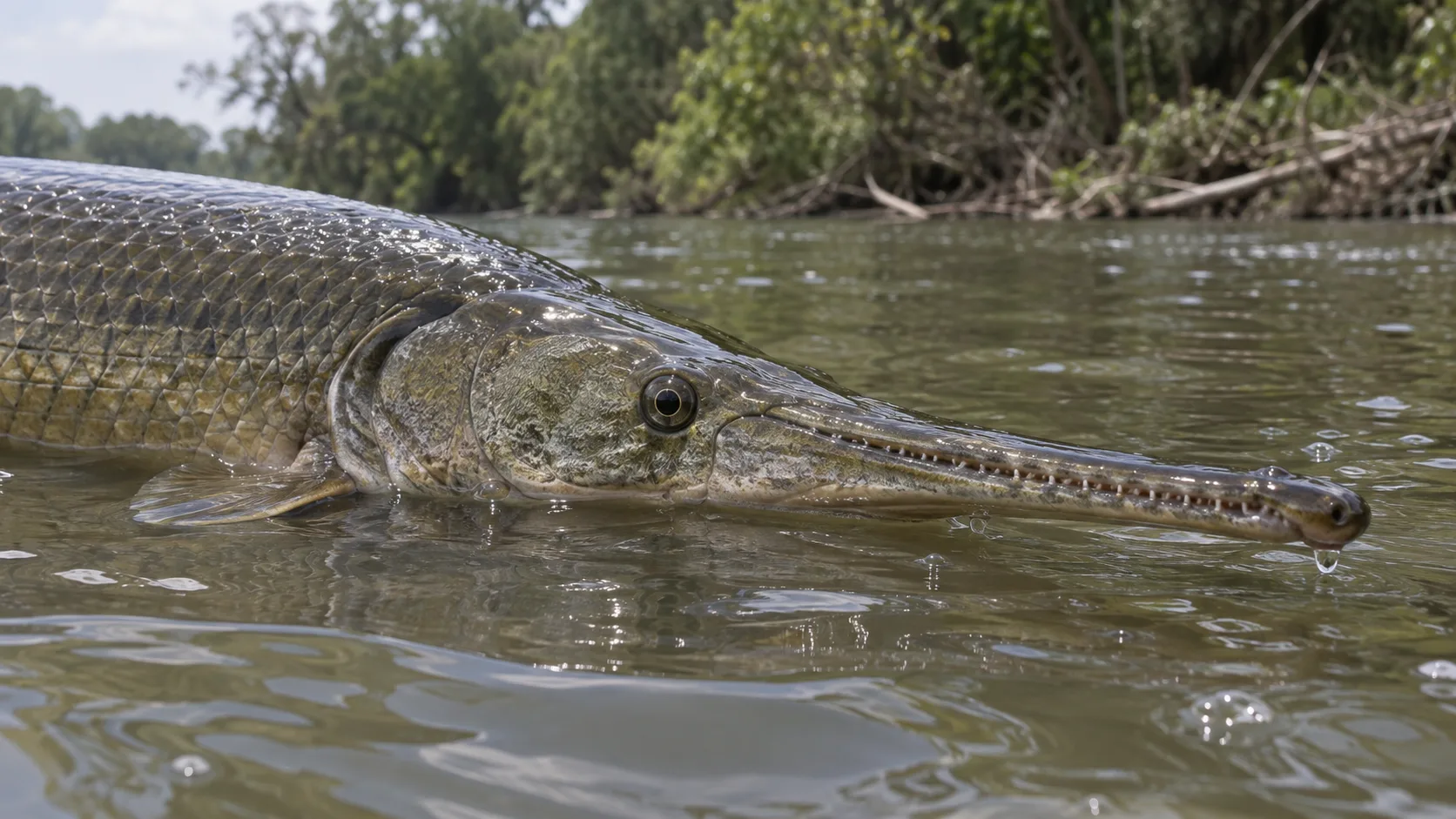
Texas has four native gar species: alligator, longnose, spotted and shortnose. All share the same ancient silhouette—a narrow body, a rounded tail and fins crowded near the rear—but their heads tell them apart. An adult alligator gar has a wide snout and two rows of teeth in the upper jaw. A longnose gar has a much slimmer body and a beak-like snout that can seem almost too delicate for the rest of the fish.
The hybrid carries an intermediate form. Dan Daugherty, science program director for the Texas Parks and Wildlife Department's Inland Fisheries Division, described the snout as triangular: broader than a longnose gar's needle, narrower than an alligator gar's bill. He estimated hybrids may represent roughly one fish in every 100 to 200—a rarity, but not a biological impossibility.
A Clue Is Not the Same as Proof
A strange-looking snout can alert an angler or biologist, but genetics is the firmer test. A 2017 study of natural Texas gar hybridization genetically confirmed 17 first-generation alligator–longnose hybrids, along with a longnose–spotted hybrid and several fish whose exact ancestry could not be resolved. Field identification based on shape correctly classified 21 of 26 suspected hybrids in the study. Useful—but not perfect.
The public reports about Benitez's fish say the state identified it as a hybrid, but they do not describe a separate DNA test on this individual catch. That distinction does not diminish the find. It shows why a fish like this makes scientists look twice: its body displays a family history that is usually hidden in the genome.
One Hundred Five Million Years Apart—and Still Compatible
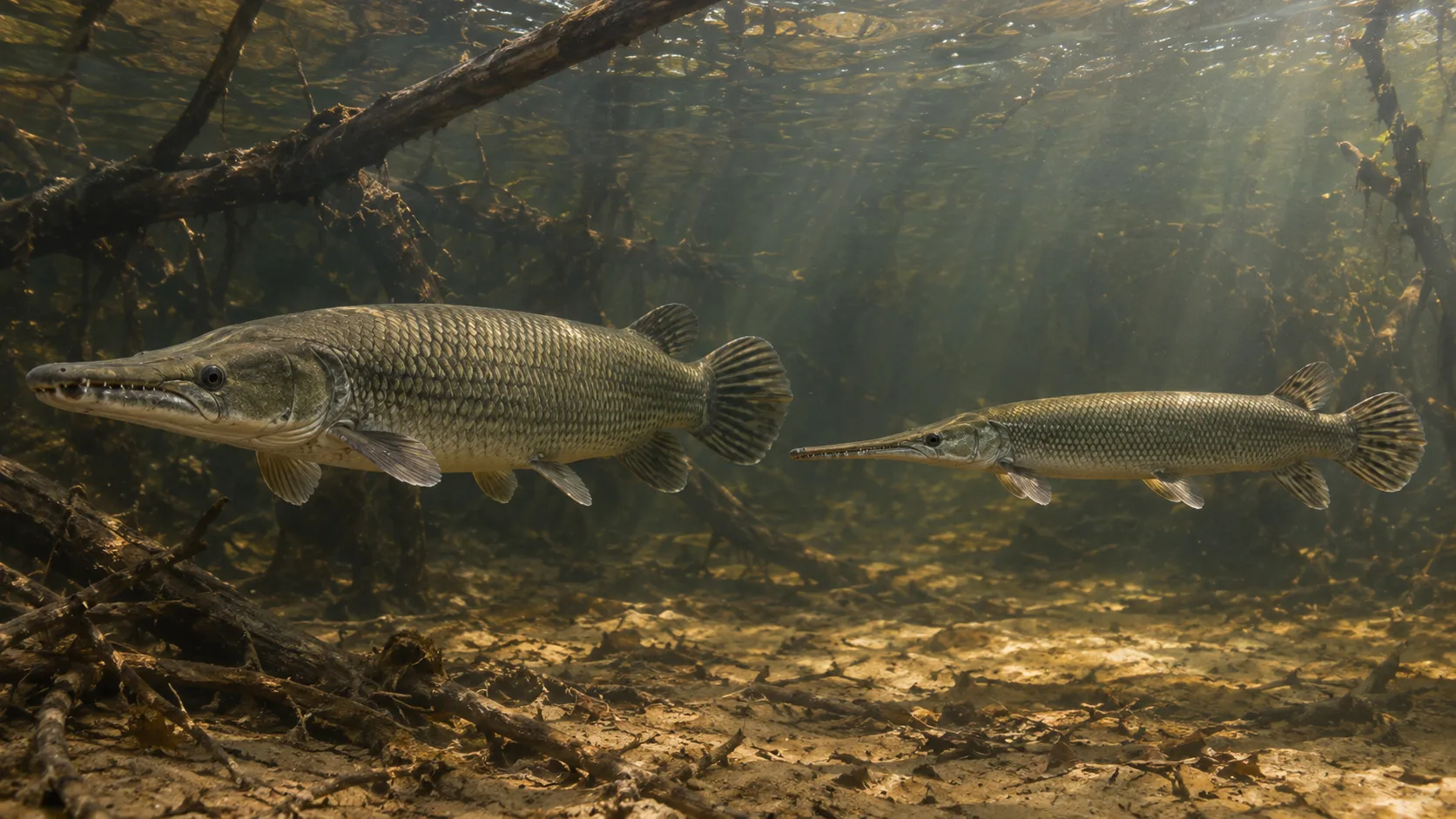
The two gar branches that produced this hybrid last shared a common ancestor about 105 million years ago, during the Cretaceous Period. By comparison, many animal lineages accumulate enough genetic differences over far shorter spans that successful reproduction between them becomes impossible. Gar appear to have taken another route.
In a 2024 study published in Evolution, researchers compared 1,105 protein-coding regions across hundreds of vertebrate species. Gars and sturgeons showed the lowest rates of molecular substitution among the jawed vertebrates examined. The authors also confirmed that deeply separated gar lineages can produce morphologically intermediate, fertile hybrids in the wild. They called it the oldest naturally hybridizing divergence known among eukaryotes—the vast group that includes animals, plants and fungi.
Slow genetic change does not mean gar stopped evolving. It means changes accumulated unusually slowly. The researchers speculate that highly effective DNA repair may be part of the explanation. With fewer incompatible changes piling up across the generations, lineages separated for more than 100 million years can remain surprisingly capable of crossing paths.
Why the Trinity River Matters
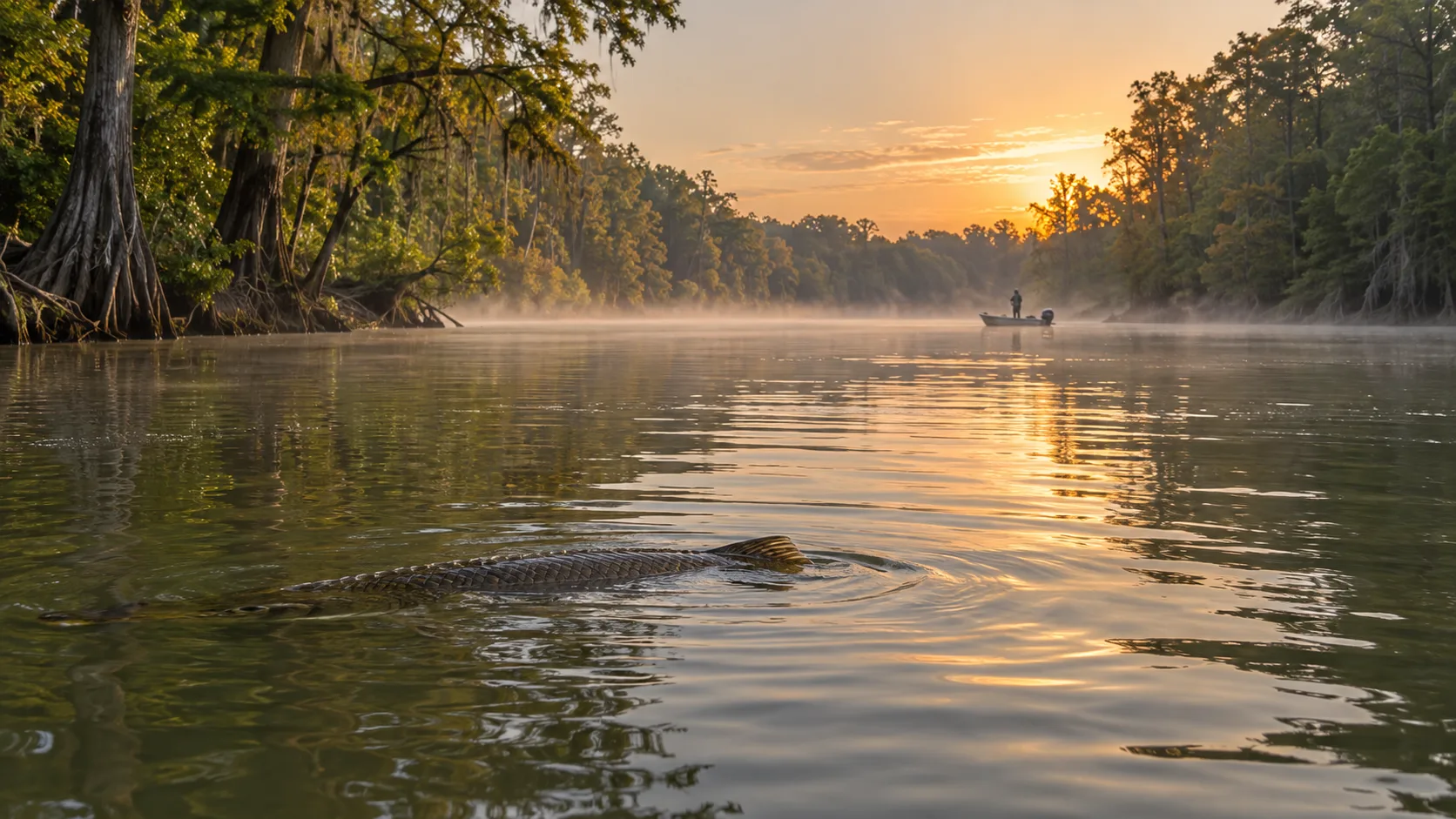
The Trinity is exactly the sort of place where an ancient surprise can surface. Texas Parks and Wildlife calls it a world-renowned alligator gar fishery, and biologists believe the river could produce a future world record. Alligator gar can reach eight feet and exceed 300 pounds, but the fishery's real strength is not merely size. It is continuity: a large river system where old fish still have room to grow, spawn and persist.
That persistence requires patience. Female alligator gar often need about a decade to mature, and successful spawning depends on warm spring floods reaching vegetated shallows. A seven-foot trophy may be around 40 years old. When mature fish disappear from a population, replacing them can take decades rather than seasons.
A Timely Trinity River Note
The timing of Benitez's catch adds a local footnote. Through September 30, the state is accepting applications for 150 special authorizations to harvest one alligator gar longer than 48 inches from a designated stretch of the Trinity. That zone runs from the Interstate 30 bridge in Dallas to the Interstate 10 bridge in Chambers County and includes Lake Livingston. The drawing applies specifically to alligator gar; it should not be read as guidance on how a hybrid catch would be classified. What it does show is how closely the river's trophy fishing and conservation are managed together.
A Better Catch Than a Record
Benitez has been pursuing gar for about three years. He did not need a record-book weight to make this fish memorable. Records tell us how large one animal became. A hybrid like this tells us how long a biological connection endured.
The fish in his hands carried the broad-headed alligator gar on one side of its family and the needle-nosed longnose gar on the other. Between them lay roughly 105 million years of separation—and, somehow, not enough separation to close the door completely.
The Trinity River is famous for fish big enough to make an angler step backward. This one accomplished something rarer. It made people lean closer.