AgriLife: Drought and Heat Cut Cotton Yields on the Texas Plains
AgriLife Extension specialists said Nov. 17 that southern Texas cotton yields were decent, but drought and heat slashed the Plains crop. USDA's Nov. 10 report forecast a Texas upland yield of 505 pounds per acre and 4.1 million bales, down from 628 pounds and 5.23 million bales in 2025.
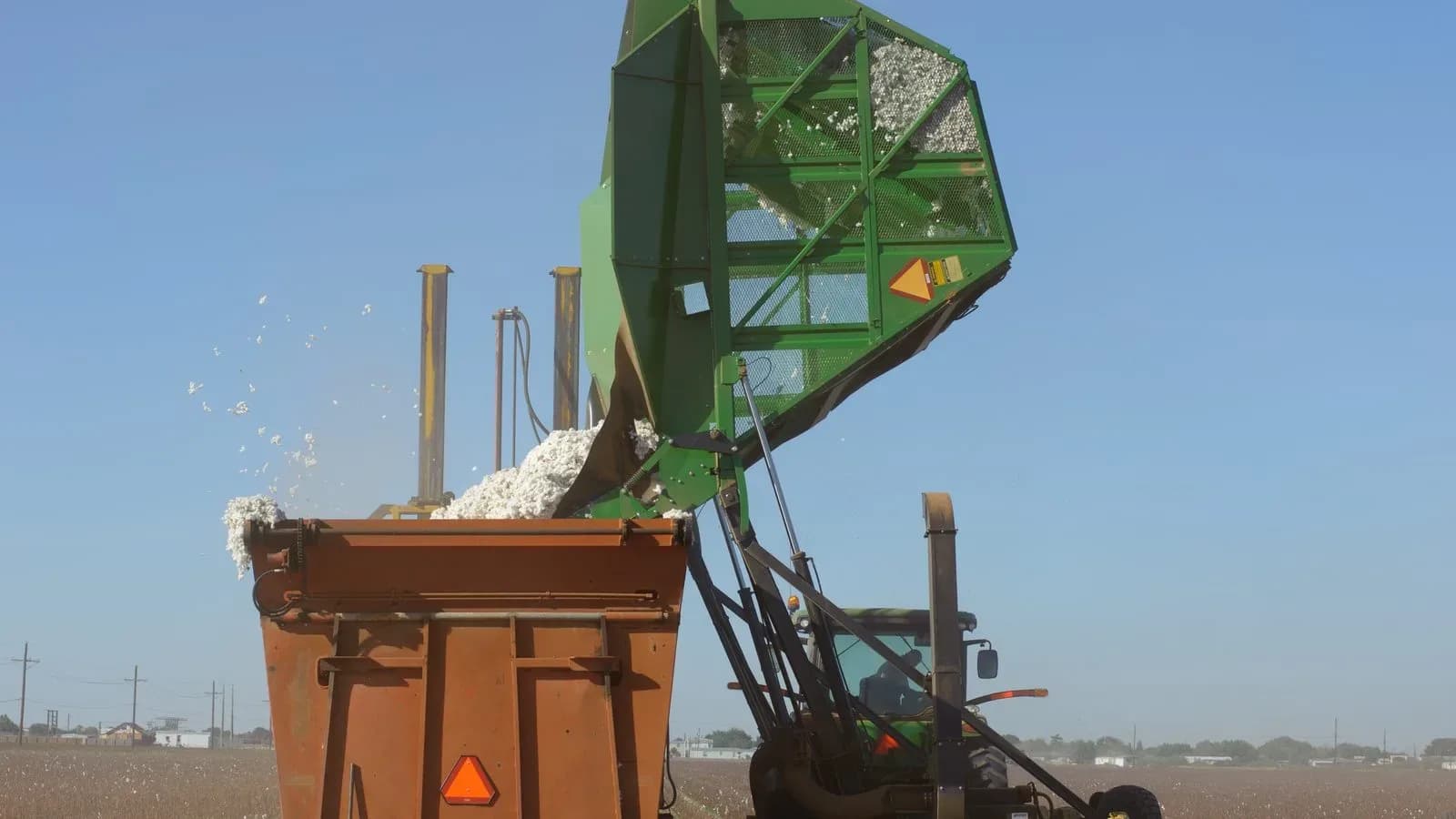
Cotton harvest is wrapping up across much of southern Texas with average yields, but drought and heat sharply reduced the crop on the High Plains, South Plains and Rolling Plains, where more than two-thirds of the state’s cotton is grown, Texas A&M AgriLife Extension Service specialists said in a Nov. 17 report.
The U.S. Department of Agriculture’s Nov. 10 Crop Production report gave Nov. 1 forecasts for Texas upland cotton, not the smaller Pima crop and not a final estimate. It forecast that growers would harvest 3.9 million upland acres, down slightly from 4.0 million acres in 2025. The Nov. 1 upland yield forecast was 505 pounds per harvested acre, down from 628 pounds in 2025 and from the department’s Oct. 1 forecast of 535 pounds. Upland production was forecast at 4.1 million 480-pound bales, down from 5.23 million bales in 2025.
Ben McKnight, an AgriLife Extension cotton specialist and associate professor in the Department of Soil and Crop Sciences at Bryan-College Station, said harvest is wrapping up across much of the state, with average yields across the southern growing regions.
Ken Legé, an AgriLife Extension cotton specialist and assistant professor in the same department at Lubbock, said the season was “the total opposite” in the High Plains, South Plains and Rolling Plains.
Southern and Central Texas Saw a Decent Crop
The Lower Rio Grande Valley and Coastal Bend are the first regions harvested in Texas. McKnight said dryland cotton in the Valley produced 700 to 1,200 pounds per acre, a good yield, and irrigated fields did even better. In the Coastal Bend, a late May rainfall dropped as much as 13 inches in one area and slowed growth while plants sat in water, but the crop recovered once the water drained. Most of that region’s fields are dryland and averaged 1,000 to 1,300 pounds per acre, he said.
The Corpus Christi classing office, which receives cotton from South, East and Central Texas, reported that it classed about 1.1 million bales and that the quality was good, with good micronaire and strength, McKnight said.
In the upper Gulf Coast, late-planted dryland fields that received good summer rainfall yielded 1,000 to 1,300 pounds per acre. On the Blackland Prairie, where most cotton is dryland and depends on timely rain, commercial yields ranged from 1,000 to 1,400 pounds per acre. McKnight said small-plot trials near Thrall at the Stiles Farm and at Temple produced “some of the best we’ve had since I started over six years ago.”
Dryland Failure and Lower Yields on the Plains
On the Texas Plains and in the Panhandle, cotton is about 70% dryland, with a wide range of irrigation capacity on the other 30%, Legé said. As of mid-November, fields north of Lubbock were about 60% harvested, while some growers south of Lubbock had not started, which he said is unusual for this time of year.
Much of the region’s cotton suffered under drought and heat. The soil profile was dry at the start of the season, little rain fell in early summer, and conditions then turned extremely hot and dry.
“Many areas went 60 to 90 days without meaningful rain, and there was no subsoil moisture to fall back on,” Legé said. “We knew by mid-August that the dryland crop wasn’t going to make it to harvest, and 90% has now been abandoned and shredded.”
Most irrigated acres are on the “light water” end, about 1.5 to 2.5 gallons per minute per acre, rather than higher capacities of 4 to 5 or more gallons per minute per acre. Legé said the light-water pivots saw more abandoned acres than he expected because they could not keep up with plant water demand. Overall irrigated yields were about 25% to 30% below normal, he said, with a field that usually makes 1,000 pounds per acre making 700 to 750 pounds. Most irrigated cotton is yielding 750 to 1,250 pounds per acre, though one trial in Hutchinson County saw 1,500 pounds.
When rain finally arrived in mid-September, after bolls had opened, exposure lowered color grade and leaf grade, Legé said. Repeated rain and humidity also slowed cotton strippers, which need relative humidity at or below 50%, and fiber quality has kept slipping the longer the crop sits in the field. Harvest could continue into the first of the year.
“We just don’t know how much of the irrigated acres will be abandoned,” he said. “Planted acres were up from the past few years, but the question is how much will not be harvested, and that is changing by the day.”
AgriLife Extension district reports included in the same article pointed to the same split. South Plains reporters called harvest totals dismal, and Rolling Plains reporters said gin numbers in parts of that district had run at 15% of a normal year so far. Those are field accounts of an unfinished harvest, not a final USDA estimate. The department’s Nov. 10 figures already show a sharp drop from 2025 and can still change as more of the Plains crop is, or is not, brought in.