Delaware’s First Urban Forest Was Already Full of Trees. The Hard Part Is Saving It.
Lewes saved its last forest from development. Now volunteers face invasive plants, groundwater questions and a restoration that may take a decade.
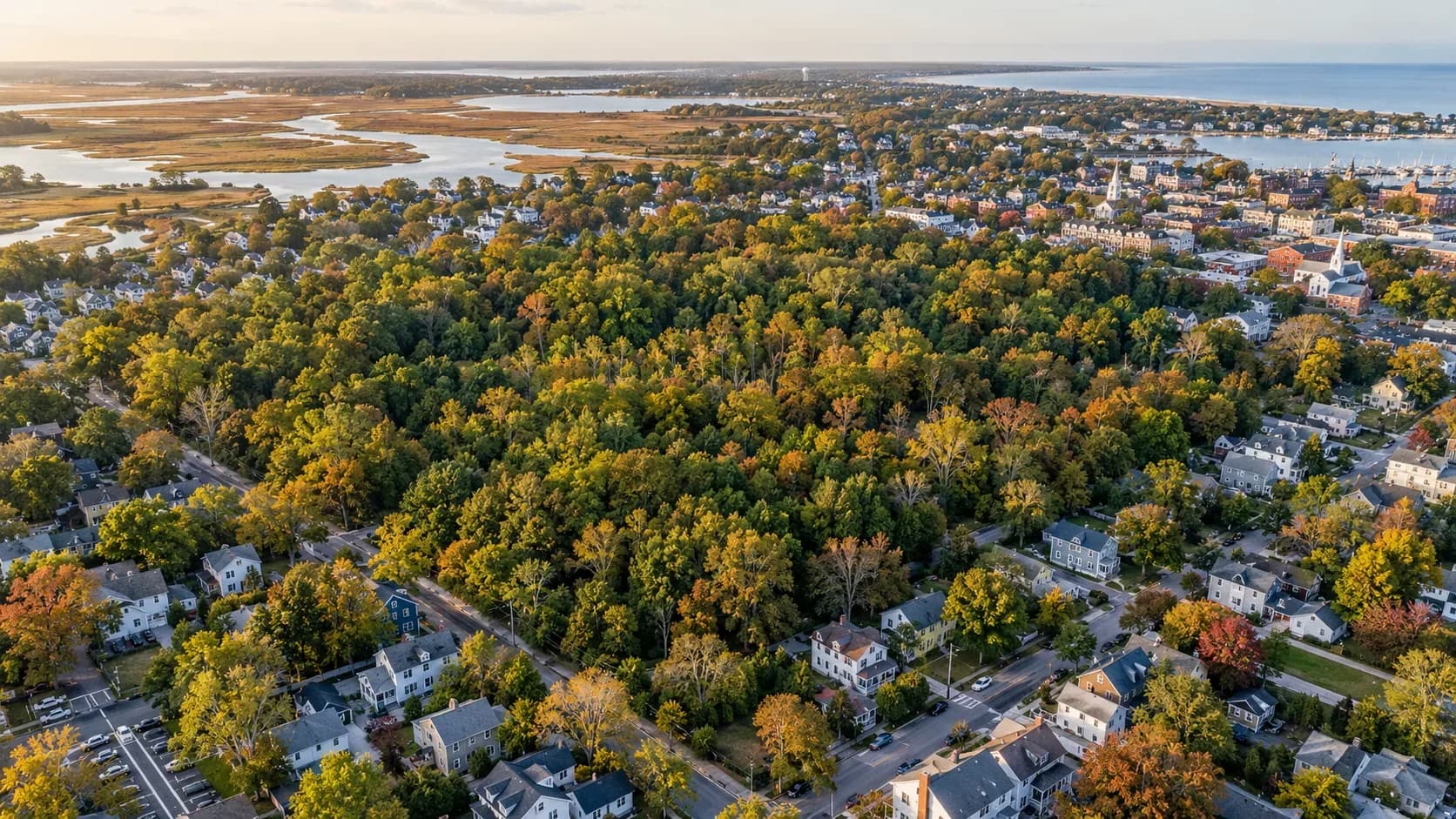
From above, the Fourth Street Preserve looks like something already saved: a thick green block of trees surrounded by the streets and rooftops of Lewes.
But buying a forest and restoring one are not the same thing.
The 30-acre property is now being developed as Delaware’s first urban community forest. The work involves removing invasive plants, rebuilding a native understory, studying groundwater, creating wetlands and trails, protecting a bald-eagle nest and solving drainage questions that existed long before the city took ownership.
The trees were only the beginning.
An $8 million decision not to build
The preserve sits only a few blocks from downtown Lewes and was described during the campaign as the city’s last remaining forest and open space. The property is also tied to the community’s earliest history. Organizers say it was among the first local properties deeded to a settler, dating to 1670.
Beginning in 2023, the Greater Lewes Foundation led a 23-month campaign to purchase the property from the Rollins Family Trust. By June 2025, the campaign had reached its $8 million goal.
City documents show that the purchase was funded by $4.2 million in public money, $1.2 million in foundation grants and $2.6 million in private donations.
The City of Lewes formally became the owner on September 15, 2025. The Delaware Forest Service holds a conservation easement that permanently restricts how the land can be used.
There will be no subdivision, commercial complex, parking lot or recreation building. Permitted improvements are intentionally modest: unpaved walking trails, benches, educational signs, small ditch crossings and a map kiosk. Bicycles will not be allowed.
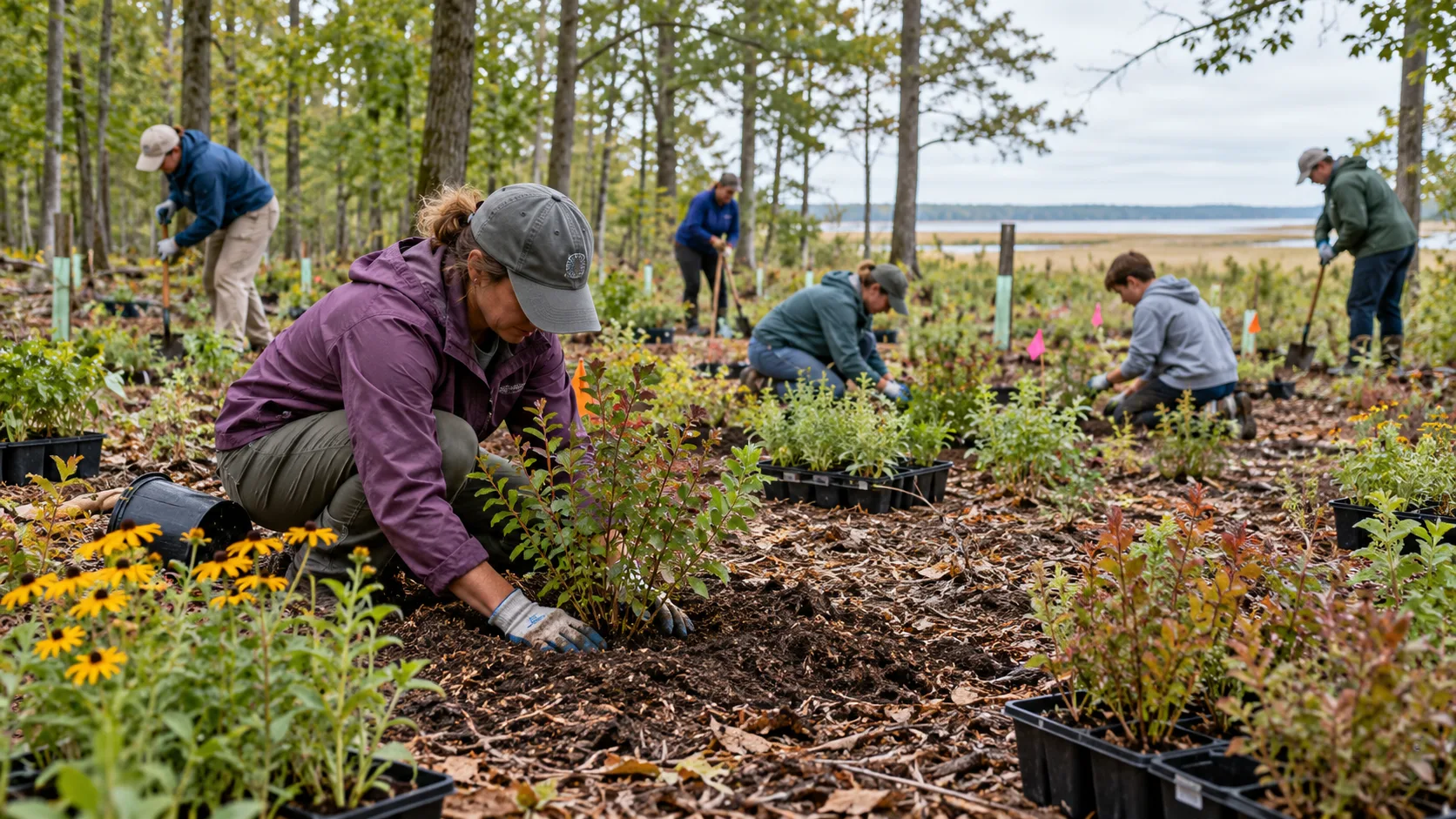
Restoring an urban forest requires new native trees, shrubs and pollinator plants—not merely protecting the trees already standing.
Why an existing forest needs to be restored
Leaving the property untouched might sound like the most natural choice. The problem is that the forest is already out of balance.
English ivy, periwinkle, autumn olive and other invasive plants have spread through the property, crowding out the native trees, shrubs and groundcover that local insects, birds and other wildlife depend upon.
Restoration crews and volunteers are removing those plants in stages rather than attempting to clear the property all at once. Native species will then be replanted over several years.
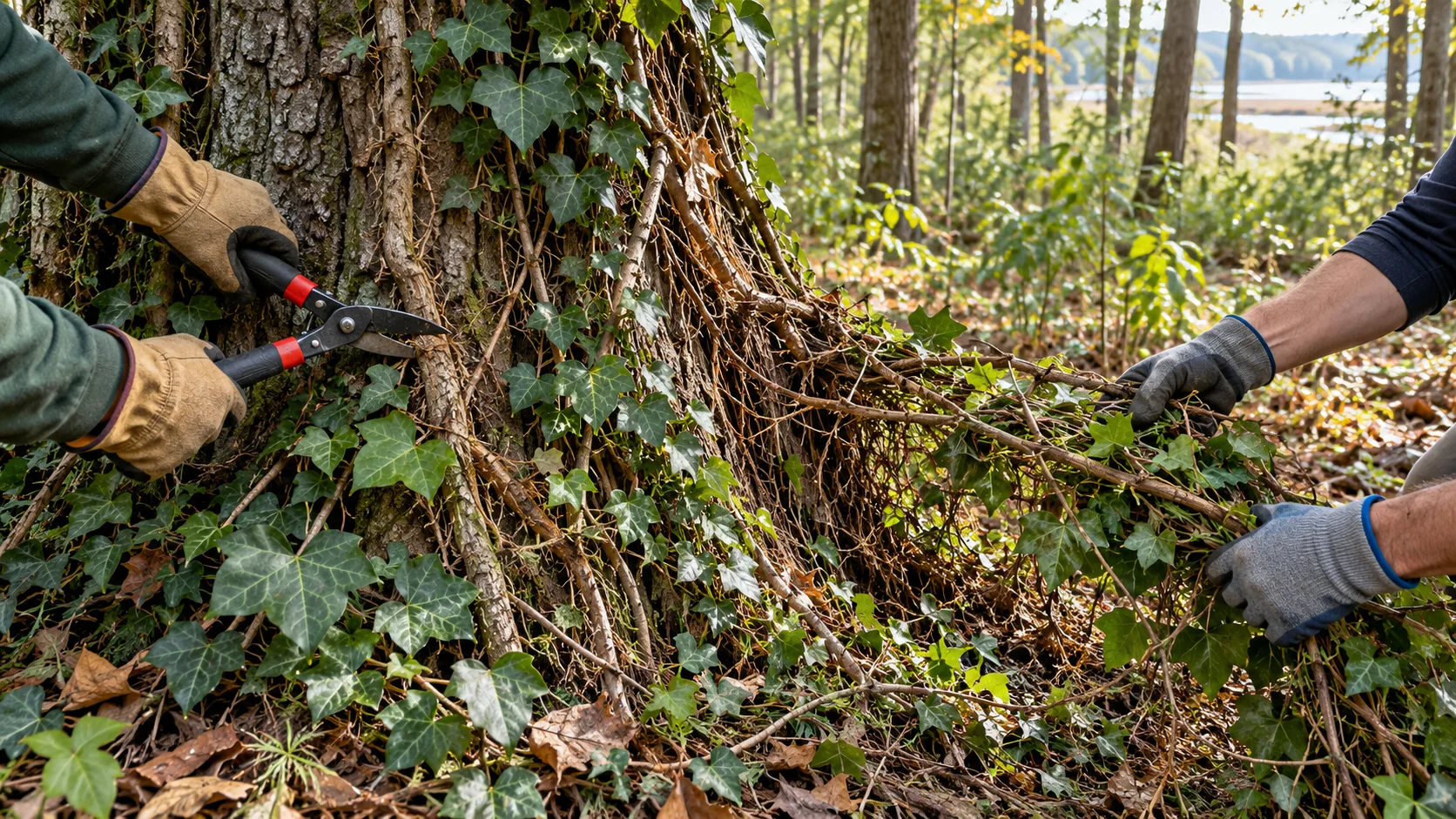
Invasive vines can smother mature trees and crowd out the native understory needed by insects, birds and other wildlife.
During a volunteer workday in October, more than 40 people planted over 780 trees, shrubs and plants. Organizers reportedly had to turn away additional volunteers because more people arrived than the site could accommodate safely.
The new plantings include pollinator drifts—small concentrations of native species intended to produce seeds and gradually spread a healthier layer of vegetation through the forest.
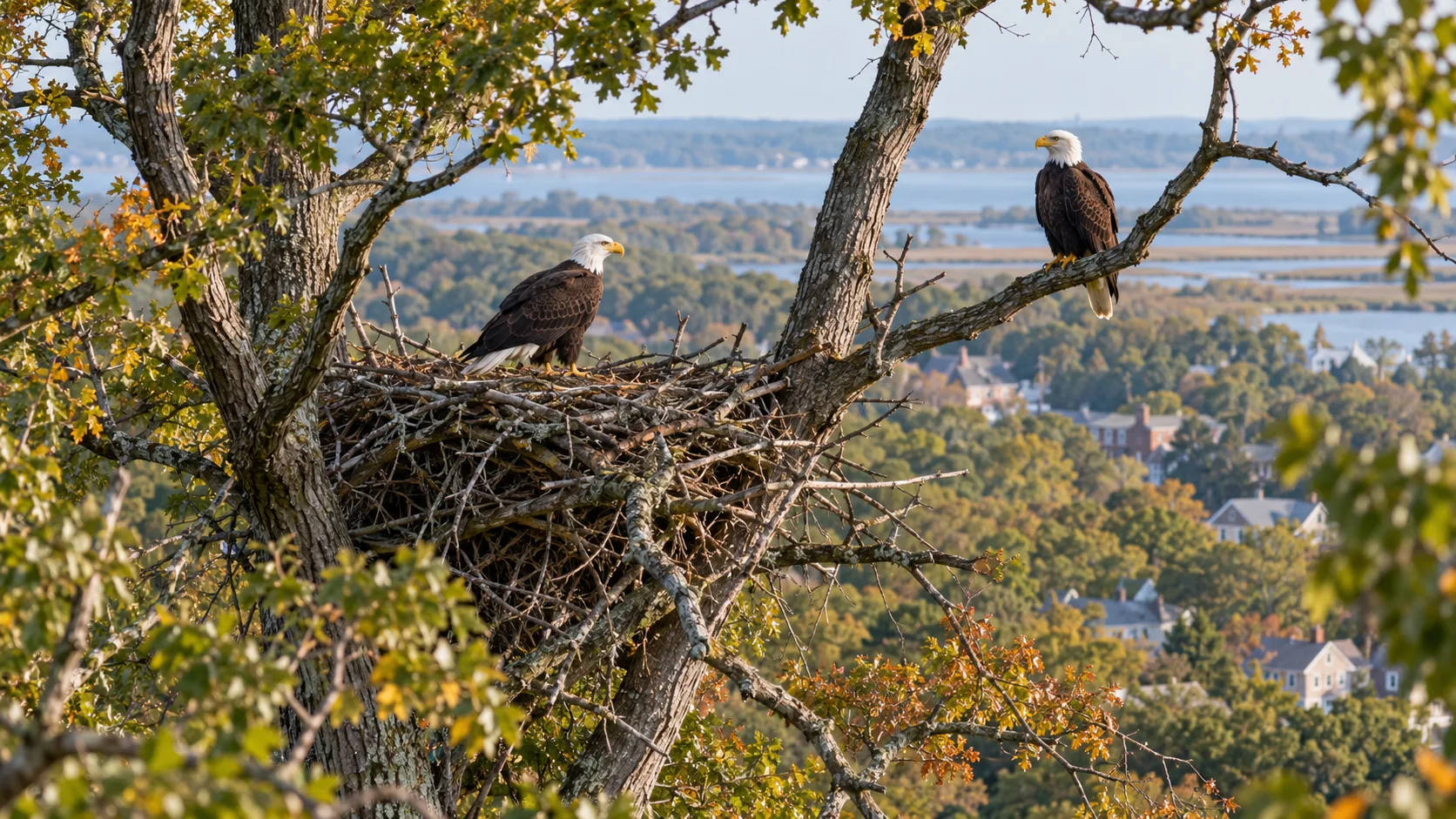
Two residents were already there
A pair of bald eagles has built a nest high in one of the preserve’s mature trees.
That discovery added another layer to the restoration plan. City employees, contractors and volunteers must limit noise and other disturbance around the nesting area while continuing work elsewhere on the property.
The nest also helps explain why the preserve matters. This is not an untouched wilderness far from town. It is habitat surviving inside a growing coastal community.
The water questions are not settled
Approximately 22 acres west of Fourth Street are expected to be addressed first. The remaining eight acres on the eastern side require more complicated groundwater, wetland and engineering work.
Small monitoring wells have been installed as part of a groundwater study. Officials expect to learn more as data is collected over roughly a year.
Old agricultural ditches also cross the property. The restoration team wants to install small crossings so visitors can move through the preserve, but approval of those structures remains unresolved.
Neighbors have previously raised concerns about long-standing drainage problems, blocked culverts, flooding, property boundaries and privacy. Plans call for native evergreen buffers along neighboring property lines, but the drainage questions make the groundwater study more than an academic exercise.
A forest saved in years, restored in decades
The initial restoration is estimated to cost another $825,000 beyond the purchase price.
The plan allocates about $300,000 for trails, crossings, planting and engineering; $210,000 for groundwater work and a constructed wetland; $110,000 for educational signs; $65,000 for professional work; and $140,000 for continued planting and maintenance.
If work proceeds as expected, limited public access to the western portion could begin in early 2027. The basic restoration may require two to three years. Organizers expect comprehensive planting and maintenance to continue for roughly another decade.
That may be the most important lesson inside Delaware’s first urban forest.
The community raised $8 million to prevent 30 acres from becoming something else. Now it must spend years helping that land become a healthier version of what it already appears to be.