Sea Rim State Park, Near Port Arthur, Is Where the Marsh Meets the Gulf
Fall migrants rest on 4,141 acres of beach and marsh at the far southeast corner of Texas. Here is what to see, what it costs and what is closed.
Not far from Port Arthur, the Texas coast turns to marsh. Sea Rim State Park sits on that edge, and fall migration is a good reason to go.
Texas Parks and Wildlife describes the park as being "at the far southeast corner of Texas." Its nature page explains the name: it is where salt marsh meets the sea. The park covers 4,141 acres of remote coastal land, bordered by the McFaddin National Wildlife Refuge, the Gulf Intracoastal Waterway and the Sabine Ship Channel. State Highway 87 splits it in two. The Beach Unit has nearly 2 miles of Gulf beach and dunes. The Marsh Unit has lagoons, wetlands, tidal drainages and two lakes, Fence Lake and Salt Lake.
Why go in fall
Birds are the main reason. According to TPWD, birds are the animals visitors see most often in both the dunes and the marsh, and many migrants on the Central Flyway stop at Sea Rim to rest. Most of the birds in the marsh are migrants, with ducks and geese the most common waterfowl. In the lakes and ponds, birders may see roseate spoonbills, several kinds of egrets, and great blue, little blue, green and night herons. The park posts a fall bird checklist on its nature page.
The weather helps too. The park page lists the busy season as April through July. It also says the first freeze usually comes in mid-November and that September is the wettest month. Mosquitoes "can be a nuisance year-round" because the park sits in a marsh, so bring bug spray.
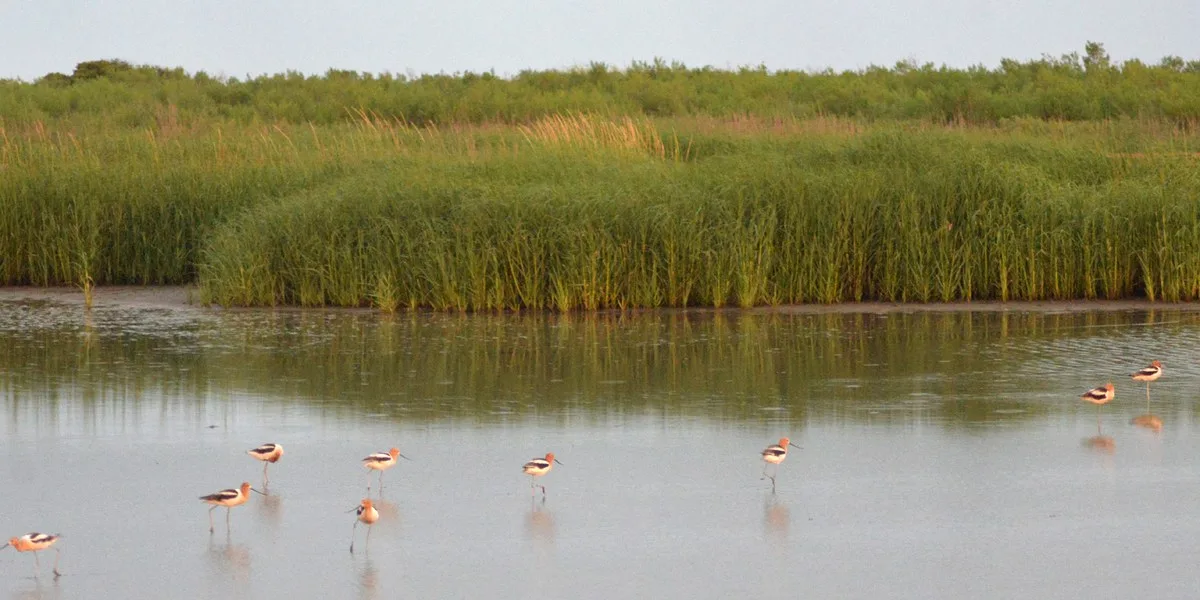
An American avocet at Sea Rim State Park, June 2025. Photo: William L. Farr / Wikimedia Commons, CC BY 4.0.
What to do there
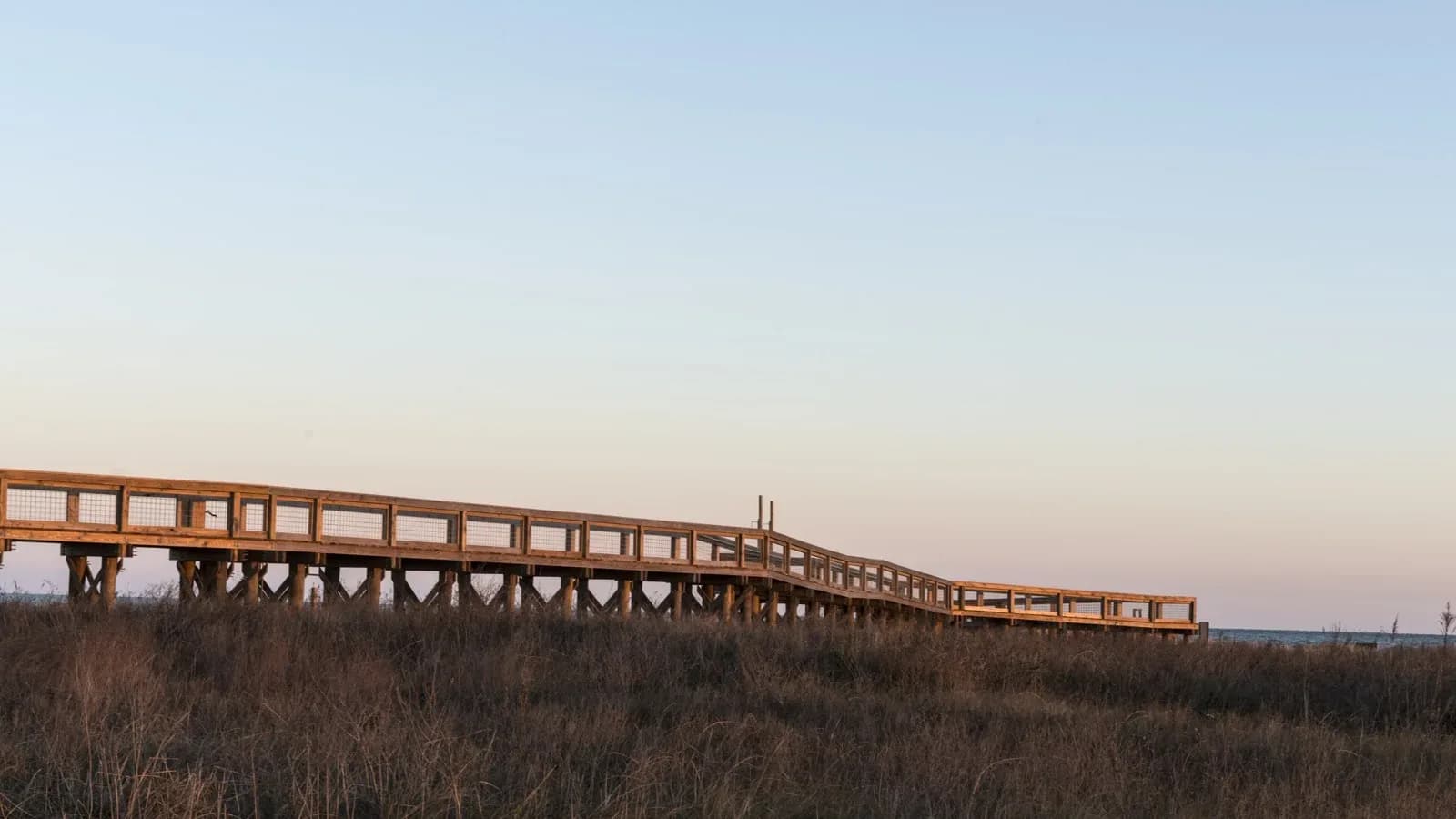
The easiest walk is the Gambusia Nature Trail Boardwalk, 0.9 mile through the marsh. It is named for the little Gambusia fish you'll see along the way. A 0.1-mile dune boardwalk connects the marsh to the beach. The trails page says the northeast end of the Gambusia boardwalk is a quiet spot for birding.
Paddlers have three marked water trails. The trails page lists them at 1.8, 4.7 and 11.7 miles round trip, while the park's main page gives different distances for the easy and advanced trails. There is a wildlife viewing platform on Fence Lake, and the trails page marks a spot known for blue crabs.
Anglers can fish the surf or the marsh, and TPWD says you don't need a license to fish from shore in a state park. The park has a boat ramp and lends fishing gear. Red drum, speckled trout and flounder live in its lakes and bayous, according to the nature page.
Plan ahead
Hours and fees: The park is open daily from 6 a.m. to 10 p.m. Entry is $4 a day for adults and free for children 12 and under.
Camping: The campsite page lists 15 sites with electricity at $20 a night and 75 drive-up primitive sites on the West Beach at $10 a night, plus the entrance fee. The primitive sites can't be reserved and close during extreme high tides. The floating boat-in campsite is listed as closed for repairs.
Beach closure: A park alert dated Feb. 11, 2026, says the East Beach is closed to camping and vehicles because of a wash-out.
Wildlife: Alligators live in the park, and TPWD posts alligator safety tips.
Contact: 19335 S. Gulfway Drive, Sabine Pass. The park office is at (409) 971-2559, and TPWD recommends reservations for both camping and day use.
A park that came back
The park history says the state bought the land in 1972, and the park opened in 1977. Hurricane Rita damaged it badly in 2005. In September 2008, it was two weeks from reopening when Hurricane Ike hit. It reopened on a limited basis in 2010, and in June 2014 staff opened a new camping loop, a cabin and an elevated dune boardwalk.
The history page asks visitors who find artifacts on the beach to leave them in place and tell park staff. "Please don't pocket the past!" it says. That's sound advice. Enjoy the place, leave it as you found it, and give thanks for a wild edge of Texas that keeps coming back after every storm.
Related on Dock Line: Lost Maples Starts Its 2026 Fall Color Reports. The Maples Are Still Green.; Texas Pollinator BioBlitz Starts Friday. Here Is How to Join.