Texas Kids Can Draw a Fish for Scholarships This Year. The Special Species Is the American Eel
The Texas Fish Art Contest is open to K-12 students through Feb. 28. Here is how to enter, what the rules require, and why the 2027 focus species is a fish most Texans have never seen.
Here is a project for the kitchen table this winter: pick a Texas fish, learn where it lives, and draw it well enough to win.
The Texas Freshwater Fisheries Center in Athens has opened entries for the Texas division of Wildlife Forever’s 2027 Fish Art Contest. The contest is open to Texas students in kindergarten through 12th grade, and entries are due by Feb. 28, 2027, according to the contest page.
The Texas contest turns 20 in 2027. Texas Parks and Wildlife credits Richard M. (Dick) Hart, a conservation leader who helped bring the program to the state and who believed educators are the key to inspiring young people toward conservation.
Why it is worth the effort
"As they research their chosen fish species and begin to learn about its habitat, they begin to find a personal connection to their fish," said Darrel Malone, education and interpretation coordinator at the center. "The Fish Art Contest is more than just drawing a fish; it is establishing a bond with the outdoors."
Texas winners receive a scholarship investment, an exhibit at the fisheries center, an invitation to a family fishing celebration and a spot in the department’s Fish Art Contest Flickr album, TPWD said. Texas first-place winners in each age group advance to the national contest.
How to enter
Pick a fish from the list. Art must show a species from the approved freshwater or saltwater lists, in its natural habitat. Goldfish, guppies, bettas and koi are not eligible.
Make it original. Artwork must be the student’s own hand-drawn creation. Photos and past entries may be used for inspiration only, and the contest warns that closely copying the pose, lighting and composition of another image counts as plagiarism even if it is redrawn by hand.
Keep the front clean. No signatures or initials on the front, and no writing unless it relates to the art, like the name of a boat.
Write, if you are in grades 4-12. Older students must also submit a one-page original creative writing piece about their fish.
Scan and submit online. Entries must be 2D and submitted digitally through the online form. Scan rather than photograph the art, crop it so the art fills the frame, and save it as a PNG or JPG. The form requires an email and mailing address and signatures from both the student and a supervising adult.
Categories are kindergarten, grades 1-3, 4-6, 7-9 and 10-12. Each student may submit one entry per year. Teachers and homeschool parents can use a group entry form for several students at once.
Meet the American eel
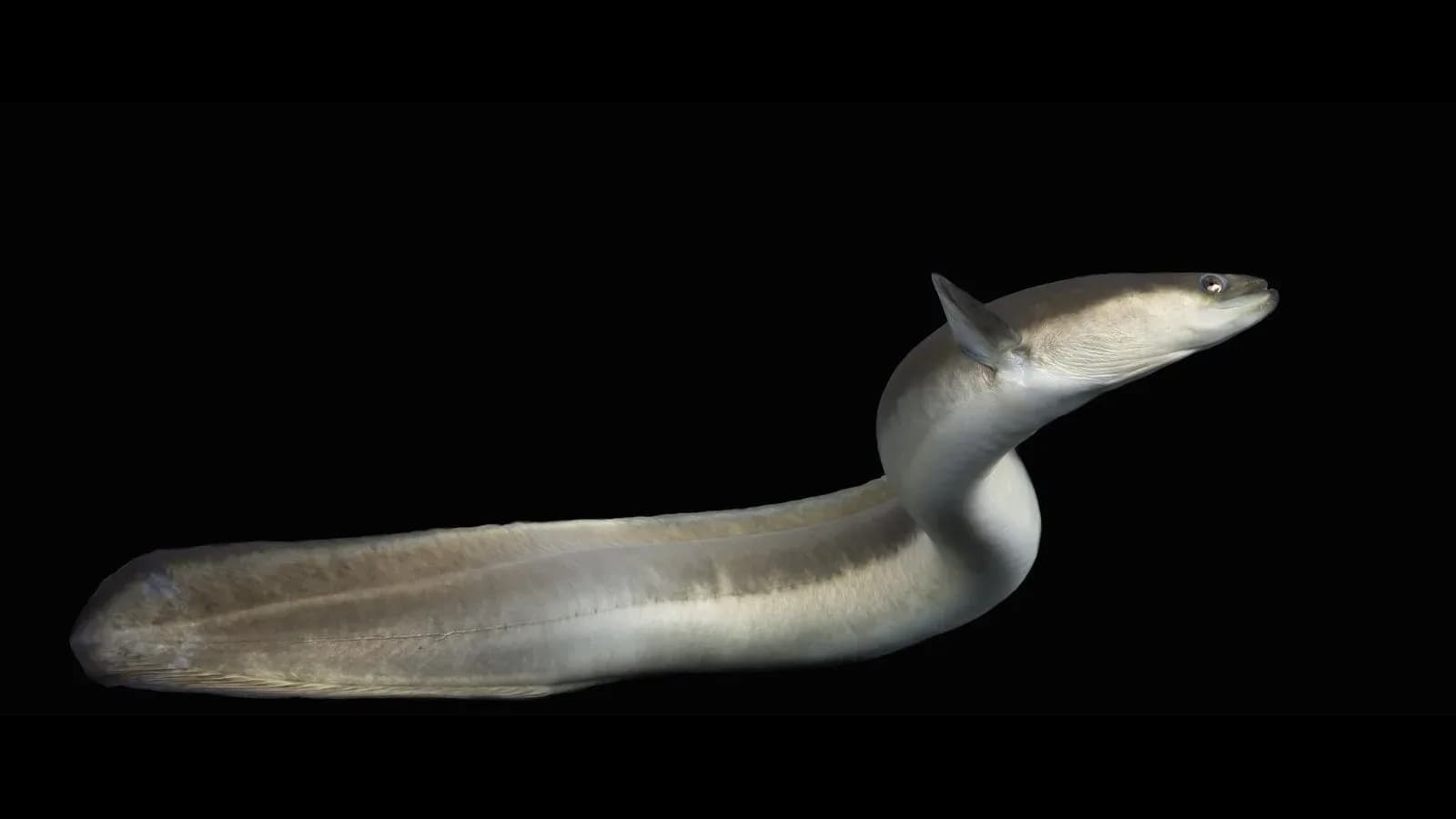
Each year the Texas contest names a Special Species Award, and for 2027 it is the American eel. One winner will be chosen from all entries. The eel must be correctly labeled and identifiable, but no extra paperwork is required.
It is a strange and remarkable fish. According to TPWD’s American eel species page, it has a slender, snakelike body with scales so small the fish may look naked, and a long dorsal fin that runs into a matching fin underneath. Its back runs olive green to brown, fading to greenish yellow on the sides and light gray or white below.
American eels spawn in winter in the Sargasso Sea, a tropical area northeast of Cuba. The young drift toward the mainland, turn into "glass eels" or "elvers," and enter fresh water. Females push far up rivers; males stay closer to the coast. Eels hide under rocks by day and feed at night.
The eel is native to much of Texas, but dams that block its upstream migrations have eliminated it from most of Central and West Texas, TPWD says. Most Texas eels are caught by anglers fishing for something else. The state rod-and-reel record is 6.45 pounds and 42 inches.
Take them fishing, too
The best research for a fish drawing is a day on the water. If you need a place to start, Texas state parks let you fish from the bank or pier without a license.
Questions about the contest go to Darrel Malone at [email protected] or (903) 286-7883, according to the contest page.
Children who learn the name of a fish, where it swims and what it needs tend to grow into adults who take care of creation. A pencil, a field guide and a winter afternoon are a good place to begin.