Her Dad Tagged Them Before She Was Born. Now She's Catching the Same Alligators.
A long-running East Texas alligator study turned into a remarkable father-daughter story when Autumn Webb helped recapture animals her father had tagged before she was born.
A long-running East Texas alligator study turned into a remarkable father-daughter story when Autumn Webb helped recapture animals her father had tagged before she was born.
A lot of wildlife research is important without being especially personal. Numbers are collected. Tags are placed. Data goes into notebooks, then computers, then reports. The work matters, but most of the time it does not come wrapped in a story people can feel. This one does.
The Original Study
In the early 2000s, Keith Webb was a graduate student at Stephen F. Austin State University studying inland alligators around B.A. Steinhagen Reservoir in East Texas. Texas Parks and Wildlife wanted better information about inland alligator populations so future decisions could be based on actual field data rather than assumptions borrowed from coastal habitats. Over the course of that research, Webb and his team captured and marked 130 alligators, using unique tail-scute patterns and tags so the animals could be identified again years later.

That alone is a solid science story. But time had another idea.
The Full-Circle Moment
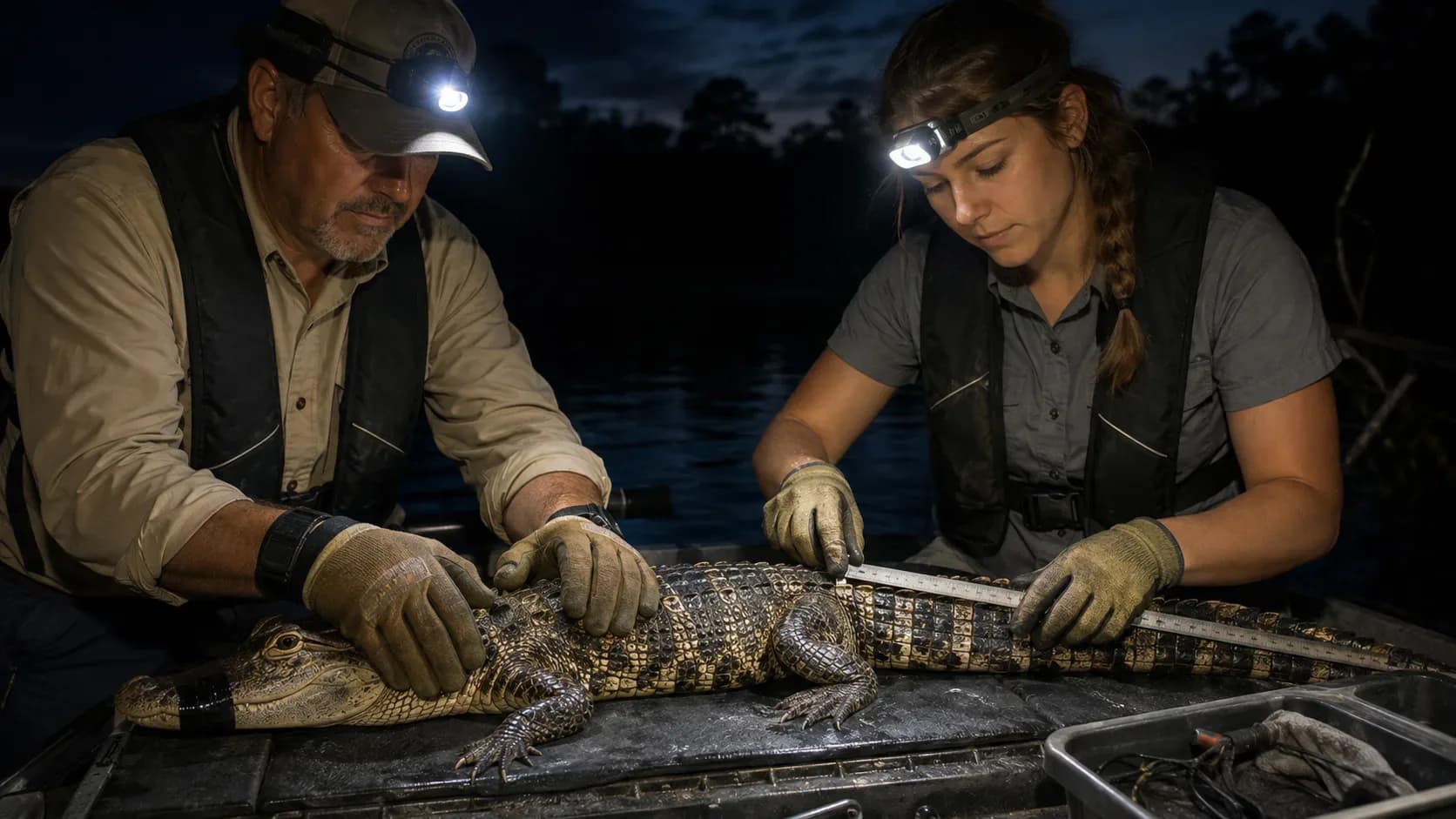
More than 20 years later, Webb's daughter, Autumn, is now a student at Texas A&M and spent this summer interning with Texas Parks and Wildlife. She went into the same East Texas wetlands and helped recapture two of the same alligators her father had handled during that earlier work. One of them still had a PIT identification tag that responded 23 years after it was first implanted.
If that sounds like something made up for a movie script, that is probably because most scientific work is not designed to deliver a full-circle moment like that. Researchers tag animals so somebody—someday—can learn something from what comes next. In this case, what came next was the next generation of the same family.
There is another detail that makes the story even better. When Keith Webb finished his graduate thesis in 2005, he thanked his unborn baby girl in the acknowledgments. More than two decades later, that baby girl was standing in the same water helping continue the same line of work.

Her mother, Andrea, is also a wildlife biologist. This summer the family was able to work together in the field—three people connected by both family and the same stretch of East Texas water.
The Science Has Kept Moving
According to reporting on the current TPWD project, researchers have tagged more than 250 alligators over the last three summers, including about 175 this summer alone. The work now includes GPS transmitters on larger animals so biologists can better understand movement, home range, nesting areas, growth, and overall population size.
The aim is not just to satisfy curiosity. Better data helps wildlife managers make better decisions about conservation, public safety, and long-term harvest management. That last part matters in Texas, where alligator season still carries a certain mystique. In the state's core counties, the 2026 alligator season runs from September 10 through September 30, and Jasper and Tyler counties—the area surrounding B.A. Steinhagen Reservoir—are part of that core range.
So this story lands at an interesting moment: right as many Texans are reminded that alligators are not just symbols of the swamp, but a living resource the state actively studies and manages.
Why It Matters Beyond the Water
We live in a time when a lot of work feels disposable. Projects are started and forgotten. Records vanish into old hard drives. People change jobs, institutions move on, and the thread gets lost. That is part of what makes this story so satisfying. Keith Webb's research mattered long after he finished it. The animals were still out there. The tags still meant something. The notes were still useful. And one day his daughter came back and discovered that good work can outlast the person who started it.

A 23-year-old PIT tag is proof that science sometimes has to wait. It waits through careers, through changing technology, through childhoods, and sometimes long enough for the next generation to step into the boat.
That is why this is more than an outdoor story or a wildlife story. It is a reminder that some of the best work people do is meant to benefit somebody they may never meet—or, in a rare and beautiful twist, somebody they raised.
Her dad tagged them before she was born. Now she is catching the same alligators. That is East Texas science at its best: practical, patient, a little muddy, and unexpectedly moving.