Monarchs Are Funneling Through Texas Now. Here Is Where and How to See Them.
The fall monarch migration is at its height across West-Central Texas, with a coastal flyway still to come. Some have already reached Mexico.
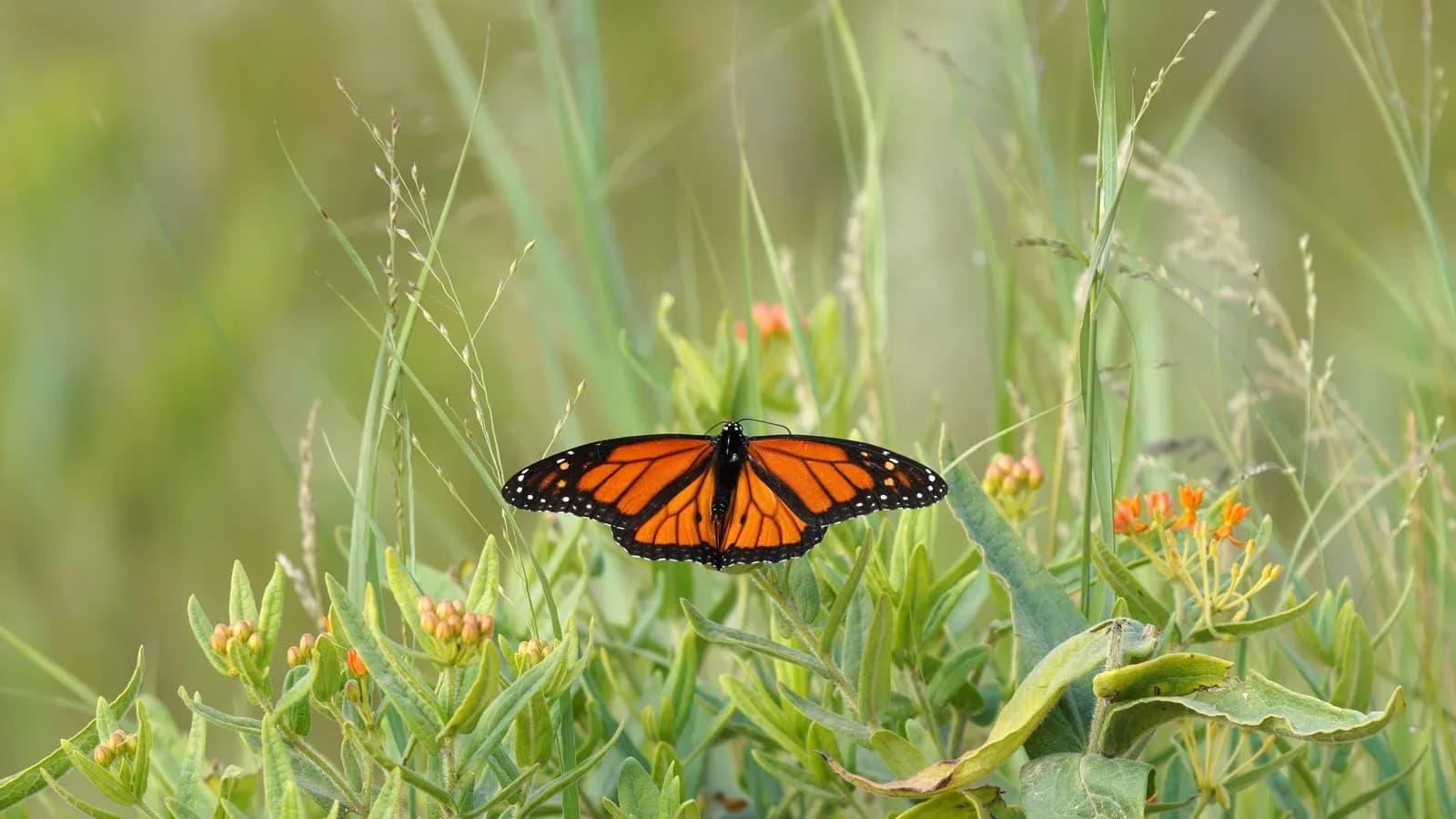
Every fall, monarch butterflies from the northern United States and Canada funnel through Texas on their way to mountain forests in central Mexico. This is the time to look up.
Texas sits between the monarchs' main breeding grounds in the north and their wintering sites in Mexico, so they pass through in both fall and spring, according to Texas Parks and Wildlife.
Two flyways
In the fall, monarchs follow two main routes through Texas. One is a path about 300 miles wide from Wichita Falls to Eagle Pass. Monarchs start entering it in the last days of September, and TPWD's monarch page says most have passed into Mexico by early November. (The agency's teacher guide puts it earlier, by the third week of October.)
The second follows the Texas coast and runs roughly from the third week of October to mid-November.
TPWD's guide for teachers says the biggest numbers in West-Central Texas, from San Angelo to Brackettville to Eagle Pass, come in the second and third weeks of October. State parks in that zone and spots along the Devils, Llano, Frio and Sabinal rivers are good places to look.
Where the migration is now
Journey North, a community science project, reported Oct. 11 that monarchs have already reached Mexico, with roosts reported in Coahuila on Oct. 5 and 7. Most recent roost reports have come from Kansas, Oklahoma and Texas. Of 67 roost reports between Oct. 1 and Oct. 10, 20 came from Texas, some estimating thousands of butterflies.
"They stopped here during their migration about four years ago, also, the same trees," one observer in Seminole, Texas, wrote Oct. 9.
How to see them
Monarchs stay put in hot, moist weather with south winds but leave quickly when a front passes, TPWD says, so call parks ahead and move fast if they are there.
You can help scientists by reporting sightings on Journey North's migration maps. Gardeners can help too by planting native nectar plants; our pollinator BioBlitz story explains how to get involved. Read more about the journey in our earlier piece, "Monarchs on the Move."
A small wonder
An insect this small flying thousands of miles to a place it has never been is one of creation's quiet marvels. Step outside this weekend and watch for them.
Hero photo: U.S. Fish and Wildlife Service / Wikimedia Commons, public domain.