That Little Island You Pass on the Way to Put-in-Bay? Ohio State Owns It.
Just off Put-in-Bay, tiny Gibraltar Island holds Ohio State's Stone Lab, War of 1812 history, Cooke Castle and more than a century of landmark Lake Erie research.
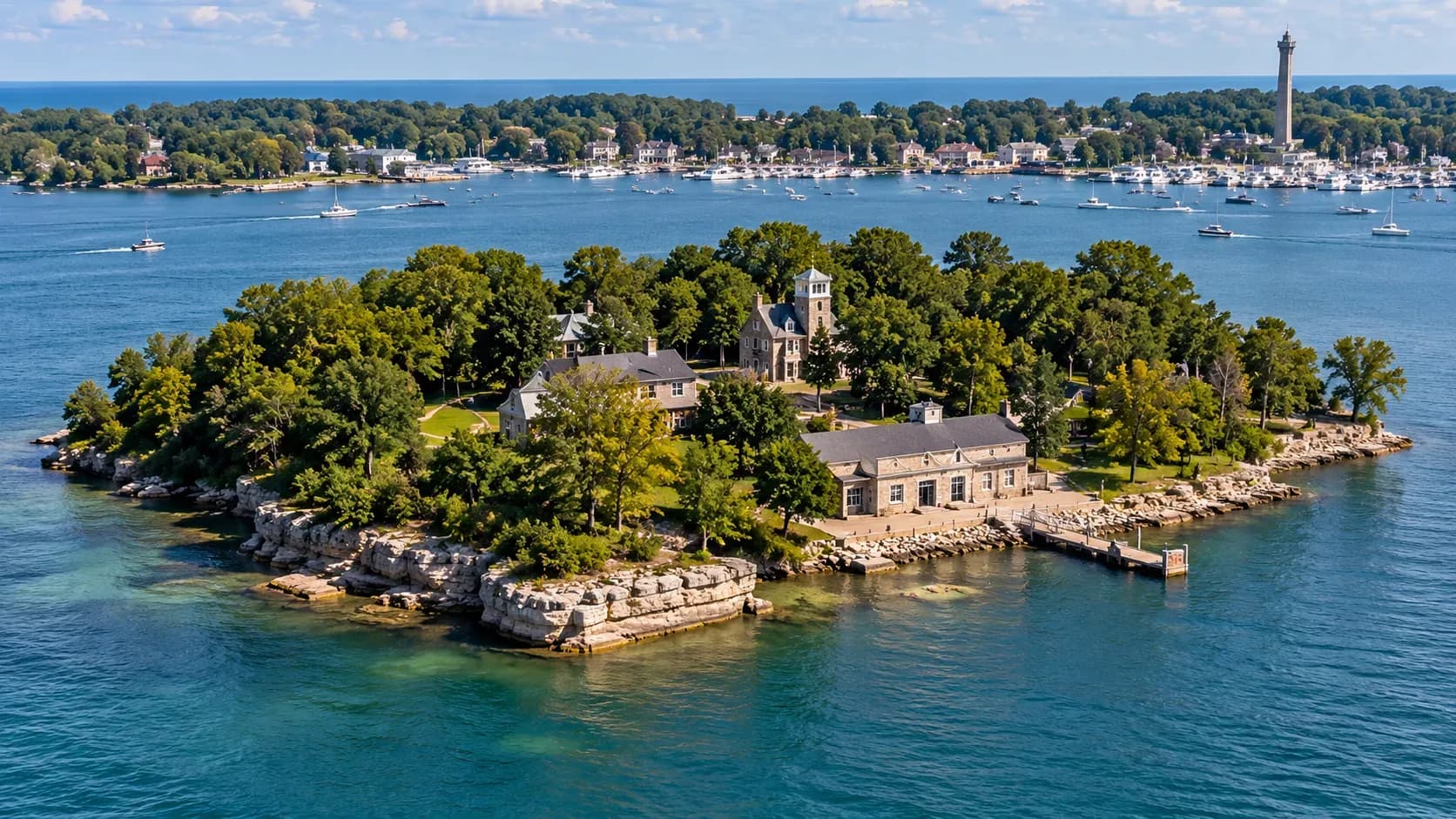
Six-and-a-half acres near South Bass Island hold War of 1812 history, a Gilded Age castle and the oldest freshwater biological field station in the United States.
Most people headed to Put-in-Bay are watching South Bass Island, the ferry dock, Perry's monument or whatever comes next on the day's itinerary. The little island sitting just offshore is easy to treat like scenery. That is exactly why Gibraltar Island is such a good surprise.
The island is only about 6.5 acres and lies a few hundred yards from South Bass Island in Put-in-Bay harbor. It belongs to The Ohio State University, and for more than a century it has been tied to some of the most important freshwater research in the country. The story gets better the farther back you go.
A Tiny Island With a Very Long Resume
Long before college students arrived with microscopes and water-sampling gear, Gibraltar Island was part of the story of Lake Erie itself. Ohio Sea Grant's history of the islands says Commodore Oliver Hazard Perry used the island's high ground as a lookout while watching for the British fleet before the Battle of Lake Erie during the War of 1812.
Later, Sandusky-born financier Jay Cooke bought the island in 1864. Cooke helped finance the Union during the Civil War, and Gibraltar became a summer retreat for his family and guests. He built the Gothic-style residence now known as Cooke Castle, turning a rocky little island in Lake Erie into an unlikely gathering place for some of the country's political, military and financial elite. The castle is still there, along with other reminders that this place had a full life before it ever became a university campus.
Then Ohio State Got an Island
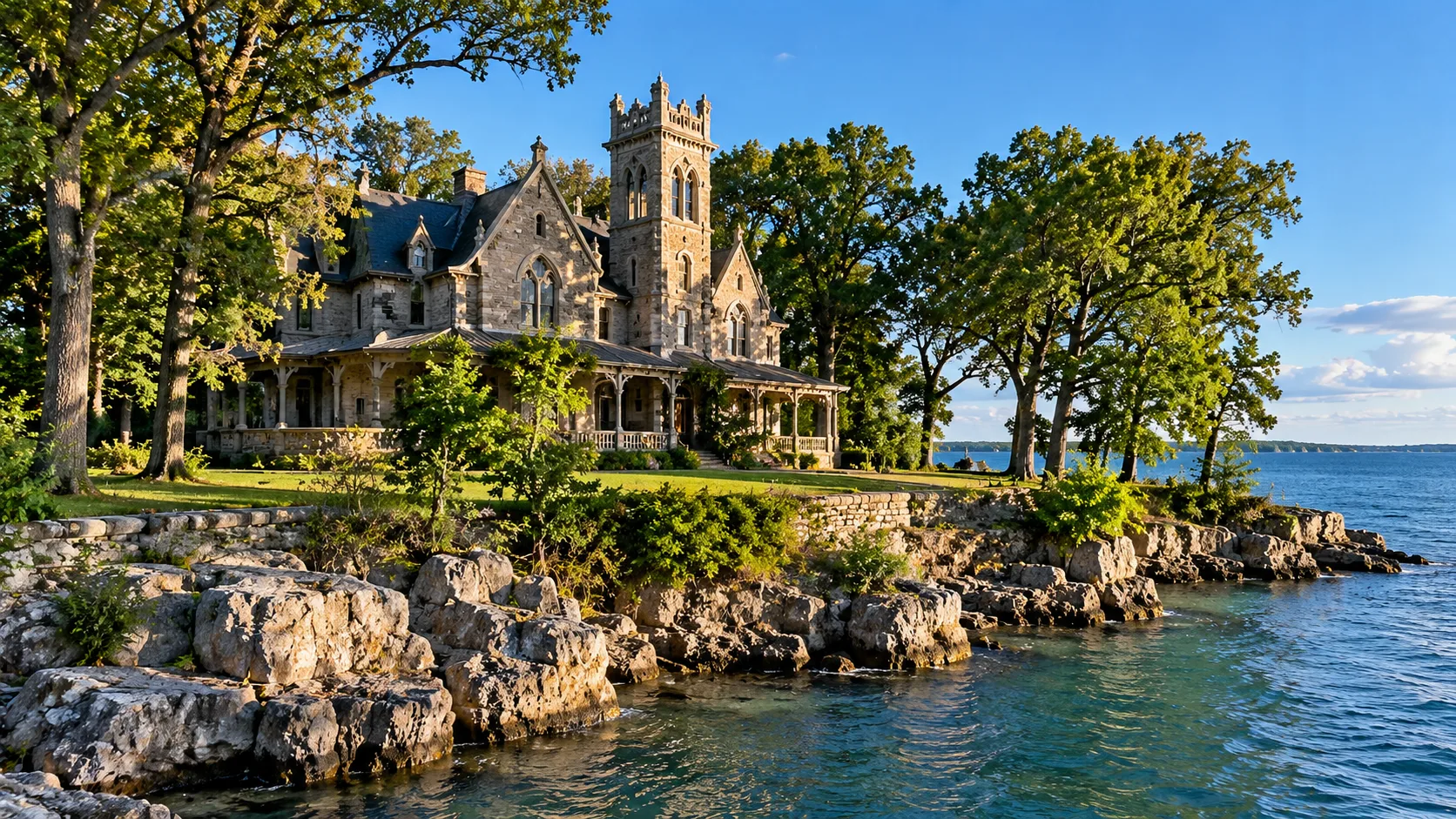
Ohio State's freshwater field station actually began in 1895, decades before it moved to Gibraltar. The program shifted locations several times around Lake Erie as the work grew. In 1925, Julius F. Stone — a former Ohio State trustee and conservation-minded businessman — acquired Gibraltar Island from the Cooke family and donated it to the university in memory of his father, Franz Theodore Stone.
That move gave the program something unusual: its own island campus, surrounded by the very lake it was created to understand. The present Stone Laboratory building was dedicated in 1929. Ohio State describes the station as the oldest freshwater biological field station in the United States.
In 2025, the university marked 100 years of Stone Lab operating from its Gibraltar Island home. Generations of students and scientists have crossed a few hundred yards of water from one of Ohio's busiest summer tourist spots and stepped into a working research station that traces its roots to the 19th century.
Why the Science Matters
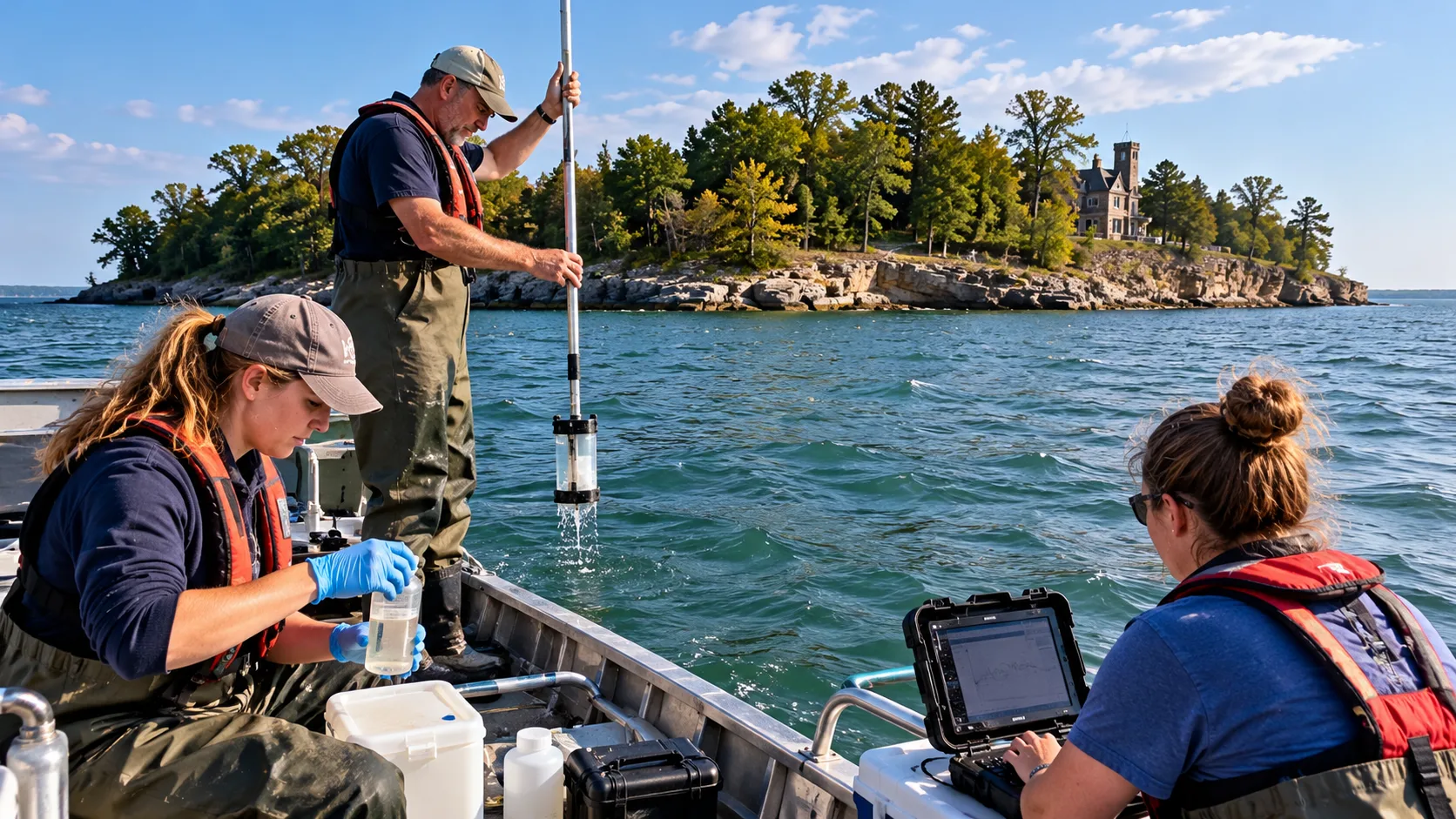
Stone Lab is not a museum with science displays added for effect. It is an active research, education and outreach center focused on Lake Erie and the Great Lakes. Researchers there study harmful algal blooms, water quality, fisheries, invasive species, nutrients, toxins and other problems that affect drinking water, fishing, wildlife and communities across the region.
Stone Lab research coordinator Justin Chaffin works on cyanobacterial blooms and on improving the ability to predict when toxins such as microcystin may appear. That work is not academic in the casual sense. Lake Erie's western basin has repeatedly dealt with harmful algal blooms, and the 2014 Toledo drinking-water crisis showed how quickly a lake problem can become a human one.
Stone Lab researchers have also worked with charter boat captains who collect weekly water samples, extending the reach of monitoring across the lake. A laboratory devoted to understanding Lake Erie is not looking at the lake from a campus hundreds of miles away — it is sitting in the middle of the system it studies, with research vessels docked outside and the water visible from the windows.
The Island Is a Classroom Too
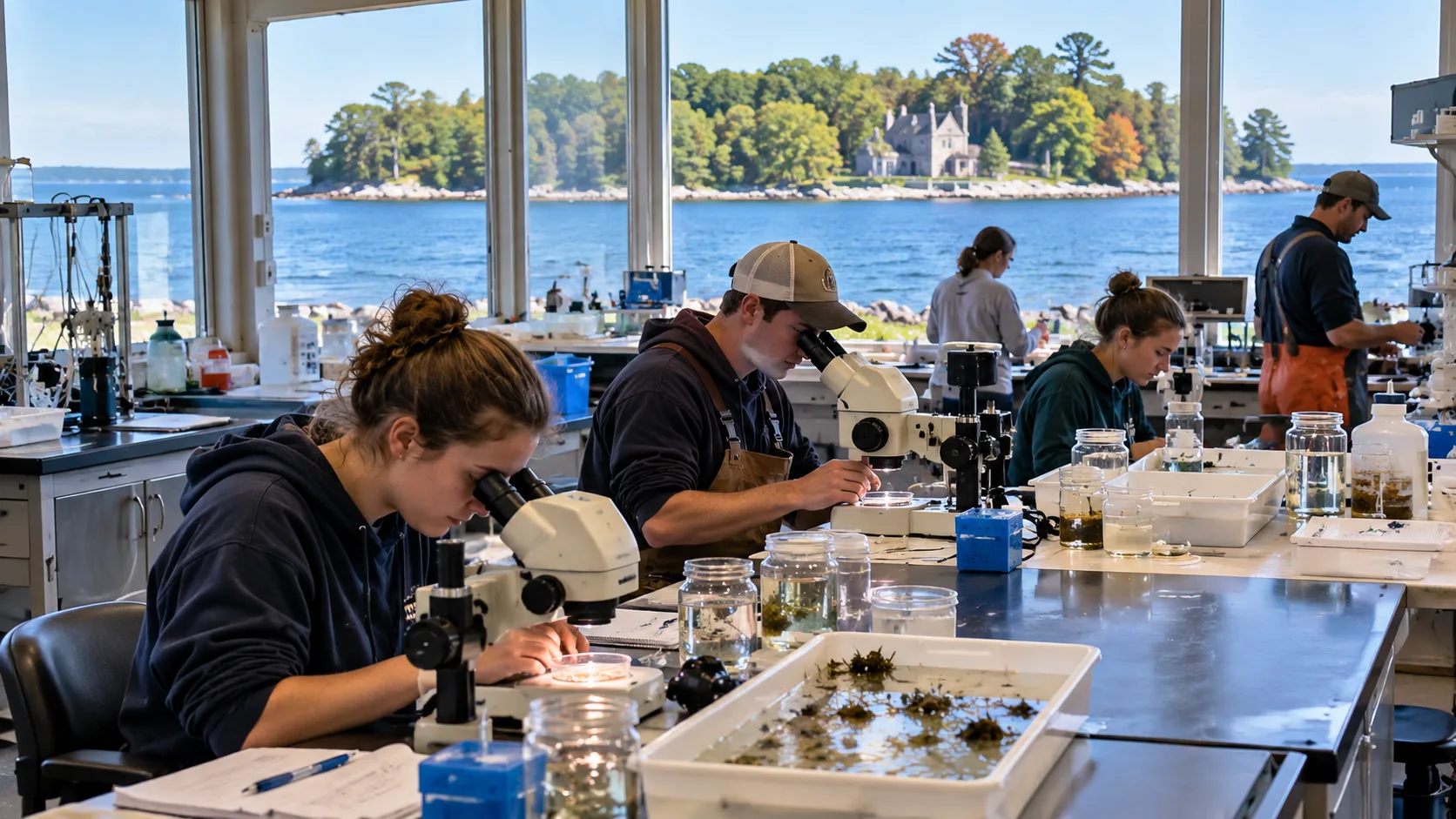
Stone Lab brings students onto the lake instead of teaching freshwater science only from a textbook. University students, visiting researchers, educators and younger students use the facilities for field courses, workshops and hands-on science. Ohio Sea Grant has described the island as both a research base and a place where students can collect samples, examine organisms and learn how the Great Lakes actually work.
For a place that barely covers six and a half acres, Gibraltar Island manages to hold a laboratory, student housing, historic buildings, rocky shoreline, wooded paths and one of the more unusual educational settings in the Midwest. Ohio Sea Grant's island guide also notes the Needle's Eye — a narrow natural sea arch in the limestone at Perry's Lookout — along with glacial features, migrating birds and Lake Erie island wildlife.
Can You Go There?
Yes — but Gibraltar is not the kind of island where you simply wander off a ferry and start exploring. Ohio Sea Grant has traditionally offered scheduled Gibraltar Island tours during the summer, along with an annual open house. Recent tours have included Stone Lab, island history and hands-on science.
Because schedules, transportation and access can change from season to season, anyone planning a visit should check Stone Lab's current calendar before making the trip. That limited access may be part of why so many Put-in-Bay visitors never realize what they are looking at. From the water, Gibraltar can appear to be just another pretty patch of green and limestone beside a much busier island. It is anything but.
The Next Time You Pass It
Put-in-Bay has no shortage of things competing for your attention — boats, restaurants, bars, golf carts, history, fishing and the giant Perry's Victory and International Peace Memorial can make a six-and-a-half-acre island easy to miss. But the next time you cross the water toward South Bass Island, look for Gibraltar.
That small island has watched a naval war, hosted a Civil War financier, become an Ohio State campus and helped generations of researchers understand one of the Great Lakes. Not bad for a place most people pass without knowing who owns it.