A Little Turtle With a Big Stink
The common musk turtle may be tiny, but its famous defense has earned it the unforgettable nickname stinkpot. Learn how this small, secretive reptile lives, feeds, nests, and protects itself.
The common musk turtle may be tiny, but its famous defense has earned it the unforgettable nickname stinkpot.
Growing up in South Dakota, I remember my mom jokingly referring to me as a "little stinkpot." I carried on the tradition, often calling my own daughter the same thing. Little did I know that an actual animal shares our family nickname—and earns it quite honestly.
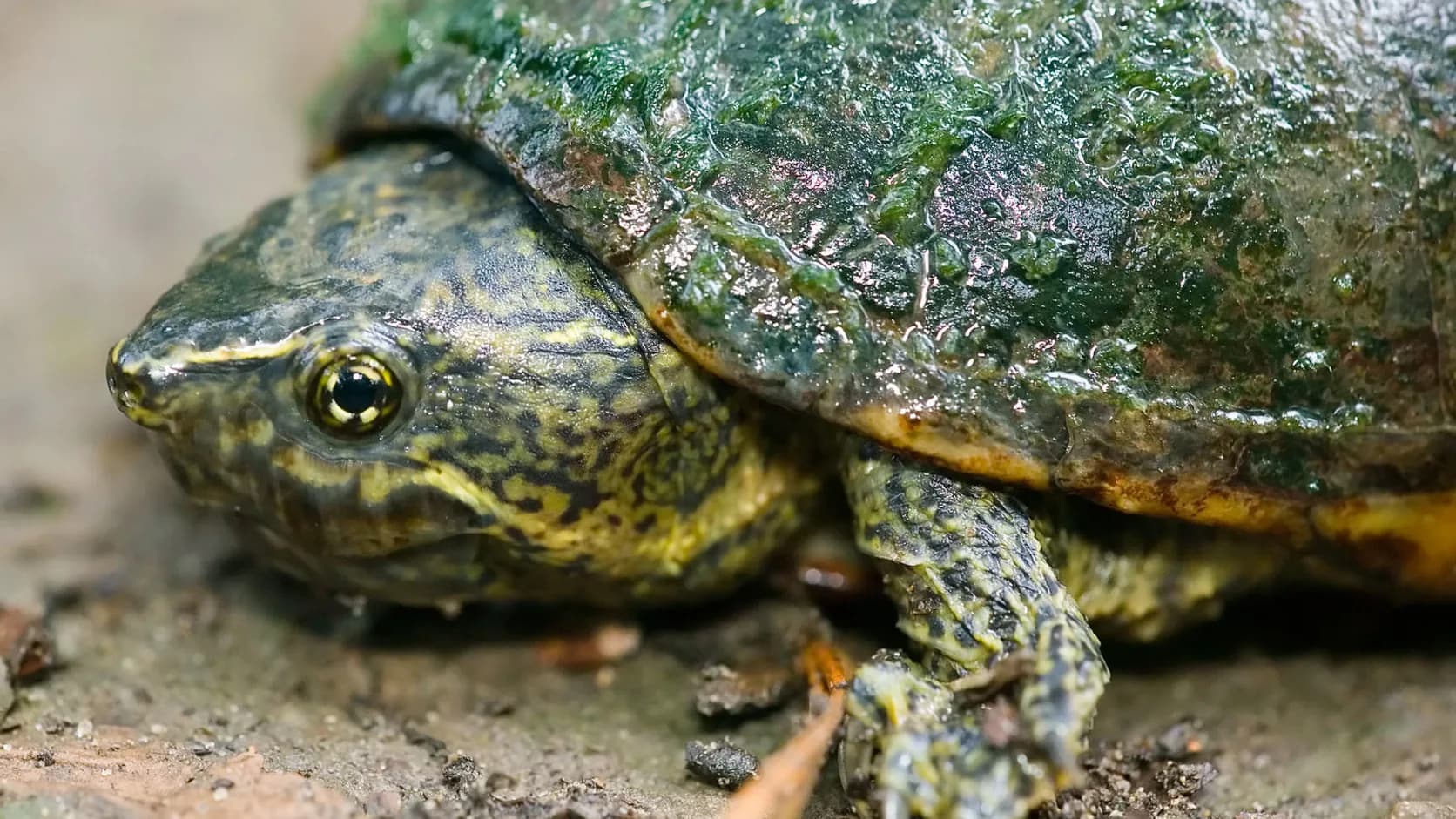
The common musk turtle, Sternotherus odoratus, is also known as the stinkpot. When threatened, it releases a foul-smelling secretion from its musk glands. It may also bite, making clear that it would prefer to be left alone.
Size and Appearance
Stinkpots are among the smallest freshwater turtles in North America, with adults measuring approximately 2 to 5 inches in shell length. They have a pointed snout and two yellow stripes along each side of the head and neck. Their carapace, or upper shell, is brown or black, although a coating of algae can give it a green appearance.
Habitat and Behavior
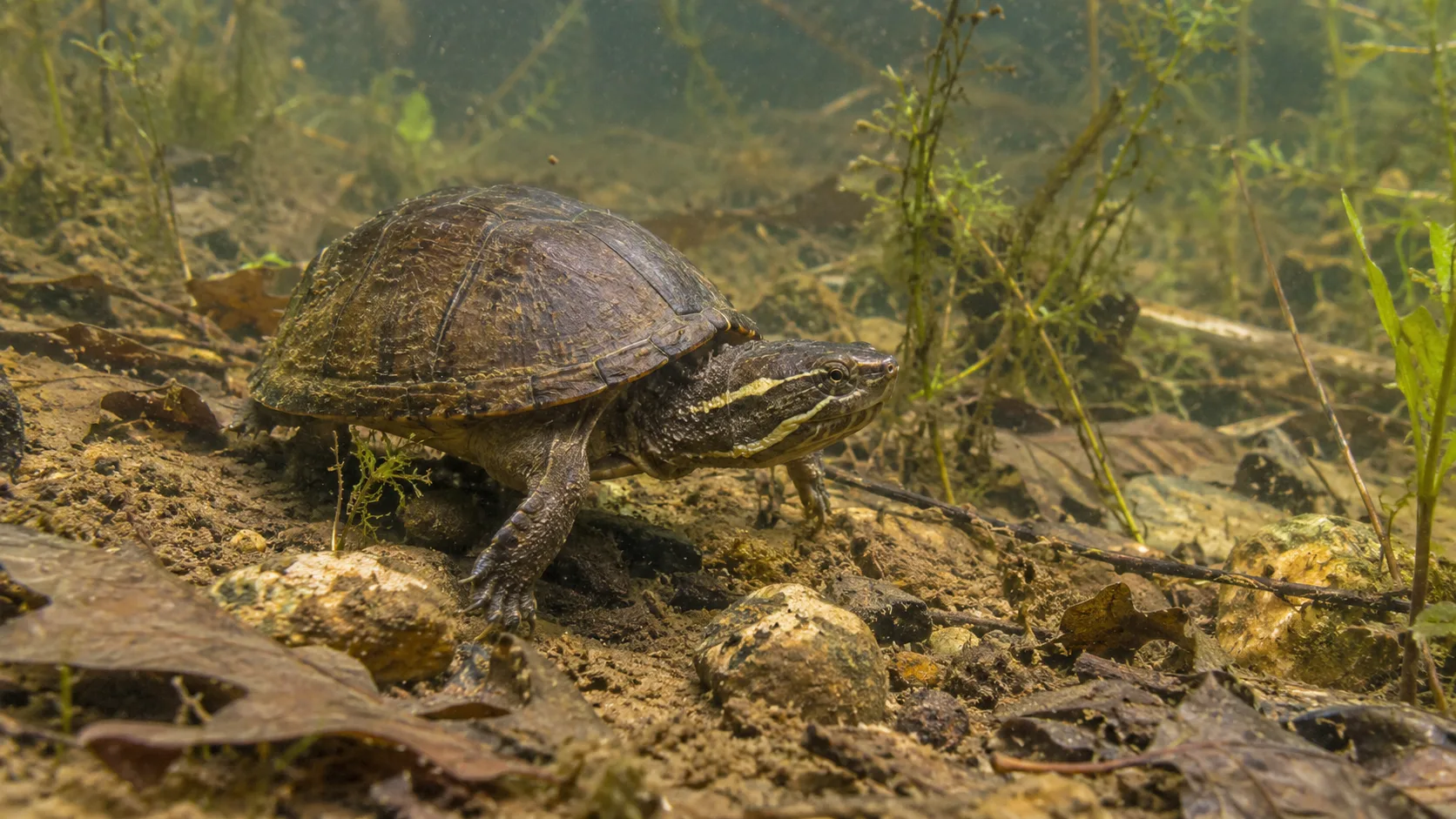
These turtles inhabit slow-moving streams, rivers, lakes, ponds, swamps, and canals. They spend much of their time walking along the bottom, searching for food or sheltering among vegetation and debris. Most active around dusk and at night, they are easy to overlook.
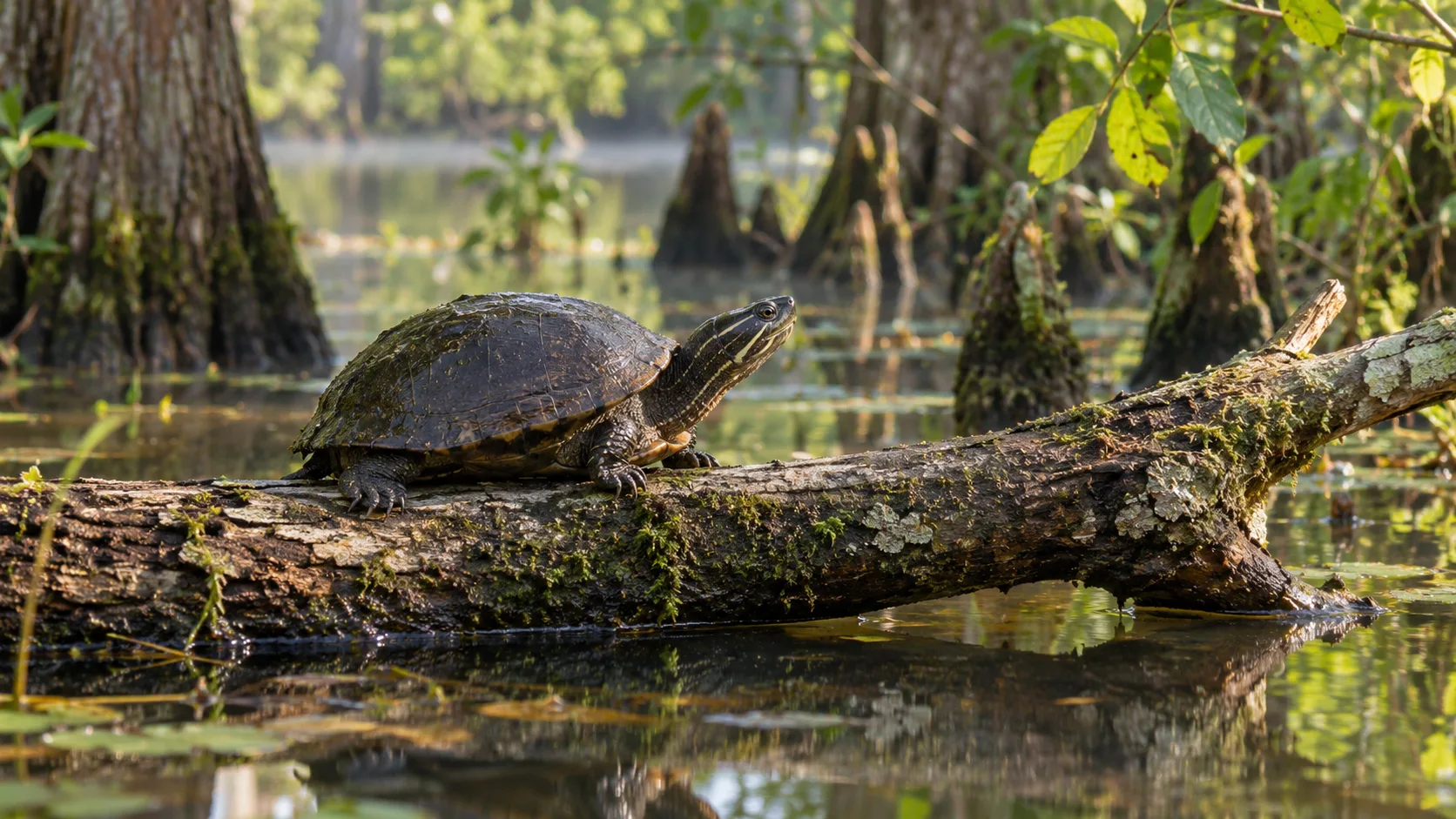
They do occasionally bask, sometimes climbing onto branches overhanging the water. During cold weather, stinkpots enter a period of dormancy called brumation, sheltering in underwater mud. The timing depends on local conditions and water temperature rather than a strict seasonal schedule.
Diet
Although stinkpots can swim, they are slow-moving and often walk along the bottom in search of food. They use sight and smell to locate a meal, scavenging dead fish and other animal remains. They also eat live prey, including snails, worms, insects, and crayfish, along with fish eggs and some plant material.
Lifespan and Maturity
Stinkpots typically live 15 to 19 years in the wild, although some live considerably longer. They take several years to reach sexual maturity, with males generally maturing at about 5 to 6 years and females at about 8 to 9 years.
Reproduction
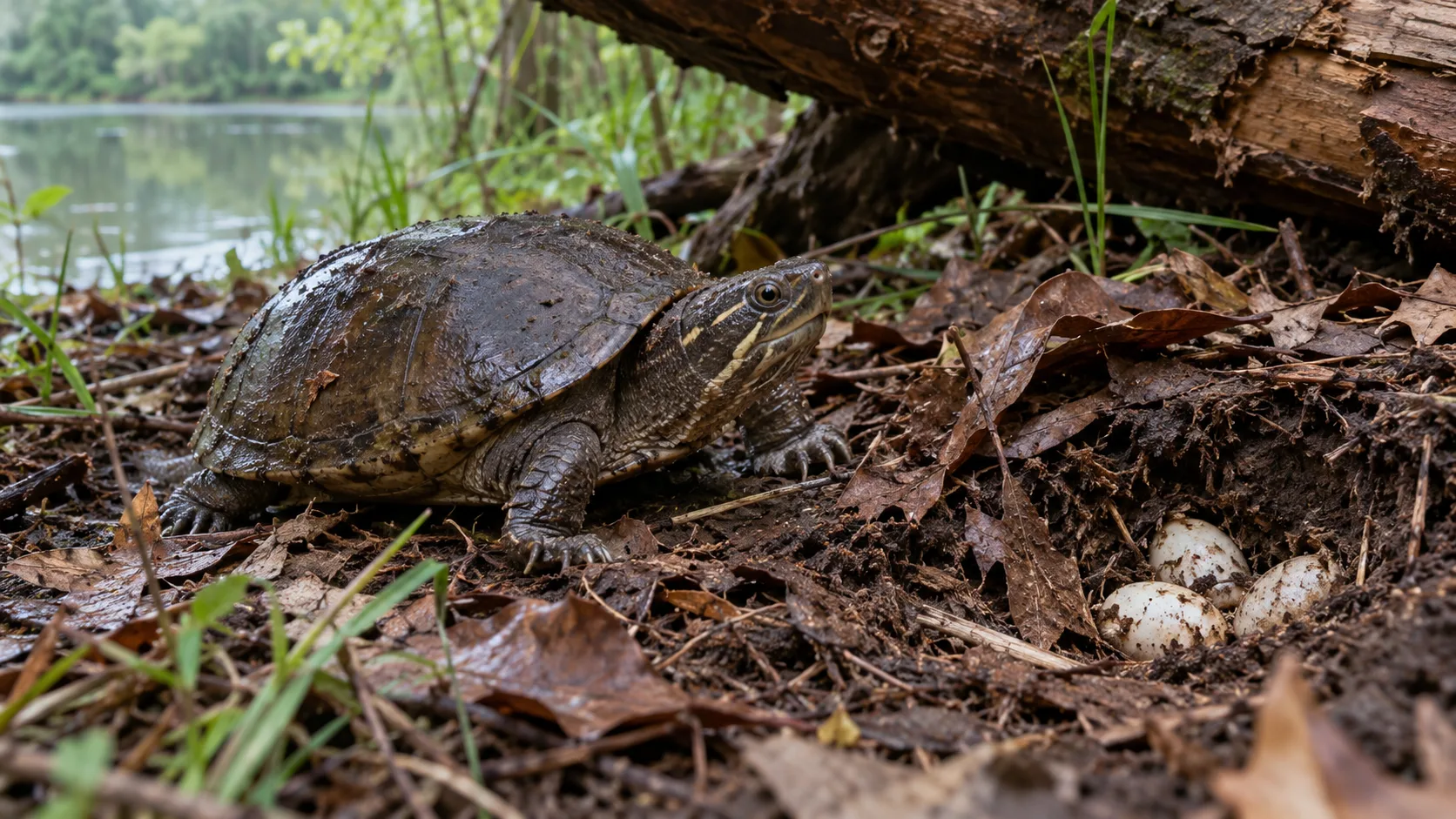
Mating takes place in the water, with breeding activity often peaking in spring and fall. In warmer southern regions, however, they may breed throughout much of the year. Females can store sperm over the winter, allowing them to fertilize their eggs later.
Females lay their eggs in shallow nests near water, often beneath logs or leaf litter or in grassy areas. They may produce one to four clutches annually, with one to six eggs per clutch. Incubation generally takes 65 to 86 days.
Interestingly, nest temperature helps determine whether hatchlings will be male or female. Consistently warm incubation temperatures above approximately 82°F favor females. What matters is the temperature within the nest, which is influenced by shade, soil conditions, and weather—not simply the outside air temperature.
Now that I know the story behind the name, I'm glad Mom used "little stinkpot" as a term of affection. At least I never had to defend myself with musk glands!