Two Sea Turtles Just Made History on America's West Coast
Two olive ridley mothers chose California beaches where no sea turtle had ever been recorded nesting. Nearly 200 eggs are now being protected, and the real ending may be fifteen years away.
Two olive ridley mothers chose California beaches where no sea turtle had ever been recorded nesting. Nearly 200 eggs are now being protected, and the real ending may be fifteen years away.
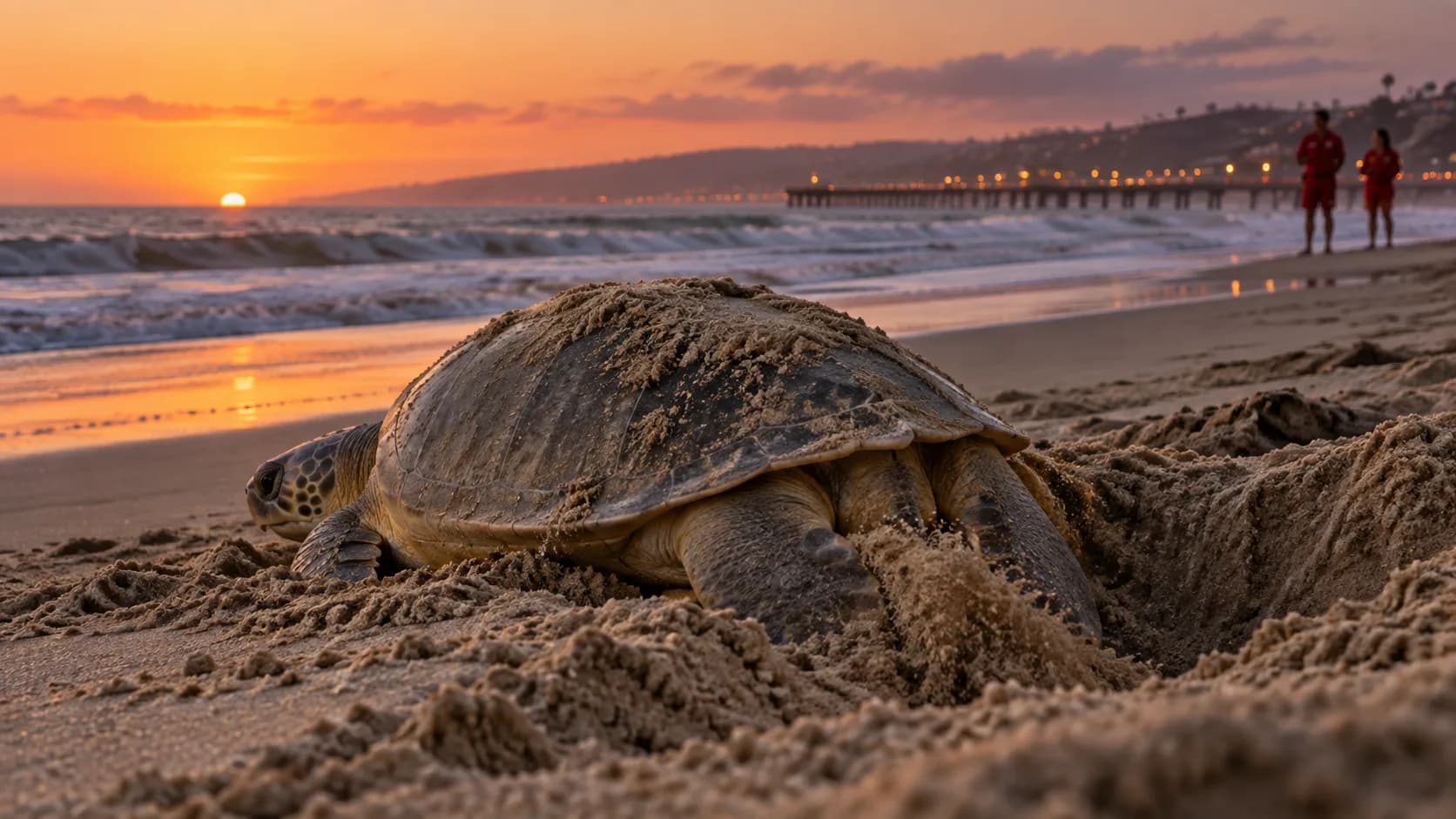
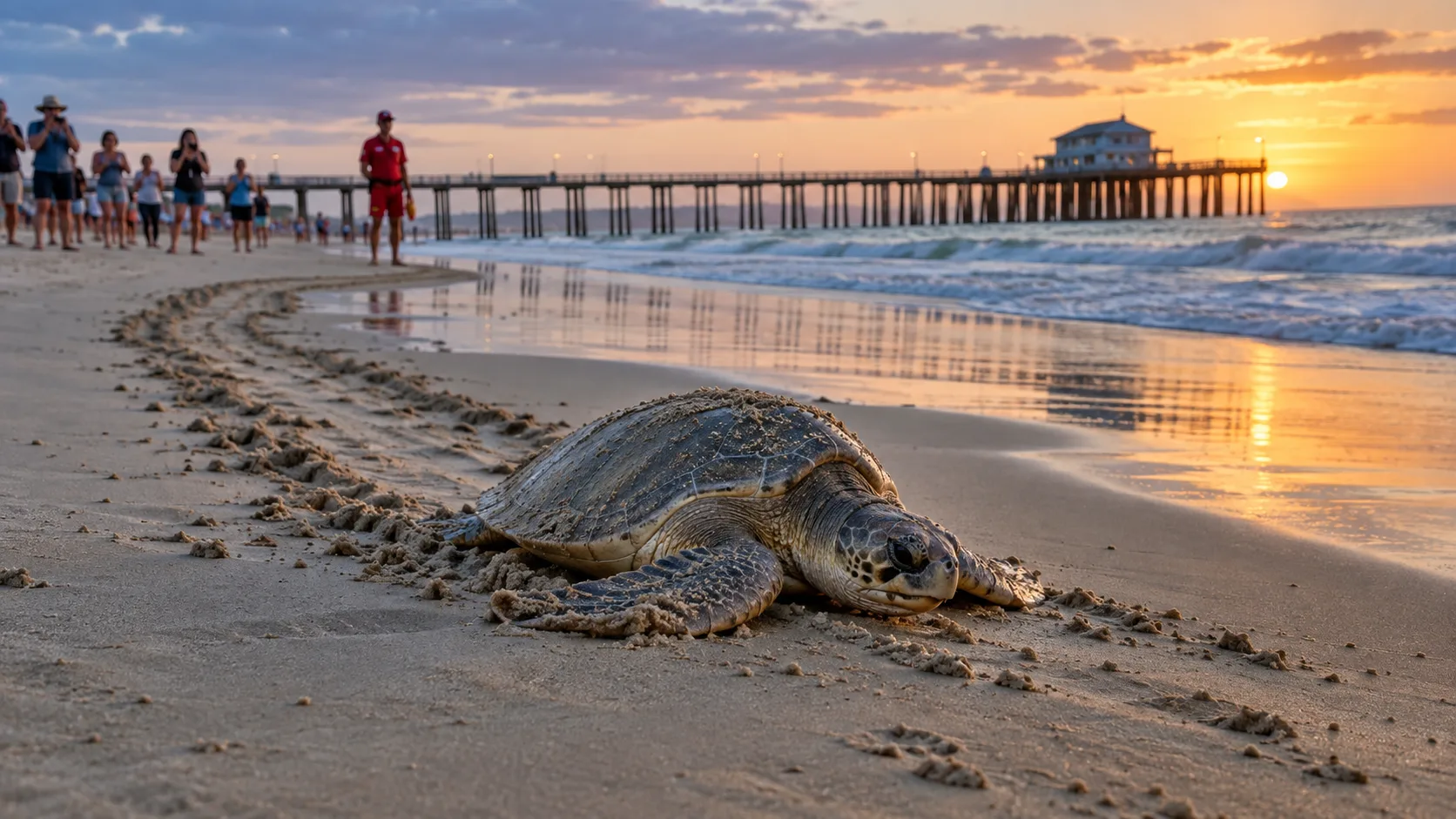
Note: All four images accompanying this story are original AI-generated illustrative editorial photographs. They do not depict the actual turtles, eggs, scientists or documented nesting events.
Eight Miles and Three Days Apart
At about three o'clock on the afternoon of September 16, a beachgoer near Seal Beach, California, saw something almost nobody expected to see on that stretch of coast: an olive ridley sea turtle digging into the sand and laying eggs.
Sea turtles occasionally appear in Southern California waters, particularly during warm conditions. Nesting was another matter. This became the first recorded natural nest for any sea turtle species on the U.S. West Coast.
Then, three days later and about eight miles away, another olive ridley came ashore near the Huntington Beach Pier. She began nesting around seven in the evening while lifeguards and beachgoers watched from a distance.
One unexpected turtle could have been dismissed as a remarkable wrong turn. Two mothers choosing nearby beaches within three days made the event harder to explain—and much more important to understand.
They Were Not the Same Turtle
Early reports left open the possibility that one female had laid both nests. Olive ridleys can produce more than one clutch in a season, often returning to the same general area. NOAA Fisheries later confirmed that the two visitors were different turtles.
Research biologist Cali Turner Tomaszewicz compared their body shapes, barnacle locations and scute patterns—the arrangement of large scales across the shell. Those patterns can distinguish one turtle from another much like fingerprints distinguish people.
California had not received one unlikely visitor. It had received two.
Small Turtle, Enormous Arrival
Olive ridleys are among the smallest sea turtles. Adults generally reach about two to two and a half feet in length and may weigh up to 100 pounds. Their name comes from the olive coloring of the heart-shaped shell. They live throughout tropical parts of the Pacific, Indian and Atlantic oceans.
Their nearest known nesting areas are hundreds of miles south in Baja California, while their largest Pacific nesting populations gather in Mexico and Central America. Some olive ridleys nest alone. Others participate in arribadas—extraordinary events in which hundreds or thousands of females come ashore together.
The two California mothers arrived alone, but their appearance may still represent the beginning of something larger.
Moving the Future Before the Surf Arrived
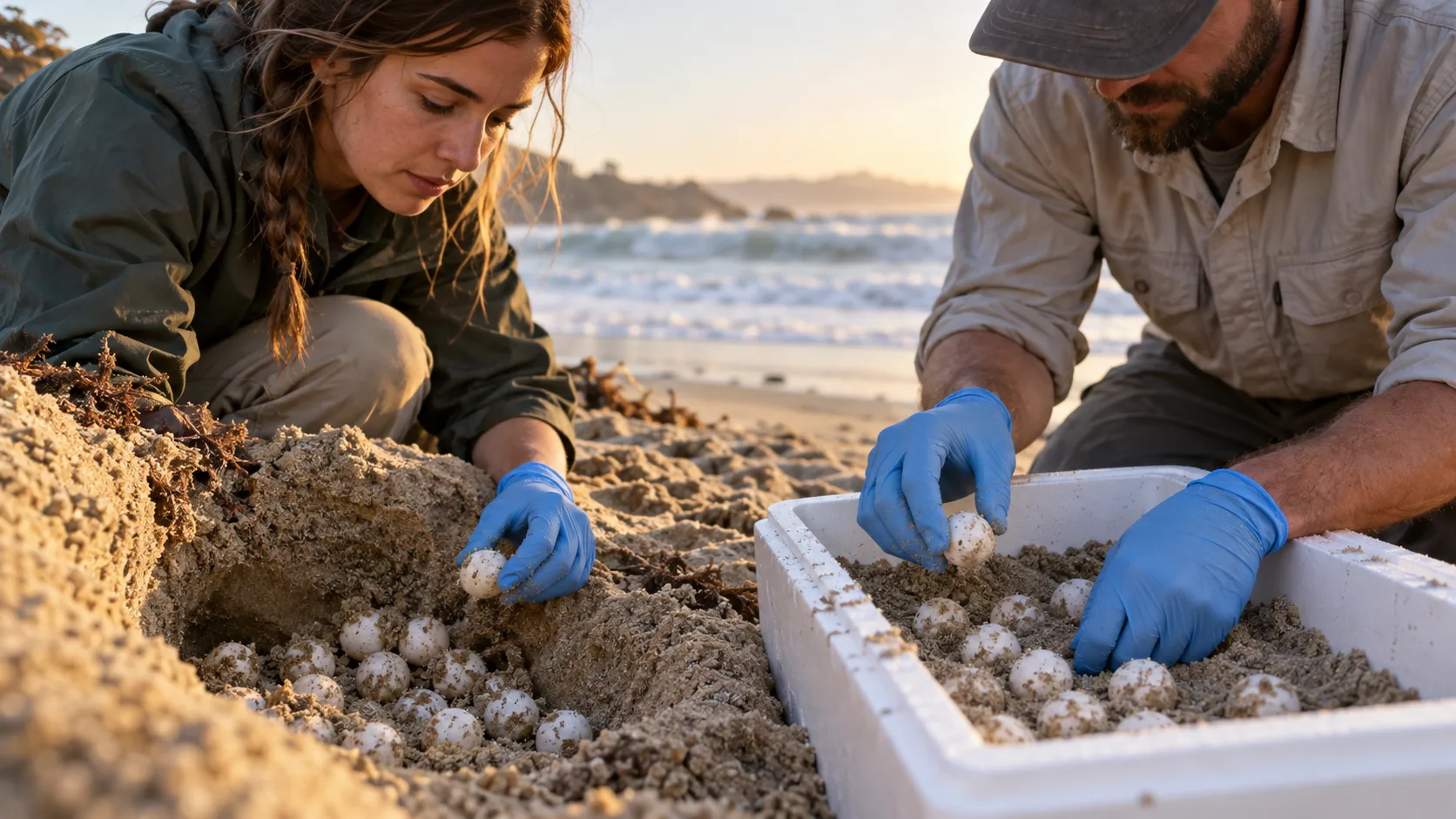
Teams from local, state and federal agencies initially fenced and monitored both nesting areas. Cities increased patrols. Scientists watched the tides, storm forecasts and beach conditions while the eggs remained beneath the sand.
Then hazardous surf associated with tropical storms off Mexico threatened to flood or wash away the nests. On September 25, biologists made the unusual decision to move them. Approximately 200 eggs were carefully collected and transferred to the Aquarium of the Pacific in Long Beach. They now rest in sand-filled containers in a quiet, private animal-care area where temperature and humidity can be monitored through the expected 45-to-60-day incubation period.
Relocating a sea turtle nest is delicate work. Leaving these particular nests in place, however, carried immediate danger. The scientists responsible for them concluded that protected incubation offered the best chance of survival.
The Crawl Has Not Happened Yet
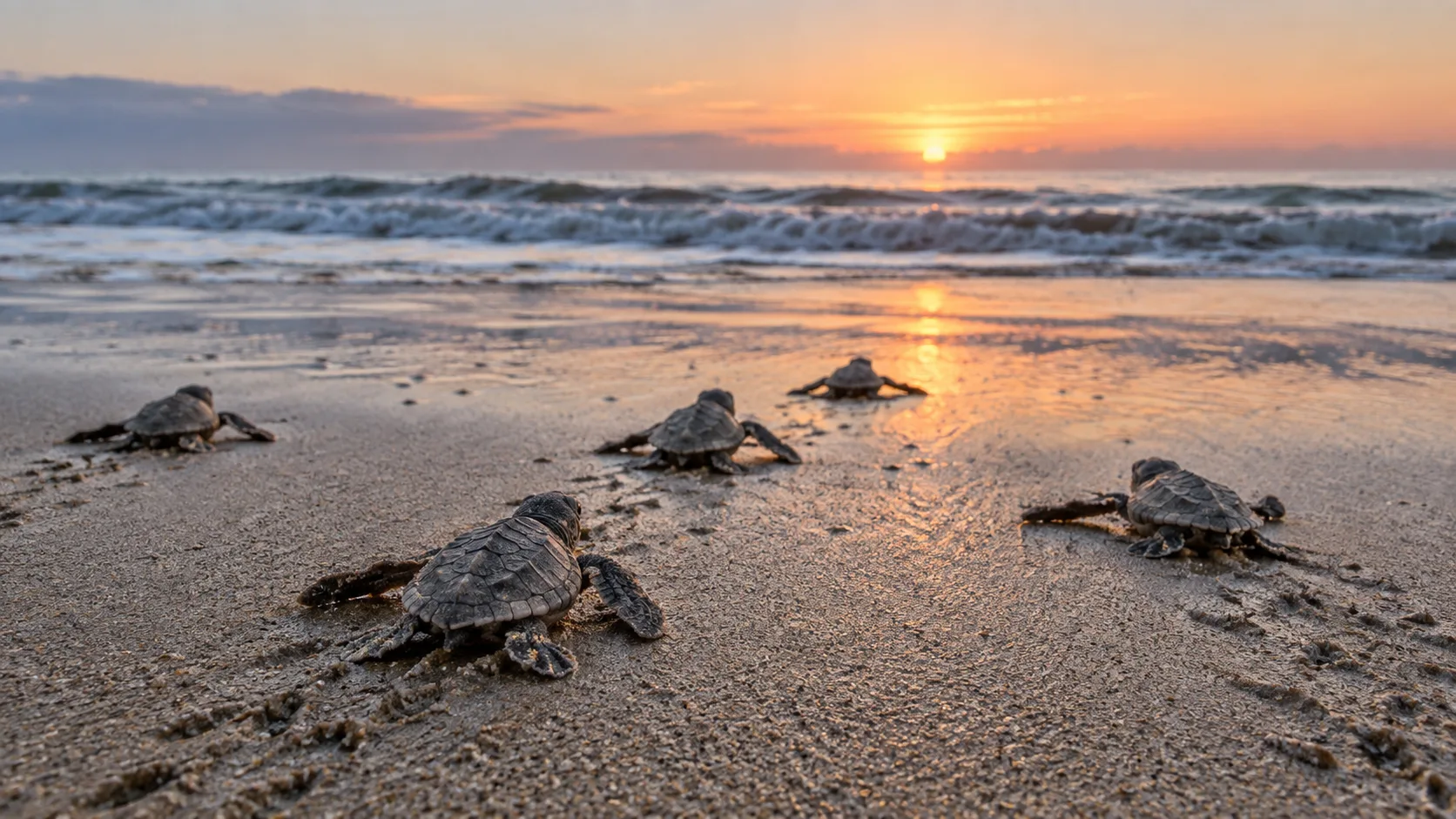
There is no guaranteed happy ending. This is the first event of its kind in the region, and the eggs still face weeks of development and uncertainty. If they hatch successfully, the young turtles will be returned to the same beaches where their mothers nested. There, they will be allowed to make the natural crawl across the sand and into the Pacific.
As of publication, the California eggs have not hatched.
Why California?
Scientists do not yet know why the two turtles selected Orange County. NOAA points to several possible influences: unusually warm sea-surface temperatures, ongoing marine heatwaves, the approaching 2027 El Niño, the olive ridley's naturally nomadic behavior and even navigational mistakes. Several factors may have worked together.
The event is evidence that something unusual happened. It is not enough by itself to prove why it happened or whether it will become common. The next nesting season—and perhaps many seasons after that—will help answer those questions.
A Possible Founding Event
The most remarkable part of the story may not be visible for another fifteen years. Female sea turtles often return to the general area where they hatched when they are old enough to nest. Olive ridleys reach maturity at roughly fourteen or fifteen years. NOAA therefore describes the California nests as a possible founding event.
If some of these eggs hatch, if the young turtles survive their first dangerous years at sea and if females eventually return, the beaches chosen by two unexpected mothers in 2026 could become the beginning of a new nesting population.
For now, the future is sitting quietly in containers of sand in Long Beach. Two turtles came farther north than their species had ever been recorded nesting in the United States. People noticed, protected what they left behind and gave the story a chance to continue. The next chapter may begin with a tiny set of tracks pointing toward the ocean. The chapter after that may not be written until 2041.