The Forest Everyone Drives Past on FM 1488 Is Turning 100
Texas bought a logged and burned tract beside what is now FM 1488 in 1926. A century later, growth surrounds W.G. Jones State Forest—but the pines and their rare woodpeckers remain.
Anyone who has spent enough time crawling along FM 1488 has probably wondered the same thing: Why is there a state forest here, of all places?
The better question is how everything else ended up surrounding it.
Long before the subdivisions, medical buildings, restaurants and daily procession of brake lights, Texas acquired this tract in 1926. It was called State Forest No. 2 then. In 2026, the W.G. Jones State Forest reaches its own 100-year mark—not as an untouched wilderness, but as a forest that was cut, burned, rebuilt and eventually surrounded by one of the fastest-growing parts of Montgomery County.
That history makes the forest more interesting than it looks from the road. It is not simply a park that happened to keep its trees. It is a century-long experiment in what damaged land can become when someone decides to manage it for the future.
It Was Not Untouched When Texas Bought It
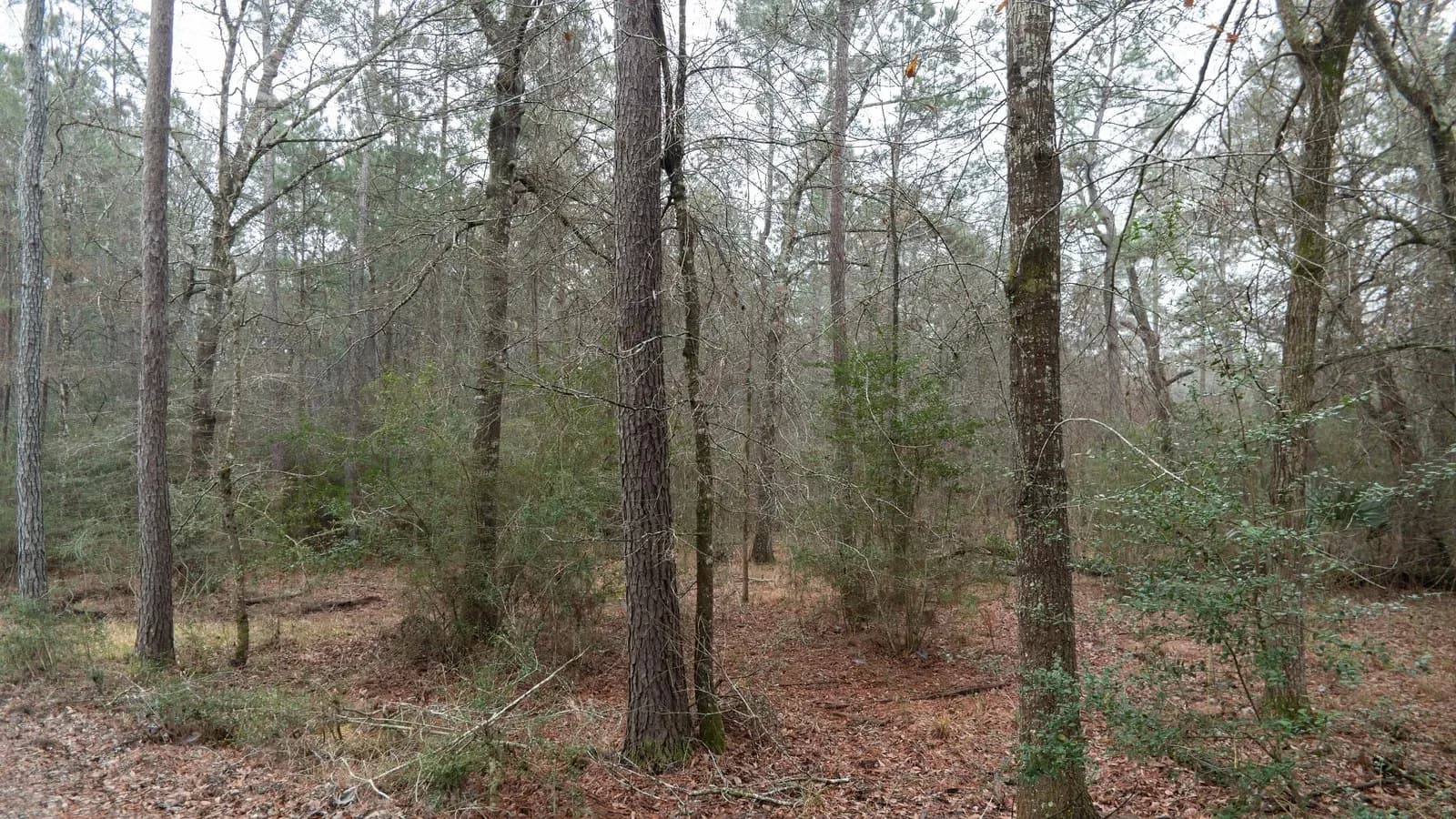
The property had been logged as early as 1892 and was periodically harvested for railroad cross ties. A severe wildfire burned the area in 1923. When the state acquired the land three years later, the Texas Legislature required that it be used for research, demonstration and education—a working example for Texas landowners rather than scenery preserved behind a fence.
Reforestation began with natural regeneration from native pines. In 1927, the state established a pine seedling nursery there with the capacity to grow 1 million bare-root seedlings a year. The nursery operated until 1940, after another facility was established in Alto.
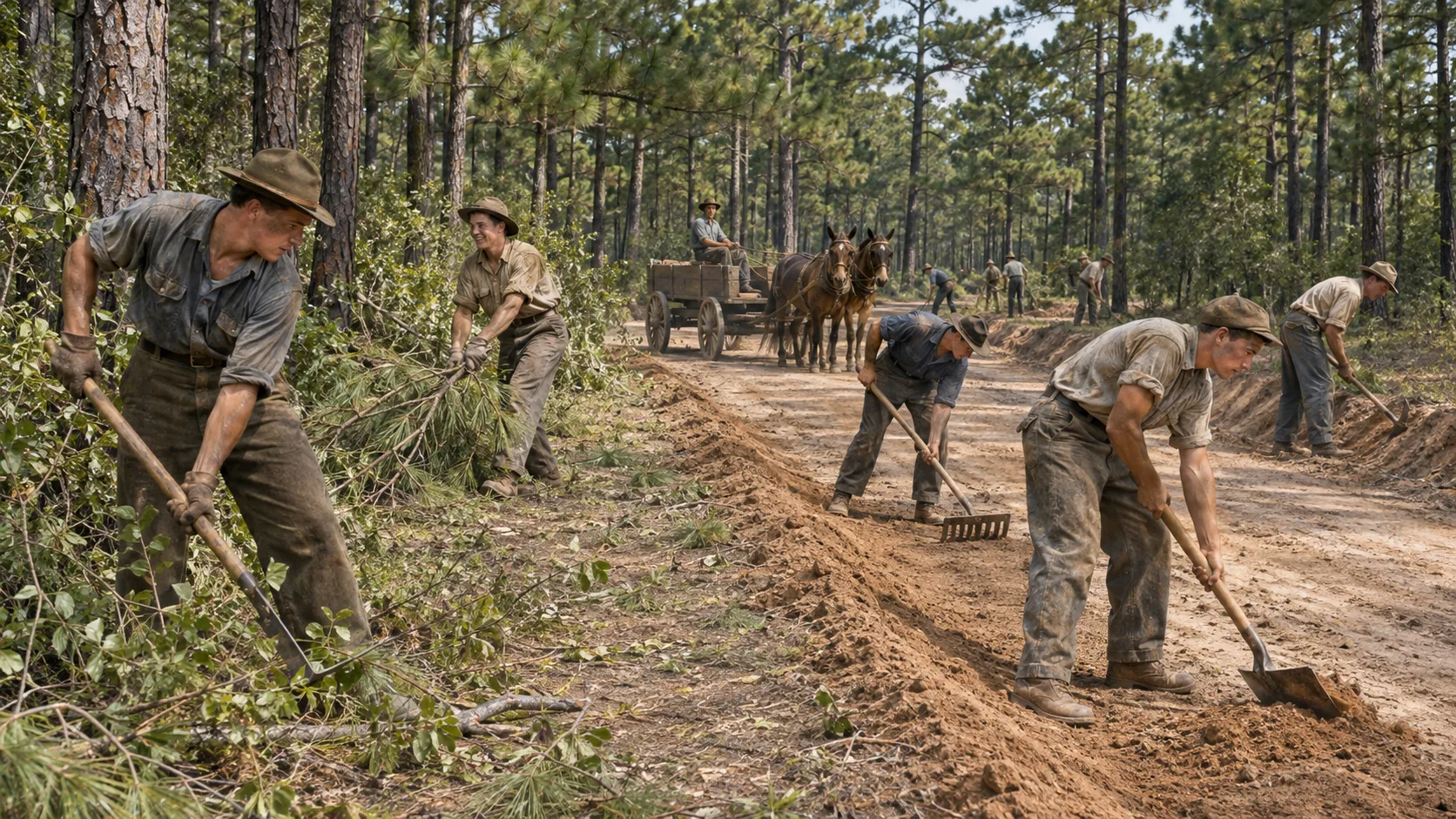
The Civilian Conservation Corps arrived in 1933. Crews built many of the forest's original roads and firebreaks before the camp closed in 1936. Those practical pieces of the landscape helped turn a heavily used and burned tract into a place where forestry could be studied, demonstrated and improved.
The forest received its present name in 1949, honoring William Goodrich Jones, widely remembered as the father of forestry in Texas. Jones was 87 when he spoke at the dedication ceremony.
Texas A&M Forest Service began a broader state-forest centennial celebration in 2024, marking a century since the state acquired its first state forest. Jones was State Forest No. 2. Its own century runs from the 1926 acquisition to 2026.
A Working Forest, Not a Frozen One
Today, the 1,722-acre property is described by Texas A&M Forest Service as one of the nation's largest working urban forests. "Working" matters. The forest is actively managed rather than left alone.
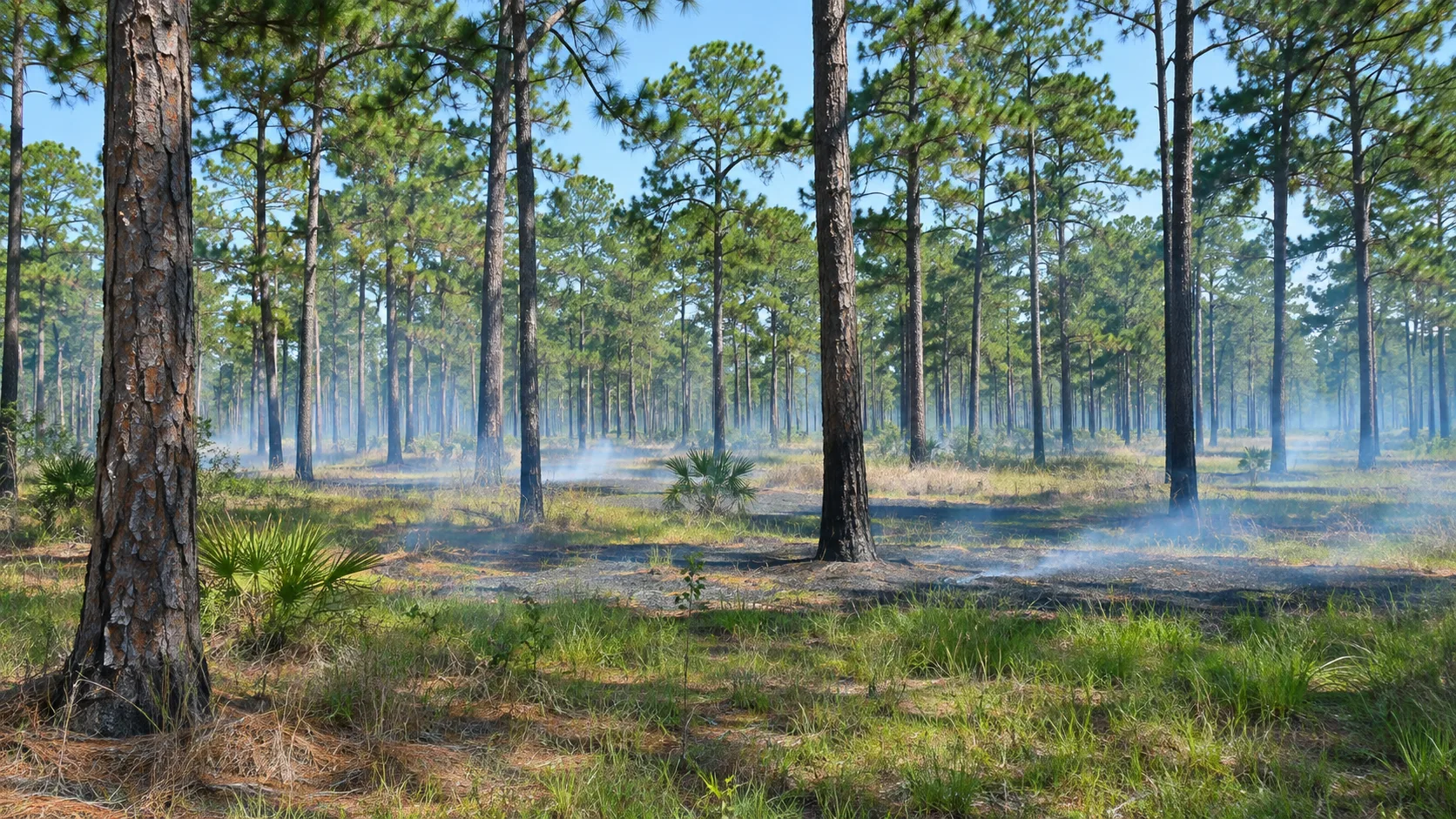
Foresters use prescribed fire, thinning, reforestation, habitat restoration and other practices that landowners can see in action. Research and demonstration areas test forest management methods, genetics and ways to protect water quality during forestry operations.
That can surprise visitors who expect every darkened tree trunk or cleared patch to mean something has gone wrong. In a pine forest, carefully planned fire is often part of what keeps the ecosystem healthy. It reduces heavy undergrowth, returns nutrients to the soil and helps maintain the open structure needed by one of the forest's smallest and most important residents.
The Little Bird That Needs Old, Living Pines
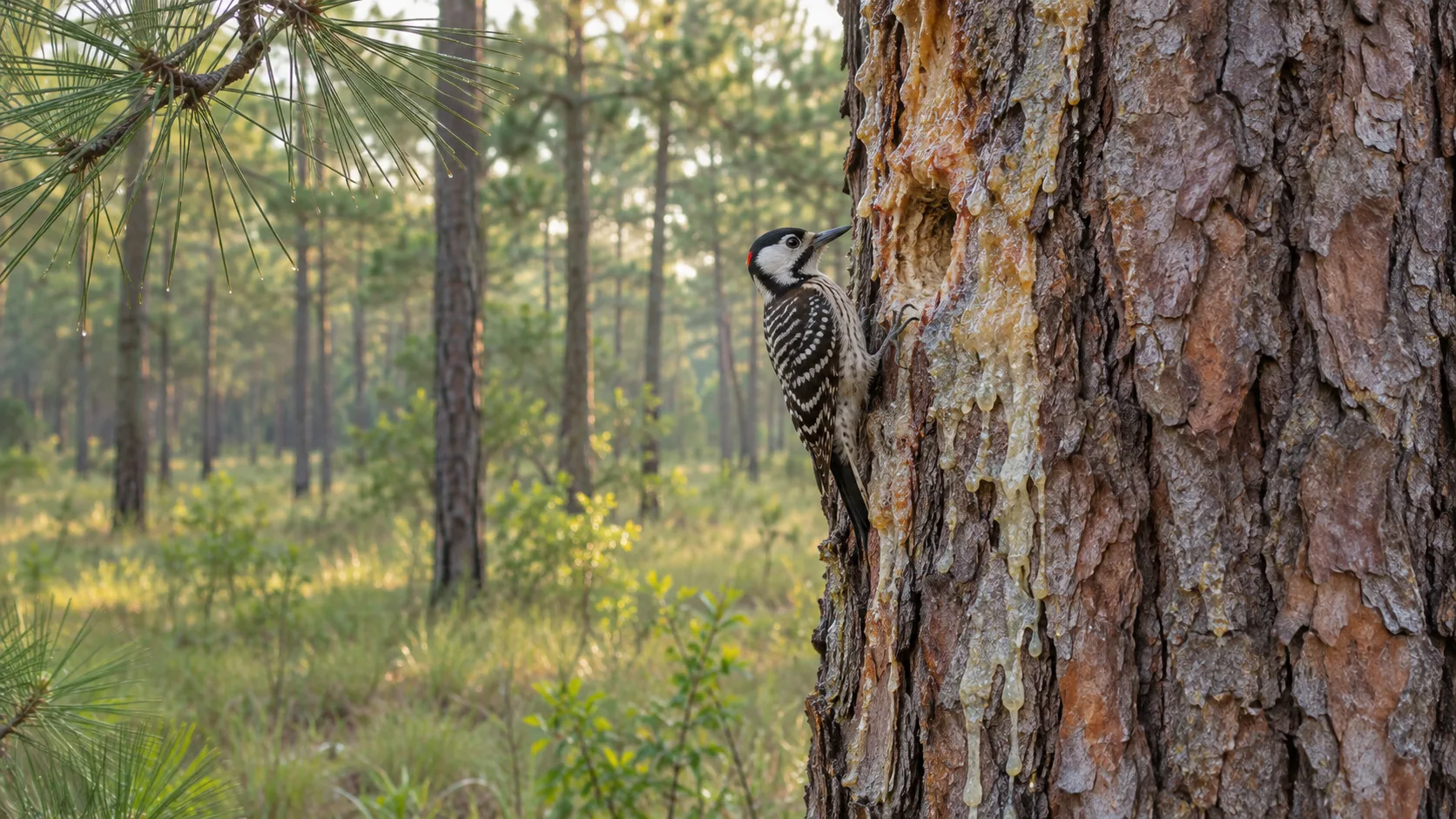
The red-cockaded woodpecker is about the size of a cardinal. Despite its name, the bird is mostly black and white. Only the male has a tiny red streak on each side of its head, and the mark can be difficult to see.
What makes the species remarkable is where it lives. According to Texas A&M Forest Service, it is the only North American woodpecker that excavates its nesting and roosting cavities in living pine trees. Older pines are especially valuable. The birds drill small resin wells around their cavities, and the flowing sap can help discourage rat snakes from reaching the nest.
The species was moved from endangered to threatened status in 2024 after decades of conservation work, but it has not fully recovered. Habitat loss and fragmentation remain threats. Rapid development around isolated forests can make it harder for birds from different family groups to move, meet and maintain genetic diversity.
W.G. Jones State Forest is one of only two Texas state forests with red-cockaded woodpeckers. Managers reduce underbrush, thin trees, conduct prescribed burns, install artificial cavities when needed and monitor nesting birds. In some cases, young birds from other populations have been relocated to the Jones and I.D. Fairchild state forests to strengthen their isolated gene pools.
That means the forest beside FM 1488 is not merely holding onto trees. It is holding onto a living piece of the old southern pine ecosystem while the landscape beyond its boundaries changes almost by the month.
The City Came to the Forest
Texas A&M Forest Service says the property now receives nearly 100,000 visitors a year. It has almost 17 miles of trails and pathways and offers hiking, biking, birdwatching, horseback riding, wildlife viewing, picnicking and limited fishing at two small lakes. School groups use it as an outdoor classroom. In 2011, it became a nationally recognized Children's Forest.
All of that now sits between Conroe and The Woodlands, surrounded on every side by Montgomery County growth.
From FM 1488, the forest can feel misplaced because the road has trained people to see the area as a commercial corridor. But the trees were there before most of what drivers recognize today. Development did not leave a convenient hole for a forest. Development grew until it met one.
The forest is open year-round during daylight hours only. It is a game sanctuary, so hunting is prohibited. Visitors are asked to pack out everything they bring in. Maps and restrooms are available at the Texas A&M Forest Service Conroe District Office, 1328 FM 1488, during weekday office hours.
The next time traffic slows beside those pines, look past the brake lights for a moment. What appears to be an odd patch of woods in the middle of growth is really a 100-year story of recovery—and a reminder that the one thing that seems out of place may simply have been there first.
Sources: Texas A&M Forest Service: W.G. Jones State Forest; U.S. Fish & Wildlife Service: Red-cockaded woodpecker reclassification.