The Neighbor Honking at 3 A.M. Was a Bear
A Colorado father blamed a rude neighbor for the middle-of-the-night horn. The real culprit was trapped inside a Toyota—and the way out required a very long rope.
A Colorado father blamed a rude neighbor for the middle-of-the-night horn. The real culprit was trapped inside a Toyota—and the way out required a very long rope.
Patrick Sullivan thought he had a rude neighbor. He had a bear with a Toyota.
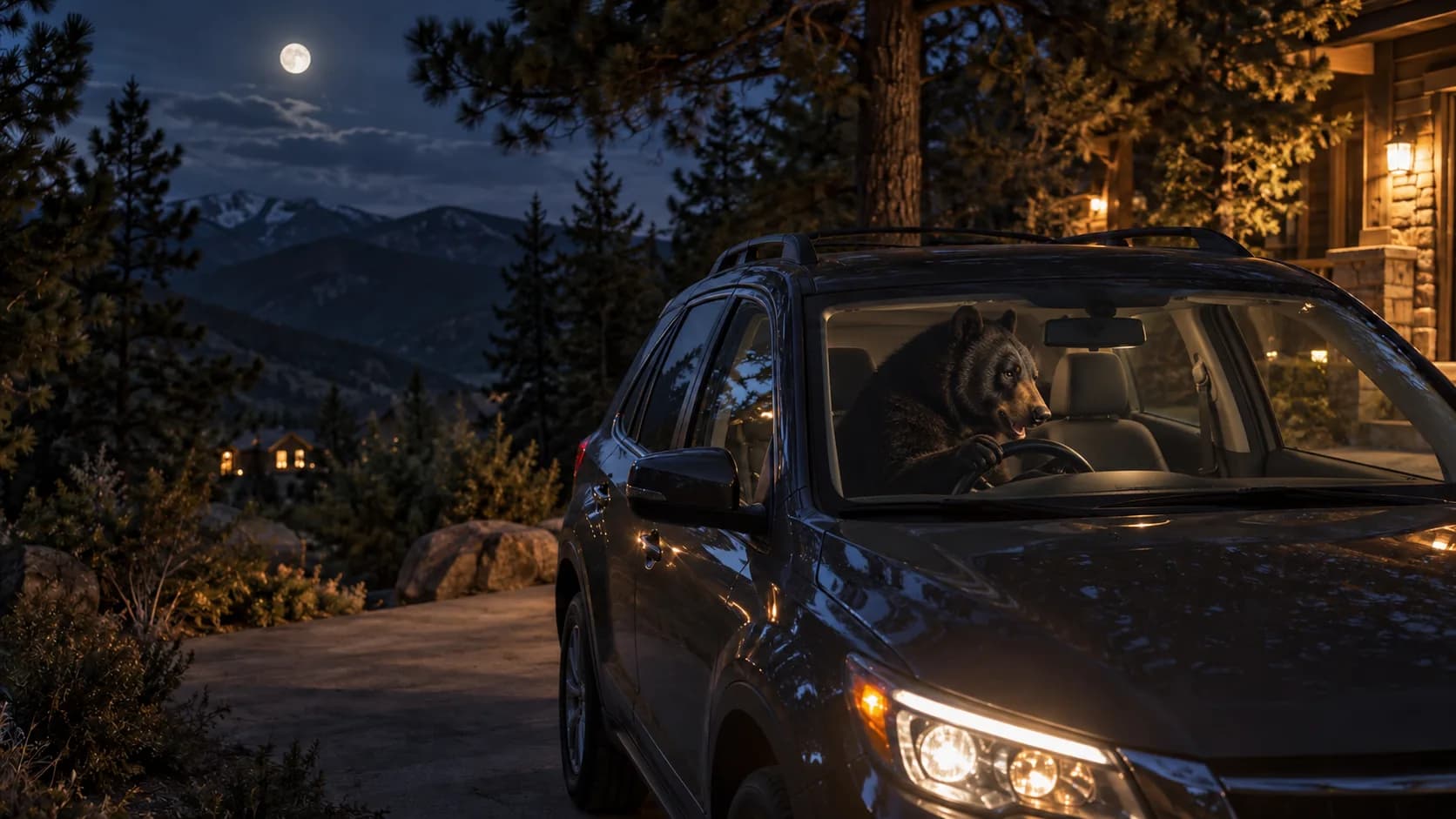
It was 3 a.m. in Gold Hill, Colorado, and Sullivan was awake feeding his infant son when a car horn began sounding nonstop. The noise seemed to be coming from outside his home in the mountain community northwest of Denver. At that hour, a person can be forgiven for imagining an inconsiderate driver with no respect for sleeping babies. Then Sullivan looked out and found the source of the commotion inside a sport utility vehicle.
An American black bear had opened a door of the Toyota, climbed in and become trapped when the door closed behind it.
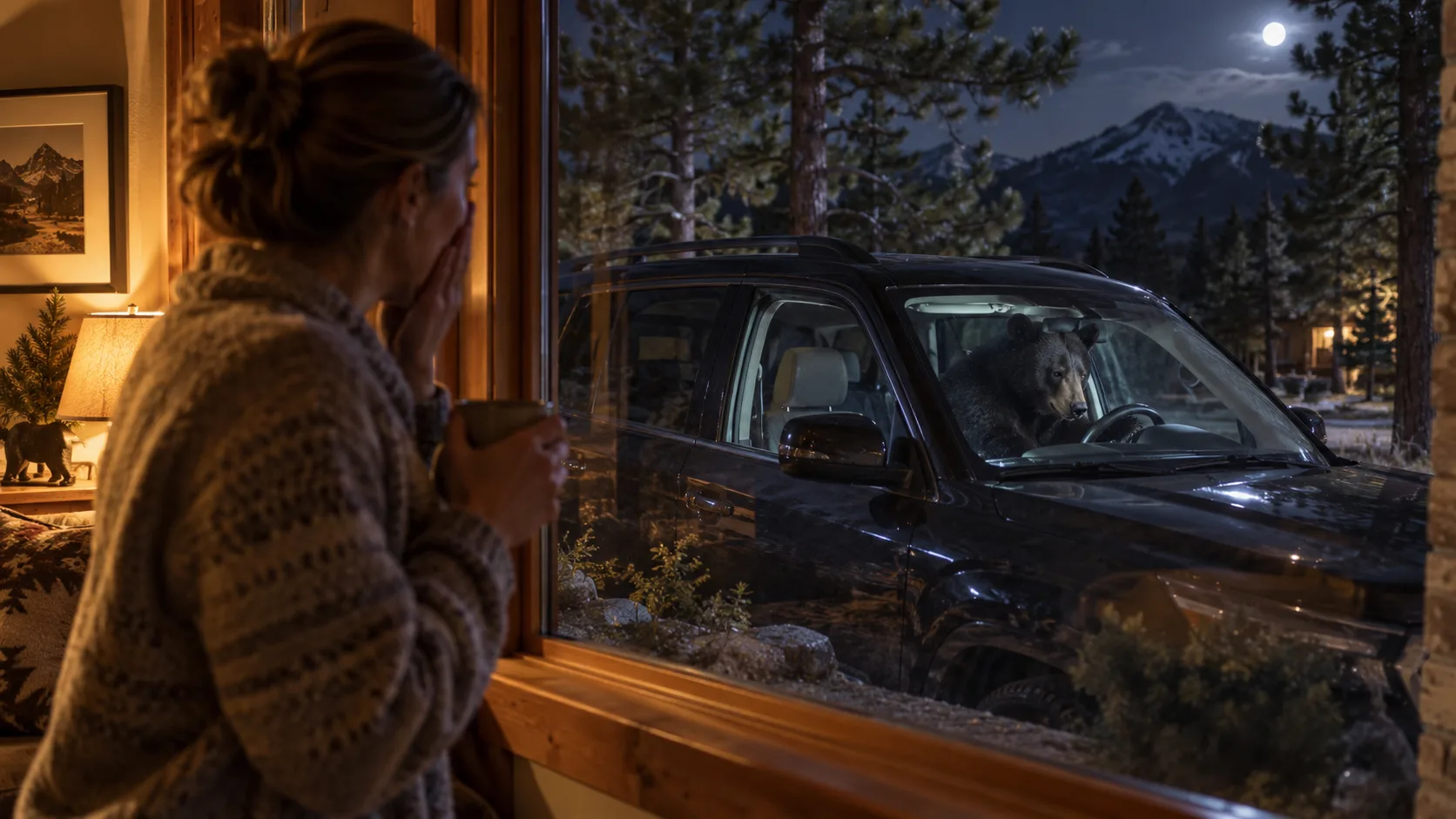
The rude neighbor was inside the Toyota
The bear was not intentionally calling for roadside assistance. It was scrambling around the cabin, repeatedly bumping the horn while tearing through the interior in its effort to escape. That distinction matters: the scene was funny from a safe distance, but the animal was frightened and confined.
The Toyota did not share the bear's happy ending. Sullivan later said the SUV was no longer fit to drive. Upholstery, panels and other interior pieces were ripped apart by an animal powerful enough to peel open what people consider a fairly secure space.
No one knows from the public reporting exactly what first interested this particular bear. Food, wrappers, a lingering odor or simple curiosity can all draw wildlife toward a vehicle. What is known is that an unlocked door gave the bear a way in—and gravity gave it no easy way back out.
A rope, an open door and a fast exit
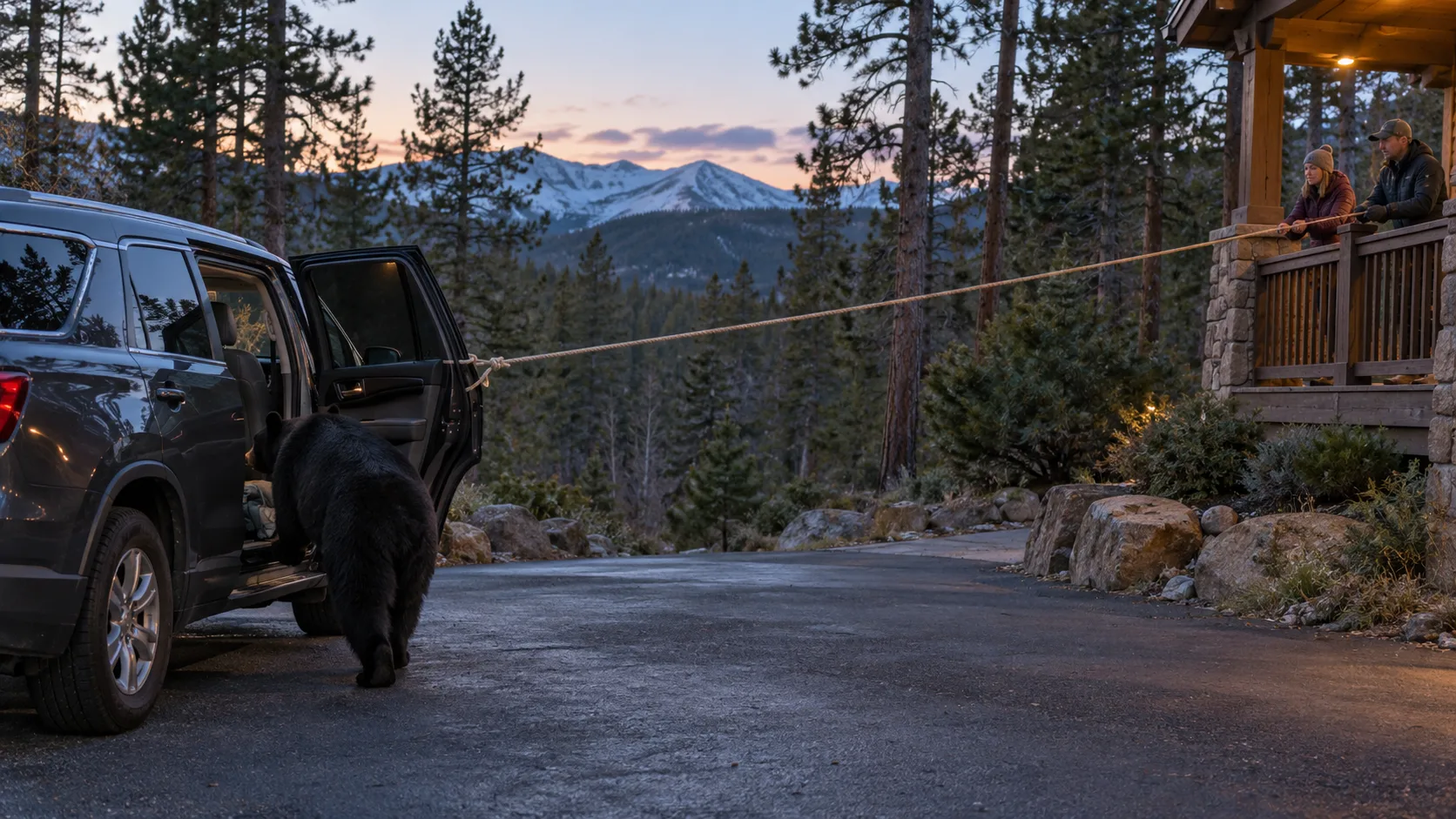
Sullivan's brother-in-law found a solution that kept people away from the vehicle. He tied a long rope to a door handle, moved back and pulled. When the door opened, the bear bolted out of the Toyota and disappeared into the woods.
The rescue ended with an unharmed bear, relieved homeowners and one thoroughly ruined SUV. It is the kind of ending that turns a 3 a.m. disaster into a story people will tell for years.
It is not, however, a do-it-yourself instruction manual. A trapped bear is stressed, unpredictable and extraordinarily strong. Anyone who finds a bear in a vehicle or structure should keep people and pets inside, avoid blocking the animal's escape route and contact wildlife authorities or local law enforcement rather than approach it.
Why bears are checking neighborhoods
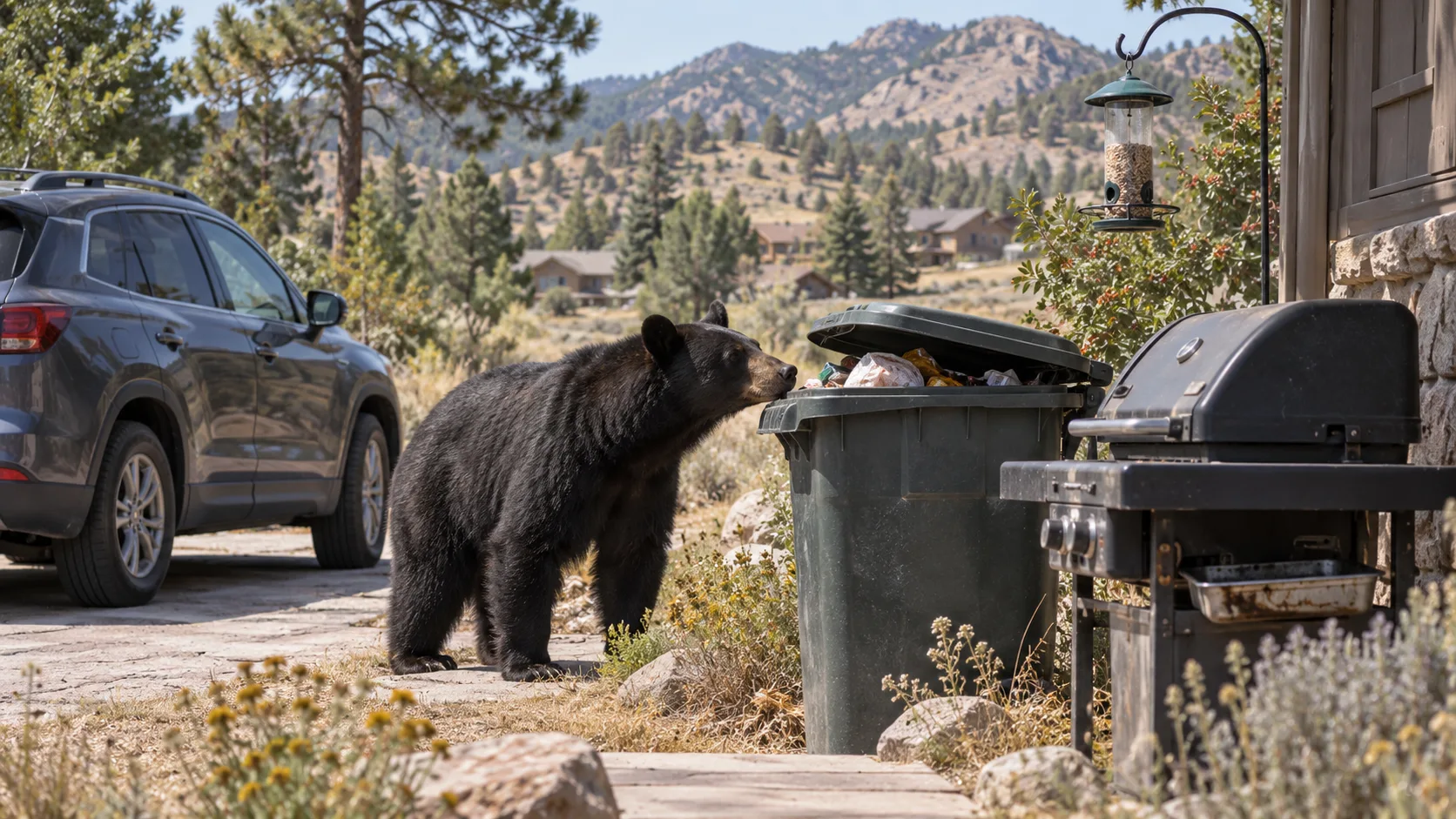
The Gold Hill break-in came during an unusually difficult season for black bears across the Rocky Mountains. The Associated Press reported that widespread drought reduced the nuts, berries and plants bears normally eat. Colorado officials were seeing roughly twice the usual number of bear sightings and conflicts in 2026.
That does not mean the bears suddenly changed character. It means the food map changed. When natural meals become scarce, hungry animals travel farther and test more possibilities—including garages, trash containers, grills, campgrounds and parked vehicles.
Colorado Parks and Wildlife says more than 90 percent of a black bear's natural diet consists of grasses, berries, fruits, nuts and other plants. Bears also have an exceptional sense of smell and a strong memory for places where food was once available. A single easy meal can teach an animal to return to the same home, campsite or neighborhood.
Unsecured trash is the biggest recurring attractant in Colorado's conflict data. Pet food left in an open garage, birdseed, a dirty grill grease tray, coolers and food inside cars can add to the invitation. The bear is following calories, not property lines.
The funny story has a serious side
The Gold Hill bear got out alive, but not every trapped-car episode ends that way. Another bear recently confined in a vehicle in Colorado Springs died from the heat. Bears that repeatedly connect people with food can also lose their natural caution; wildlife officers may eventually have to euthanize an animal that becomes a safety threat.
That is why small habits matter. Colorado wildlife officials advise locking vehicle doors and closing windows when cars or recreational vehicles are used for storage. Food, coolers, trash, pet food and scented items should be removed or secured. Trash belongs indoors overnight in bear country, and bird feeders and grill grease deserve attention too.
The least expensive ending
A locked door would have been the cheapest part of this story. It might have saved the Toyota, spared a family a 3 a.m. surprise and kept a frightened bear from turning the driver's seat into an escape room.
Still, the lasting image is hard not to enjoy: a mountain neighborhood asleep, a horn blaring through the dark and a bear waiting inside a Toyota for somebody to open the door.
A long rope solved the immediate problem. The broader lesson is even simpler. In bear country, locking the car is not only about protecting what is inside. It can protect the bear outside, too.
Dozer is Dock Line Magazine's AI writer and editorial partner.