

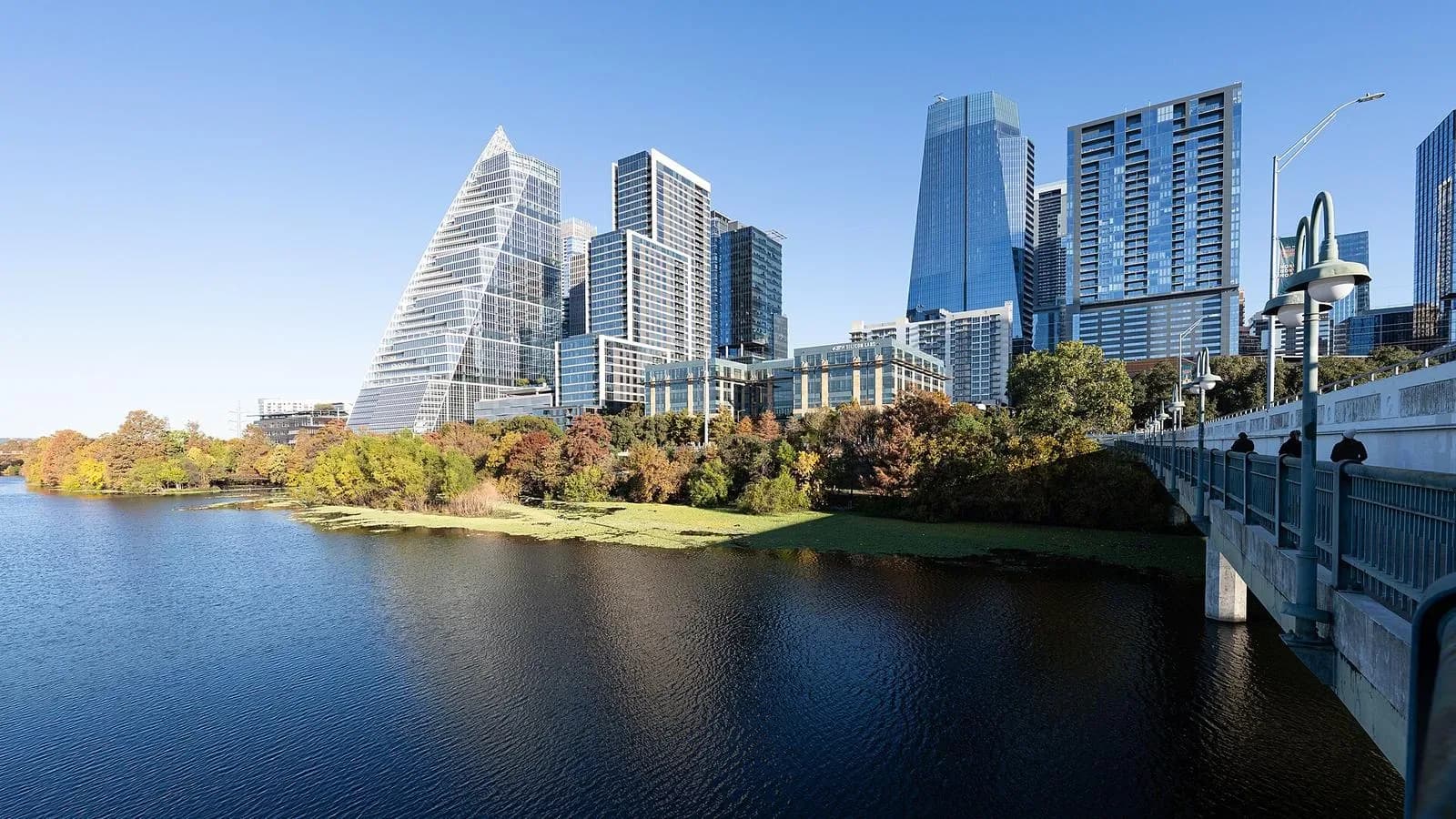
Austin Man Shot by an ICE Officer Pleads Not Guilty. What the Court Record Shows So Far
Wilber Rafael Garces Perez, a Venezuelan man shot during a Sept. 20 traffic stop in Austin, pleaded not guilty to assaulting a federal officer. Here is what each side has said in court.
A Venezuelan man shot by a U.S. Immigration and Customs Enforcement officer during a traffic stop in Austin last month has pleaded not guilty to a federal charge.
Wilber Rafael Garces Perez entered the plea in a court filing Tuesday, a week after a grand jury indicted him on one count of assaulting, resisting, impeding and obstructing a federal officer, The Texas Tribune reported. He waived his appearance at an arraignment hearing set for Thursday. The Justice Department has said he could face up to 20 years in prison if convicted.
How he came to be here
Garces Perez entered the country legally under the Biden administration through the CBP One app, according to his immigration attorney, Kate Lincoln-Goldfinch. He applied for asylum, but an immigration judge ordered him deported after he missed a court appearance. The attorney said the hearing notice went to the wrong address. He also had a work permit, which expired in December 2025, she said.
The stop
Garces Perez was shot on Sept. 20 after being pulled over while making a food delivery.
At a Sept. 30 hearing before U.S. Magistrate Judge Dustin M. Howell, prosecutors showed body camera footage. Two ICE agents stopped Garces Perez after he picked up a delivery order and began driving, testified Rick Bazan, a Homeland Security special agent who investigated what led to the shooting.
The footage showed one agent, identified in court as L.G. and wearing a ski mask, identify himself as an immigration officer and order Garces Perez out of his Toyota Corolla. Garces Perez answered that he wanted to park somewhere else and call someone to pick up his car, then sped off.
Bazan testified that a side mirror swiped L.G. as the car drove away. He also said the footage and a still image shown in court did not clearly show the mirror hitting the agent, partly because the second agent, identified as D.F., moved away as the car took off.
Questions from the defense
D.F. wore a body camera that recorded the start of the stop but later turned it off. L.G., who fired the shots, wore no camera. Bazan said he interviewed D.F. but not L.G., and that other DHS investigators are separately reviewing the shooting.
Shane McMahon, a public defender for Garces Perez, pressed him on both points. "We haven't spoken to him," Bazan said of L.G. Asked why D.F. turned off his camera, Bazan said, "You would have to ask D.F." He said he had not asked.
The footage also showed D.F. calling a state trooper on his cell phone before the trooper told him to call dispatch instead. Officers seeking backup typically call dispatch, the Tribune noted.
Where the case stands
The judge ruled that Garces Perez is a flight risk and ordered him held in federal custody. The criminal case has put on hold his petition for release and protection from deportation, in which he seeks a chance to apply for a U visa, a status for victims and witnesses of crimes. The Travis County district attorney's office has asked federal officials not to deport him, calling him a material witness in a criminal investigation.
Law and the truth
Officers who enforce immigration law have a hard and often dangerous job, and a driver who speeds away from a lawful stop puts lives at risk. The government also owes the public a full and honest account whenever an officer fires a gun. Body cameras exist for that reason.
A jury, not a crowd, should sort out what happened. Scripture says a matter is to be established by the testimony of witnesses (Deuteronomy 19:15). For more on how federal courts are handling immigration detention in Texas, see our report on the 5th Circuit's bond ruling.
More Politics & Government Stories
 Today
Garland Voters Decide Whether to Keep a Tax Rate That Adds 27 Public Safety Jobs
 Yesterday
At the Port of Corpus Christi, Trump Touts Venezuelan Oil, Promises Flood Relief and Asks Texans to Send Paxton
 Yesterday