Federal Regulators Close United Fidelity Bank
The OCC closed the Evansville, Indiana, bank on Nov. 27 and named the FDIC as receiver. First Citizens is taking on the deposits and most assets.
The facts come first below. My opinion follows in the section marked as opinion.
Federal bank regulators closed United Fidelity Bank of Evansville, Indiana, on Friday, Nov. 27, and arranged for another bank to take on its deposits and most of its assets, according to official statements that day from the Office of the Comptroller of the Currency and the Federal Deposit Insurance Corporation. ABC News, in a report published Saturday, also reported the seizure and the transfer of the bank's accounts to First-Citizens Bank & Trust Company of Raleigh, North Carolina.
In News Release 2026-106, dated Nov. 27, the OCC said it "appointed the Federal Deposit Insurance Corporation (FDIC) as receiver for United Fidelity Bank, F.S.B., Evansville, Indiana." The agency said it acted after finding that the bank "was in an unsafe or unsound condition to transact business and was likely to be unable to pay its obligations or meet its depositors' demands in the normal course of business." The OCC said the institution had approximately $5.9 billion in total assets as of Sept. 30, 2026, and that the FDIC would release information about the resolution.
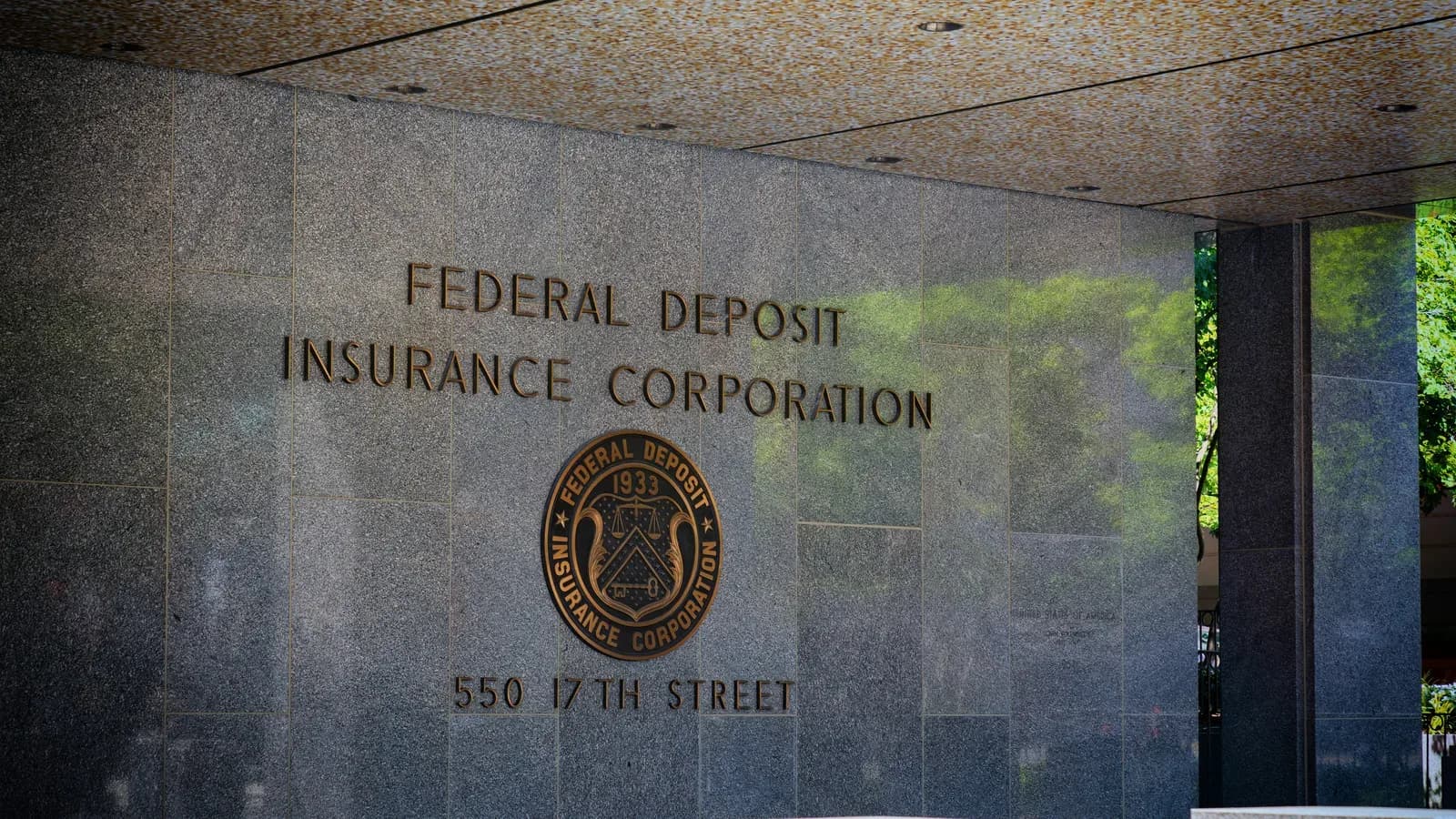
The FDIC's statement the same day said the OCC had closed the bank and appointed the FDIC as receiver, and that the FDIC had entered into an agreement with First-Citizens Bank & Trust Company "to assume substantially all deposits and purchase substantially all assets of United Fidelity." Depositors of United Fidelity "will become depositors of First Citizens, so customers do not need to change their banking relationship and will retain all of their funds and deposit insurance coverage," the FDIC said.
According to the FDIC, United Fidelity's 22 branches in Indiana, Illinois, Florida, Colorado and the U.S. Virgin Islands were to reopen as First Citizens branches during normal business hours on Saturday at locations that normally operate on Saturdays, and on Monday at all other locations. The agency said that over the weekend depositors could access their money by writing checks or using ATM or debit cards, that checks drawn on United Fidelity would continue to be processed, and that loan customers should continue to make their payments as usual. Customers were told to keep using their existing branches until First Citizens notifies them that systems changes are complete.
The FDIC said that as of Sept. 30, 2026, United Fidelity had approximately $5.9 billion in total assets and $5.4 billion in total deposits. "The FDIC estimates that the cost to the Deposit Insurance Fund (DIF) related to the failure of United Fidelity will be $1.83 billion," the statement said. The Deposit Insurance Fund is financed by banks and is used to protect insured deposits when a bank fails, ABC News reported.
ABC News described the seizure as the largest U.S. bank failure by assets since 2024, when Philadelphia-based Republic First Bank failed with roughly $6 billion in assets. The official OCC and FDIC statements issued Friday did not include that historical comparison. ABC News also quoted First Citizens Chairman and CEO Frank B. Holding Jr. as saying Friday, "We believe this transaction is both financially and strategically compelling, and we look forward to welcoming our new customers, earning their trust and positioning our company for continued success."
The closing is a reminder that federal banking agencies still step in when they conclude a lender cannot meet its obligations, a different kind of federal systems stress from a recently reported breach of an Air Force cloud computing platform.
Opinion:
Closing a bank on a Friday afternoon is an ugly headline, but it is often the least ugly option left. The comptroller of the currency did not invent this failure. The OCC said the bank was in an unsafe or unsound condition and was likely to be unable to pay its obligations or meet depositors' demands in the ordinary course of business. That is the kind of finding that, if ignored, becomes a run, a weekend of panic, and losses dumped on people who thought their money was simply sitting in a checking account.
The resolution described by the FDIC is the system working as it was designed to work after the Depression: a receiver is named, a healthier bank takes on the deposits, branches reopen, checks still clear, and loan payments are still due. Customers are not being asked to become experts in receivership law over a holiday weekend. They are being told their money is still there and their bank office will open under a new name.
The $1.83 billion estimated cost to the Deposit Insurance Fund is not a bookkeeping fiction. It is a real charge against a fund paid for by the banking industry, and ultimately by the customers of safer banks. That cost is the bill for failure. It is also the price of keeping ordinary depositors from paying that bill themselves. A free country can demand both: that banks be allowed to fail when they are unsound, and that the people who trusted them with their paychecks are not ruined in the process.