Fourth Circuit Lets Virginia Limit Local ICE Partnerships
A federal appeals court on Nov. 23 vacated an injunction on Virginia's ICE-partnership law, while a separate mask rule for federal officers remains blocked.
The facts come first below. My opinion follows in the section marked as opinion.
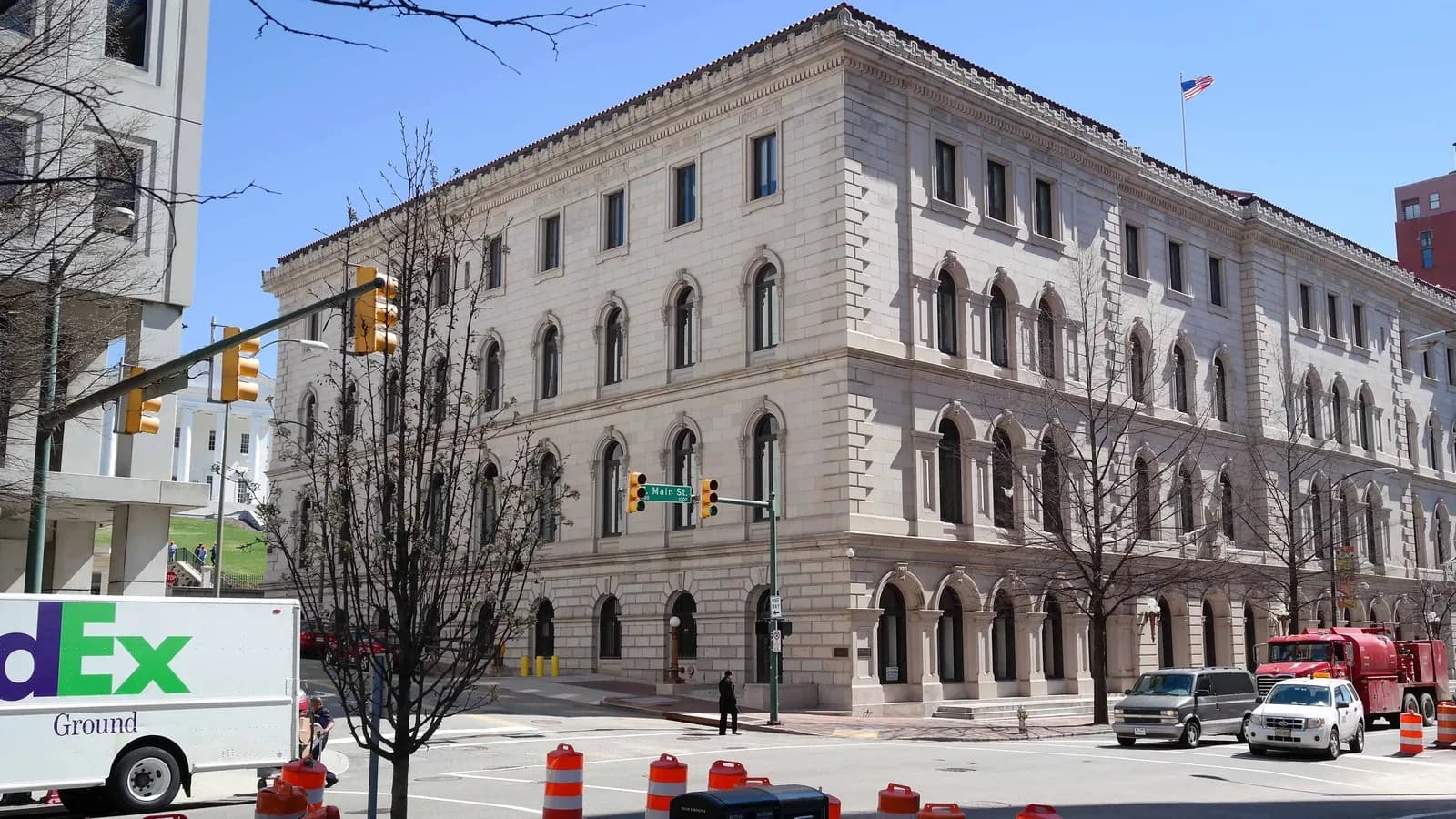
A federal appeals court has vacated a preliminary injunction that had blocked Virginia from enforcing a new law limiting local partnerships with U.S. Immigration and Customs Enforcement, while leaving in place a separate injunction against a state rule on masks and identification for federal officers. The 4th U.S. Circuit Court of Appeals published the decision on Nov. 23, 2026. Fox News, in a report dated Nov. 28, described the ruling as lifting an injunction that had blocked key provisions of the partnership law signed in April and said the mask restrictions remain blocked.
Judge Heytens wrote the published opinion, which Judge Benjamin joined. Judge King concurred in the decision to vacate the injunction on the partnership statute and dissented from the decision to keep the mask law blocked. The cases, argued Oct. 27, are United States v. Commonwealth of Virginia, Nos. 26-1874 and 26-2258, on appeal from Senior District Judge Robert E. Payne in the Eastern District of Virginia.
The partnership statute, which the court called the 287(g) Law, "was signed by the governor on April 22, 2026," the opinion said. It is codified at Virginia Code Section 15.2-1726.1, titled "Immigration enforcement agreements with federal authority; required provisions." The statute says no law-enforcement agency may maintain, renew or enter into a federal immigration enforcement agreement unless the agreement includes 12 listed conditions, and that any existing agreement not modified in writing by Sept. 1, 2026, "shall be deemed void and unenforceable."
Those required conditions, set out in Section 15.2-1726.1(C), include that ICE provide "the names and ranks of all federal agents involved in any immigration enforcement activity within the Commonwealth at least seven days prior"; that agents not display the word "police" on a uniform, vehicle or equipment; that no ICE agent "conduct any immigration enforcement activity on the property of any school, faith-based organization, or courthouse"; and that any shooting involving an agent in the performance of official duties "shall be investigated by the Virginia State Police" and be subject to prosecution by a local prosecutor or the attorney general.
In No. 26-2258, the appeals court said, "we vacate the preliminary injunction that bars enforcing the 287(g) Law with respect to existing agreements." The opinion concluded that the federal government is not likely to succeed on its claim that the law violates the intergovernmental immunity doctrine or the Contracts Clause, writing that the federal government may not "command" the commonwealth's "officers, or those of [its] political subdivisions" to assist with federal immigration enforcement efforts, and that Virginia's legislature has imposed new limits on when its agents may agree to do so.
The same panel reached the opposite result on the mask statute. "The second law—the Mask/Identity Law—was signed by the governor on May 20, 2026," the opinion said. "In contrast, we affirm the preliminary injunction against enforcing the Mask/Identity Law against federal officers acting in their official capacities." The United States filed the underlying lawsuit on June 11, 2026, the court said.
Fox News reported that the Loudoun County Sheriff's Office is suspending its 287(g) agreement with ICE after the appeals court lifted the injunction on the partnership law. A spokesperson for the office told FOX 5 DC, in a quotation carried by Fox News: "The practical difference going forward will be the release of persons with warrants or detainers concurrent with their scheduled release date from the jail. We will not be holding them up to 48 hours for ICE to arrive as required under 287G." According to the same report, the jail-only partnership dated to August 2024, and 330 illegal immigrants have been turned over to federal immigration authorities by the sheriff's office since the beginning of the year. Fox News also noted that federal authorities can still take certain inmates into custody under a separate Virginia law, and the code section itself says, "Nothing in this section shall be construed to prohibit" a sheriff or jail superintendent, "upon receipt of a federal immigration detainer," from transferring custody of an adult as authorized by another state statute.
The fight over how far a state may go in limiting cooperation with federal officers is part of a wider run of court battles this year, including a federal judge's order blocking an early FCC review of ABC broadcast licenses.
Opinion:
A state cannot be ordered to deputize its sheriffs as federal immigration officers. That much is a fair reading of the Constitution, and the 4th Circuit was right to say so. What Virginia then did with that freedom is another matter. The 12 conditions in the statute are not a good-faith rewrite of a partnership agreement. A requirement that ICE give seven days' notice of its agents, stay off school and church property, drop the word police from its vehicles, and submit agent-involved shootings to state police and local prosecutors is a list designed to make continued cooperation all but impossible.
The practical meaning, if the Loudoun County sheriff's office is describing its jail accurately, is that people with immigration detainers will walk out on their scheduled release date instead of being held a short time for ICE. That is not an abstract federalism exercise. It is a policy of cutting the last clean handoff between a jail and the agency charged with removing people who have no right to be here.
The same court was also right to keep blocking the mask law as applied to federal officers. Dual sovereignty cuts both ways. Virginia may refuse to lend its deputies. It does not get to dictate how federal agents cover their faces while doing a dangerous job the Constitution assigned to the United States.