Flooding Closes Roads Across West Texas as State Crews Stand By
Heavy rain tied to the remnants of Hurricane Simon and a strong cold front flooded highways from the South Plains to the Rolling Plains. State rescue teams were staged ahead of the storms.
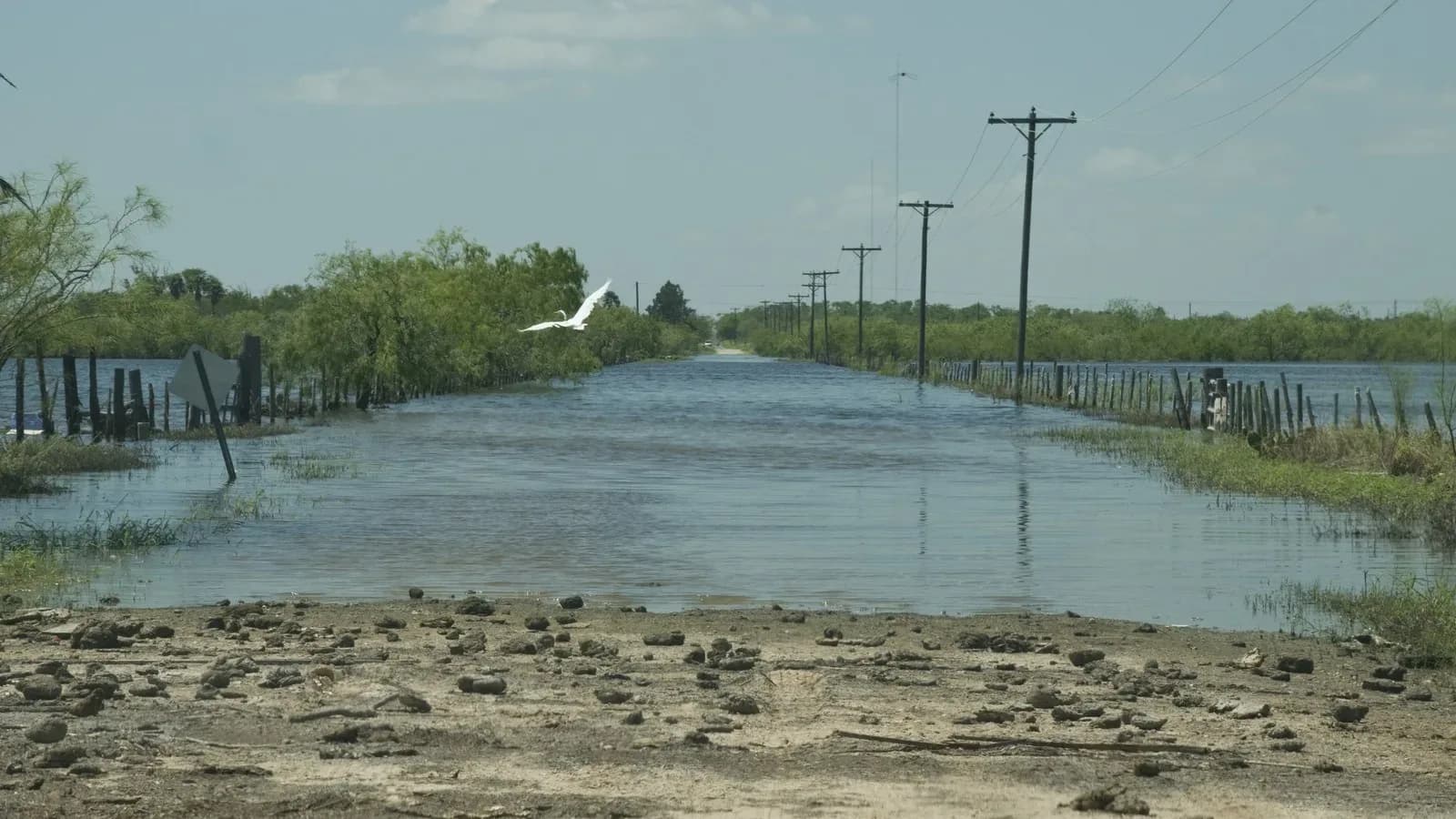
Floodwater closed or covered highways across West Texas as a strong cold front and heavy rain moved through the South Plains and Rolling Plains, FOX 4 reported. The flooding followed a day of severe storms and reported tornadoes in the region.
Texas Department of Transportation maps showed, according to FOX 4, dozens of high-water advisories and flooded-road alerts in Bailey, Lamb, Hale, Motley, Cottle, Foard, Wilbarger, Dickens, King, Stonewall and Haskell counties, along corridors from Muleshoe southeast to Jayton and east toward Vernon. Some highway segments were closed while crews assessed runoff and cleared debris.
Warnings in the Permian Basin and Red River country
Earlier Thursday the National Weather Service had flash flood warnings for parts of Borden, Dawson, Howard and Martin counties, for parts of Martin and Midland counties near Stanton, and for parts of Foard, Hardeman and Wilbarger counties around Vernon and Crowell, FOX 4 reported.
As of about 5:20 p.m. Thursday, National Weather Service alerts showed a flash flood warning for parts of Nolan and Taylor counties, near Abilene, until 7 p.m. Flood watches ran until 7 a.m. Friday across much of the Permian Basin, including Midland, Ector, Martin, Howard and Dawson counties, and across the Concho Valley and Big Country, including Tom Green, Taylor, Jones and Haskell counties. River flood warnings were in effect for the Pease River near Vernon, where moderate flooding was forecast; Beaver Creek near Electra; the Rio Grande in Big Bend National Park; and the Pecos and Devils rivers in Val Verde County. Warnings change quickly; check the current ones and DriveTexas.org before you travel.
The state's response
Gov. Greg Abbott directed the Texas Division of Emergency Management on Tuesday to activate state resources ahead of the storms, which forecasters tied to moisture from the remnants of Hurricane Simon, FOX 7 Austin reported. According to the governor's office, those include Texas A&M swiftwater rescue boat squads and urban search and rescue teams, Texas Parks and Wildlife game wardens and rescue boats, DPS troopers and helicopters, and state emergency medical teams with medics and ambulances.
"I urge all Texans to monitor local forecasts, heed guidance from state and local officials, and never drive through flooded roadways," Abbott said in his Oct. 13 announcement.
Stay off flooded roads
The rule is simple: turn around, don't drown. Water over a road can hide washed-out pavement, and it takes little moving water to sweep a vehicle away. Check DriveTexas.org for closures and TexasReady.gov for preparedness information, KLBJ noted.
Standing water left behind after storms also breeds mosquitoes. Our report on West Nile cases in Texas explains how to dump it out. For how the agencies responding to storms fit together, see our guide to Texas state agencies.
Neighbors first
West Texans know how fast a dry draw can turn into a river. The state has staged help, but the first responders are often neighbors checking on the elderly couple down the road. Pray for those in the path of these storms, and stay home if you can until the water goes down.
Hero photo: Patsy Lynch / FEMA via Wikimedia Commons, public domain (U.S. government work), cropped and resized.