Jersey Village OKs $8.1 Million for City Campus in Cash After Three Failed Bonds
Voters rejected bonds for a new city hall three times. Jersey Village's council voted 4-1 to start phase one anyway, paid from cash already in the budget.
Jersey Village voters turned down bonds for a new city hall three times. Now the city is building one anyway, one phase at a time, with cash it has already set aside.
On Oct. 27, the City Council approved a guaranteed maximum price of $8.1 million for the first phase of the City Campus project, Community Impact reported. The vote was 4-1, with council member Simon Hughes opposed.
What the money buys
Counting construction, architecture and engineering fees, phase one comes to $9.3 million, according to meeting documents cited in the report. It includes:
Renovations to two buildings
A new lobby
Demolition of three buildings
Site improvements
The city expects to issue the notice to proceed on Dec. 1, and construction should take about eight months.
According to the city's City Campus page, the council decided in December 2025 to phase the project. Phase one was tentatively set as city offices plus public works, facilities and parks maintenance space. Phase two would be the council and municipal court chambers and a community and recreation center.
No new debt, for now
The council set aside $9.5 million for phase one in the fiscal 2026-27 budget, adopted Aug. 18, so no new debt was issued for this contract. Finance Director Jennifer Brown said the general fund balance should be about $4.64 million at the end of the fiscal year after phase one is paid for. That is $846,000 more than the city's required reserves.
The project has a history at the ballot box. Bond proposals for it failed in 1990, 2002 and November 2025, according to the report. The city's page says the November 2025 bond was for $21.6 million, based on a February 2025 estimate of $21,611,025 for the whole campus. A revised estimate in November 2025 put the full project at $20,617,634.
After the last bond failed, the council chose a pay-as-you-go approach.
"The fact we need a new city hall, the fact we're here today is not an accident… this is probably the single biggest deferred item the city has," council member Greg Holden said.
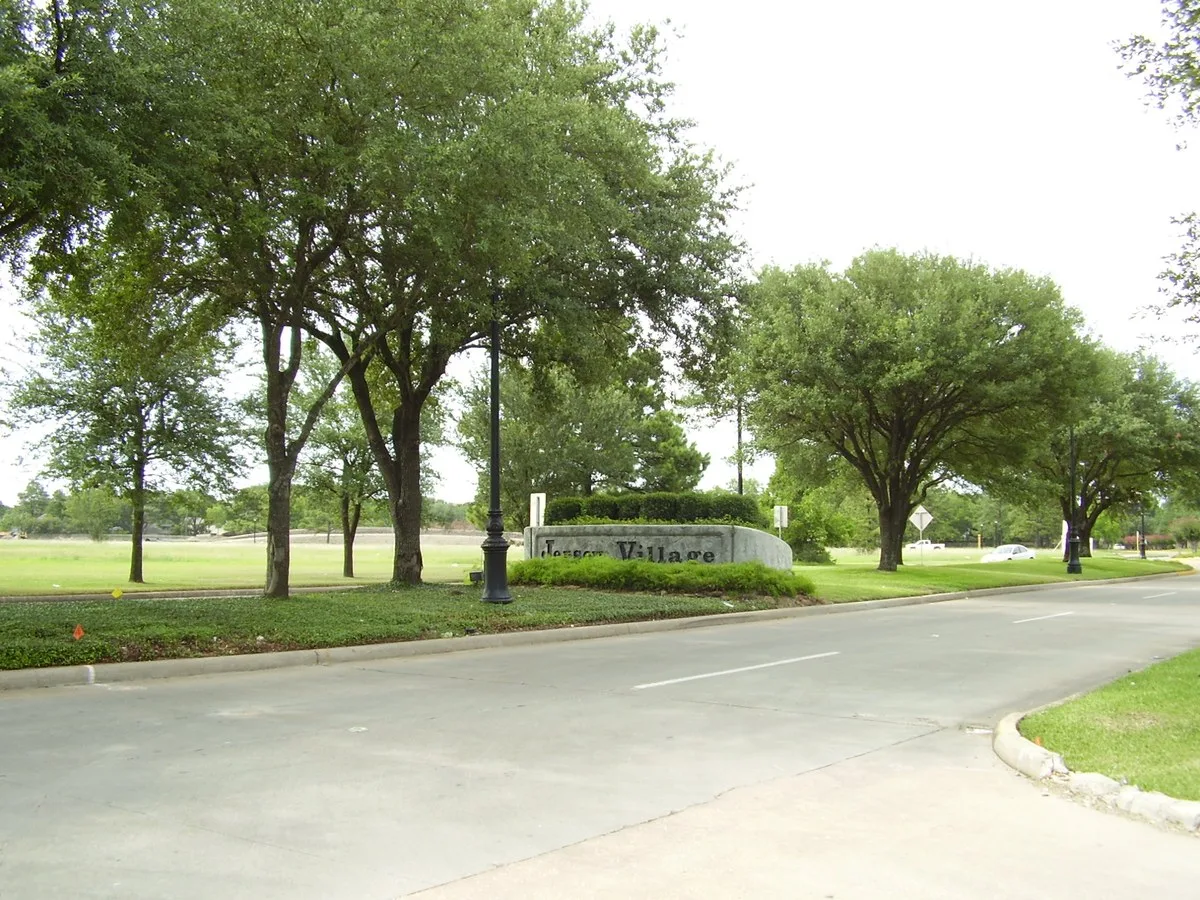
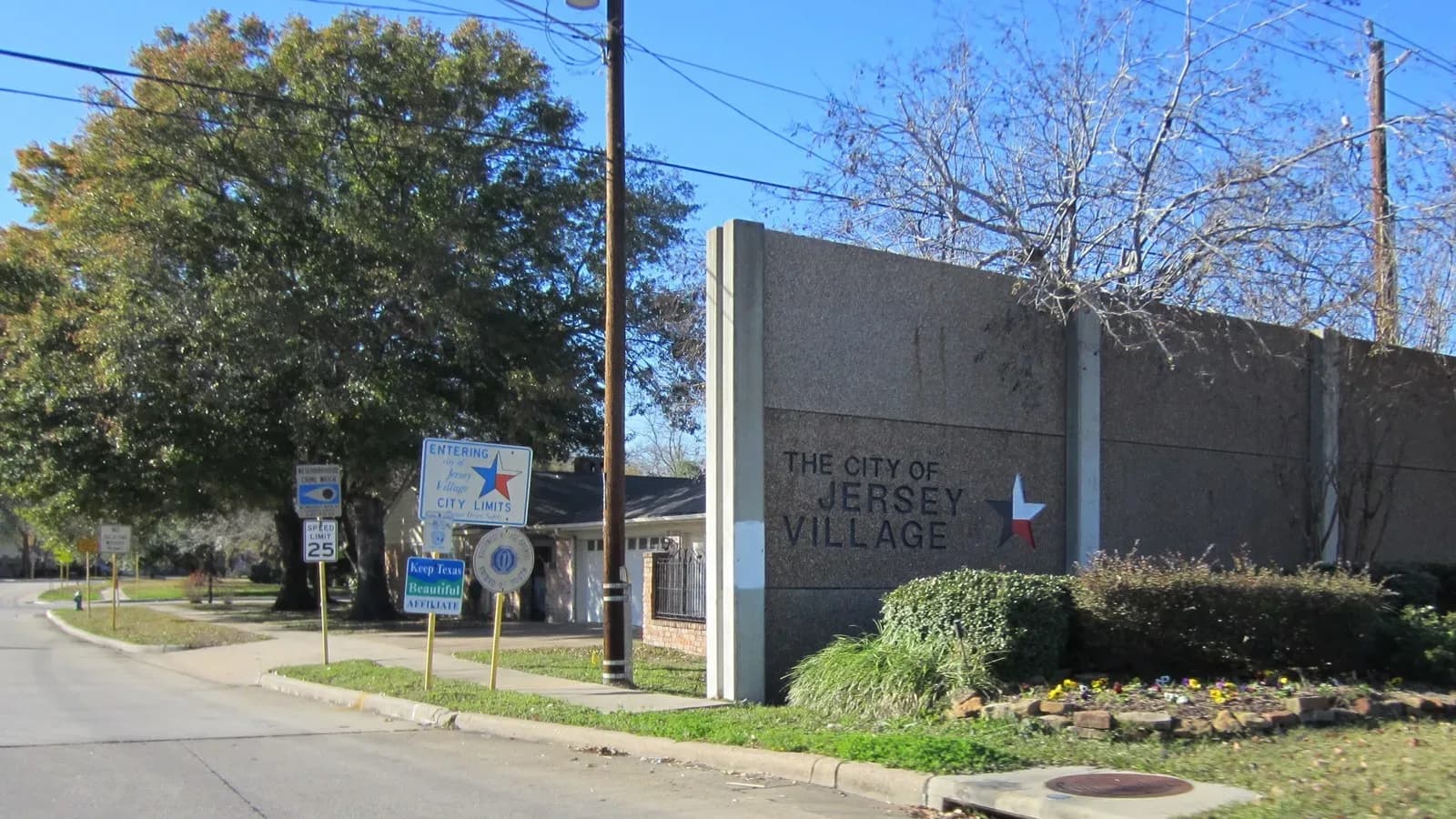
An entrance to Jersey Village. The photo is undated. Photo: WhisperToMe / Wikimedia Commons, Public domain.
The lone no vote
Hughes said he would rather have used bond money for phase one, so the city could move quickly into phase two using its fund balance. His concern is the community spaces residents use now, many of which will not be available once phase one begins.
"I think, while the city's delighted to have better offices for the administration, and closer offices and facilities for public works, I think the city is really, you know, jonesing for these community spaces," Hughes said.
City Manager Austin Bleess said staff told those groups the arrangement was temporary.
"We told each and every one of the people that are using that space, every time they talk to us about it, this is temporary, this will go away," Bleess said. "Everybody agreed to it, so we let people use it."
Holden asked staff to look for alternatives or policy changes to help the groups that will be displaced.
Our view
There is something to admire in a city that pays cash instead of borrowing. Debt has a way of outliving the people who vote for it, and Proverbs warns that the borrower is servant to the lender.
But voters said no three times, and residents should ask whether paying as you go honors that answer or works around it. The fair reading is that voters rejected borrowing $21.6 million, not a new building paid from money already on hand. Either way, the council owes residents a clear plan, and a real price, for phase two before it starts.
Other Texas cities are wrestling with how to pay for big projects. Brownsville moved toward $27 million in new debt without a bond election, and Conroe residents are asking what happened to a hotel that was supposed to pay for itself.