The Supreme Court Will Hear Asian-American Parents' Challenge to Maryland Magnet Schools. Intent Should Matter.
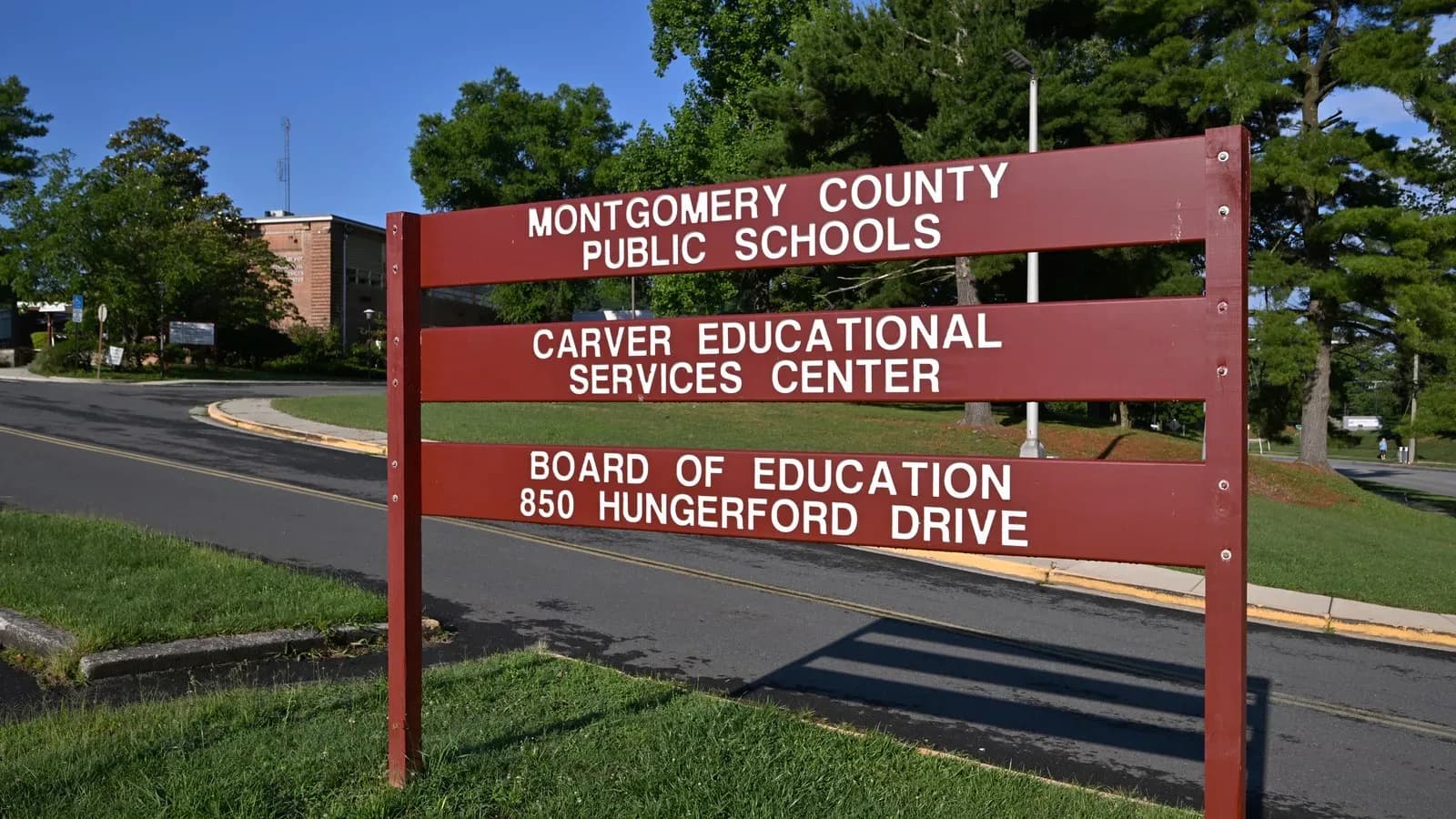
The Supreme Court agreed Monday to hear a challenge from Asian-American parents to the admissions process for Montgomery County, Maryland's selective magnet middle schools.
The facts come first below. My opinion follows in the section marked as opinion.
The Supreme Court agreed Monday to hear a challenge from Asian-American parents in Montgomery County, Maryland, who say the county's admissions process for its most selective magnet middle schools was built to reduce the number of Asian-American students who get in.
The case is Association for Education Fairness v. Montgomery County Board of Education. The justices will hear oral argument early next year, SCOTUSblog reported. The announcement came two years after the Court turned down similar challenges involving Thomas Jefferson High School for Science and Technology in northern Virginia and three of Boston's elite public high schools.
What the parents say
The Association for Education Fairness, which describes itself as an organization of "concerned Asian-American parents in Montgomery County," first sued in 2020, according to SCOTUSblog. The group said a new admissions process, intended in part to increase enrollment of Black and Hispanic students at four highly selective magnet middle schools, violated the constitutional rights of Asian-American students. That process screened all fifth graders, eliminated teacher recommendations and compared students with their peers at their local schools.
Beginning in 2021-22, the county moved to a lottery. Fifth graders who met criteria including grades, reading level and test scores went into a pool, and students were picked from it at random. The parents amended their suit to argue that this policy, nicknamed the Pandemic Plan, also intentionally discriminates against Asian-American students. Because entry to the lottery depends on how students rank against others in their own schools, the parents say it hurts Asian students at high-performing schools, NBC News reported.
What the courts said
U.S. District Judge Paula Xinis dismissed the case. She wrote that she could not "see how the Pandemic Plan visited a disproportionate burden on Asian American students when the percentage of admitted Asian American students so substantially outpaces the percentage representation among all applicants," SCOTUSblog reported. The 4th U.S. Circuit Court of Appeals upheld her ruling in February.
The school board urged the justices to stay out, SCOTUSblog reported. It called the dispute "unremarkable and of little significance" and said the case "involves a race-neutral lottery adopted in response to a global pandemic." The parents pointed to the Court's 2023 decision striking down affirmative action in college admissions and argued that "[i]f '[e]liminating racial discrimination means eliminating all of it,' this cannot stand."
The Court agreed to decide only a narrow question, according to SCOTUSblog: "[w]hether a plaintiff challenging a facially neutral admissions policy as racially discriminatory must establish that the targeted racial group suffered an aggregate disparate impact relative to its share of the applicant pool." NBC noted that because the case turns on what evidence challengers need, the Court is not poised to rule on the underlying constitutional question. It is the second Montgomery County schools case to reach the justices in recent years. Last year, the Court ruled for parents who objected on religious grounds to LGBTQ-themed books in elementary classrooms, NBC reported.
Opinion: Intent matters, and the parents deserve their day in court
The school board has a real point, and it should be stated plainly. By the district judge's account, Asian-American students were admitted at a higher rate than their share of the applicant pool. The parents will still have to prove that officials meant to hold their children back. A lottery adopted in a pandemic is not proof of bad motives by itself.
But the question the justices took is the right one. If officials set out to shrink the number of children of one race in a school, that is wrong whether or not the scheme fully works. A rule that closes the courthouse door unless the numbers come out a certain way turns a question of fairness into a question of arithmetic. Children are not quotas. Scripture is plain that God "is no respecter of persons," and it tells judges, "in righteousness shalt thou judge thy neighbour." Government should hold itself to that standard when it hands out seats in a public school.
Helping children who start behind is a worthy goal, and families of every background want good schools. The way to reach that goal is to build more good schools and better programs, not to engineer who sits in the ones we have. Let the parents make their case and let the evidence decide it. This term the Court will also weigh the federal home-distilling ban, as Dock Line reported in Supreme Court Takes Up Challenge to Federal Home Distilling Ban.