When Texas Takes Over a School District, Local Taxpayers Get the Bill
As Austin ISD braces for state intervention, Houston, Fort Worth and Beaumont show what takeovers cost. The state sends no extra money.
When the Texas Education Agency takes over a failing school district, it brings new leaders, new programs and a new board. It does not bring money. The bill goes to local taxpayers.
That question is now in front of Austin ISD, which faces state intervention after two middle schools, Webb and Burnet, received five straight F ratings, triggering a state law that requires TEA to act. The district has appealed the ratings. Preliminary scores put Burnet at 59 and Webb at 58, one and two points short of a D, and TEA will send appeal decisions before it releases final ratings Dec. 11, Community Impact and KUT reported. If either F becomes final, state law requires the commissioner to close the campus or replace the superintendent and elected board. Parents at the two schools also have until Oct. 15 to petition TEA to close their campuses instead, FOX 7 Austin reported. The reporting comes from Austin Current, republished by The Texas Tribune on Oct. 12.
No blank check
TEA does not give districts extra money to cover the cost of intervention. Agency spokesperson Jake Kobersky said the state "works with district leadership to identify additional revenue sources" as part of the support it gives all districts.
Commissioner Mike Morath has options. He can order a full takeover, remove the superintendent and replace the elected board with an appointed board of managers. Or, as he did in Wichita Falls ISD, he can keep local leaders in place and appoint a conservator to oversee changes.
What it has cost elsewhere
Houston ISD, taken over in 2023, pulled nearly $450 million from its reserves in the first two years for new technology, programs and higher pay at some schools. Superintendent Mike Miles was hired at $380,000 and now makes $462,000. If he leaves before his contract ends in June 2030, he could walk away with up to $924,000. About 21,000 students have left the district since the takeover, costing roughly $190 million in state funding.
The results have been real, too. Nearly eight in 10 HISD schools earned A or B ratings this year, about double the share before the takeover. To pay for it, the district cut hundreds of central office jobs, transportation and social work. Voters rejected a $4.4 billion bond in 2024.
Fort Worth ISD, taken over in March, paid at least $412,000 plus benefits to part ways with its superintendent. It pays a conservator $250 an hour plus travel, and faces a nearly $50 million shortfall next year.
Beaumont ISD will pay its former superintendent $245,000 to serve as an adviser until January 2027, on top of paying its state-appointed leader.
Austin is already broke
Austin ISD ended last year with a $105 million deficit. It closed 11 schools and passed a budget with $205 million in cuts affecting more than 500 jobs. Its reserves are about half what board policy requires, and it must borrow $140 million to make payroll through November while it waits on property taxes. Superintendent Matias Segura earns a base salary of $362,000, and his contract does not spell out a buyout in case of takeover.
Trustee Candace Hunter does not see a way through.
"Financially speaking, the district is already in a stranglehold. There's no upside to this."
Roxanne Martinez, a removed Fort Worth trustee, put the core question plainly:
"Will these investments ultimately produce the improved student outcomes that everyone wants?"
Analysis: Accountability runs both ways
Texas was right to pass a law that refuses to let schools fail children year after year. Five straight F ratings is not a rough patch. Parents in those schools deserve better, and the state has a duty to act when local leaders will not.
But accountability should run both ways. When elected trustees are removed, voters lose the one tool they have to fire the people spending their money, as one removed Houston trustee pointed out after the bond failed. If the state decides who runs a district, the state should also be clear about what it will cost and who answers for the results. Taxpayers in every district that could be next deserve that much.
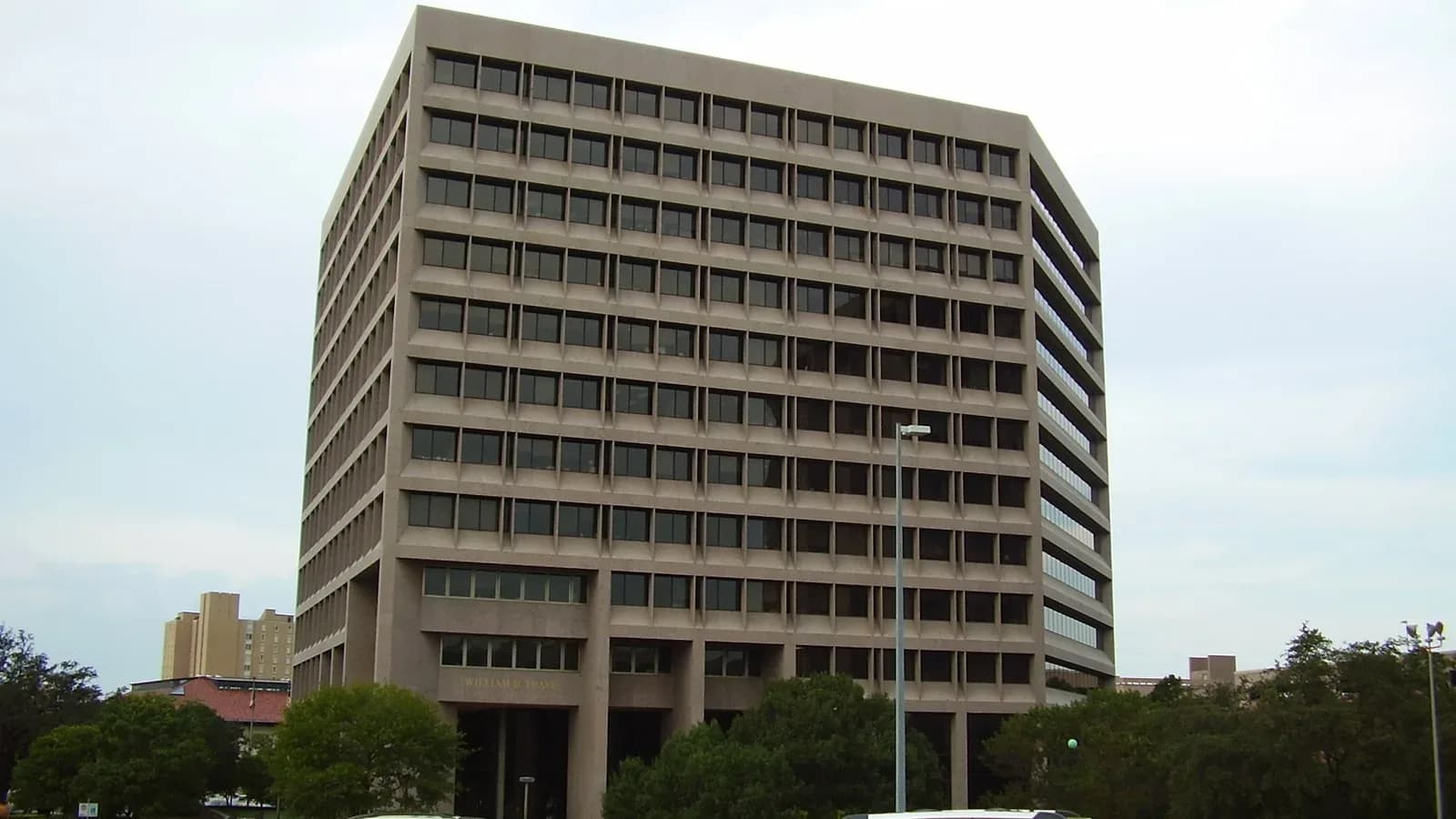
Hero photo: William B. Travis State Office Building, Austin, by WhisperToMe via Wikimedia Commons, public domain.