Harris County Unplugs Flock Cameras as Conroe's Police Chief Shows How His Are Used
Harris County covered 61 Flock cameras in one precinct and takes up the system Thursday. In Conroe, the chief says searches fell to about 13 a day and showed council how the system works.
License plate cameras are on the agenda on both sides of the county line this week, and the two governments are heading in different directions.
In Harris County, Precinct 4 Commissioner Lesley Briones has already switched off every Flock Safety camera on her precinct's property, and the full Commissioners Court is scheduled to take up the county's use of the cameras on Thursday, Oct. 15. In Conroe, the police chief went before City Council last week with a live demonstration meant to show the cameras are a narrow investigative tool, not mass surveillance.
Both sides are making serious arguments. Residents deserve to hear them plainly, and to see the numbers.
Harris County: cameras covered, questions pending
On Oct. 8, Briones directed her staff to "decommission and cover all Flock cameras installed on Precinct 4 property," according to FOX 26 Houston. That is 61 devices, 13 automatic license plate readers and 48 security cameras, across nine parks and facilities. Her office said residents had raised concerns about "outside-agency access, vendor disclosure authority, improper searches by authorized users, and retention of downloaded records after the original data expires."
"I have heard my Precinct 4 residents' legitimate concerns and am committed to addressing them," Briones said. "But I cannot wait to act. These Precinct 4 cameras are offline."
Her office told FOX 26 that the precinct's Flock costs came to about $350,000, including installation. Precinct 3 Commissioner Tom Ramsey said his precinct's 44 fixed license plate readers will stay on, at $125,000 a year. Precinct 1 Commissioner Rodney Ellis said his office never deployed the cameras and supports Briones. Questions about remaining payments or refunds were referred to the County Attorney.
County Judge Lina Hidalgo questioned the county's contract with Flock at the Sept. 17 court meeting, Houston Public Media reported. The contract has been renewed three times since 2023 and gives several departments access to the data, including precinct offices, constables and the Sheriff's Office. Hidalgo directed the Office of County Administration to report Thursday on how many readers exist and where, how much the county has spent, which outside parties can see the data, and how many times it has been searched and why, according to a summary of her request published by The Katy News. Commissioners could amend or end the contract.
Conroe: the chief shows his work
Conroe went the other way. At an Oct. 8 City Council meeting, Police Chief Jon Buckholtz laid out the city's numbers and had a captain run a live search on the city's own system, according to a detailed account by the Montgomery County Police Reporter. The same night, council approved year three of the city's five-year Flock contract on its consent agenda, Hearst Newspapers reported, which also reported the camera and search figures below from the city's presentation.
Buckholtz told council Conroe has 51 Flock cameras. In the past 30 days, he said, they logged 14,616,406 vehicle passes, or 872,484 different vehicles. Officers searched 375 of them, about 13 a day, mostly by investigators and the warrants unit. "A tool being used very specifically for a very specific crime," he called it.
That search count is a sharp drop. In a June presentation, Buckholtz reported 1,733 searches in 30 days, about 60 a day, as Dock Line reported in August. The two counts may not be measured identically, but the direction matches the changes he described.
Those changes include fewer logins, with patrol officers asking dispatch to run searches; a required offense type and case number for every search; mandatory audits; and a stricter written policy. He said Conroe's system had been open to agencies nationwide when he arrived, and that access is now limited to state agencies and a few states where the department has cases. Data is kept 30 days by default, and he is studying a cut to 15.
One answer at the meeting should give every resident pause. Asked by the mayor how the system checks that a case number is real, Flock's Max Weinstein said it currently does not. Until it does, the department has to audit searches itself.
What the law says, and what it does not
Buckholtz pointed to the Fifth Circuit, which governs federal courts in Texas, and its March 2026 ruling in United States v. Porter that using a plate-reader alert to make a stop did not violate the Fourth Amendment in that case. He acknowledged a federal district judge in Oklahoma ruled on Oct. 1 in United States v. Kyle that a warrantless search of about 30 days of a vehicle's location history did. That ruling does not bind Texas.
The right questions
Conservatives hold two convictions at once here. We back the police, and we want criminals caught; Buckholtz described a hit-and-run case in which the cameras gave investigators the only lead. We also believe the government should not keep a searchable record of where law-abiding citizens drive unless it can prove it is guarding that record.
The test is not the camera. It is the controls: who can search, why, how long the data lives, who outside the county can see it, and whether anyone checks. Conroe has put its answers on the record. Harris County residents should expect the same on Thursday.
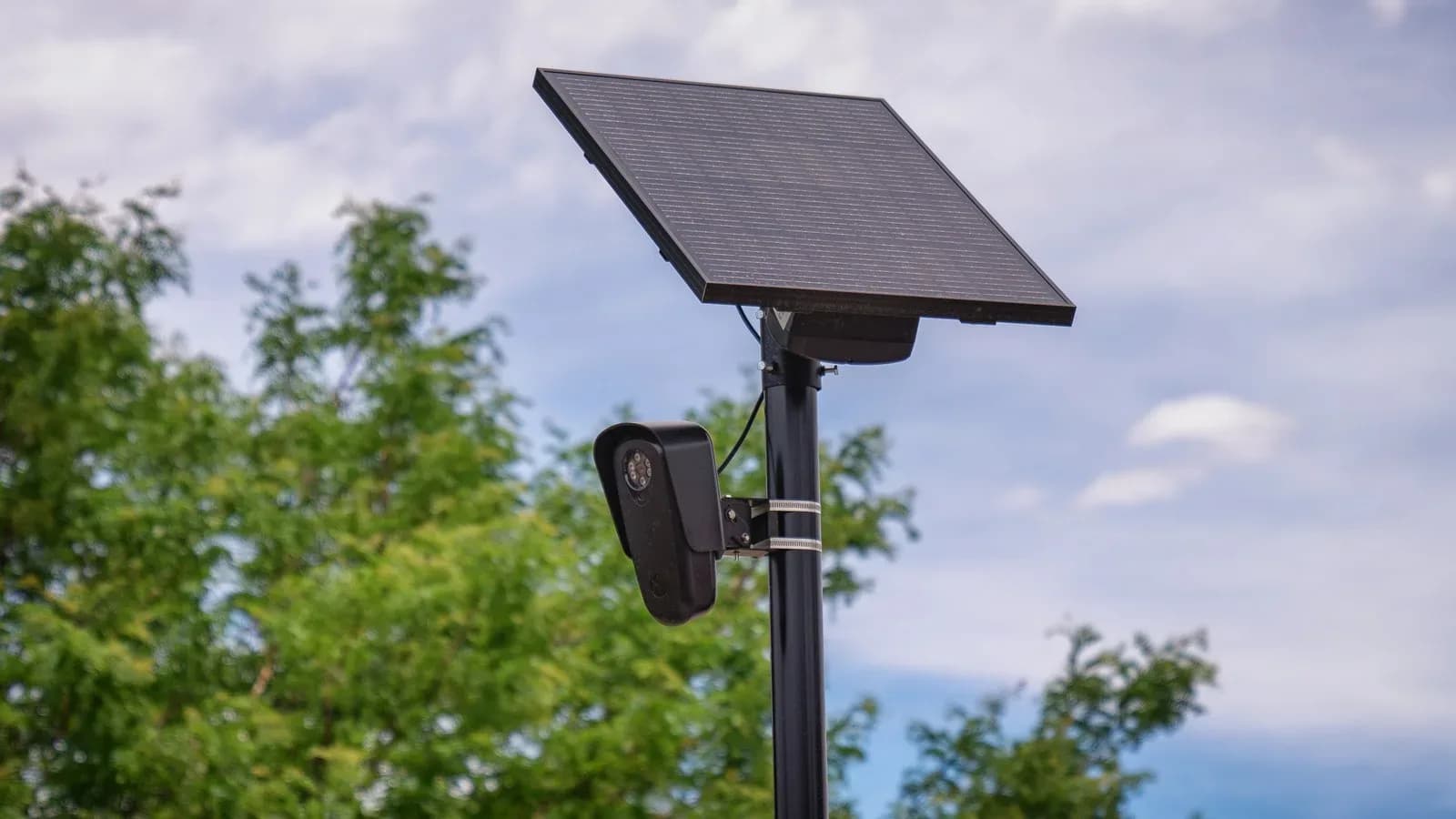
Hero photo: Flock Safety camera in Aurora, Colorado (not a Conroe camera), by Tony Webster via Wikimedia Commons, CC BY 2.0, cropped and resized.