Austin's ICON Raises $200 Million to Put 3D-Printed Building Systems in Texas First
The Austin builder says the round will put its Titan system in the field, starting in Texas. It also says 257 of its projects are already here.
Austin-based ICON, the company best known for 3D-printing houses, announced Tuesday it has raised $200 million to put its newest construction system into the field, and says Texas will get it first.
The round was led by British investment firm Baillie Gifford, with funds managed by BlackRock and participation from Capital Factory, Norwest Venture Partners, Tiger Global and others, The Real Deal reported. The Austin American-Statesman also reported the round and the company's plans to scale up hiring.
What the money is for
ICON says the money will go toward manufacturing and deploying Titan, its multistory robotic construction system announced in May, expanding into Texas, Florida, Washington, D.C. and other markets, and growing its workforce.
According to the company, Titan can print a 2,500-square-foot home in under seven days, with wall systems that cost about $20 per square foot, which ICON says is 40 percent below the national average. It says its FormCrete material makes walls rated for winds up to 175 mph. A Titan system sells for $899,000. Those are company claims, and builders will test them in the field.
Logan Grant, ICON's division president of design-build, told The Real Deal:
"Texas developers are underwriting projects against rising costs and a shrinking skilled workforce, and the numbers are getting harder to make work. Titan changes that math. With this round, we're putting more Titan systems into the field, and Texas is first in line."
Already built here
ICON says it has built 263 structures in the U.S. and Mexico. CEO and co-founder Jason Ballard said, by the company's count, 257 of those are Texas commercial and residential projects, including homes in Austin's Mueller neighborhood and Wolf Ranch in Georgetown. The company has also built at Community First! Village in Austin, which houses formerly homeless people, and a building at Camp Mabry, the Statesman reported.
In April, ICON launched a space and defense division, ICON Prime. The company says it has won more than $370 million in government contracts, including a $57 million NASA contract to develop construction systems for the moon.
The caution flag
ICON laid off about 100 employees, roughly a quarter of its workforce, in January 2025, saying it needed to "streamline." Ballard did not directly answer The Real Deal's question about how the new hiring squares with those cuts. Startups that raise big rounds do not always turn them into lasting businesses, and Texas has seen plenty of promising tech that never reached Main Street.
Why it matters
Texas families feel the housing squeeze, and Dock Line has covered how new-home prices are shifting and how the market has cooled in the north Houston suburbs. Builders blame labor shortages and costs. If a machine can print sturdy walls in days for less money, that is good news for young families trying to buy a first home.
It is also a reminder that machines do not replace the need for skilled hands. Someone still has to run the printer, frame the roof, wire the house and stand behind the work. The best version of this technology puts more Texans to work building homes, not fewer.
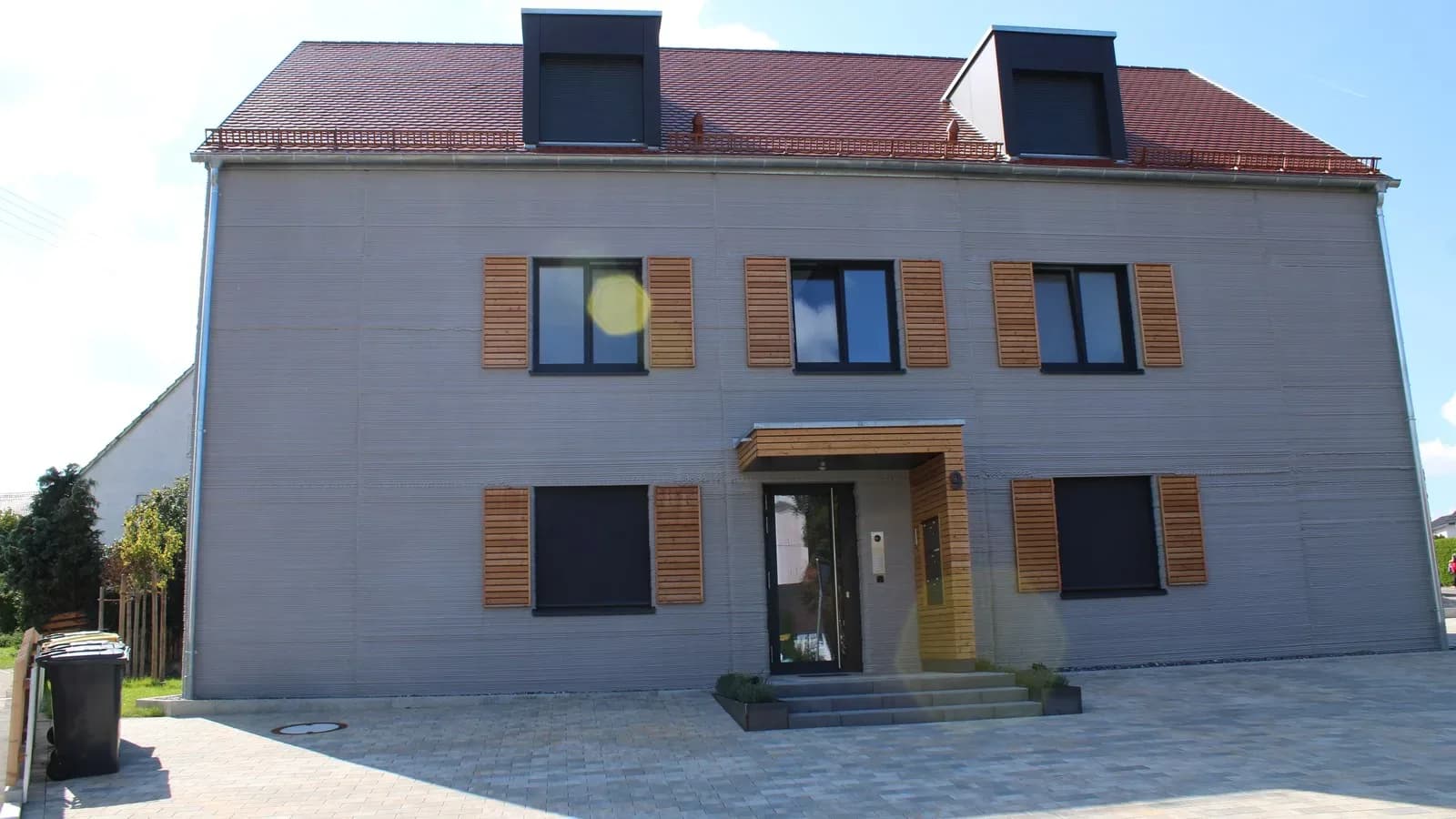
Hero photo: 3D-printed house in Wallenhausen, Germany (not an ICON project), by Looniverse via Wikimedia Commons, CC BY-SA 4.0; cropped and resized.