Busy Is Not the Same as Productive
An assembly line creates rhythm. Modern multitasking creates interruption.
An assembly line creates rhythm. Modern multitasking creates interruption.
Some days feel productive because we never stop moving.
We answer a text while opening an email. We begin a report, notice a notification, check a website, return a phone call, and then stare at the original page trying to remember what sentence we were writing. By noon, we have touched fifteen jobs and finished three.
It feels like multitasking. Most of the time, it is something less impressive: switching from one unfinished thought to another so quickly that the motion begins to look like progress.
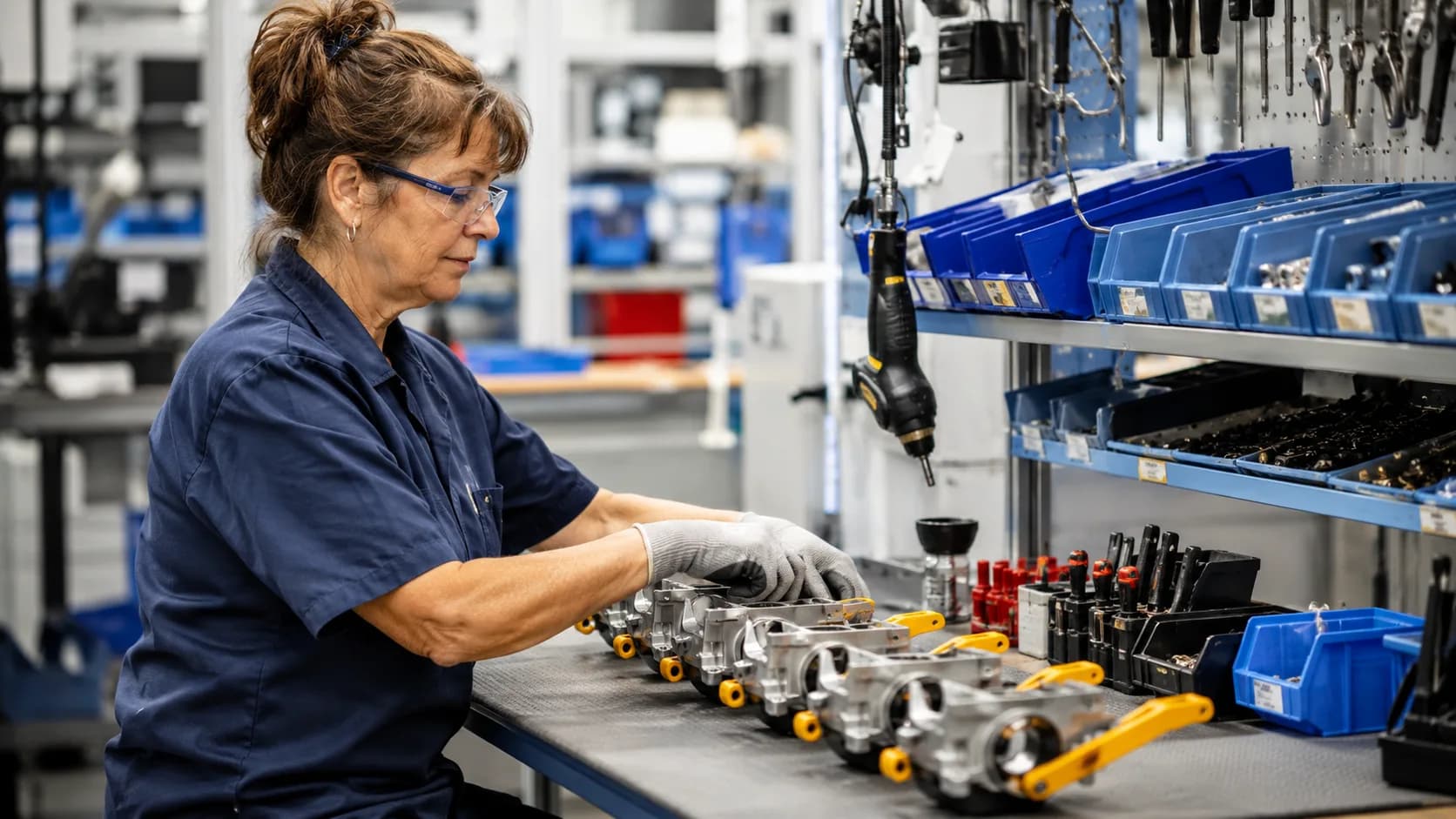
There are jobs where several actions truly belong together. An experienced worker on an assembly line may pick up a part, place it, tighten it, inspect it, and send it forward. Five actions happen, but they are not five unrelated jobs. They form one practiced process. The order stays the same. The tools stay in the same place. The hands learn the rhythm.
That is very different from writing an article, answering messages, checking a website, troubleshooting an image, discussing a deadline, and remembering which file still needs to be marked complete. The first is a sequence. The second is a traffic jam wearing a productivity badge.
The Assembly Line Is Different
A repeated process can become smoother with practice. The brain no longer has to make every small decision from the beginning. The worker knows what comes next, where to reach, what to inspect, and how the finished step should feel.
Practice does not magically create two brains, but it can reduce how much conscious attention familiar actions require. That is why an experienced cook can tend a fire, watch the meat, and prepare another part of the meal without feeling mentally torn in half. The jobs are related, the timing is familiar, and some of the work has become automatic.
The same thing happens when someone walks a familiar route while having an ordinary conversation, folds laundry while listening to music, or performs a well-learned series of steps at work. One task may require judgment while the other mostly runs on habit.
The trouble begins when both tasks demand real thought—or when several unrelated tasks keep interrupting one another.
Most Multitasking Is Actually Switching
When two complicated jobs compete for attention, the brain usually does not perform them both at full strength. It shifts the goal, activates a different set of rules, and then tries to return to the first job later.

That return is not free. We have to remember where we stopped, what we had decided, and what we intended to do next. Sometimes we recover quickly. Sometimes we reread the same paragraph three times. Sometimes we finish the wrong version of the task because the interruption knocked a detail out of working memory.
Researchers call these delays and mistakes switching costs and resumption costs. The individual cost of one switch may be small. The accumulated cost of dozens or hundreds of switches can quietly consume a day.
This is why a person can feel exhausted after being busy without being able to point to much that is complete. The mind has spent energy repeatedly loading and unloading the work.
Interruption Has a Long Tail
An interruption does not end when the phone is put down or the message is answered. Part of the mind may still be holding the new information while another part tries to rebuild the earlier train of thought.
In high-stakes workplaces, the consequences can be serious. Observational studies in medical settings have linked interruptions and multitasking with longer task times, higher mental workload, and more errors. An office mistake may not carry the same risk as a medication error, but the underlying problem is familiar: attention was pulled away, and something had to be reconstructed when the person returned.
The modern workplace has made that reconstruction almost constant. Email, messaging, calendars, news alerts, shared documents, phone calls, and social media all arrive through the same few screens. Every responsibility has been given permission to interrupt every other responsibility.
We used to leave one job and walk into another room. Now all the rooms have been squeezed into one device, and every door can open at once.
Why Busy Feels So Convincing
Small tasks provide quick evidence that we did something. We answered the message. Cleared the alert. Checked the number. Moved the file. Each action offers a tiny sense of completion, even when the important job remains untouched.

Deep work is less generous. A difficult article, repair, plan, or decision may require an hour before there is anything visible to show for it. During that hour, the phone keeps offering easier victories.
Busyness can therefore become emotionally satisfying. It protects us from the discomfort of staying with a hard problem. We are not procrastinating, we tell ourselves. Look at all the things we are doing.
The calendar is full. The inbox is active. The desk looks like a command center. Yet the one job that mattered most is still waiting patiently beneath the noise.
Some Multitasking Is Necessary
Real life does not allow perfect concentration all day. Parents manage children while cooking. Nurses respond to changing patient needs. Business owners shift priorities when equipment fails or a customer calls. A barbecue pit does not care that we were in the middle of something else when the temperature starts moving the wrong direction.
The goal is not to pretend interruptions can be eliminated. It is to distinguish between necessary coordination and avoidable fragmentation.
A good process groups related steps and gives them a repeatable order. A bad process lets every new signal become the most important thing in the room. One creates rhythm. The other creates reaction.
That is why checklists, routines, staging areas, written notes, and clear stopping points help. They reduce the amount of work required to remember where we were when life inevitably interrupts.

Build Rhythm Instead of Juggling
The answer is not a complicated productivity system that requires more maintenance than the work itself. It is often simpler.
Finish a complete thought before checking the next alert. Group similar tasks together. When stopping in the middle of something, leave a short note explaining the next step. Turn off notifications during work that requires judgment. Decide which job deserves the best part of the day instead of donating that time to whatever makes the loudest sound.
Most importantly, stop measuring a day by how many things competed for attention.
An assembly line works because the sequence is clear. The next step belongs to the step before it. Modern multitasking often feels chaotic because the next step belongs to an entirely different job.
An assembly line creates rhythm. Modern multitasking creates interruption.
What Actually Got Finished?
At the end of a busy day, the useful question is not, “How many things did I touch?” It is, “What moved far enough forward to matter?”
Productivity is not the absence of activity. It is activity that has direction. A person can move all day and remain in the same place. Another can sit quietly for an hour, solve the right problem, and change the direction of an entire project.
Busyness measures motion. Productivity measures whether something worthwhile was finished.
We do not need to do only one thing forever. We need to know when several steps are part of one process—and when we are merely bouncing among unrelated demands because the world has trained us to answer every knock at the door.
The work will always contain interruptions. The trick is not allowing interruption to become the work.
No squeezing sawdust and calling it lumber.
Sources
Ruthruff et al. — How practice reduces dual-task interference (Psychological Research, 2006)
Hirsch et al. — Resumption costs after task interruption (Memory & Cognition, 2024)
Westbrook et al. — Interruptions, multitasking, and task errors (BMJ Quality & Safety, 2018)
Liu et al. — Workflow interruption and mental workload (BMC Health Services Research, 2023)
Practiced routines can reduce interference; the research does not claim every form of multitasking is impossible.