

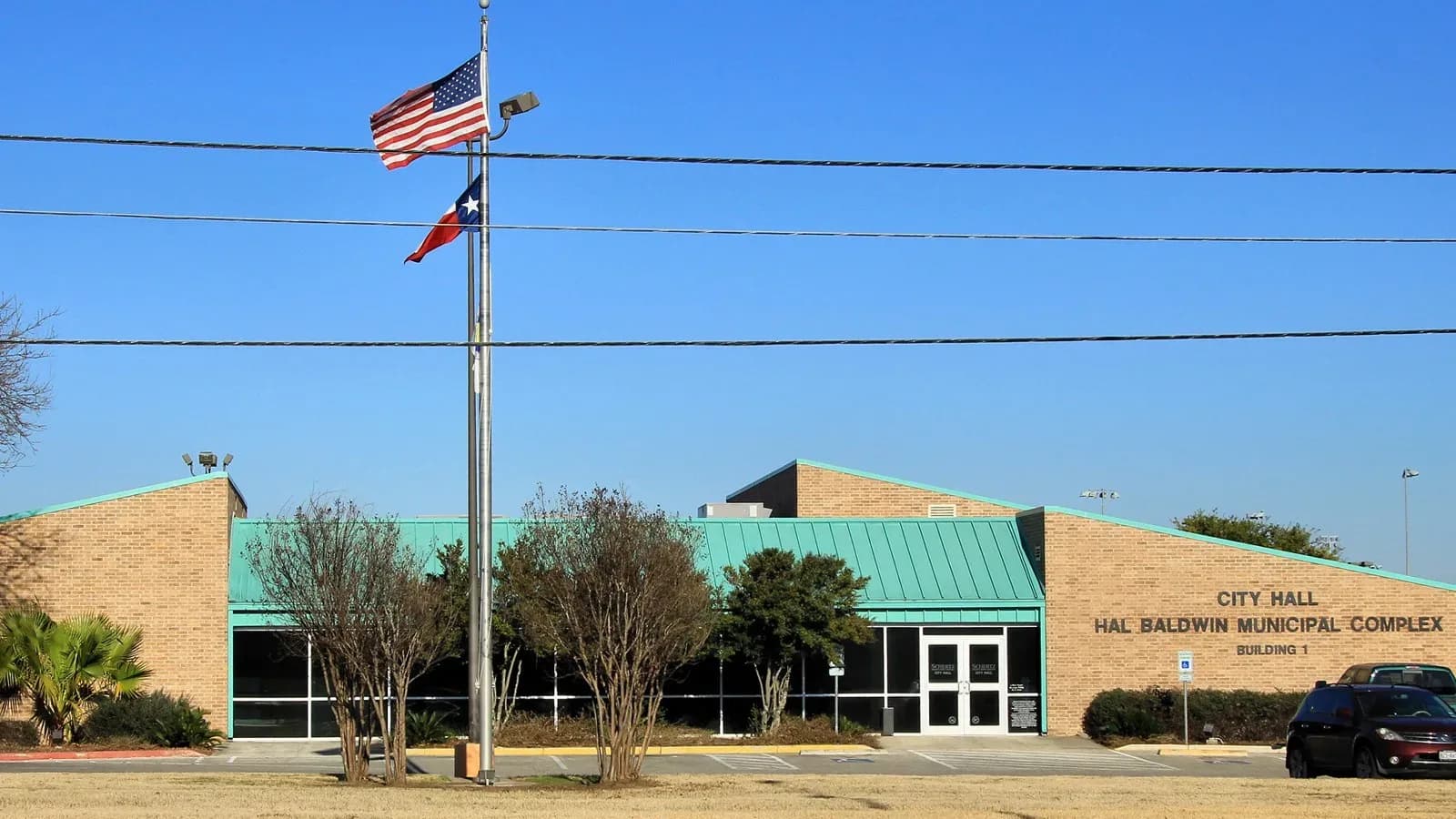
Schertz Now Requires a Council Vote and Public Hearing for Any New Data Center
Schertz defined data centers in its code for the first time and now requires a specific use permit in its manufacturing districts. The planning commission had wanted them limited to heavy industry.
Until last month, a data center could have gone up in parts of Schertz without the City Council ever voting on it. That has changed.
On Oct. 20, the council voted 7-0 to adopt Ordinance 26-S-020, which defines a data center for the first time in the city's development code and requires a specific use permit before one can be built in the city's two manufacturing districts.
What changed
According to the city's staff presentation, the old code did not define data centers or list them in its table of allowed uses. Senior Planner Daisy Marquez told the council that such projects were being treated as office warehouses, which are allowed by right in the GB-2 general business district and the M-1 and M-2 manufacturing districts, according to the city video transcript of the meeting.
Now a data center needs a specific use permit in M-1 light manufacturing and M-2 heavy manufacturing. Each request goes to the Planning and Zoning Commission, gets a public hearing and then goes to the council, which can approve it, deny it or attach conditions. The staff presentation says GB-2 was left out on purpose, because some GB-2 land sits next to homes and some lies along Interstates 35 and 10.
The ordinance defines a data center as a building or group of buildings mainly used for housing and running large computer systems, servers, storage and network equipment. It does not count ordinary offices that keep server rooms for their own computer needs. Marquez said staff added that line so a hospital or company office would not be swept in by accident.
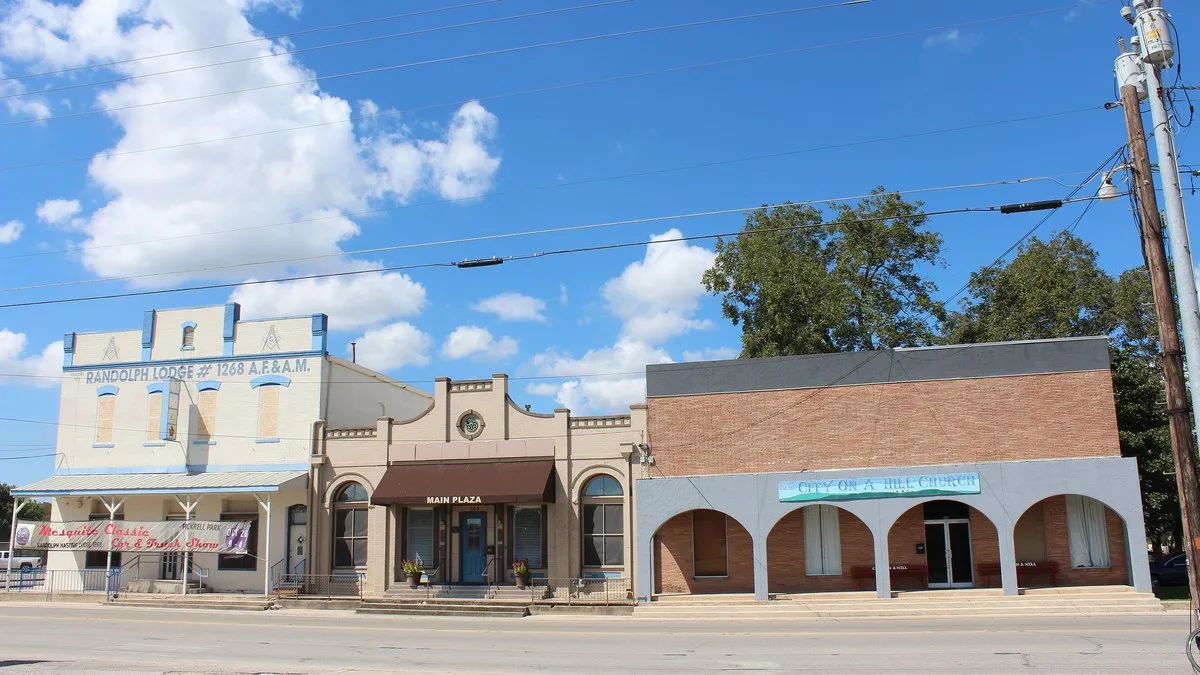
Historic buildings along Main Street in Schertz in 2017. Photo: Jonmallard / Wikimedia Commons, CC BY-SA 4.0.
A split over where to allow them
The idea started with requests from the Planning and Zoning Commission chairman in May and from Council Member Watson in July, the staff presentation says. When the commission held its public hearing Aug. 5, it recommended allowing data centers only in M-2, the heavy manufacturing district, with a permit. Staff kept M-1 in its version, and the council approved the ordinance as staff presented it. The commission also talked about a size limit, but staff said builders could get around one by putting up several smaller buildings.
One resident told the council at the hearing that data centers raise many unknowns, including water use and noise, and asked whether residents could vote on the matter. City staff answered that zoning rules are set by the council, with public hearings along the way. One council member suggested a town hall on data centers. Staff said it could hold one, and the council member who made the motion said it was important to get rules on the books now and clarify them later if needed.
The staff presentation lists three existing sites it labels data centers, two on Tri-County Parkway and one on Mid-Cities Parkway. Marquez said they were mostly old telecommunication buildings turned into smaller data centers. The meeting video is posted on the city's video site.
Other Texas cities are writing their own rules. Read about Taylor's setbacks and noise caps and Edinburg's new limits.
Our view
A city should have a say in what gets built next to its neighborhoods, and a public hearing for every data center is a fair way to give residents a voice. Schertz did right to close the gap before a project showed up. Whether M-1 should have been left open, as the planning commission warned, is a fair question the council may need to revisit.
More Business Stories
 Today
Texas Sales Tax Revenue Jumped 13% in October to $4.8 Billion. Construction and Manufacturing Led the Way
 Yesterday
Port Houston Will Study Deepening the Ship Channel Itself as Its Container Docks Near Capacity
 Yesterday