

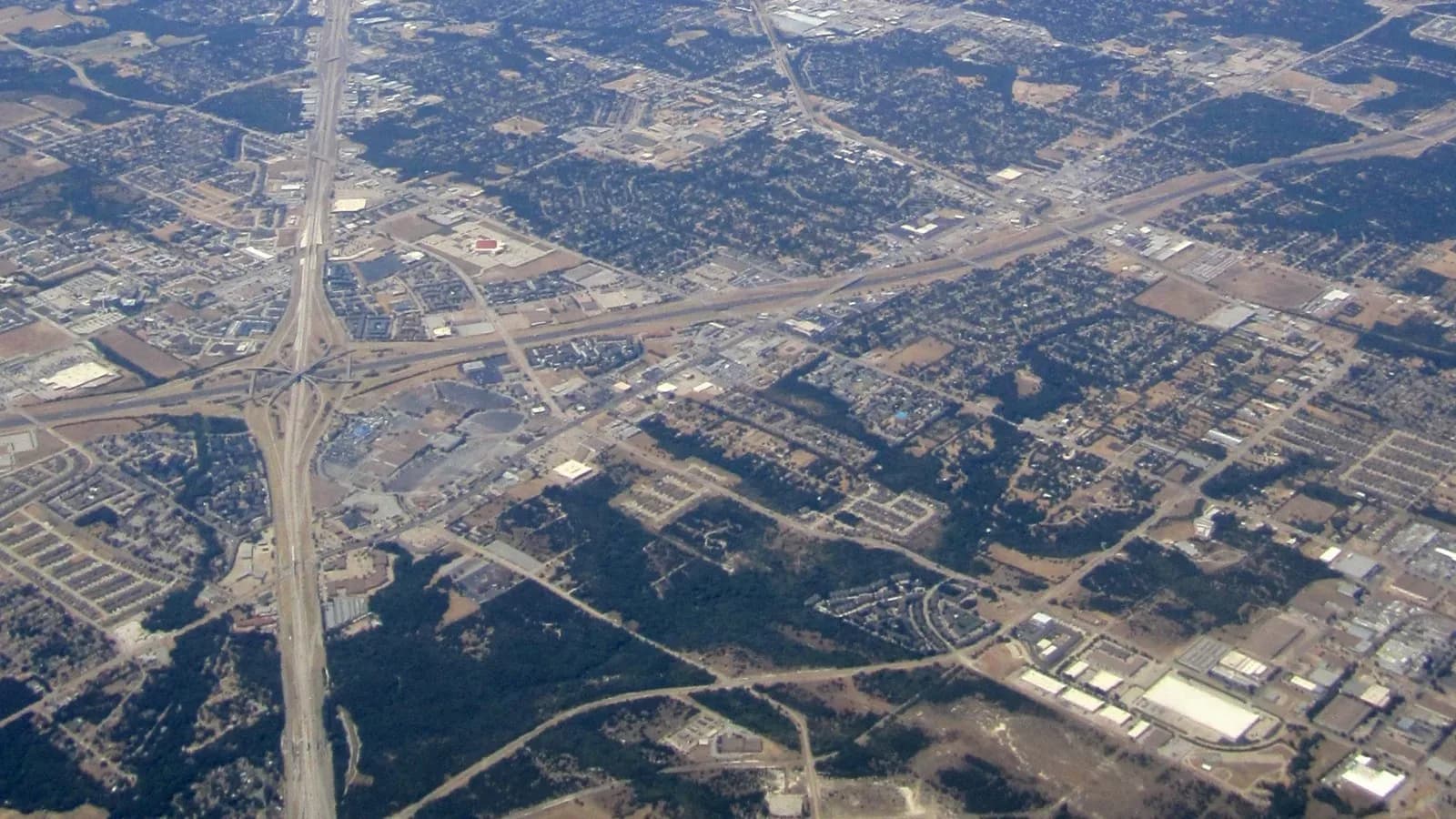
Duncanville Hears Requests for Nearly $2 Million to Revive Two Vacant Downtown Buildings
Duncanville's economic development board holds hearings Monday on a $465,395 grant for a pizza place at the old county tax office and a $1.5 million request for a boutique hotel and spa on Main Street.
Duncanville's economic development board will hear from the public Monday night on two requests for taxpayer-funded help to fill vacant downtown buildings. One would turn the former Dallas County Tax Office into a pizza and deli restaurant. The other would turn the old Ben Franklin Apothecary on Main Street into a 13-suite boutique hotel and spa.
Both appear as public hearings on the Duncanville Community and Economic Development Corporation's Oct. 26 agenda and packet. The meeting begins at 6 p.m. at City Hall, 203 E. Wheatland Road. Staff reports for both items say the board is not being asked to take any formal action. Any final deals would come back later as separate items.
A pizza place at the old tax office
The city owns a 1.9-acre parcel at 100 E. Wheatland Road. It includes the vacant former county tax office, a one-story building of about 3,910 square feet, according to the staff report. On May 5, the city council authorized the interim city manager to sign a non-binding letter of intent to sell about 0.479 acres of the site to Cenzo Holdings, LP for a Cenzo's Pizza & Deli. The letter, signed July 17, sets the price at $193,200. The city also agreed to plat the lot and extend utilities to it before closing.
The company's request, filed Sept. 22, puts the total project cost at $1,861,580. That includes a $1,173,000 restaurant finish-out, figured at $300 a square foot, plus $200,000 for furniture and equipment, $220,380 in soft costs and $75,000 in start-up costs. The financing plan lists:
A first-lien bank loan of $837,711 (45%)
A second-lien loan from a community development lender of $428,163 (23%)
A grant from the economic development corporation of $465,395 (25%)
Owner equity of $130,311 (7%)
The staff report says the applicant calls the grant "what makes the rest of the financing work." It says the project would put a vacant, tax-exempt city property back on the tax rolls and serve as a restaurant anchor for a planned mixed-use district on the site. Final terms depend on finishing the plat and utility design, the owner closing its private financing and the two sides signing a purchase agreement and an incentive agreement.
A hotel and spa on Main Street
The second request comes from Create Atelier, LLC, a Dallas architecture and design firm. It proposes buying the vacant former Ben Franklin Apothecary building at 302 N. Main St. and converting it into The Jespersen Hotel & Spa. The staff report describes 13 luxury suites and a full-service spa with indoor and outdoor plunge pools, saunas and five treatment rooms. There would also be a lobby lounge and a coffee and deli counter facing the street and open to the public. The report notes the firm designed the Isbella restaurant on North Main, in what it says was Duncanville's first volunteer fire station.
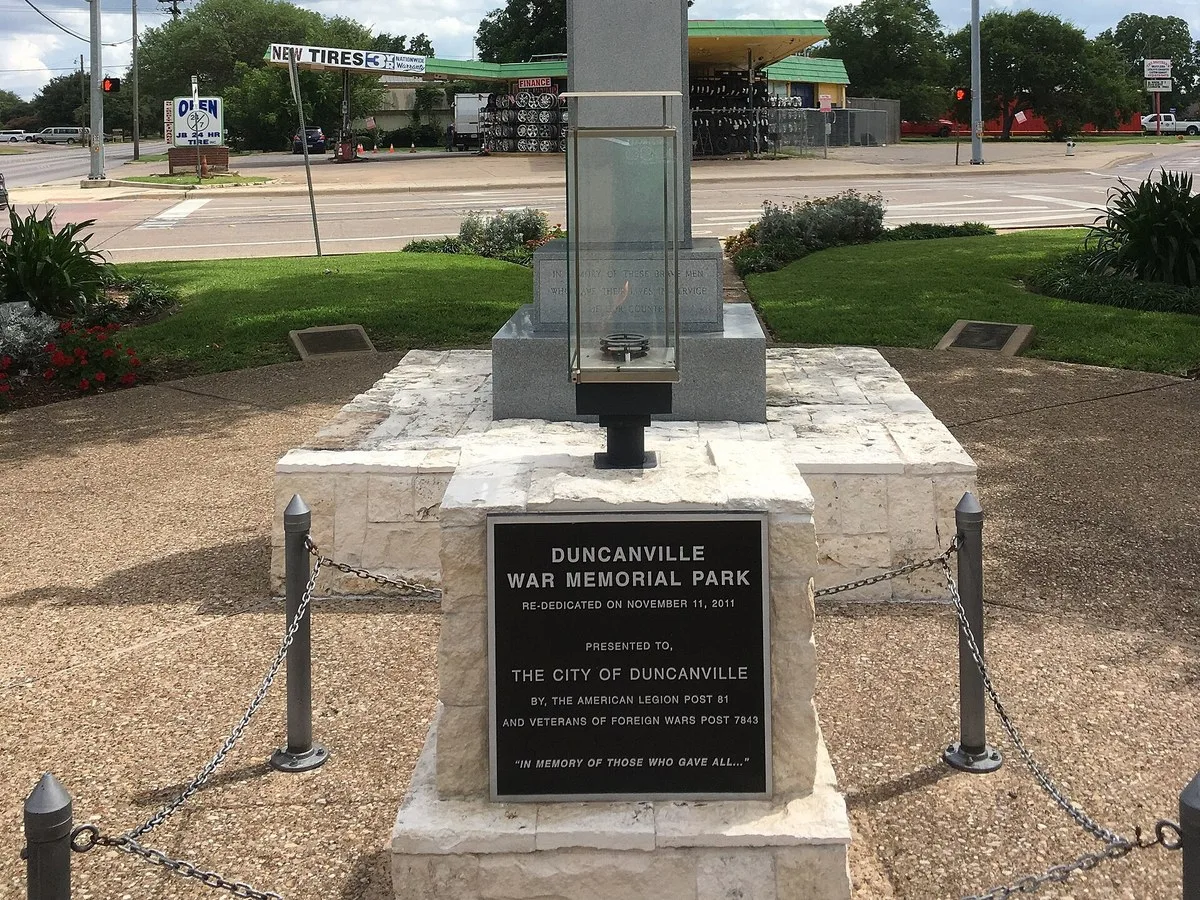
The Duncanville War Memorial at Main and Center streets downtown, 2020. The photo is shown for context. Photo: Pete unseth / Wikimedia Commons, CC BY-SA 4.0.
The applicant puts the cost at $7,019,521: $1.5 million to buy the roughly 9,500-square-foot building, $4,769,521 for renovation and $750,000 for soft costs, interest and closing. It lists $4,019,521 in private financing, $1.5 million in owner equity and a requested $1.5 million grant from the corporation.
The packet's table labels the grant and the equity as 16% each and the private loan as 68%. Those percentages do not match the dollar amounts. By our math, $1.5 million is about 21% of the total, and the private financing is about 57%. Board members may want to settle which numbers are right before anything is signed.
Hotels are not currently allowed in the Downtown Duncanville zoning district. The project would need a zoning change and a specific use permit, each with public hearings before the Planning and Zoning Commission and the city council. According to the staff report, any incentive would also depend on proof of the owner's financing and equity and on an agreement with "performance and repayment terms." The city held a downtown forum on the concept on June 15.
What to watch
Together, the two requests seek nearly $2 million in public grants from the economic development corporation. City staff argue that both projects would bring empty buildings back to life downtown, in line with the Downtown Master Plan and the city's Comprehensive Plan 2040.
Monday's hearings are the public's first formal chance to weigh in. The agenda says comments emailed to the corporation must arrive by 4 p.m. Monday, and residents may also speak during the citizens' forum. Questions worth asking include what the city gets back if a project fails, and how the repayment terms will be written.
Duncanville's board is not alone in using public dollars to bring life back to a downtown. The right deal can pay for itself. The wrong one leaves taxpayers holding the bag.
Related on Dock Line: What Does It Cost to Keep a Downtown Alive?; Ingleside Would Spend $120,000 in Hotel Tax on a Faire Expected to Fill 12 Rooms
More Business Stories
 Today
The Fed Is Expected to Hold Rates This Week as Inflation Runs Hot. Honest Money Should Not Wait on an Election.
 Today
Texas Put $1.66 Billion on the Table for Terafab. Who Runs It Is Still Unsettled.
 Today