

Fed Holds Rates Steady as Two Officials Push for a Hike. Waiting Is Defensible, Waiting for an Election Is Not.
The Fed held rates steady on Oct. 28, six days before the midterms, while saying inflation remains elevated. Two officials wanted a hike.
The facts come first below. My opinion follows in the section marked as opinion.
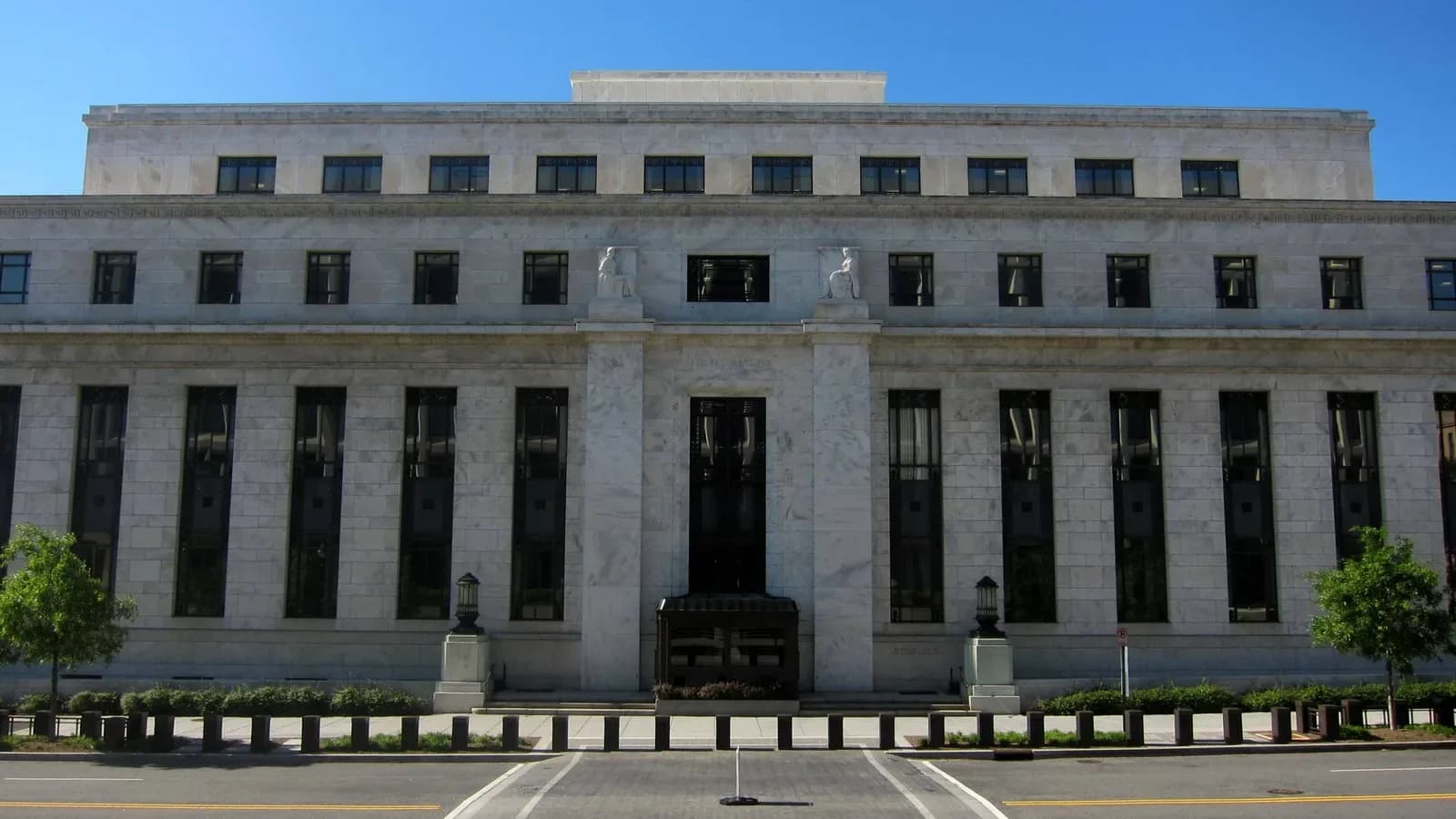
The Federal Reserve left interest rates alone on Wednesday, six days before the midterm elections, but two policymakers wanted to raise them. The Federal Open Market Committee voted 10 to 2 "to maintain the target range for the federal funds rate at 3-3/4 to 4 percent," according to the Fed's official statement.
The two dissenters were Governor Lisa D. Cook and Cleveland Fed President Beth M. Hammack, who the statement said "preferred to raise the target range for the federal funds rate by 1/4 percentage point at this meeting."
What the Fed said
The statement gave a strong report on growth and a blunt one on prices. "Economic activity is expanding at a strong pace," the committee said. "Job gains have kept pace with the workforce, and the unemployment rate has changed little." Then it added: "Inflation remains elevated. The accumulation of more information will help the Committee determine the policy stance appropriate to ensure a timely return of inflation to the Committee's 2 percent goal. The Committee will deliver price stability."
The rate range has held since the Fed approved a quarter-point increase in September, CNBC reported. The network said the "expanding at a strong pace" language was a seeming upgrade from "solid" in September, and that markets had priced in less than a 10% chance of a hike at this meeting.
The dissents and the politics
This was Cook's first dissent since she joined the Fed in 2022 as an appointee of President Joe Biden, according to CNBC. President Donald Trump has tried to remove her over allegations about information on home loan applications. CNBC reported that the Supreme Court stopped those attempts, that the administration has restarted the effort, and that a hearing is scheduled for early November.
The same report noted that Trump, who nominated Chairman Kevin Warsh, has long argued the Fed's rate should be much lower, and that inflation has been above the Fed's 2% target for more than five years. CNBC said some observers had speculated that officials would not want to raise rates this close to an election, while Fed officials consider political independence a cornerstone of the central bank.
Futures pricing points to a strong possibility of another hike at the Fed's December meeting, and perhaps one or two more in 2027, the network reported.
A new meeting schedule
Warsh also announced a change in how the committee will meet. "We believe eight meetings per year is the right number for the FOMC, but in 2027, one meeting will focus exclusively on broad monetary policy strategy, with neither a vote on the federal funds rate nor a policy statement anticipated," he said at his news conference, as quoted by CNBC. He said he expects two strategy meetings and six policy-setting meetings in 2028.
Opinion: Waiting is defensible. Waiting for an election is not.
There is an honest case for holding. The Fed raised rates only last month, and higher rates take time to work through the economy. A central bank that moves every few weeks out of nerves does its own kind of damage. If the committee truly needs another month of data, it should take it.
But the committee's own words make the case harder to sell. It says growth is strong. It says jobs are holding up. It says inflation remains elevated and has now been above target for more than five years. When a strong economy meets stubborn inflation, the textbook answer is not patience. Two members of the committee, one appointed by a Democratic president and one a regional bank president, said as much with their votes. Their dissents deserve a hearing, not a shrug.
The timing invites suspicion, fair or not. Holding rates the week before an election and hinting at a hike in December looks to many families like a decision shaped by the calendar. I am not accusing anyone of bad faith, and the Fed insists it is independent. But the best way to prove independence is to act on the data whether or not the moment is convenient, and to do it in December no matter who wins next Tuesday.
Inflation is not an abstraction. It is a quiet tax on every paycheck and every savings account, and it falls hardest on the retiree and the young family. Scripture is plain about honest measures: "A false balance is abomination to the LORD: but a just weight is his delight." A dollar that loses value year after year is a scale that keeps tipping. Those entrusted with the nation's money owe it a just weight.
We wrote before this meeting that honest money should not wait on an election, in Fed Expected to Hold Rates Oct. 28 as Inflation Runs Hot. The Fed has bought itself time until December. It should use them, and then do its duty.
More Business Stories
 Yesterday
Prosper Approves Zoning for $2 Billion Venice-Style District With Up to 4,400 Homes
 Yesterday
Consumer Confidence Rebounds in October as Gas Prices Ease. One Good Month Is Not a Recovery.
 Yesterday