The Empty Pastures Behind Expensive Beef
Years of drought forced ranchers to sell breeding cattle. Now Americans are discovering how long it takes to grow a hamburger supply back.
Years of drought forced ranchers to sell breeding cattle. Now Americans are discovering how long it takes to grow a hamburger supply back.
“We ate part of tomorrow's herd during yesterday's drought.”
The price tag on a package of hamburger can make it feel as though somebody misplaced half the cattle in America.
In a way, we did.
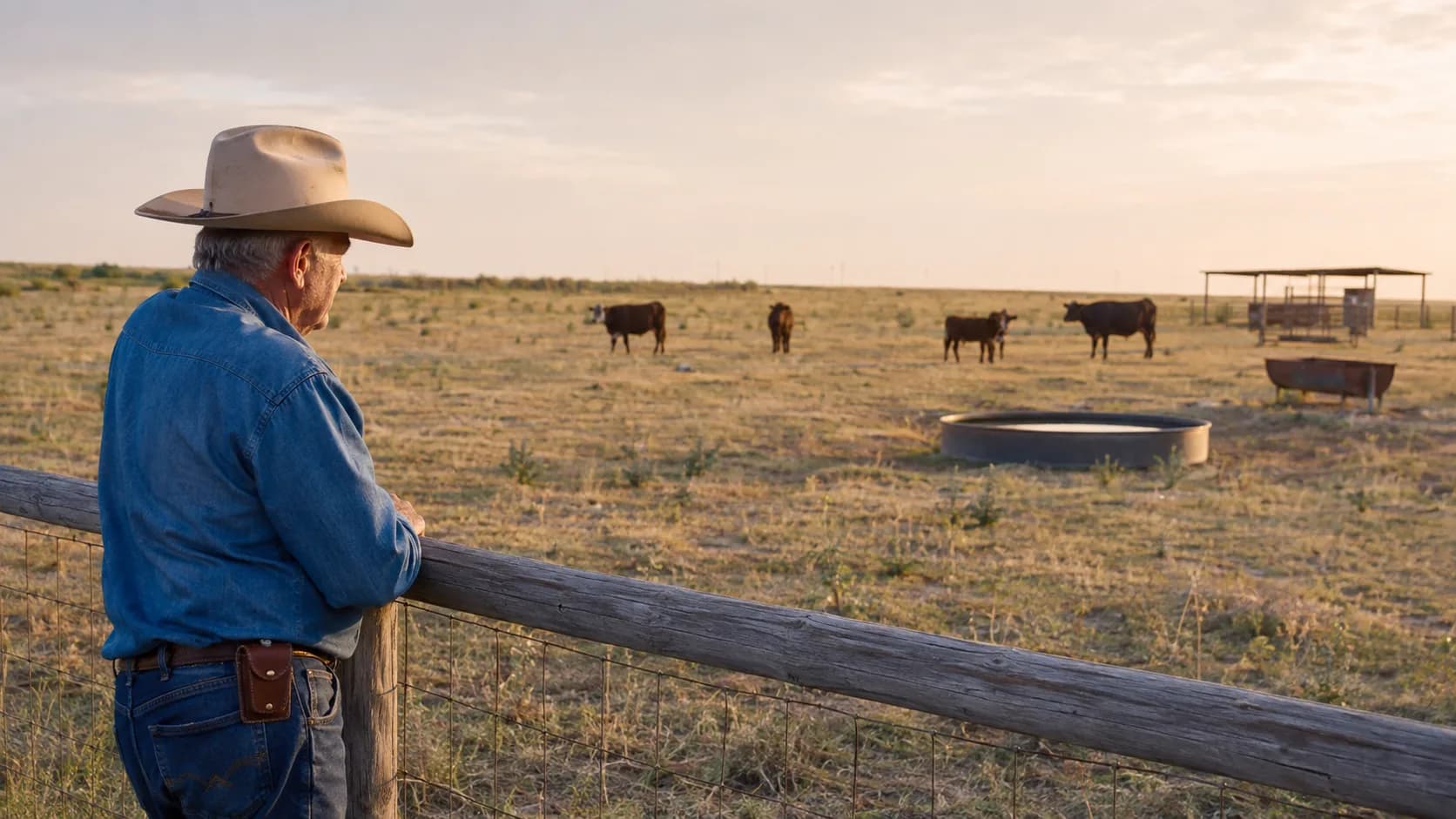
The cattle did not wander off, and there is no single villain hiding behind the meat counter. The shortage now reaching grocery stores began years ago on pastures where drought reduced grass, hay became expensive and ranchers had to decide which animals they could afford to keep.
Many sold cows that had been producing calves. Others sent young females to feedlots instead of keeping them as the mothers of the next generation. That added beef to the market at the time, but it also quietly reduced the number of calves that would be born later.
We ate part of tomorrow's herd during yesterday's drought. Now the bill is arriving at the grocery store.
The Herd Beneath the Headlines
The United States began 2026 with 86.2 million cattle and calves, the smallest January inventory in roughly 75 years. Of those, 27.6 million were beef cows - the mature animals that produce most of the calves entering the beef supply. That number was down another 1 percent from the year before, while the previous year's calf crop was down 2 percent.

The July count looked larger at 94.2 million cattle and calves, but January and July numbers should not be compared as though millions of cattle suddenly appeared. Herd numbers rise and fall seasonally as calves are born and animals move through the production system. The more revealing July figures were that beef cows were still down 1 percent from a year earlier and the projected 2026 calf crop was down 2 percent.
That tells us the breeding foundation of the industry has not yet entered a strong, obvious expansion. Feedlots can remain busy for a while because cattle already in the pipeline are still moving toward market. The problem is what comes behind them. Fewer cows and fewer calves eventually mean fewer cattle available for slaughter.
Where the Cows Went
The answer begins with weather.
Cattle spend much of their lives turning grass into food. When rain does not come, pasture growth slows and stock ponds shrink. Ranchers must either buy hay and supplemental feed or reduce the number of animals on the land. During the recent contraction, many faced both poor forage and record-high hay costs.
A rancher can sell a steer and still have the cow that may produce another calf next year. Selling the cow changes the future. Selling a young heifer that might have joined the breeding herd changes it again.
Those sales do not remove beef from the food system. They do the opposite at first. More cows and heifers going to slaughter can temporarily increase meat supplies. The shortage appears later, after those missing mothers fail to produce the calves that would have entered the pipeline one, two or three years afterward.
That delayed effect is why today's expensive beef can trace its roots to decisions made several seasons ago.
Cattle Do Not Run on a Factory Clock
When chicken prices rise, producers can respond relatively quickly because broilers reach market weight in weeks. Cattle operate on a very different calendar.

A rancher who decides to rebuild must keep a valuable heifer instead of selling her while prices are high. She generally will not produce her first calf until she is about two years old. That calf may then require roughly another year and a half before reaching slaughter weight.
The broader cattle cycle commonly lasts eight to twelve years. Producers expand when prices and conditions encourage them to retain females. Supplies eventually grow, prices weaken and the herd contracts again. Drought, feed costs, interest rates and land availability can speed or delay the cycle, but biology refuses to be hurried.
There is also an uncomfortable stage in rebuilding. When ranchers finally keep more heifers and cows for breeding, those animals do not go to slaughter. Beef supplies can tighten before the larger calf crop arrives. The cure can make the shortage feel worse before it makes it better.
Why the Grocery Bill Keeps Climbing
A smaller herd is meeting consumers who have continued buying beef despite higher prices. That combination gives the market very little room to breathe.
USDA's July 2026 outlook projected retail beef and veal prices to rise about 10.7 percent during the year. Wholesale beef prices in June were 12.7 percent higher than a year earlier, and the agency raised its 2026 forecast for slaughter steers to about $251 per hundredweight.
High cattle prices are necessary to persuade ranchers to rebuild, but that does not mean every cattle producer is suddenly wealthy. A rancher selling an expensive calf may also be paying more for replacement females, land, feed, equipment, labor, veterinary care, fencing, fuel and borrowed money. A drought can turn a strong market price into a smaller-than-expected margin in a hurry.
The supermarket price also contains far more than the animal. Slaughter, processing, packaging, refrigeration, transportation, labor, insurance, store operations and spoilage all stand between the pasture and the checkout line. Tight cattle supplies raise the starting cost before the rest of that chain is added.
Can Imports Fill the Gap?
The United States already imports beef, and those imports are becoming more important while the domestic herd remains tight. USDA's July outlook projected 2026 beef imports at a little more than 6 billion pounds.
Imported beef does not simply replace American steaks one for one. A significant share is lean beef used to blend with fattier domestic trimmings for hamburger. Australia, Canada, Brazil, Mexico and New Zealand are among the major suppliers, although the mix changes with global production, exchange rates, tariffs and animal-health rules.
America also normally imports live cattle from Mexico, especially for feedlots in Texas and the Southwest. Those shipments have been interrupted by concern over New World screwworm, a destructive livestock pest. USDA has announced a cautious reopening beginning with the Douglas, Arizona, port on August 24, 2026, provided disease-control conditions are met.
The border closure did not create the long cattle cycle or the drought-driven herd reduction. It did remove one source of feeder cattle at a time when the domestic supply was already tight. Imports can soften a shortage, but they cannot instantly rebuild America's breeding herd.
Texas Feels Both Sides of the Market
Texas remains the country's largest cattle state, with about 12.1 million cattle and calves at the beginning of 2026 and more than 4 million beef cows. That makes the state especially important to both the national supply and the national recovery.

For Texas ranchers, strong cattle prices can be welcome after years of expensive feed and difficult weather. But the decision to rebuild depends on more than the sale-barn price. A rancher needs grass, water, affordable replacement animals and confidence that the next drought will not force another liquidation before the investment pays off.
For Texas families, the same market appears from the other side of the counter. A rancher's high calf price becomes part of a higher restaurant menu or grocery bill. Both experiences can be true at once: the producer may finally receive a price that helps cover risk, while the consumer struggles to fit beef into the family budget.
When Will Beef Become Cheaper?
There is no date that can be circled on a calendar.
Weather will matter first. Better pasture and hay conditions make it easier for ranchers to keep females. High cattle prices provide an incentive. Lower financing and input costs would help. But the July 2026 inventory still showed fewer beef cows and a smaller calf crop than a year earlier, so the data did not yet point to a rapid flood of additional beef.
Even when expansion becomes visible, consumers may wait several years before the larger herd meaningfully increases supplies. Retail prices also do not move in perfect step with cattle inventories because processing costs, wages, transportation and consumer demand continue to change.
That does not mean beef prices will rise forever. Cattle cycles eventually turn. It means the turn is slow, and the first signs of recovery may appear on a ranch long before they appear in a grocery-store cooler.
The Pasture Behind the Price Tag
It is tempting to look at expensive beef and search for one person, company or policy to blame. The real story is less satisfying and more useful.
Years of drought reduced forage. High feed costs encouraged liquidation. Breeding cows and replacement heifers entered the beef supply instead of producing future calves. Consumer demand remained strong. Imports helped, but could not replace the time required to grow a domestic herd. Animal-health restrictions added pressure at the border.
The empty pasture is not literally empty. It simply holds fewer of the animals that create next year's supply.
That is the lesson hidden inside the price of a hamburger: agriculture works on biological time. We can change interest rates, shipping schedules and store promotions. We cannot negotiate a nine-month pregnancy or hurry a calf into becoming a finished steer.
The cows did not disappear. We are waiting for their replacements to be born.