Cuero Puts Travis' 'Victory or Death' Letter on the DeWitt County Courthouse Lawn
Alamo descendants, veterans and students gathered in Cuero to dedicate a replica of Travis' 1836 letter, part of a push to put it at every Texas courthouse.
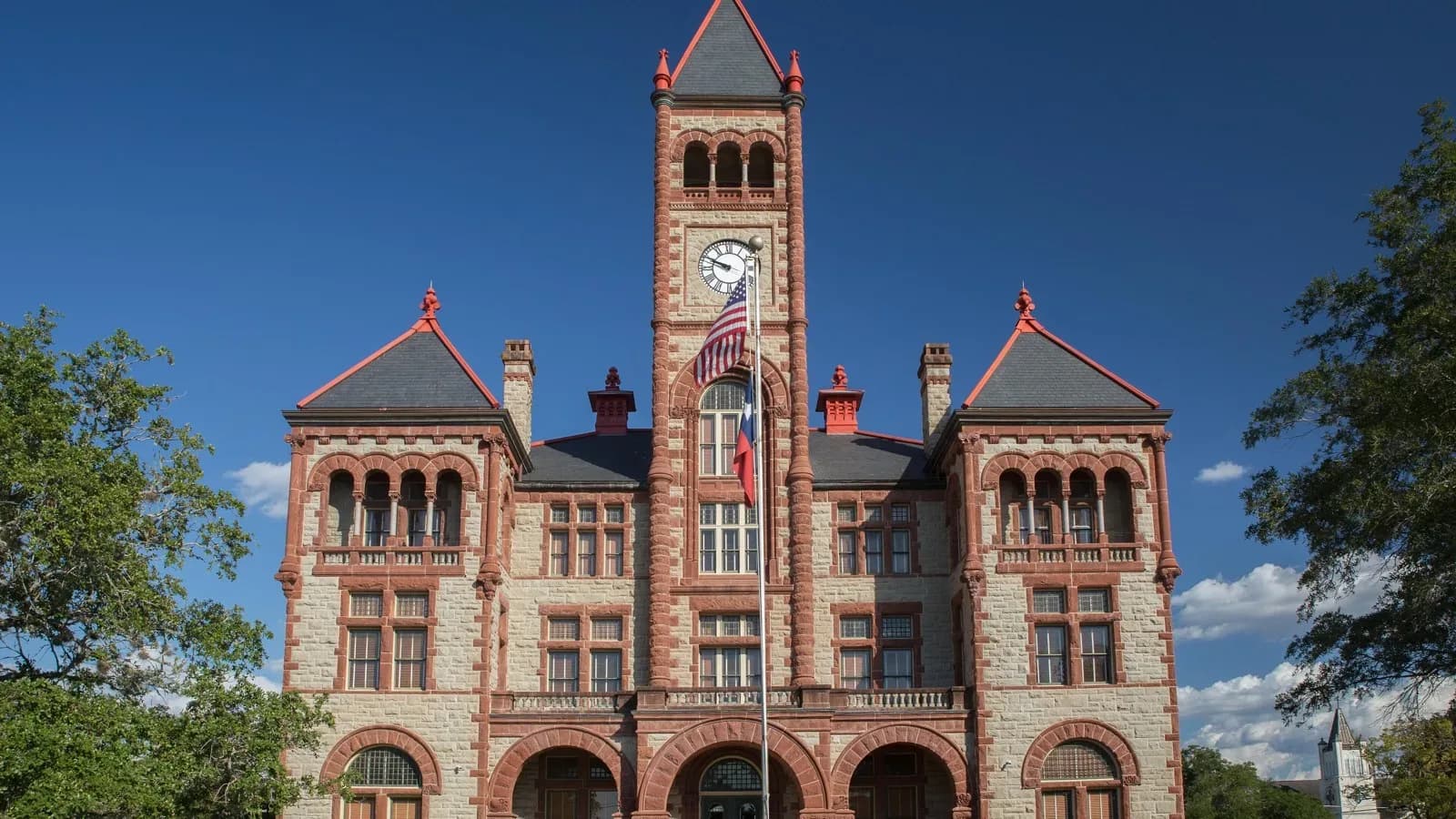
Anyone who walks across the front lawn of the DeWitt County Courthouse in Cuero can now stop and read the most famous letter in Texas history.
A replica of Lt. Col. William Barret Travis' 1836 "Victory or Death" letter was dedicated on the lawn on Sunday, Oct. 4, in a ceremony put on by the DeWitt County Historical Commission and the Alamo Letter Society. Crossroads Today reported ahead of the event that the replica would be mounted on a granite monument and that the society sponsored the plaque to raise awareness of the sacrifices made in the pursuit of freedom and liberty.
The society's goal is to place a Travis letter plaque at every county courthouse in Texas, all 254 of them. DeWitt County Today reported that Bill and Fain McDougal donated the monument to the residents of the county.
Descendants, veterans and schoolchildren
The ceremony drew a good crowd, organizers told DeWitt County Today. Five descendants of Alamo defenders were on the program, and children from Yorktown Junior High and Cuero took part.
A detailed account in The Voice of Cuero, a local news site, said County Judge Daryl Fowler opened the program in a black cowboy hat. Peggy Ledbetter, president of the historical commission, led the ceremony and introduced descendants of David Crockett, Gregorio Esparza and Capt. Albert Martin, along with members of the Sons of the Republic of Texas and veterans. That account was written by Pat Trevino, who is also running as a write-in candidate for county judge.
George Benavides spoke as a descendant of José Gregorio Esparza, his fourth-great-grandfather. Esparza was the only Alamo defender allowed to bring his family into the compound, according to the account, and his wife and four children survived the battle. Benavides named other Tejano defenders who died with Esparza and spoke of Juan Seguín, who fought alongside Travis and was sent out as a courier before the final assault. The account says Esparza's brothers later recovered his body, making him the only defender to receive a Christian burial.
Errol Flannery, a fourth-great-grandson of Crockett, also took part. Bill Blackwell received the Captain Albert Martin Award, named for the courier who carried Travis' letter through enemy lines on Feb. 24, 1836.
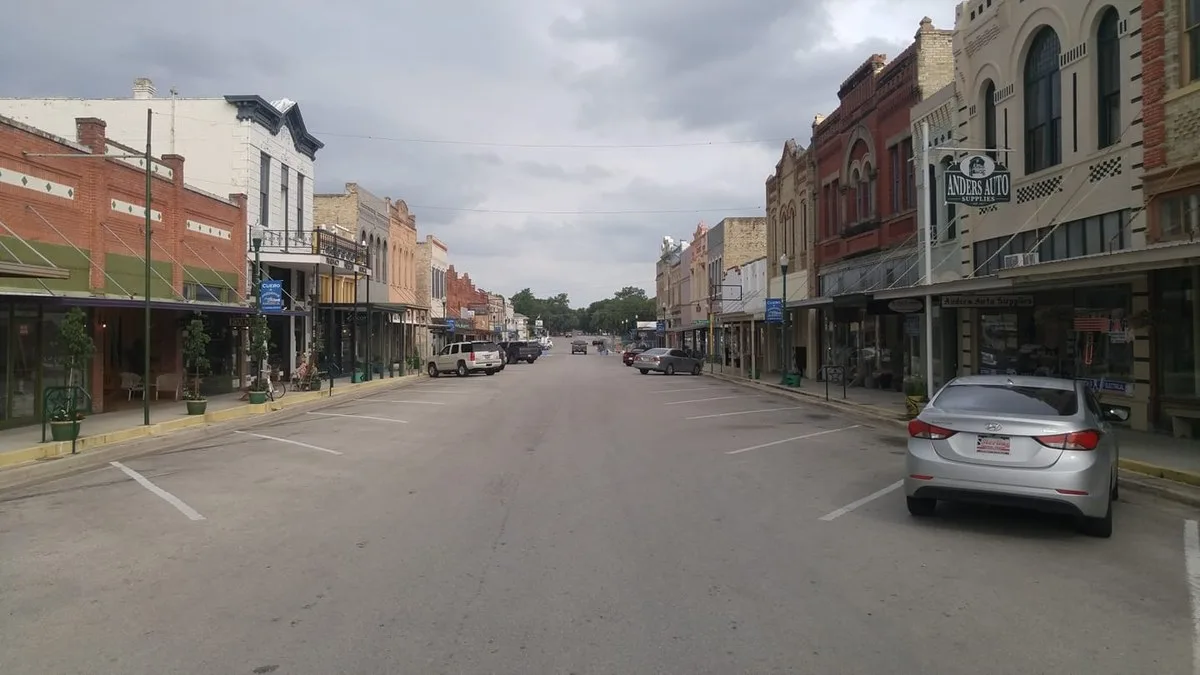
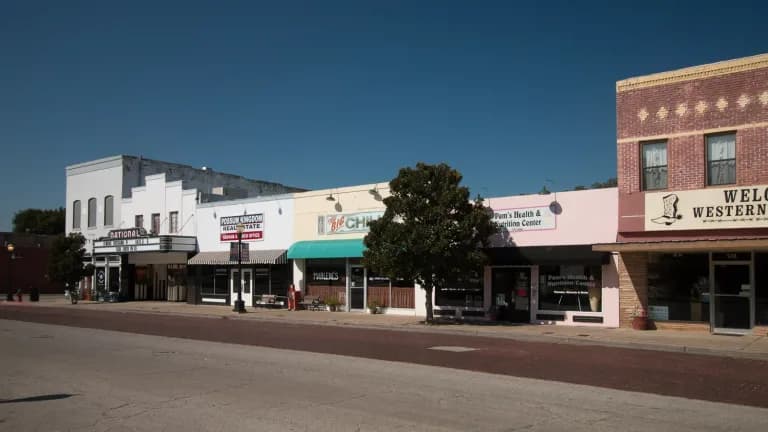
Downtown Cuero, looking east on Main Street, photographed in August 2018. Photo: Americannomad1776 / Wikimedia Commons, CC BY-SA 4.0.
A letter for the next generation
Students had a part as well. Brenda Lord of the historical commission introduced the winner of a "Letters From the Alamo" essay contest. Yoakum ISD Texas history teacher Jennifer Chumchal guided her seventh-grade class through the project, which produced 72 entries. Madelyn Rosas took first place.
Travis wrote the letter early on Feb. 24, 1836, with the Alamo surrounded. He addressed it "To the People of Texas & All Americans in the World," asked for reinforcements and signed off with the words "Victory or Death." The Voice of Cuero noted that he was 26 years old.
Cuero joins a growing list of counties with the plaque. Small Texas towns are full of this kind of history, from San Augustine to Castroville.
Our view
Every Texas child should know the words of that letter. Travis was a young man with too few soldiers and no promise of help, and he chose to stand. Texans have long seen the hand of Providence in what came after.
It is good to see the whole story told in Cuero, too. Tejano defenders like Gregorio Esparza gave their lives for the same cause as Crockett and Travis, and their families deserve to hear them named. A granite monument on a courthouse lawn is a small thing. But when seventh graders write essays about it and descendants come to read the letter aloud, a small thing can keep a great memory alive. DeWitt County did well.