
Her Brother Was 22 Years Older. They Were Conceived at the Same Time.
A newborn in Athens began as an embryo more than 22 years ago. Her arrival connects remarkable IVF science with one family's grief and hope.
A girl born in Athens began as an embryo during the same IVF treatment that brought her brother into the world more than two decades earlier.
Baby Georgia arrived in Athens on September 9, but part of her story had been waiting since 2004. Her mother, Cristina Rapti-Tzelepi, was 54. Her father, Constantinos Raptis, was 60. Georgia weighed 3.49 kilograms — 7 pounds, 11 ounces — and appeared in news photographs sleeping in her parents' arms like any other newborn. Nothing about that quiet hospital scene revealed the extraordinary calendar behind her birth.
Twenty-two years earlier, the couple had turned to in vitro fertilization. Their first embryo transfer led to the birth of their son, Giorgos. Other fertilized embryos from that treatment remained in cryogenic storage. One of them would eventually become Georgia.
That makes the headline sound almost impossible. Brother and sister began during the same IVF treatment, yet one was born roughly 22 years before the other. Giorgos grew from an infant into a young man while the embryo that became his sister remained at its earliest stage of development.
The Decision Came During the Family's Worst Year

The long gap was not part of a carefully arranged family plan. In October 2025, Giorgos died in a road crash at age 21. His parents were still in deep mourning when they faced a second clock: Greece generally bars women from completing IVF after age 54, and women over 50 require approval from the national reproductive authority.
Rapti-Tzelepi told The Associated Press that she had only a two-and-a-half-month window. Greek reporting said the embryo transfer took place in December, about two months after the accident. The couple did not have the luxury of postponing the decision until grief became easier. If they waited, Greek law could close the door. They chose to proceed.
The pregnancy led to Georgia's healthy birth less than a year after her brother's death. Her parents named her in honor of Giorgos, giving two children separated by decades a connection that can be heard whenever their names are spoken together.
A Frozen Embryo Is Different From a Frozen Egg
The phrase frozen egg is often used casually, but it is not quite accurate here. An egg has not yet been fertilized. An embryo has — it consists of cells that have already begun the earliest stages of development after an egg and sperm join.
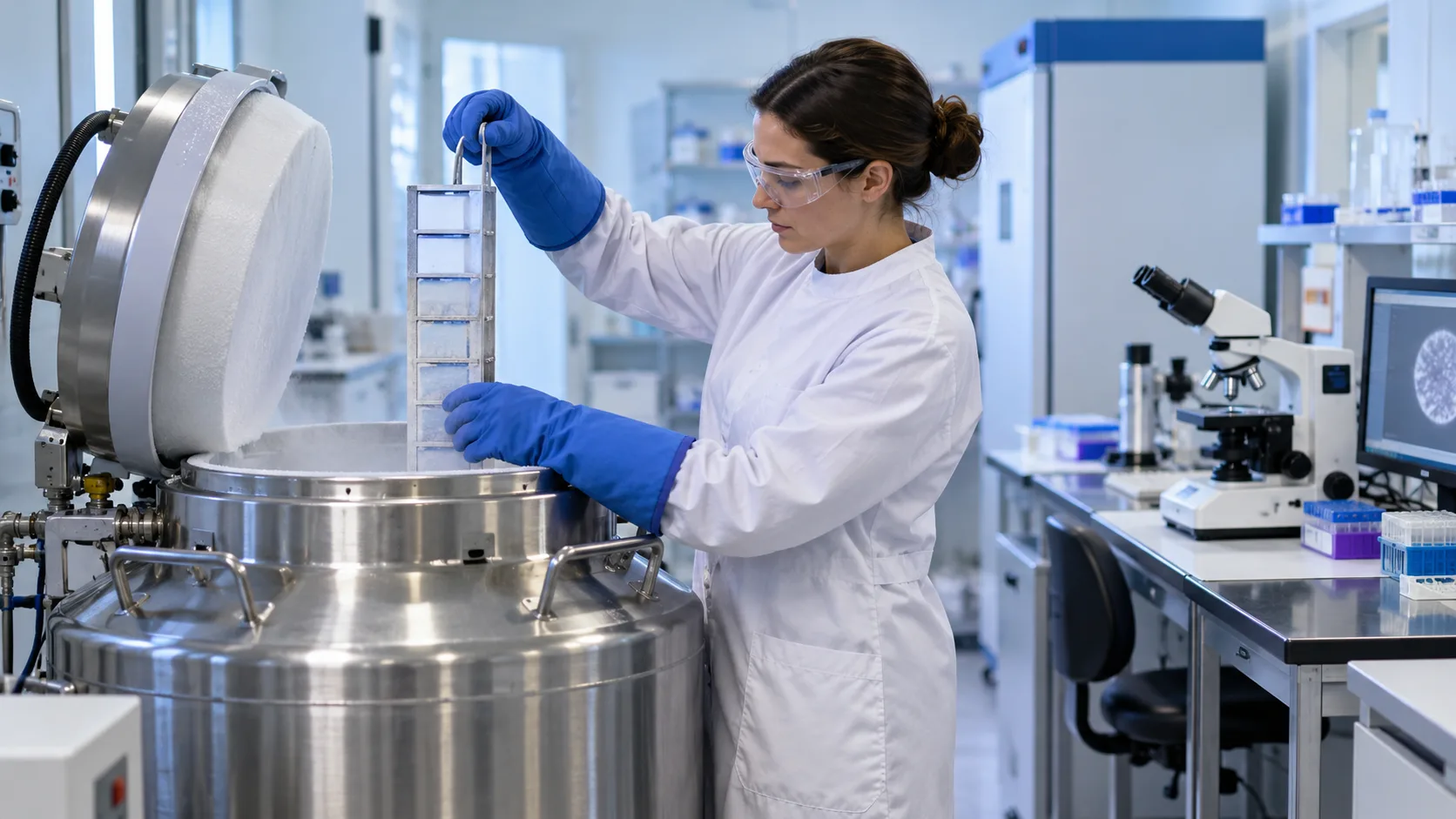
During embryo cryopreservation, specialists place suitable embryos in a protective solution that reduces damage from ice crystals. The embryos are then cooled and stored in tanks of liquid nitrogen. Many clinics now use a rapid-freezing method called vitrification, although techniques have changed since Georgia's embryo entered storage in 2004.
When a family is ready to try for pregnancy, an embryologist thaws an embryo and determines whether it survived the process. Doctors prepare the uterus, and usually one embryo is transferred. Not every embryo survives freezing and thawing, and a transfer does not guarantee pregnancy.
The Embryo Did Not Grow Older in the Tank
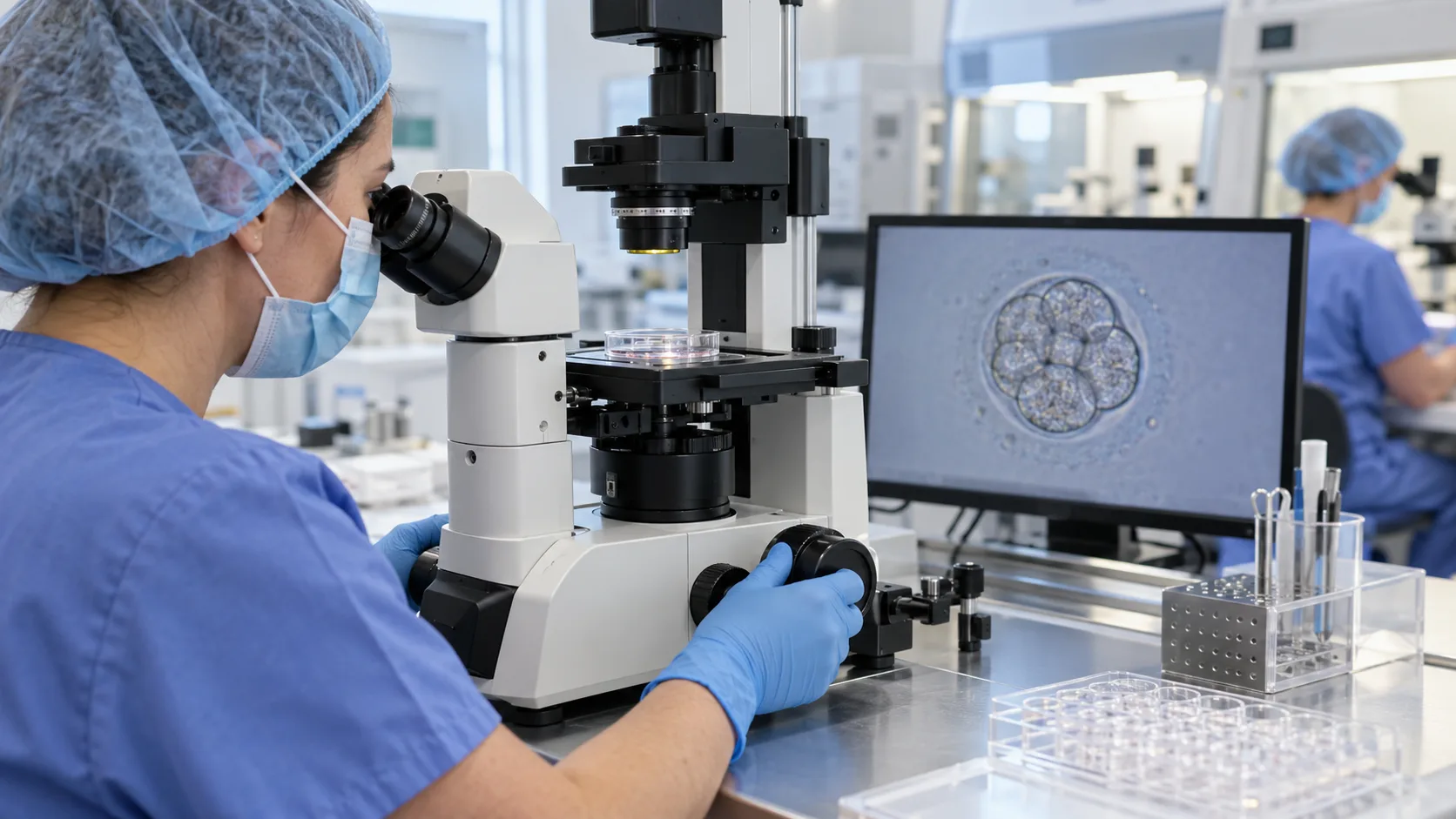
Calling Georgia a 22-year-old newborn makes a memorable joke, but it confuses storage time with biological age. Her embryo did not spend those years developing. Cryogenic storage held it at the same early cellular stage until it was thawed and transferred. Her age began the way every newborn's age does: at birth.
The United Kingdom's Human Fertilisation and Embryology Authority says it has found no evidence that the length of time an embryo remains frozen harms it. The agency also notes that long-term evidence is still limited and that some embryos do not survive thawing. Georgia's birth cannot promise the same result for another family, but it shows what careful storage can preserve: a possibility.
Twenty-Two Years Is Extraordinary but Not the Record
Some early reports described Georgia's birth as a world record. It is not. In July 2025, Lindsey and Tim Pierce of Ohio welcomed a boy named Thaddeus from an embryo that had remained frozen for at least 31 years and 56 days. Guinness World Records recognized that birth as the longest storage interval for an embryo used in a successful pregnancy.
That correction does not make Georgia's story ordinary. A successful birth after more than two decades of storage remains uncommon, and her family's circumstances make this much more than a contest over a number of years.
A New Child Does Not Replace the One Who Was Lost
The science makes people stop and stare. The grief requires more care.
Georgia should never be described as a replacement for Giorgos. Her parents did not stop loving their son when they welcomed their daughter, and their daughter was not born with the job of repairing every part of their loss. Rapti-Tzelepi said she wants Georgia to grow up healthy, happy and full of the same joy that her first child brought into their home. Her words leave room for both children. One is remembered. One has just begun.
One day Georgia will learn that her story includes a laboratory tank, a government deadline, a brother she never met, and parents who made a difficult decision while grieving him. Science can explain how her embryo waited 22 years. It cannot make that decision simple, or tell her family what comes next.
For now, what comes next is smaller and more familiar: feeding a newborn, losing sleep and learning the sound of a new laugh inside a home that had grown painfully quiet.