They Took Her Family. Ten Years Later, She Built One of Her Own.
Rescued from the illegal wildlife trade as an 18-month-old orphan, Lulingu the Grauer's gorilla returned to the wild in late 2024 and gave birth to a healthy infant on May 21, 2026—the first birth from a GRACE-released gorilla.
Rescued from the illegal wildlife trade as a baby, Lulingu returned to the wild and is now raising an infant in Virunga National Park.
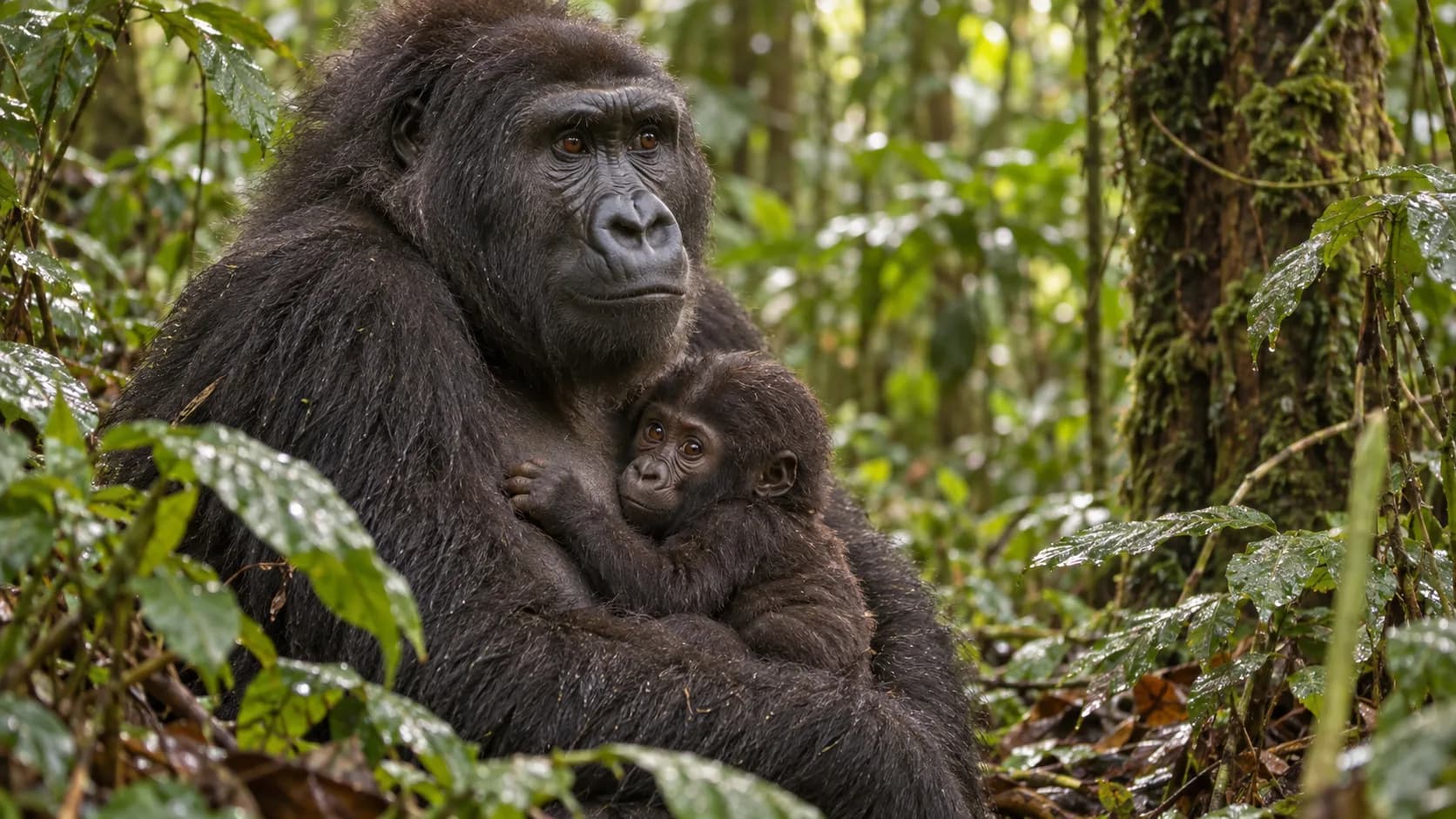
The photograph is almost too quiet for the size of the story it tells. Deep in the forest on Mount Tshiaberimu, an adult gorilla sits with a tiny infant folded against her chest. She nurses the baby. She cradles it. She plays with it. To the monitoring team keeping watch from a careful distance, mother and child appear healthy.
Her name is Lulingu, and getting to this moment took nearly her entire life. Ten years ago, she was the baby who needed to be held.
A Childhood Stolen
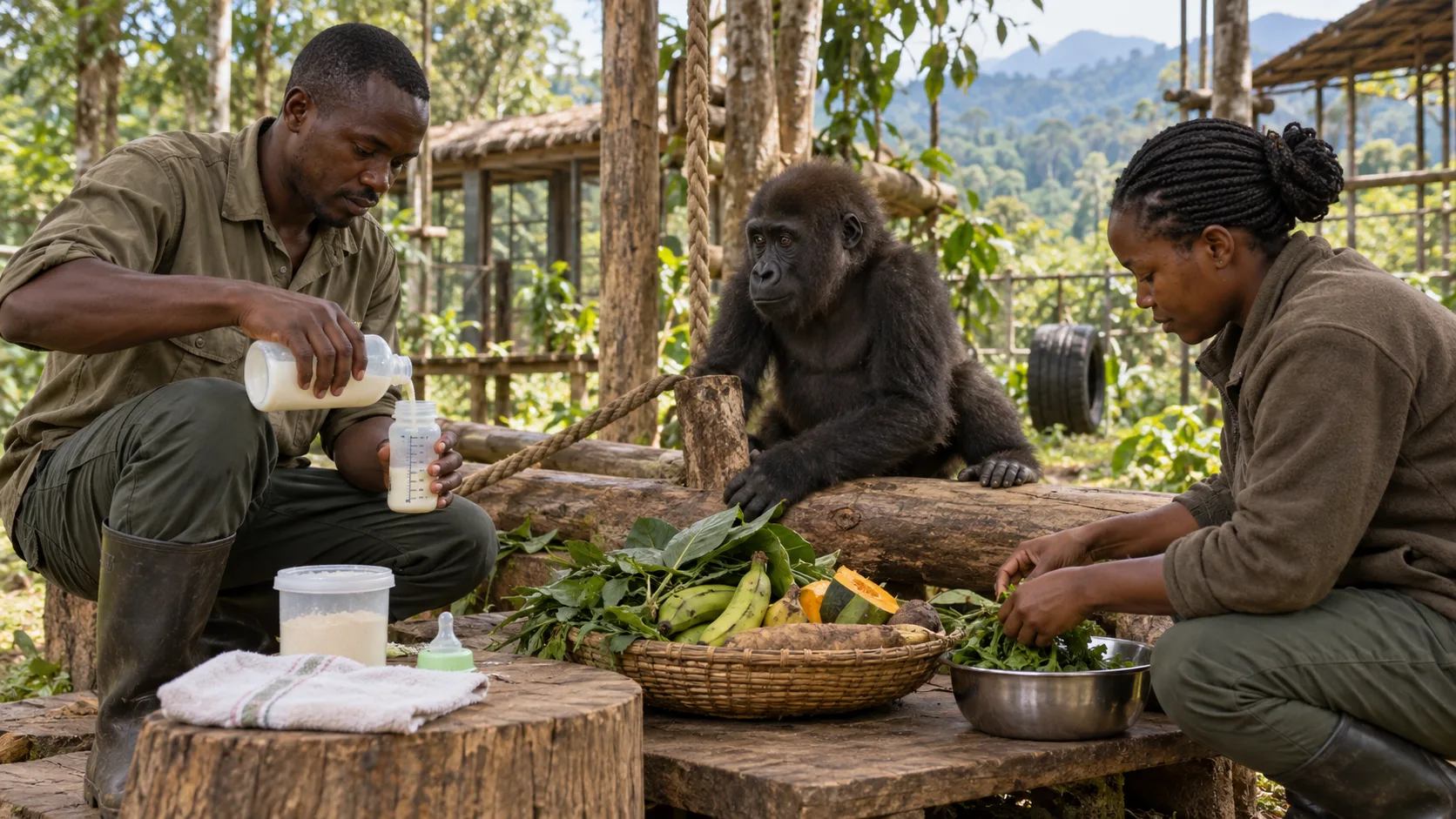
Lulingu was about 18 months old when Congolese wildlife authorities and Gorilla Doctors rescued her in 2016. She had been taken from her family and pulled into the illegal wildlife trade. What happened to the rest of her family has not been made public, but the arrival of a lone infant tells enough of the story.
She was the youngest gorilla ever brought to GRACE, the Gorilla Rehabilitation and Conservation Education Center in the Democratic Republic of the Congo. GRACE is the world's only sanctuary devoted to rescued Grauer's gorillas, also called eastern lowland gorillas.
For a frightened young animal who should have been clinging to her mother, survival began with people. Congolese caregivers Devotte Kavira Kihira and Kambale Muviri stayed with her around the clock. They fed her, comforted her and helped her recover. That kind of care can keep an orphan alive. It cannot, by itself, teach a gorilla how to be a gorilla.
The Mother Who Chose Her
Lulingu's next chance came from Pinga, an experienced female at GRACE. Pinga accepted the little newcomer as a surrogate daughter. Inside a family of gorillas, Lulingu learned the things no bottle or human hand could provide: how to read the group, how to find her place, how to behave around other gorillas and how to live as one of them.
The relationship mattered for another reason. From the beginning, the greatest hope was not simply that Lulingu would be safe in a sanctuary. It was that she might someday be ready to leave it. That hope took years.
A Door Back to the Forest
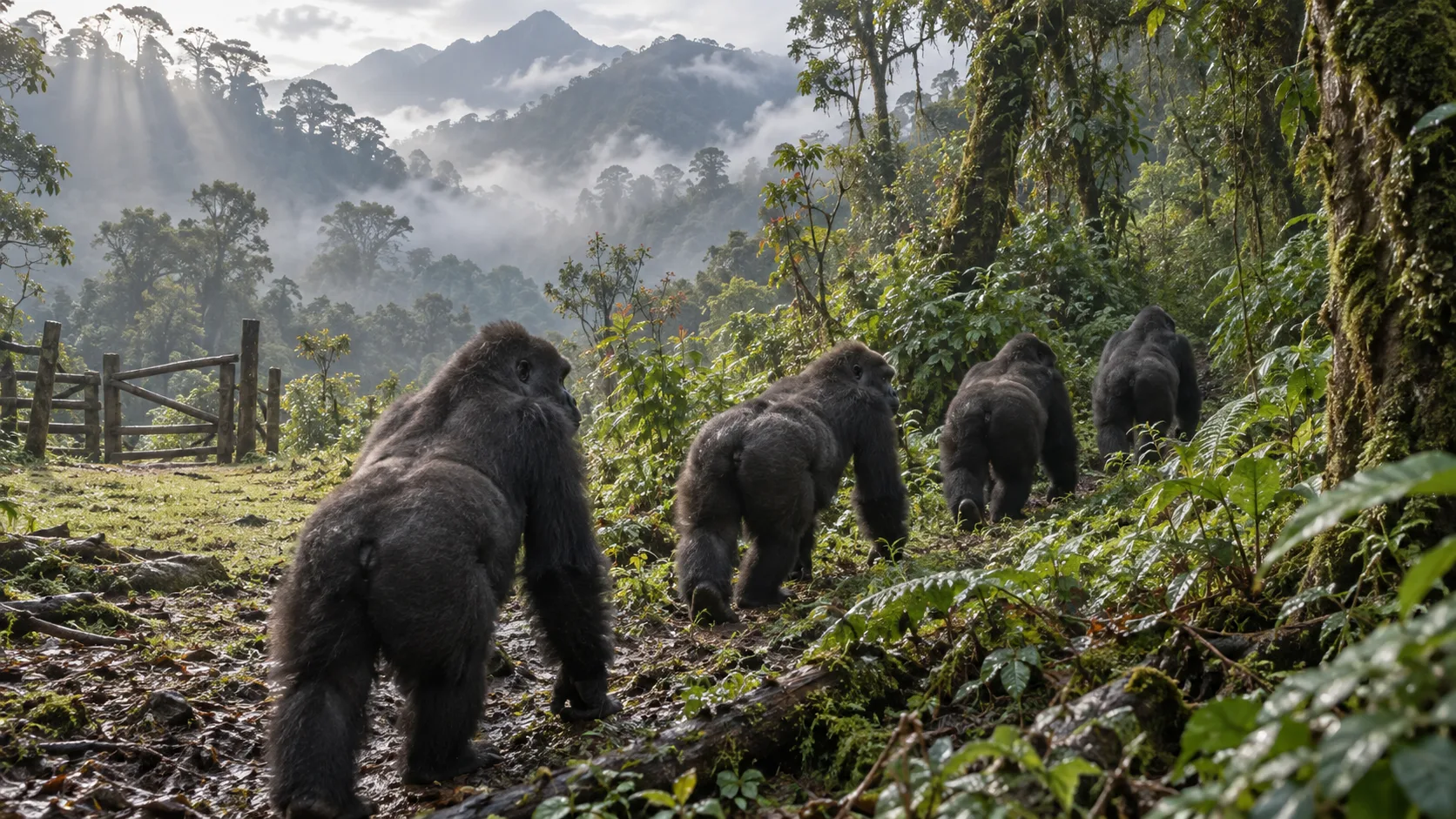
GRACE, Virunga National Park, Gorilla Doctors, the Congolese nature authority and local communities spent more than five years preparing an unprecedented return. Lulingu and three other rescued females—Isangi, Mapendo and Ndjingala—were selected for their health, behavior and ability to live together.
In late 2024, the four females were moved to a rewilding facility on Mount Tshiaberimu. On the other side was Mwasa, a wild silverback. He showed interest in the newcomers, and the females could see and hear the forest that waited beyond their temporary home.
Then, on December 3, the gate was opened. No one pushed them through it. Lulingu and the other females left voluntarily and followed Mwasa into the trees. They were the first gorillas from GRACE to return to the wild.
Their arrival also brought new hope to one of the smallest and most isolated populations of Grauer's gorillas. Before the move, only eight gorillas remained in the Mount Tshiaberimu group. Four healthy females raised that number to twelve and gave the group a better chance to survive across generations.
A New Life in the Wild
Returning an animal to the forest is not the end of a rescue. It is the beginning of a much harder test. Lulingu had to adjust to unfamiliar terrain, new foods and a new social order without the routines of sanctuary life.
A monitoring team followed the gorillas while giving them space, recording what they ate, how they behaved and whether they remained healthy. The team even collected urine from leaves and used ordinary pregnancy tests to look for hormonal changes without handling the animals.
The four females joined Mwasa's family group. None required veterinary treatment for illness or injury after the release, according to Gorilla Doctors.
Then came the result no health chart could fully capture. On May 21, 2026, Lulingu gave birth. The father was Mwasa. The infant was born wild in Virunga National Park—a new member of a critically endangered species and the clearest sign yet that Lulingu had not merely survived her return. She belonged there.
The People Watching from Afar
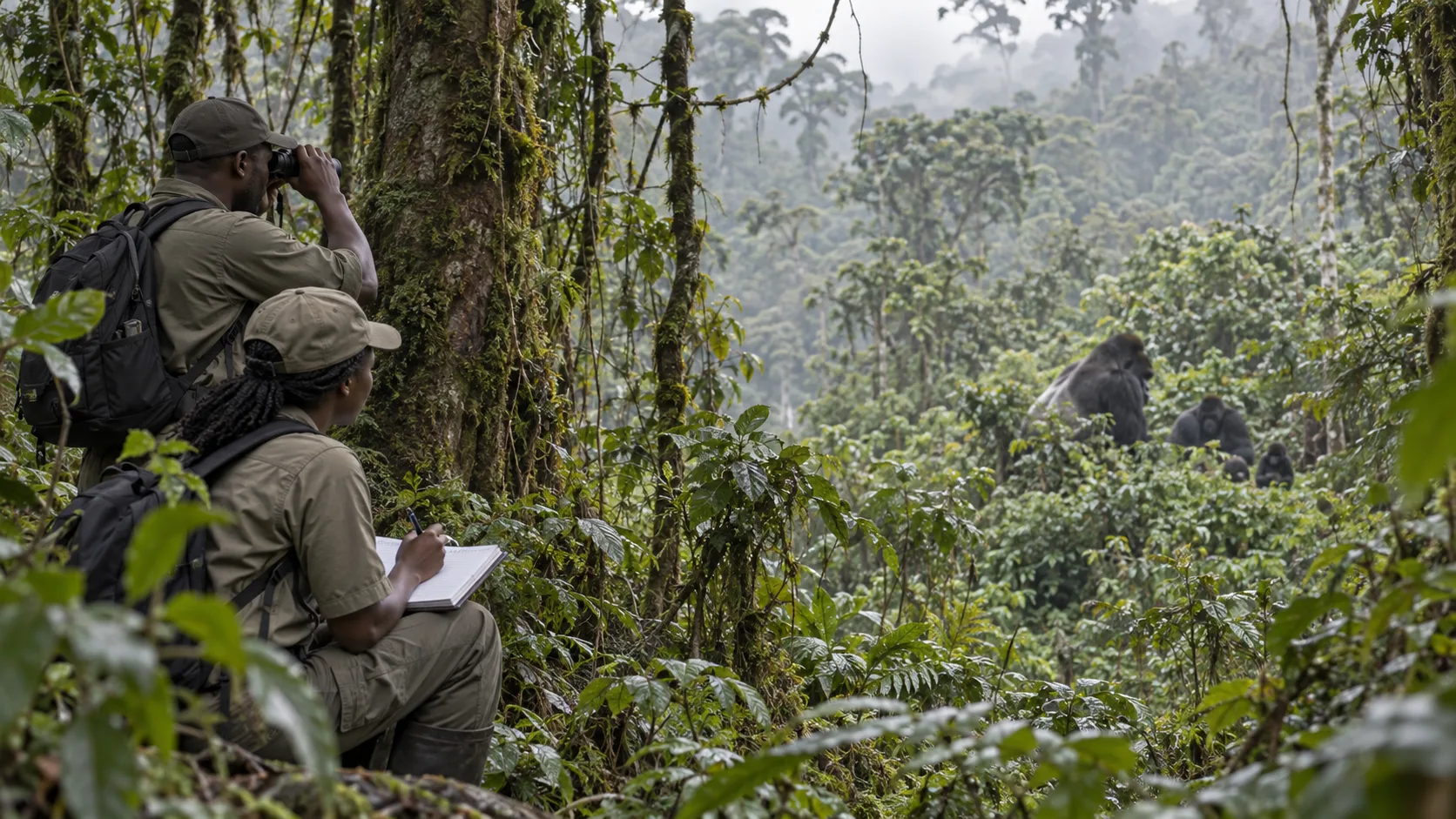
The birth was announced in September after months of close observation. The team has seen Lulingu nursing, cradling and playing with her infant. Both were reported healthy, although conservationists remain careful. Raising any infant in the wild carries risks, and every life matters in a population this small.
For the people who once carried bottles to a frightened orphan, the view from a distance is exactly the success they worked toward. Devotte, one of Lulingu's earliest caregivers, put it simply:
"I feel like a grandmother to this baby."
There may be no better description of conservation done well. The goal was never to make Lulingu dependent on people forever. It was to give her what she needed until she no longer needed them close by.
That work also belonged to the surrounding communities. Local residents participated in meetings and conservation events, and Congolese caregivers helped guide the decisions because they knew the gorillas as individuals. Local monitors now help protect the family in the forest. This was not a rescue carried out somewhere else by people passing through. It was a long commitment built in the place where the gorillas live.
What One Baby Means
One infant cannot erase the illegal wildlife trade, repair every damaged habitat or guarantee the future of Grauer's gorillas. Lulingu and her baby will still need a protected forest, careful monitoring and communities with a stake in keeping them safe.
But conservation is often measured in moments like this: one animal saved, one family formed, one door opened, one new life born on the right side of it.
Lulingu entered human care because someone had taken away the life she should have known. People could not return her childhood. They could not give back her original family. What they could do was refuse to let that loss become the end of her story.
Pinga showed her how to live inside a gorilla family. Mwasa led her into the forest. Congolese caregivers, veterinarians, rangers and neighbors protected the path between those two worlds.
Now Lulingu is doing the holding. And somewhere beneath the green canopy of Mount Tshiaberimu, a baby who was born free is learning what home feels like.