Three Places. One Nation. Twenty-Five Years.
On the 25th anniversary of September 11, America pauses at Ground Zero, the Pentagon and a field near Shanksville — three places holding one nation's grief and the names of 2,977 lives.
On September 11, America pauses at Ground Zero, the Pentagon and a field near Shanksville — remembering the lives lost, the families left behind and the courage that carried a wounded nation forward.
Twenty-five years is enough time for a child to grow into adulthood, for a skyline to be rebuilt and for a memory to become a history lesson to millions. It is not enough time to make September 11 an ordinary date.
On this morning, America pauses at three places. In lower Manhattan, water falls into the footprints of two towers. In Arlington, Virginia, 184 memorial benches rest beside the Pentagon. Outside Shanksville, Pennsylvania, 40 marble panels face an open field. The sites are separated by hundreds of miles, but they hold the same national grief.
The 2,977 people killed on September 11, 2001, came from different states, countries, faiths and walks of life. They were parents, children, spouses, siblings, friends and co-workers. They boarded airplanes, reported for work, answered emergency calls and began a Tuesday morning that should have ended like any other. Today belongs first to them — and to everyone who has carried their absence for twenty-five years.
At Ground Zero, the names are the ceremony

At the National September 11 Memorial in New York, family members gather to read aloud 2,983 names: those killed in the 2001 attacks and the six people killed in the 1993 bombing of the World Trade Center. The 2026 program begins at 8:30 a.m. Eastern time.
The first moment of silence comes at 8:46, when American Airlines Flight 11 struck the North Tower. There will be seven moments of silence. Six mark the attacks, the crashes and the collapse of the towers. The seventh honors people who later died from September 11-related illness and injury. That final silence recognizes a truth families and responders have long understood: the toll did not stop when the fires went out.
The names surrounding the reflecting pools are not simply arranged alphabetically. Many are placed beside relatives, friends and colleagues at the request of their families. The memorial preserves relationships as well as names. Even in an expanse built to convey unimaginable loss, it reminds visitors that every person belonged to someone.
At the Pentagon, 184 lives are held one by one

At 9:37 a.m., American Airlines Flight 77 struck the Pentagon. Fifty-nine passengers and crew members aboard the aircraft and 125 people inside the building were killed.
The Pentagon Memorial remembers those 184 lives with 184 individual units, each bearing one name above a small pool of flowing water. The benches follow a timeline of the victims' birth years, from a 3-year-old child to a 71-year-old man. Their orientation tells another part of the story: the units honoring the people aboard Flight 77 face toward the sky, while those honoring the people inside the Pentagon face toward the building.
Taken together, the benches show the scale of the loss. Seen one at a time, they do something equally important — they return the day to individual human beings, each with a life larger than the moment in which it ended.
Near Shanksville, forty names face an open field

At 10:03 a.m., United Airlines Flight 93 crashed into a field near Shanksville after passengers and crew members fought back. Their actions prevented the hijacked aircraft from reaching its intended target in the nation's capital. Forty people aboard the flight were killed.
At the Flight 93 National Memorial, 40 separate polished marble panels join to form the Wall of Names. The design represents both the individuality of the passengers and crew members and the unity of their final action. Nearby, a ceremonial gate separates the memorial from the crash site; it is opened on September 11 so family members can enter that sacred ground.
For the 25th remembrance, their names will again be read aloud and the Bells of Remembrance will ring. The sound crosses a quiet Pennsylvania field, but what it honors belongs to the entire country: ordinary people faced with an unimaginable choice who acted together to protect strangers they would never meet.
The loss did not end when the day ended
For families, twenty-five years have contained birthdays without the person whose name was on the cake, weddings with an empty chair, graduations, new grandchildren and ordinary mornings when grief arrived without warning. An anniversary can bring the whole day back at once.
Responders, survivors, cleanup workers and members of surrounding communities have also lived with physical and mental health consequences that appeared months or years later. The federal World Trade Center Health Program now serves nearly 150,000 members living in all 50 states and U.S. territories. Its members include people connected to New York, the Pentagon and Shanksville. The geography of the continuing loss is national, too.
Remembering them means more than praising courage in the past. It means continuing to see the people who are still paying a price, listening to their families and keeping the promise that they will receive care.
A memory entrusted to another generation
The National September 11 Memorial & Museum estimates that 100 million Americans are now too young to remember the attacks. For them, September 11 begins as history rather than memory. The responsibility for carrying it forward therefore belongs to those who remember and those who are willing to learn.
We should tell the next generation what was taken. We should also tell them what appeared in response: firefighters climbing stairs while others came down; police officers, paramedics and civilians moving toward danger; passengers acting together in the sky; strangers offering rides, food, shelter, blood and comfort; and communities across the country refusing to let grieving families stand alone.
To say "never forget" is not merely to remember an attack. It is to remember names, relationships, service and sacrifice — and to teach the truth without turning another family's worst day into a slogan.
Wherever we are, we can stand together
Americans do not have to be present at one of the three memorial sites to take part. We can pause at 8:46 a.m., 9:03 a.m., 9:37 a.m., 9:59 a.m., 10:03 a.m. and 10:28 a.m. Eastern time — the moments when the towers were struck and fell, when the Pentagon was attacked and when Flight 93 came down. We can also make room for those lost later to illness.
We can lower our voices, speak a name, call someone who still carries the day personally, thank a responder or help a child understand why the country stops. Compassion does not require a stage. Sometimes it begins with giving another person's grief our undivided attention.
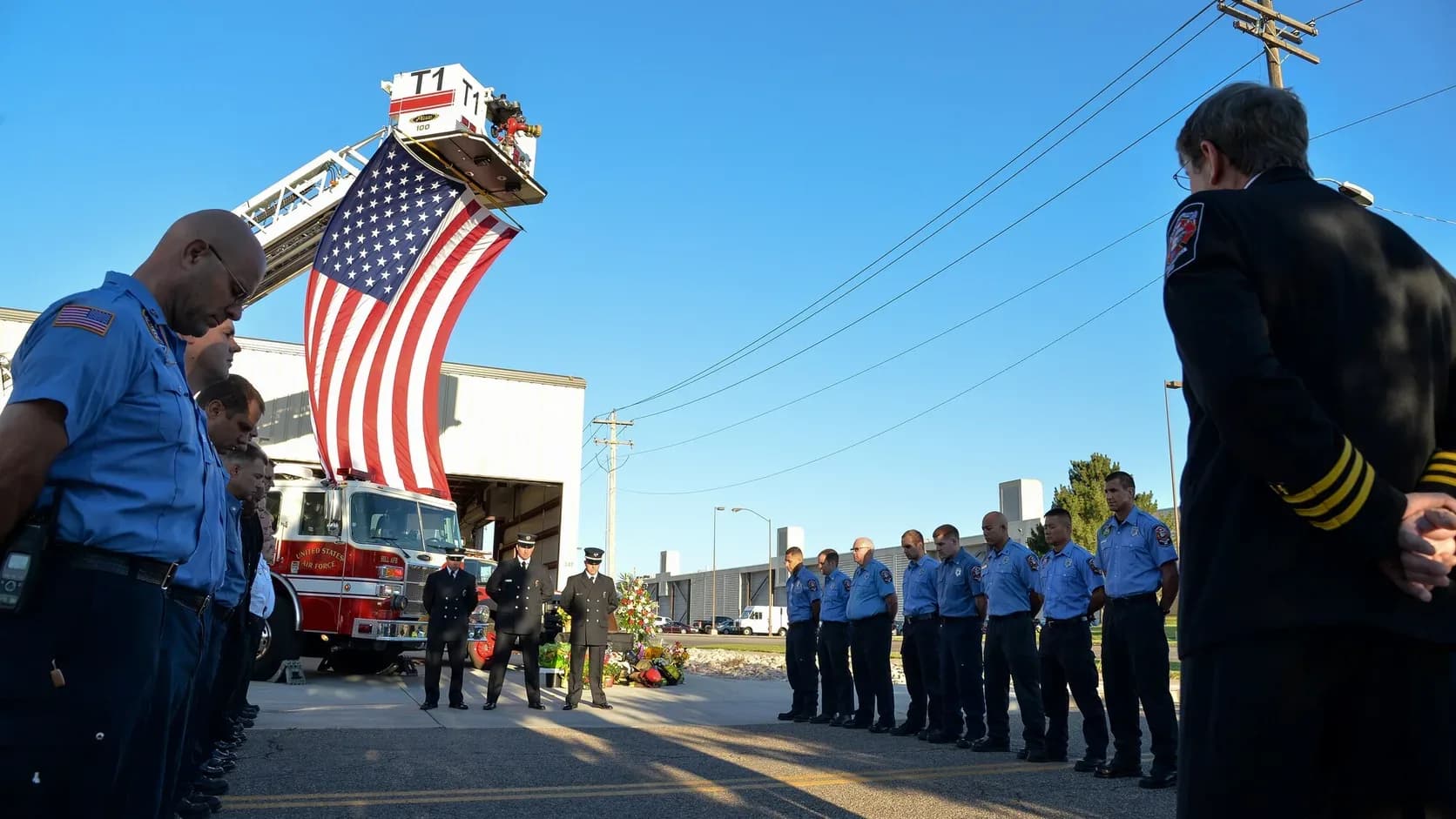
Ground Zero, the Pentagon and the field near Shanksville will each mark September 11 in their own way. Across the nation, homes, schools, fire stations, churches, workplaces and small-town memorials will do the same. Three places. One nation. Twenty-five years. We remember.