Pope Leo Says Christ the King Reveals the True Meaning of Justice
On Christ the King Sunday, Pope Leo XIV said in his Angelus that God's judgment is salvation and the condemnation of iniquity.
The facts come first below. My opinion follows in the section marked as opinion.
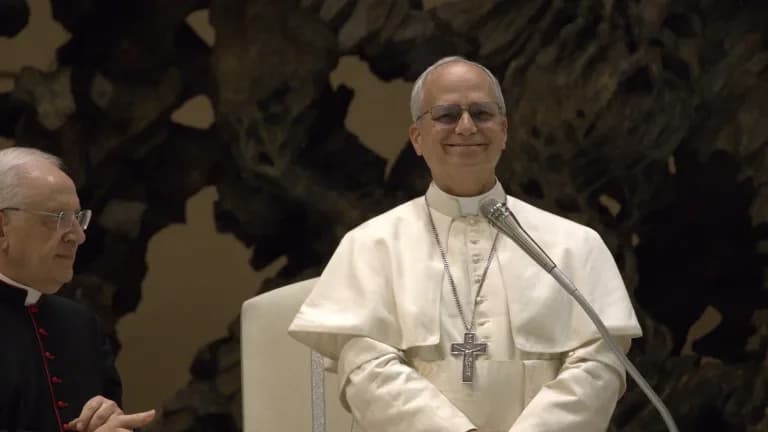
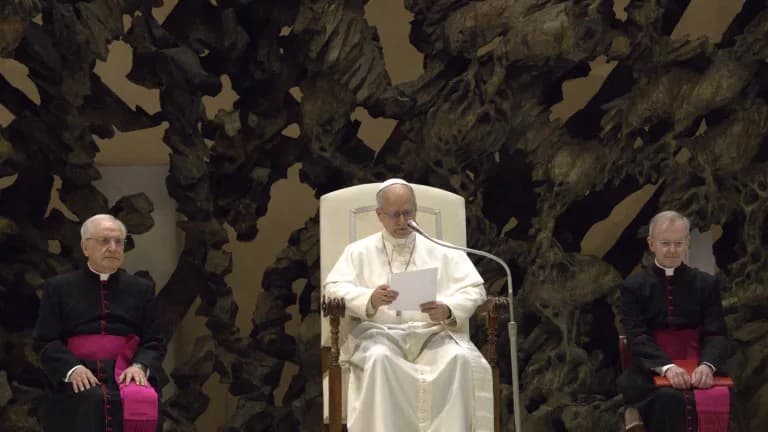
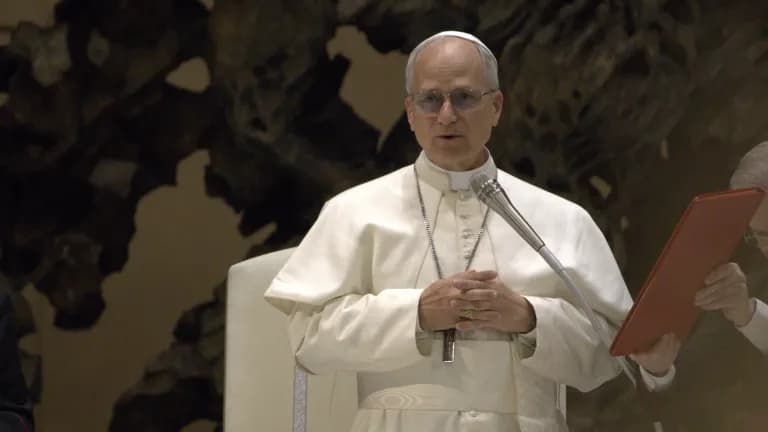
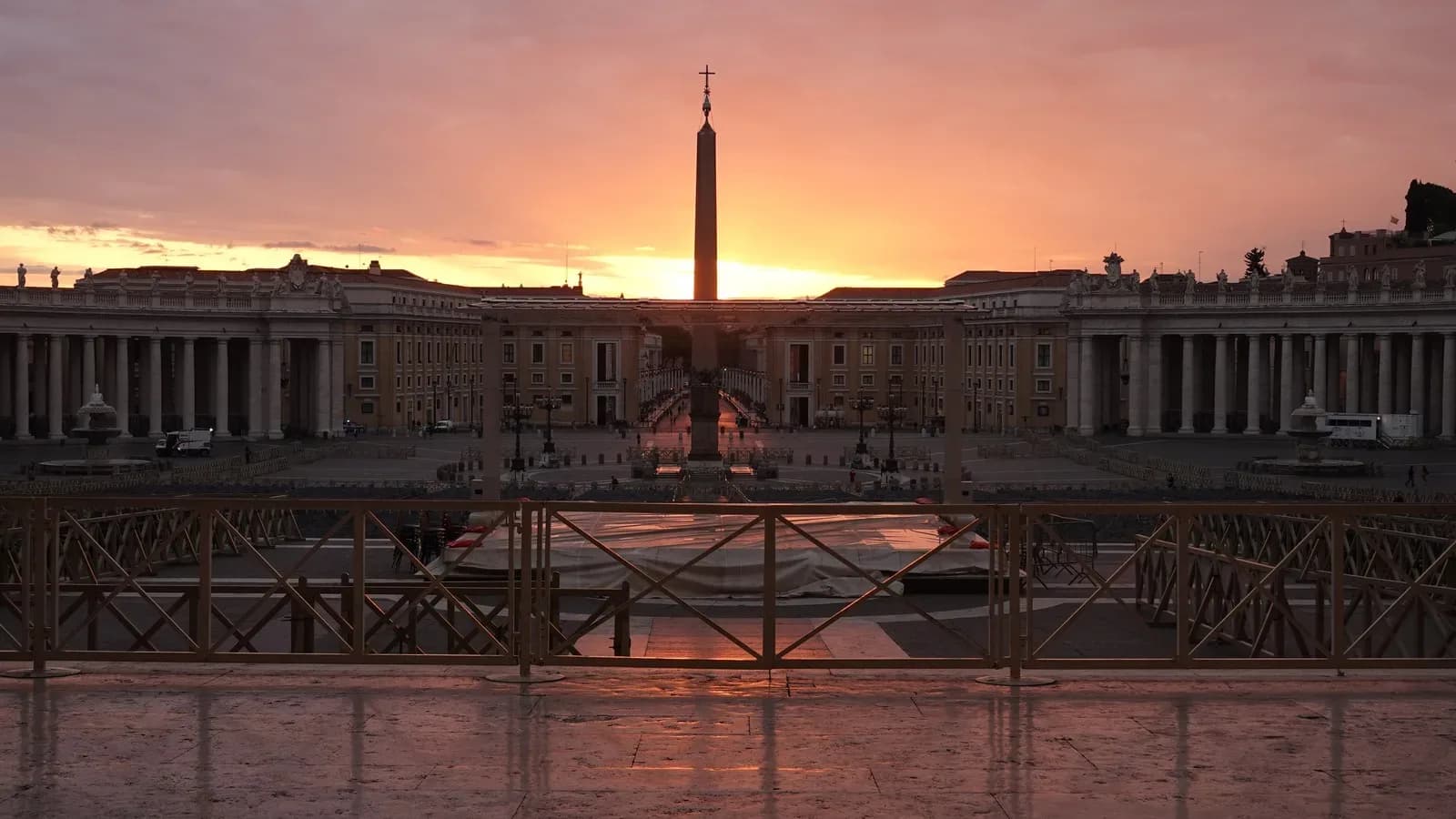
Pope Leo XIV told pilgrims in St. Peter's Square on Sunday that Christ the King reveals the true meaning of justice, and that the Last Judgment is both salvation and the condemnation of iniquity, according to the official Vatican text of his Angelus address and a report by Vatican News. The address was given on the Solemnity of Our Lord Jesus Christ, King of the Universe, at the close of the liturgical year. It was a separate appearance from his Saturday remarks to a space forum, which Dock Line reported in Pope Leo Tells Space Forum to Safeguard Outer Space for Peace.
In the published text, dated Sunday, Nov. 22, 2026, the pope said the day's Gospel, Matthew 25:31-46, presents Christ "as the Lord who reveals the true meaning of justice through a dialogue in which everyone is involved — both the righteous and the wicked." He continued, "Christ is the measure of justice because he is the author of salvation; by illuminating our relationships, he reveals their truth in himself, in opposition to all forms of corruption."
He tied that justice to the works of mercy. "Indeed, justice is that which sustains life," the official address says, citing the Lord's words, "I was hungry and you gave me food." He also cited the Gospel lines about welcoming the stranger, clothing the naked, and visiting the prisoner, and said, "Jesus' discourse applies to all times and all peoples (cf. v. 32); we are all equal before the law of God."
The one who speaks in that Gospel, the pope said, "is neither a despot who threatens nor a tyrant who crushes others with his power." "He is the true King who, through his omnipotence, redeems us; he is the true man, the Master of humanity," the text says. "Christ therefore lifts us up from the dust of passing time, raising all peoples from death to the new life to which he calls them."
The feast is kept at the end of the liturgical year, he said, "because it points to the fulfillment of all history: the encounter with God, which is realized in the Last Judgment — that is, in the word that the Lord addresses to all humanity for the sake of our lives." Then, in the official text: "This judgment is, in fact, salvation. The word that God speaks to the world is a proclamation of mercy. It is his Word made flesh for us, Jesus Christ." At the same time, "this judgment is the condemnation of all iniquity." He cited the Gospel warning, "Just as you did not do it to one of the least of these, you did not do it to me," and said, "Thus, the King of the universe stands alongside the least and the oppressed to redeem them from all evil."
Vatican News, in a report dated Nov. 22, summarized the same teaching. The pope also recalled Pope Pius XI's reason for establishing the solemnity: "In an era marked by tensions and conflicts, my predecessor wished to emphasize that the Lord of history is the King of peace and justice for all the peoples of the world," the official text says. "As a pilgrim through the centuries, the Church renews this teaching, proclaiming that the Kingdom of God is coming and will endure forever."
After the prayer, the pope said World Youth Day was being celebrated in particular Churches throughout the world, and that young people will be accompanied from Sunday onward by the words of Jesus, "Take courage! I have overcome the world." That verse, he said in the address, is the theme of the 41st World Youth Day, next August in Seoul. "Christ's victory is not a worldly victory, but that of a humble King who identifies himself with the least among us," he said. "I therefore invite all young people to have the courage to be meek and humble, like Christ. May his love be your strength!" The appeal follows his earlier words to young people, including Dock Line's report that Pope Leo Tells Young People of Lazio That Holiness Is a Gift.
He also said his thoughts and prayers went to people in Papua New Guinea and other Pacific countries affected by drought, and he asked for prayer "for the victims of the many conflicts that, sadly, continue to sow death and suffering throughout the world," according to the official text. He said he would shortly join "the lunch with the poor, which has been moved to this Sunday because of the Apostolic Journey."
Opinion:
The pope named the only King who does not have to grasp at a throne. Christ is not a mascot for a party, and he is not a despot. He is, the pope said, "the measure of justice because he is the author of salvation." That is a harder word than a slogan. It means our dealings with one another are measured by him, "in opposition to all forms of corruption," and that we are "all equal before the law of God."
Mercy is not the cancellation of judgment. "This judgment is, in fact, salvation," he said in the official address, and "a proclamation of mercy." He also said it is "the condemnation of all iniquity." A church that preaches only warmth, and never the reckoning in Matthew 25, is not being kind. It is being unclear. The works of mercy are not a substitute for repentance. They are what love does, and the Lord will ask whether we did them.
Pius XI placed this feast in a time of conflict so that nations would remember who actually rules history. That need has not expired. Young people are being sent toward Seoul with a command to take courage, and to be meek like the King who "identifies himself with the least among us." Meekness is not surrender to the age. It is strength under God's hand. The Kingdom is coming, the pope said, "and will endure forever." That is the news that outlasts a news cycle.