

Poteet Knows Strawberries: Why Texas Gardeners Plant Them in Fall, Not Spring
Texas strawberries are planted in the fall, and timing matters. Here is what Texas A&M experts and research tied to Poteet's growers say about varieties, mulch, water and freezes.
Most people think about strawberries in April, when the berries are red and the Poteet Strawberry Festival is in full swing. Growers in Poteet know the real work starts months earlier. The plants that fill spring baskets go into the ground in the fall, and the weeks right now matter more than most backyard gardeners realize.
Poteet, in Atascosa County south of San Antonio, has the highest concentration of strawberry growers in Texas, according to a 2022 Texas A&M AgriLife report on statewide strawberry trials. The Poteet Strawberry Growers Association and the Poteet Rotary Club helped buy plants for that research.
Fall is planting season
In an Oct. 20 AgriLife Today article, Tim Hartmann, the Texas A&M AgriLife Extension Service statewide fruit specialist, said September and October are the best months to plant strawberries in Texas. Gardeners can plant through early December, he said, but earlier planting gives plants more time to grow and leads to bigger spring harvests.
In Texas, strawberries are grown mainly as an annual. The plants build a strong root crown through the cool months, then put on fruit before summer heat shuts them down. Fruit can start as early as February in the southern part of the state in mild weather, and harvest usually runs until late May or June.
The 2022 research shows why timing matters. Russ Wallace, an AgriLife Extension horticulturist in Lubbock who led the trials, said strawberries should be planted "as soon as plants arrive in early to mid-October." In Lubbock, the varieties tested lost an average of 1.7% of their berry yield per day when planting was pushed toward mid-November. By our own simple math, two weeks of delay at that rate would cost nearly a quarter of the crop. The researchers did not state that figure. The report also said earlier experience showed that planting later than mid-November "may result in no yields the following spring."
Those two pieces of advice differ somewhat. The 2026 home-garden article allows planting into early December. The 2022 findings came from commercial-style field trials, and the Lubbock losses were measured on the High Plains. The safe reading of both is the same: if you want strawberries this spring, plant soon.
Pick the right plants
Hartmann recommends day-neutral varieties such as Albion or San Andreas, or June-bearing types such as Chandler or Camarosa. June-bearers give one big spring crop. Day-neutral plants may produce a few berries in the fall before the spring crop.
He warned against everbearing varieties bred for northern gardens. Those are often what retail nurseries sell in spring, and the Texas heat cuts their harvest short. If a local nursery cannot order fall plants, he suggested a reputable mail-order source. Strawberries are self-fruitful, so one variety is enough.
Beginners should start with plugs, which are potted starter plants, instead of bare-root plants. A bare-root crown set too high dries out. Set too low, it rots. With a plug, the soil line is easy to see. "It's just a little easier in my experience to plant the plug," Hartmann said.
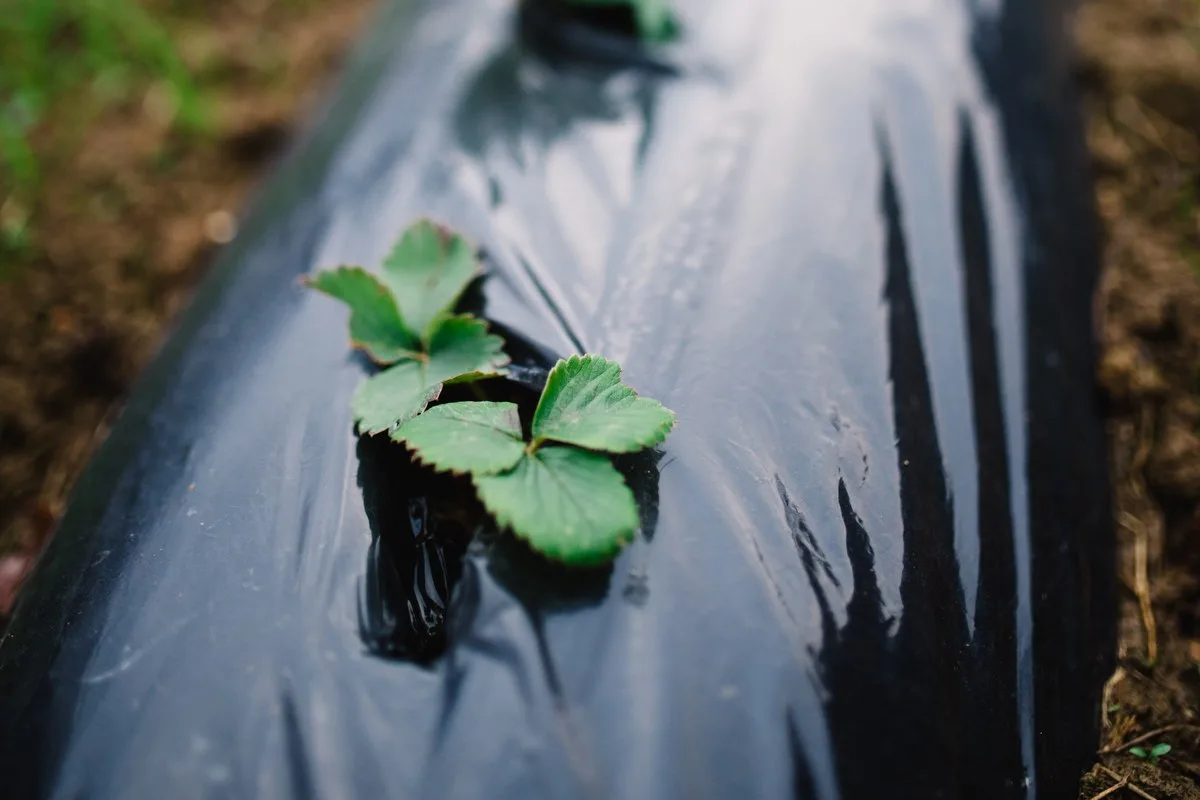
A young strawberry plant set in black plastic mulch. The photographer did not give a location; this illustrative photo was not taken in Poteet. Photo: Shixart1985 / Wikimedia Commons, CC BY 2.0.
Sun, drainage, mulch and water
Sun: Plant where the plants get as much sun as possible. "The sun fuels fruit production and sugar content," Hartmann said.
Drainage: Strawberries do not tolerate soggy soil. Use raised beds if your soil is heavy or slow to drain. Wallace said strawberries grow best in soil with a pH below 7.
Mulch: Weed-block fabric or pine straw keeps berries off damp soil, where they rot quickly. Hartmann said to avoid hay, which can carry herbicide residue that damages the plants.
Fertilizer: Strawberries are heavy nitrogen feeders. Hartmann recommends a slow-release fertilizer at planting or nitrogen-rich compost. Without slow release, he said, plan to fertilize about every week. Test your soil for other needs.
Water: Use a soaker hose or drip line at the roots, not overhead sprinklers, since wet leaves and fruit invite rot and disease. The roots are shallow, so water often when rain is not steady.
Watch for freezes
The plants themselves handle cold well. The flower buds and fruit do not. Hartmann recommends frost blankets or floating row covers over small hoops when a hard freeze threatens, with extra layers for more protection. "Here in Texas we could have a strong flower or fruit set well before the final frost date, so we want to protect yields," he said. Our earlier piece on making a freeze plan covers more cold-weather steps, and gardeners looking for other fall crops can read about garlic, greens and roots.
The festival
The Poteet Strawberry Festival Association says it is preparing for its 80th annual festival next year. Its website says dates will be announced later.
Our view
Strawberries reward patience. You plant in the fall, tend through the winter and wait on a harvest you cannot see yet. Farmers in Poteet have lived that way for generations, and it is a fair picture of how most good things grow. "To every thing there is a season," Ecclesiastes says, "a time to plant, and a time to pluck up that which is planted." For Texas strawberries, the time to plant is now. A family that puts a few plugs in a sunny bed this month may be picking berries with their children in spring, and that is worth an afternoon's work.
More Garden & Recipe Stories
 Last Week
Make a Freeze Plan Now. Texas A&M Experts on Protecting Plants, Hoses and Pipes Before the First Cold Snap
 October 21, 2026
Pecan Season in San Saba: How to Store Your Pecans and Bake a Pecan Coffee Cake
 October 20, 2026