Pecan Season in San Saba: How to Store Your Pecans and Bake a Pecan Coffee Cake
The self-styled Pecan Capital of the World owes much to an 1874 English immigrant. AgriLife experts explain when pecans are ready, how to store them and a lighter coffee cake.
Pecan season has started across Texas, and few towns take it more seriously than San Saba. According to the Handbook of Texas, the county seat calls itself the "Pecan Capital of the World." The San Saba County office of Texas A&M AgriLife Extension says the town is often called that because it ships pecans worldwide.
For anyone in San Saba County with a tree in the yard, or anyone who just bought a sack at a roadside stand, here is what Extension experts say about when pecans are ready, how to keep them, and one way to bake them.
How San Saba earned the name
A historical marker at the entrance to the San Saba River Nature Park, on East Wallace Street, tells part of the story. According to the marker text, Edmund E. Risien was an English immigrant who arrived in San Saba in 1874. He experimented with pecan breeding, and his work led to large commercial pecan orchards throughout the county. The paper-shell varieties he developed include San Saba Improved, Onliwon and Western Schley.
The Handbook says the area's postwar farm economy came to rest on wheat, pecans, peanuts, fruit and grain sorghum, along with cattle, sheep and goats. In the mid-1970s, local companies were building pecan-harvesting equipment and processing pecans for shipment. AgriLife's county page still lists pecans among the county's crops, along with wheat, hay and peanuts.
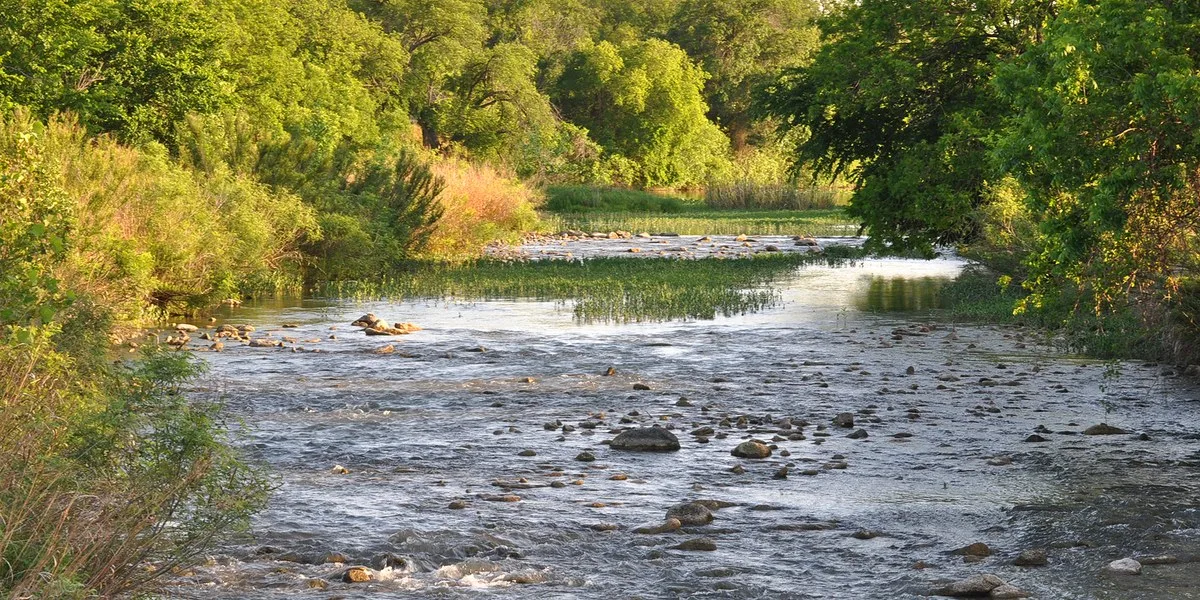
The San Saba River near Sloan, San Saba County, 2014. Photo: William L. Farr / Wikimedia Commons, CC BY-SA 4.0.
When the nuts are ready
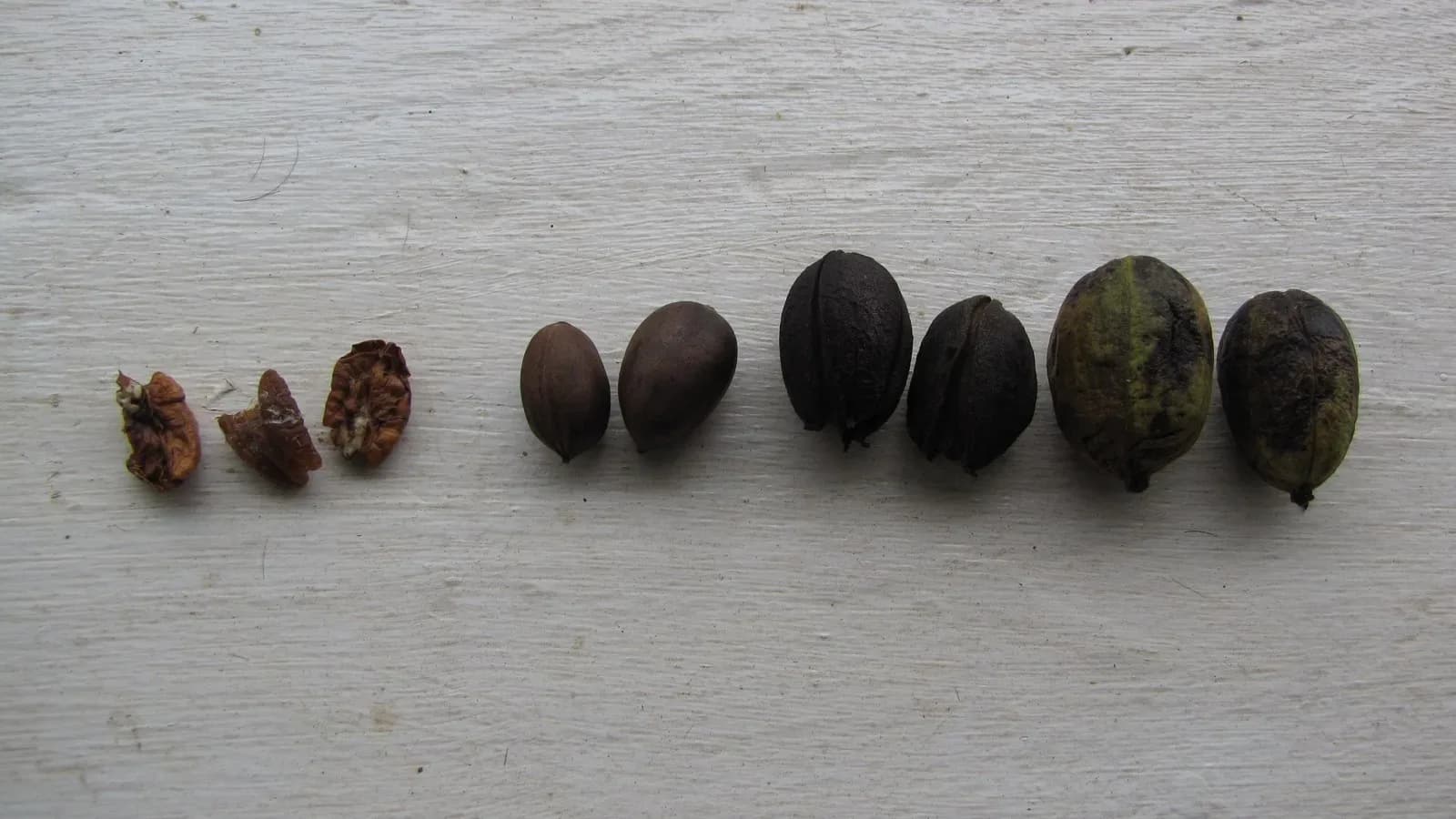
A 2020 AgriLife Today report says pecans typically fill from mid-August to early October, depending on variety. Harvest runs anywhere from late September to late December, depending on variety and climate.
Fresh pecans hold more water than they should for storage. Monte Nesbitt, an AgriLife Extension horticulture program specialist, said in that report that kernels at first maturity can run 15% to 20% moisture or more, and the ideal is about 6%. "Kernels that do not snap and break when bent with force, but bend or have a rubbery texture are not adequately dried," he said.
How to keep them
Moisture is the enemy, the report says. Because of their oil, in-shell pecans don't last long at room temperature, though they can stay usable for six to 12 months in a cool, dry place. Shelled pecans keep up to nine months in the refrigerator in a covered glass jar or plastic bag. Frozen at 10 to 31 degrees, they last two years, and at 0 degrees, up to five.
Pecans also soak up odors, so Nesbitt suggests double-bagging or heavy plastic containers in the refrigerator. "Pecans that won't be used for more than four months – be they in the shell, cracked or shelled – should be stored in the freezer," he said.
When buying, look for full, plump kernels that are even in size and color. Nesbitt said a brown kernel tends to mean rancidity or poor storage, except in a few varieties that run naturally darker. He also suggested asking to taste before you buy.
One more warning from the report: keep pecans away from the dog. They are not toxic to dogs themselves, but they can carry molds that are, and they are high in fat.
A pecan coffee cake
AgriLife's Dinner Tonight program offers a lighter coffee cake that makes 24 pieces in a 9-by-13-inch pan.
1 cup sugar
1/2 cup nonfat Greek yogurt
1 tablespoon vanilla extract
2 eggs
1/2 cup 2% milk
2 cups whole wheat flour
1 tablespoon baking powder
1/4 teaspoon salt
1/2 cup brown sugar
2 tablespoons butter, melted
1 tablespoon cinnamon
1 cup coarsely chopped pecans
Mix the sugar, milk, yogurt, eggs and vanilla until well combined. In a separate bowl, mix the flour, baking powder and salt. Slowly add the dry mixture to the wet and combine well. Pour the batter into a greased 9-by-13-inch pan. Stir together the brown sugar, cinnamon, pecans and melted butter, then sprinkle the mixture evenly over the unbaked batter. Bake at 350 degrees for 30 to 35 minutes.
AgriLife's Path to the Plate pecan factsheet notes that the pecan is the state tree of Texas and grows wild in 150 counties, in the rich soil near rivers and creeks. Many Texans can pick up the harvest from their own yards or a nearby creek bank. In San Saba, it is a way of life worth giving thanks for.
Related on Dock Line: Greenville Gardeners Still Have Time to Plant Garlic, Greens and Roots; What to Plant in Your Brazos Valley Fall Garden Right Now; Brownwood's Extension Agent Says Fall Is the Time to Plant Trees, Shrubs and Wildflowers