Beyond Lost Maples: Texas State Parks Where You Can See Fall Color, From the Panhandle to the Pineywoods
Lost Maples gets the crowds, but TPWD points to yellow cottonwoods at Caprock Canyons and East Texas hardwoods at Daingerfield, Cooper and more. Here is where to go and what to know.
Texans like to joke that the state has only two seasons. The Texas Parks and Wildlife Department disagrees. On its Lost Maples page, the agency says the park's bigtooth maples prove "that Texas does have four seasons."
Lost Maples draws the biggest crowds, and it often hits capacity in the fall. But it is not the only state park where leaves turn. TPWD's Fall for Parks page points to several others, from the Panhandle to the Pineywoods.
East Texas hardwoods
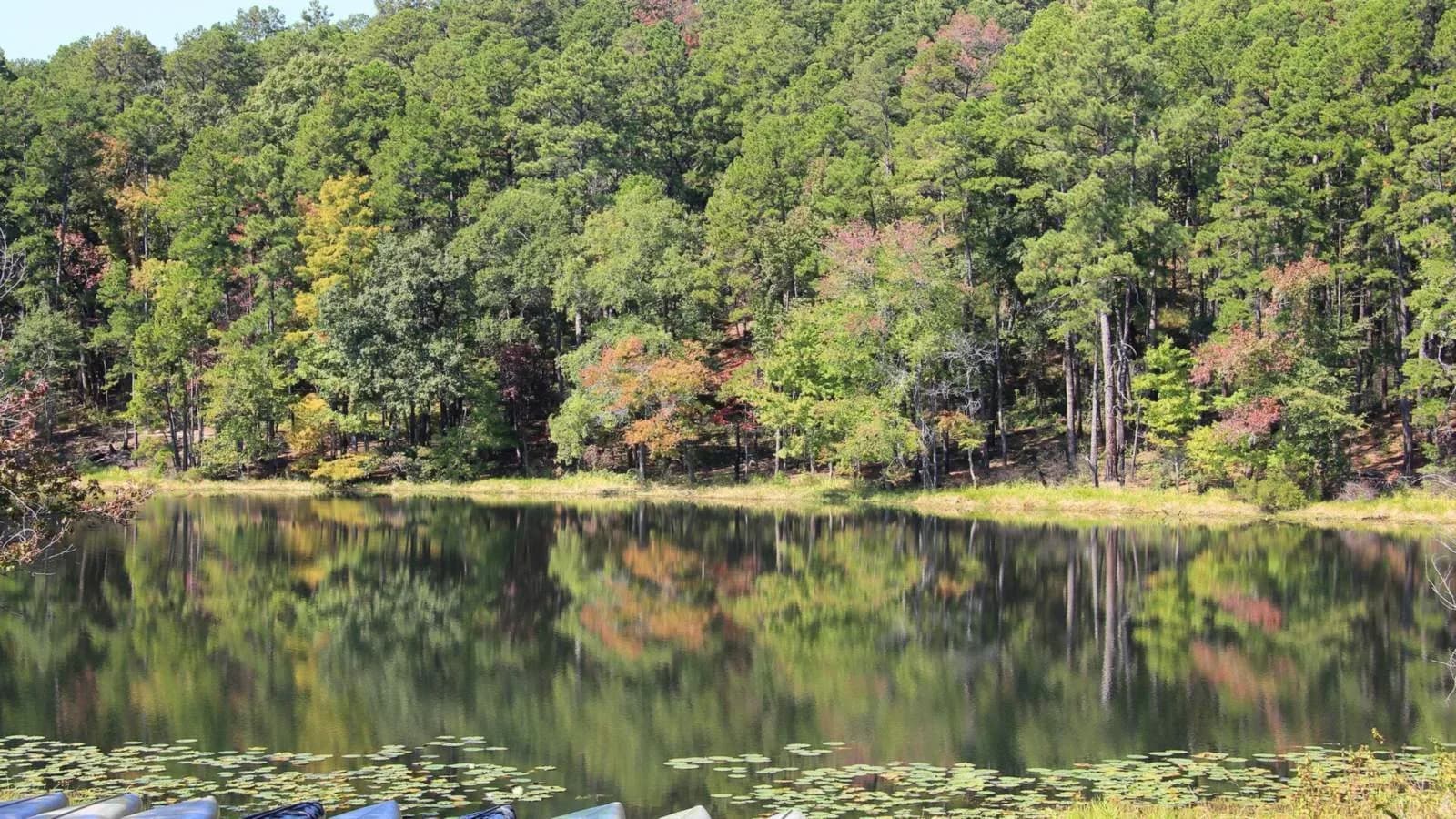
In East Texas, TPWD says visitors can see hardwoods including elms, oaks, sweetgums, beeches and hickories at state parks such as Lake Bob Sandlin, Cooper, Daingerfield and Martin Creek Lake.
At Daingerfield State Park in the northeast corner of the state, TPWD describes a "cathedral of trees," with pines, oaks, dogwoods and more. The 2.4-mile Rustling Leaves Trail is an easy walk around 74-acre Little Pine Lake, and the 0.8-mile Mountain View Trail climbs to the highest point in the park.
You can also see the color from the water. The park rents canoes, kayaks, paddle boards and paddle boats year-round, and the lake has a 5 mph speed limit. You do not need a fishing license to fish from shore or a boat in the park. For an overnight stay, there are campsites and historic cabins.
One rule to remember: the county is under a quarantine to stop the spread of the emerald ash borer, so moving firewood is restricted. Buy firewood where you burn it.
Panhandle cottonwoods
Out west, TPWD points to "gorgeous yellow cottonwoods" at Caprock Canyons State Park. The park is also home to the Texas State Bison Herd and has nearly 90 miles of trails, ranging from easy to very challenging. The 120-acre Lake Theo offers fishing, swimming and no-wake boating.
The bison are wild animals, the park reminds visitors, so keep a safe distance.
The latest from Lost Maples
If you still want to see the famous maples, check before you drive. Our earlier story covered the park's first report of the season. In its Oct. 21 update, the latest posted when this story was written, staff said they were "still mostly seeing green." The sycamores had turned golden yellow and were starting to drop their leaves, and a few maples were beginning to change color at the edges.
According to the park's nature page, the maples usually change color from the last two weeks of October through the first two weeks of November, depending on the weather. You can hear a recorded report by calling (830) 966-3413, option 3.
The park has room for only 250 cars and reaches capacity daily in October and November, TPWD says. Weekends sell out fast, so reserve a day pass online or by calling (512) 389-8900. Entrance is $6 a day for adults, and children 12 and under get in free. The park is open daily from 8:30 a.m. to 4:30 p.m., and there is no cell phone service inside.
You do not have to hike to see the color there. Visitors can drive about a mile into the park and view the foliage from their cars. Hikers have more than 10 miles of trails. TPWD asks everyone to stay on marked trails, because bigtooth maples have shallow roots that walking over them can damage.
Make a day of it
TPWD also lists Thanksgiving and fall events at state parks, including wild turkey talks and Dutch oven demonstrations. Pack a thermos and a field guide, and bring the grandkids.
"To every thing there is a season," the Preacher wrote (Ecclesiastes 3:1). Autumn in Texas is quieter and shorter than in many places, which is all the more reason to go see it, and to give thanks for a few weeks of red and gold.