Love Bugs Are Back—and This Year It Feels Personal
Drivers across Southeast Texas are finding windshields covered within miles. The swarm is early, the mess is real—and somehow we nearly missed the story.
Drivers across Southeast Texas are finding windshields covered within miles. The swarm is early, the mess is real—and somehow we nearly missed the story.
The story did not merely knock. It threw itself at the truck repeatedly all the way toward Coldspring.
The Story Hit the Windshield
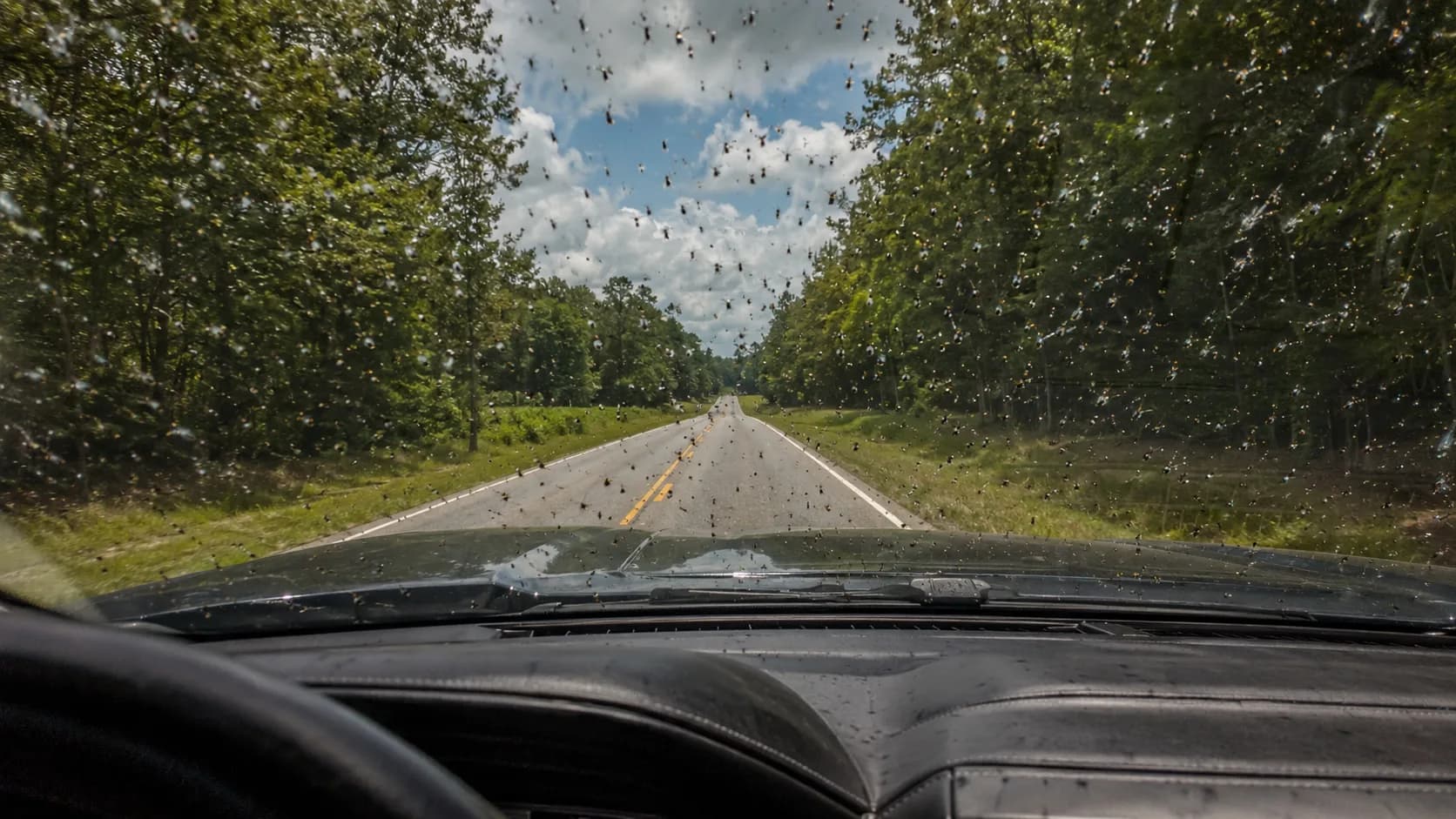
On Highway 150 toward Coldspring, the love bugs were not merely noticeable. They struck the windshield so steadily that it looked like rain. By the time the truck reached Willis, the story had already written itself across the glass. We simply failed to read it.
That requires an explanation. We had been searching for a bug story that local readers might enjoy. We talked about insects people recognize, settled on ladybugs and produced the article. Meanwhile, thousands of love bugs were throwing themselves at the front of the truck as though submitting a competing manuscript.
Our objective was to find a timely bug story. Our evidence was covering the windshield, hood and grille. Our conclusion was: "Hmmm. Perhaps ladybugs."
We did not miss the story. We were conducting immersive field research.

No, It Is Not Just Your Truck
This late-summer flight is being noticed across Southeast Texas. Regional reports in August described love bugs appearing a few weeks earlier than the traditional September emergence. Recent rain may have improved conditions for larvae, allowing more adults to survive and emerge together.
That does not mean anyone has completed a love-bug census for Willis, Conroe or Coldspring. Populations rise and fall naturally, and Texas A&M Forest Service says the massive outbreaks occur every few years rather than every season. But when drivers across the region are making the same complaint—and one short trip can repaint a windshield—the increase is more than one man taking the condition of his new truck personally.
Although it still feels personal.
They Are Flies with Terrible Timing
Love bugs, Plecia nearctica, are not technically bugs. They are March flies: small black flies with red coloring behind the head. Their more romantic name comes from the pairs remaining attached during and after mating, including while they fly.
In Texas, two generations usually emerge each year, around May and September. The adult flight lasts roughly four weeks in a location, but each adult lives only three to five days. Numbers begin modestly, climb rapidly, peak after about two weeks and then fall. Their brief adult lives have one primary assignment. Unfortunately, they conduct much of it at windshield height.
The larvae are less irritating and more useful. They live in decaying grass and leaves, helping break down plant material and return nutrients to the soil. Adults feed on nectar and pollen and may assist with pollination. They do not bite, sting or transmit disease. In other words, they are harmless environmental workers whose retirement ceremony takes place on the front of a pickup truck.
Why the Highway Becomes a Singles Bar

Love bugs locate decaying vegetation by smell when searching for places to lay eggs. Researchers have found that sunlight changes compounds in vehicle exhaust into odors resembling those produced by decomposing plant material. Heat adds to the attraction. The result is a tragic misunderstanding: the insects follow what smells like promising habitat and discover Highway 150 moving toward them at 65 miles per hour.
They are most active during warm daylight hours—roughly late morning through afternoon—and they are weak fliers. Wind can move them and concentrate them in certain places. This explains why one stretch of road may be tolerable and the next may look as though the sky has developed pepper.
Love bugs were not engineered by the University of Florida to eat mosquitoes, despite a remarkably durable legend. The species migrated naturally from Central America through Texas and Louisiana. Specimens used in its scientific description were collected in Galveston in 1940, before the insect became famous for tormenting Florida drivers.
The Real Problem Is What Stays Behind
Love bugs are not dangerous to people, but a heavy swarm can become a driving and vehicle-maintenance problem. Remains can obstruct the windshield, cover headlights and clog a radiator or grille badly enough to reduce airflow.
Paint deserves attention too. The splatter does not instantly dissolve a modern finish, but Texas A&M warns that the insects' slightly acidic body fluids can damage paint when left for days. University of Florida guidance notes that crushed remains become more acidic as they sit, while Texas heat helps bake the residue onto the surface. The sensible rule is simple: do not wait for the next scheduled wash if the front of the vehicle looks like ours did.
How to End the Relationship

Start by soaking the remains with water for several minutes. Rehydrating the residue makes it easier to remove and reduces the temptation to attack the paint with whatever rough object happens to be nearby. Use a pH-balanced automotive soap or a product approved for the finish, then wipe gently with a clean microfiber mitt and rinse thoroughly.
Do not scrub dried insects aggressively. That can grind debris into the clear coat and create a second problem while solving the first. Work in the shade when possible and do not allow soap or cleaner to dry on the surface. Wax or another finish-safe protective coating can make later cleanup easier.
Check the windshield-washer reservoir before driving, especially during warm daytime hours. After a particularly heavy trip, inspect the grille and radiator area as well as the paint.
Spraying the yard or roadside will accomplish little during a mass emergence. Adults continually drift in, cover a wide area and live only a few days. The population will run its course long before Southeast Texas wins a chemical war against it.
The Article We Had to Scrape Off the Glass
The current flight should fade after several weeks. Until then, drivers can travel earlier or later in the day when love bugs are less active, keep washer fluid ready and remove the evidence promptly.
As for us, the lesson is harder to clean off. We went looking for an insect story capable of attracting readers while one repeatedly struck the windshield, covered the truck and followed us into the car wash. Only afterward did someone finally ask the obvious question: Why did we not write about love bugs?
This may be the best total miss we have ever managed. But the field research is complete, the truck is clean, and the story has finally been recovered from the grille. Next time an article throws itself at the windshield, we promise to notice before choosing another bug.