The Elusive Snipe
A summer field guide to a real bird, a questionable hunting method, and the person left holding the bag.
There are some summer traditions that never make it into official brochures.
They are not announced with banners. They do not come with sponsorships. Nobody sets up a ticket booth.
They simply get handed down from one generation to the next, usually around a campfire, a backyard, or a patch of woods after dark.
Somewhere on that list, right alongside ghost stories and dares no one should have accepted, sits one of the great old traditions of summer: snipe hunting.
For people who have never heard of it, the whole idea can sound made up.
For people who have, the memory usually begins with one thought: How in the world did I fall for that?
But before we get to the part about flashlights, burlap sacks, and one trusting soul standing alone in the dark, it helps to know something important.
The snipe is real.
A Real Bird With a Suspiciously Useful Reputation

July was one of the best times to go snipe hunting.
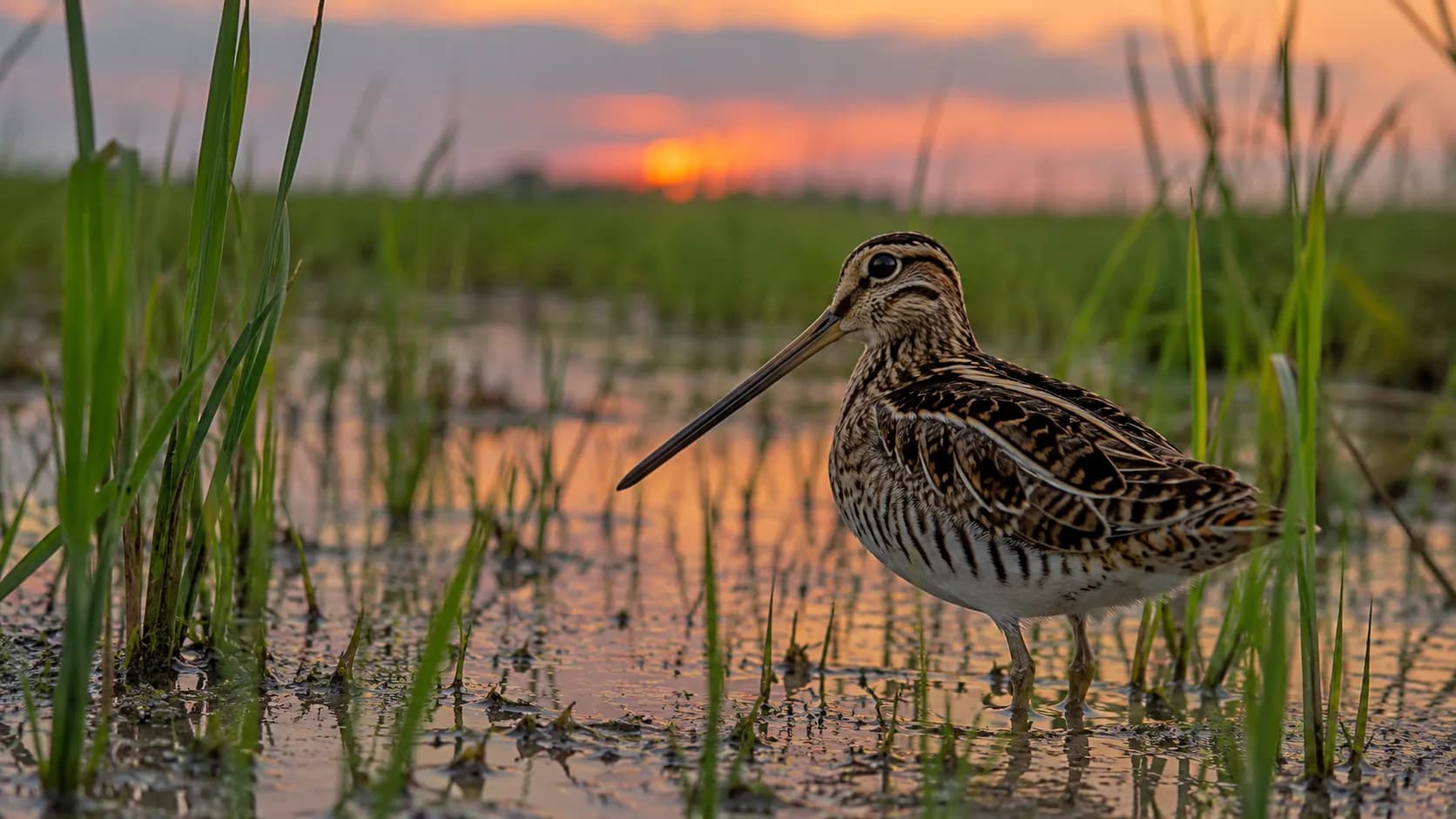
The bird most people are usually talking about is the Wilson’s Snipe, a shorebird found in marshes, wet meadows, muddy fields, and grassy wetland edges.
It is not flashy. It does not stand around posing for photographs. It is built more like a bird that prefers not to be noticed.
Its streaked brown coloring blends beautifully into grass, reeds, mud, and brush. Its long bill is designed for probing soft ground in search of worms, insects, and other small things most people would never think to look for in a muddy field.
And when it takes off, it does not do so politely.
It explodes upward in a fast, erratic zigzag that makes it surprisingly hard to follow.
In other words, it is the perfect bird for a practical joke.
Small. Hard to see. Hard to catch. Found in places where people already expect mysterious noises.
If someone wanted to invent a bird just believable enough to trick an unsuspecting kid into standing in the dark with an empty bag, they could hardly have done better.
Summer Was a Fine Time to Hunt Snipe
July was one of the best times to go snipe hunting.
The nights were warm. The woods were alive with crickets, frogs, and sounds nobody could quite identify. People were camping, visiting relatives, gathering at the lake, or staying up later than they probably should have.
And most important of all, there was often at least one younger person around who still believed the older crowd knew what they were talking about.
That was all the opening a proper snipe hunt needed.
The explanation was usually given in a serious tone. That helped.
The bird was real, after all. It lived in grassy places, moved quickly, and was difficult to see. That part was true.
Then came the hunting method.
This is where science quietly stepped away and decided not to get involved.
The Equipment Was Simple

The beginner was the key — preferably someone eager enough not to ask too many questions.
A successful snipe hunt required surprisingly little equipment.
Usually just a flashlight, a sack or pillowcase, a dark patch of woods or field, several experienced “hunters,” and one enthusiastic beginner.
The beginner was the key — preferably someone eager enough to participate and trusting enough not to ask too many questions.
That person would be led to a carefully selected spot and instructed to stand very still with the bag open.
The more experienced hunters would then spread out and circle around to “drive the snipe” toward the bag.
This sounded reasonable for about thirty seconds.
That was often all the time it took.
The beginner, now stationed in the darkness with a bag held open and eyes focused on the night ahead, would wait patiently while the others disappeared into the woods to begin the operation.
Then something remarkable would happen.
The forest would grow very quiet.
The Truth Usually Took a Few Minutes
At first, the person holding the bag remained optimistic.
Surely the others were working their way around. Perhaps snipe were being guided into position. Maybe this was a slower process than expected.
Then a few more minutes passed. And then a few more.
At some point, suspicion began to replace confidence.
No footsteps. No whispers. No crashing through the brush. No older cousin triumphantly yelling, “Here they come!”
Just darkness, bugs, and the growing realization that the only thing being hunted might be dignity.
That was the true art of the snipe hunt.
It was never really about the bird. It was about the setup, the instructions, the seriousness of it all, and the confidence with which people explained the process.
And finally, the moment when the person holding the sack began to understand that the night’s only real catch was them.
Left Holding the Bag

A snipe hunt was rarely cruel. It was usually more like an initiation.
There is a reason that phrase fits so perfectly.
A good snipe hunt left someone not only alone, but also physically holding the evidence: a bag, a sack, or a pillowcase — some symbol of complete and temporary faith in other human beings.
People remember that part for years. Not always happily at first, but eventually with laughter.
Because once the embarrassment fades, what remains is usually the memory of a summer night, people laughing, and the feeling of having been officially welcomed into a tradition older than you realized.
And that may be why the joke lasted.
A snipe hunt was rarely cruel. It was usually more like an initiation into a long line of people who had all, at one time or another, believed the story just enough to stand there and wait.
Once you had been through it, you were no longer the beginner. You were part of the next wave of “experienced hunters.”
Which is how traditions survive.
The Best Pranks Always Borrow From the Truth
What made the snipe hunt work so well was that it did not begin with something completely ridiculous.
It started with a real bird.
A bird that really does hide in grassy wet places. A bird that really is hard to see. A bird that does move quickly and unpredictably.
A bird strange enough in its habits to make the whole idea sound just believable enough.
That is the beauty of it.
The prank did not need to invent the animal. It only had to invent the method.
And that method, strangely enough, survived for generations.
Not because it made sense, but because it made memories.
Summer Needs a Little Foolishness
There was a time when summer was full of things like this.
Harmless nonsense. Campfire jokes. Tall tales. Games that had no point except to make people laugh.
A little embarrassment, maybe. But mostly laughter.
Maybe that is part of what people miss — not simply the prank itself, but the setting around it.
The warm night. The flashlight beam. The sound of insects. A group of people trying not to laugh too soon. The younger kid or cousin wanting badly to be included.
And the moment, sometime later, when everyone headed back to the house, the cabin, or the campsite still laughing about it.
A modern summer can be highly organized. Scheduled. Screen-filled. Mapped out in advance.
A snipe hunt belonged to a different kind of summer — one where not everything had to be productive.
Some things were allowed to be silly.
That alone may be reason enough to remember them.
The Bottom Line
So yes, the snipe is real.
The bird exists. Its habits are real. Its strange movements and camouflage are real.
The part about catching one by standing in the dark with an open sack while someone else “drives it toward you” is where the story begins to drift away from wildlife biology and into family tradition.
And maybe that is exactly why people still smile when they hear the phrase.
Because a snipe hunt was never just about being fooled.
It was about summer. About trust. About laughter.
About the old moment when someone handed you a bag, pointed into the dark, and said with a perfectly straight face:
Now whatever you do, don’t let it get past you.
Dock Line Tip — If you pass the tradition along, keep it kind — the best snipe hunts end in laughter, not lasting embarrassment. And yes: the bird really does exist.