The Water Looks Fine but the Air May Tell You Otherwise
The Gulf may look normal even when red tide is in the water. Before visiting Galveston, Crystal Beach or Bolivar, know why the first warning may be a cough.
Red tide has reached parts of Galveston Island, Crystal Beach and the Bolivar Peninsula. The first warning may be a cough rather than red water.
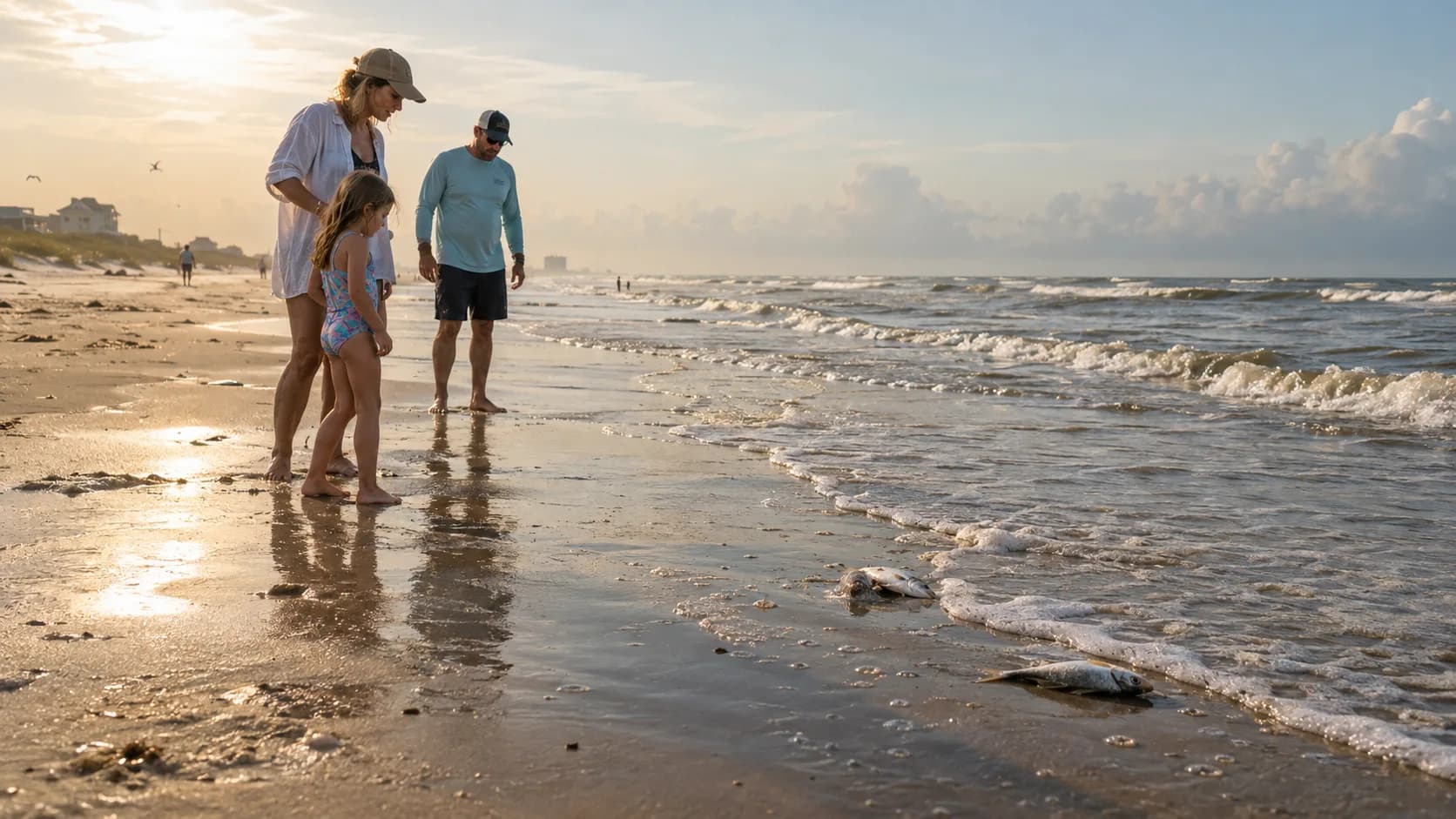
The beach can look perfectly normal when your throat tells you it is time to leave. People who have experienced red tide rarely forget the surprise. The Gulf may still be blue-gray. The sky may be clear. Then the coughing starts. Eyes burn or water, noses and throats sting, and someone who expected a quiet walk near the surf suddenly wants to get back to the car.
That is worth knowing before heading toward the Upper Texas Coast this weekend. Texas Parks and Wildlife reported fish kills and respiratory symptoms from September 7 through 11 around the Bolivar Peninsula, Crystal Beach and several locations on Galveston Island. Water samples from those areas showed moderate to high concentrations of red tide. NOAA sharpened that warning Saturday evening. Its forecast said some Galveston County beaches could experience a moderate to high risk of respiratory irritation during the following 36 hours. The risk changes with the wind and can vary from one beach to the next, so conditions should be checked again before leaving home.
Red tide does not always look red
The Texas bloom is caused by Karenia brevis, a microscopic saltwater alga. When enough of the organisms gather, the bloom can discolor the water, kill fish and force shellfish closures. But the name creates a dangerous expectation: people assume the water must turn obviously red before there is a problem. It does not. Blooms are patchy. The concentration can change along the coast and through the day. A stretch of beach may look ordinary while wind and breaking waves carry tiny toxin-containing droplets into the air. That is why a person's nose, eyes or lungs may detect the trouble before the water provides a visual warning.

The wind can carry the warning
NOAA says respiratory risk is most likely when winds blow onshore from the water toward land or travel along the shoreline. Offshore wind can reduce the risk at the beach, but it does not remove the bloom from the water. A forecast is useful because the same beach can feel different after the wind shifts.
Breathing affected sea spray can cause coughing, sneezing, shortness of breath, throat irritation and watery or irritated eyes. Contact with the water can also irritate skin. Symptoms from brief exposure often improve after a person leaves the affected area, according to Texas health officials, but people with asthma or chronic lung disease may have a stronger reaction. Anyone with serious or continuing symptoms should contact a health care provider.
There is no prize for trying to tough it out. If several people begin coughing at the shoreline, or your own breathing suddenly changes, move inland or leave the area. The current bloom does not affect every mile of the Texas coast, and a different beach may have better conditions.
Dogs do not know when to turn around
Pets face an added danger because they investigate the very things people know to avoid. Texas health officials advise keeping pets and livestock away from dead marine life and out of water where red tide is active. Do not let a dog sniff, lick or eat a fish on the sand, and do not assume an apparently healthy animal can safely play in affected surf. The Centers for Disease Control and Prevention warns that harmful algal bloom toxins can make animals seriously ill. Vomiting, weakness, stumbling or seizures after exposure require immediate veterinary attention.

The seafood rules are specific
A red-tide warning does not mean every kind of seafood from the Gulf must be avoided. The important distinction is how the toxin accumulates. Texas health officials say not to eat oysters, clams, mussels or scallops from an affected area. Cooking does not destroy the toxin stored in those shellfish. Fish, shrimp and crabs caught alive can be eaten because the toxin does not build up in them the same way. Healthy live-caught fish should be filleted, the guts discarded, and the fillets rinsed with tap or bottled water. Never eat fish or shellfish found dead, sick or floating belly-up. Current shellfish closures should always be checked with the Texas Department of State Health Services.
Check the beach before starting the drive
Before traveling, check the Texas Parks and Wildlife red-tide status page and NOAA's Texas respiratory forecast. Once there, watch for discolored water, unusual numbers of dead fish or people coughing near the surf. Conditions can change quickly enough that yesterday's report may not describe today's beach.
If you contact affected water, wash your skin and clothing with soap and fresh water. People who believe the bloom caused symptoms may contact a health care provider or Poison Control at 1-800-222-1222. Suspected red tide and fish kills can be reported to Texas Parks and Wildlife at 800-792-1112.

A reason to check, not a reason to panic
Red tide is unpleasant, and for some people it can be medically serious. It is also uneven. Texas Parks and Wildlife reported no red-tide fish kills in the Matagorda Bay, San Antonio Bay, Corpus Christi Bay, Aransas Bay or Lower Laguna Madre regions during its latest update. There are still miles of Texas shoreline beyond the affected pockets.
The sensible response is neither panic nor stubbornness. Check the latest conditions, pay attention to the wind, keep pets away from dead fish and believe what your lungs are telling you. A beach day can be moved. Breathing should not have to become part of the adventure.