When the Trees Come Down, Where Does the Wildlife Go?
As development spreads through Montgomery County, some animals adapt, some crowd into what remains and some disappear without ever becoming a neighborhood complaint.
As development spreads through Montgomery County, some animals adapt, some crowd into what remains and some disappear without ever becoming a neighborhood complaint.
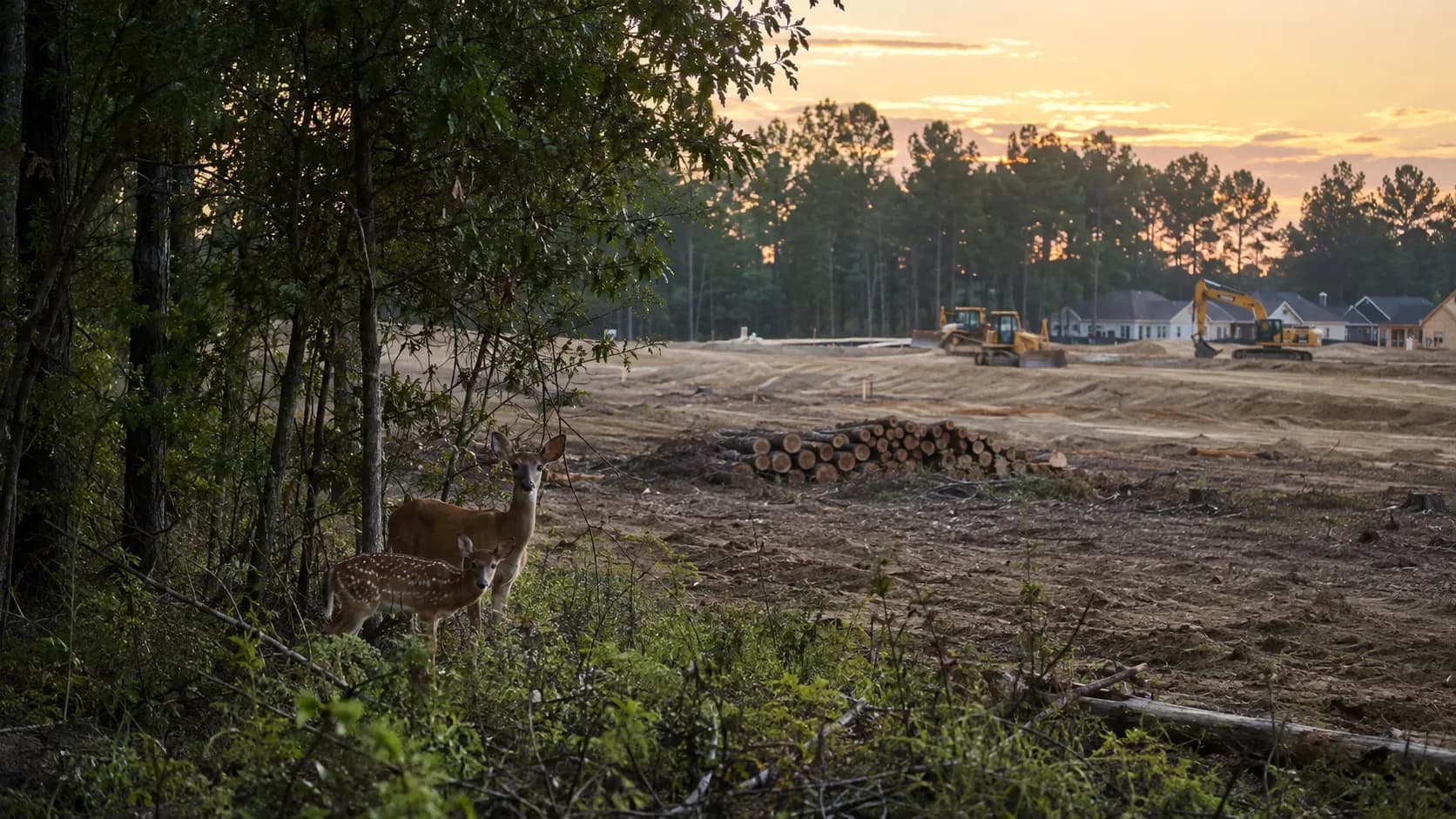
The trees can disappear from a familiar tract in a week. First comes the survey tape, then the machines, the piles of timber and the pale open ground where shade used to be. Soon the road is cut, drainage is shaped and a sign promises homes, shops or another place for a growing county to grow. People watching from the next neighborhood often ask the same question: Where did all the animals go?
The comforting answer is that they moved deeper into the woods. Around Conroe, Willis, Magnolia and The Woodlands, that answer is becoming harder to believe. The deeper woods may already contain another animal's territory. They may be divided by FM roads, highways and fences. They may be a narrow creek bottom squeezed between two developments—or the next tract waiting to be cleared.
Some wildlife moves. Some adapts. Some is injured or killed during clearing and road crossings. Some competes for food and shelter in the habitat that remains. And some declines quietly enough that people never notice it is gone.
Growth Has a Physical Footprint
Montgomery County's growth is not an impression. Census Bureau estimates put the county at about 781,000 residents in 2025, nearly 26 percent above its 2020 base. The county recorded more than 13,000 building permits in 2025. Each project is different, and responsible development can preserve meaningful habitat, but growth at that scale changes the landscape one tract at a time.
A cleared parcel is more than a collection of trees. It may contain nesting cavities, browse for deer, insects for birds, cover for rabbits, den sites, seasonal pools and routes animals have used between feeding and breeding areas. Removing it does not place those functions neatly on the parcel next door.
Texas Parks and Wildlife describes many urban wildlife conflicts as a direct result of urban sprawl into land where deer, foxes, opossums and other species lived. Some animals move away. Others alter their behavior and use crawlspaces, trash cans, pet food, bird feeders and landscaped water as replacements for what development removed.
Wildlife Does Not Relocate as One Group

There is no single wildlife response because a deer, a bobcat, a box turtle and a native bee do not need the same world.
Deer can travel and often become more visible in greenbelts, drainage channels and yards. That visibility can be mistaken for abundance. A cluster of deer beside a subdivision may mean the remaining habitat is concentrating animals, not that habitat loss helped them. Crowding increases competition and brings more vehicle collisions and conflict with people.
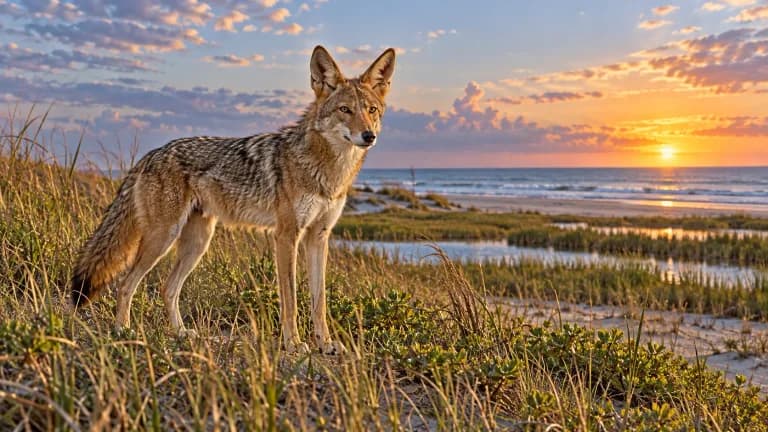
Coyotes, raccoons, opossums and some foxes are adaptable. Food left outside, unsecured trash and rodents around development can support them. Bobcats may follow creek corridors and patches of cover, staying close without often being seen. Snakes appear when clearing removes shelter or when rodents draw them toward structures. Most Texas snakes are nonvenomous and are usually trying to leave an encounter, not begin one.
Birds vary enormously. Some nest on buildings and thrive along edges. Others need mature woods, cavities, understory or an uninterrupted patch large enough to raise young. Pollinators may lose the exact host plants or seasonal flowers they require. Small animals, nestlings and slow-moving reptiles may not be able to escape heavy equipment at all.
The species people see most often after construction are the survivors best able to live around us. They are not a complete inventory of what the land once supported.
The Remaining Green Becomes a Highway

Creeks, floodplains, drainage corridors, utility easements and strips of woods often become the last connected routes through a developed area. To people, a creek corridor may look like leftover land. To wildlife, it can be a road, dining room, water source and hiding place at the same time.
Lake Conroe, the West Fork and tributaries of the San Jacinto River, and the many smaller creeks across the county create natural movement lines. Preserving width and connection along those lines matters. A thin ribbon ending at a six-lane road is not the same as a continuous corridor with safe crossings and cover.
Texas transportation guidance recognizes the need to avoid, minimize and mitigate impacts to natural resources. Culverts, bridges and drainage structures can sometimes maintain passage beneath roads, but design matters. Animals need an approach they will use, not merely a concrete opening that technically connects two sides.
Quieter Counties Are Not Empty Rooms
It is reasonable to think some animals pushed north or east may find more open land in San Jacinto, Walker or Trinity counties. Those counties are far less dense than Montgomery County. Trinity County, for example, had fewer residents in 2020 than it did in 2010, even though recent estimates show modest growth.
But a county with fewer people is not vacant habitat. Its forests and fields already support animals with established territories and limited food, water and nesting sites. It has roads, timber operations, farms, fences and new construction of its own. An animal forced across a county line does not receive an unoccupied home.
Population decline may leave more open land in one place, but it does not replace an ecosystem destroyed somewhere else. Habitat is defined by connection, vegetation, water, soil and the relationships among species—not simply by how few people live within a boundary.
Why Wildlife Suddenly Appears in the Yard
A sudden increase in neighborhood sightings does not necessarily mean wildlife populations exploded. Construction may have removed cover nearby, compressed animals into a visible corridor or disrupted their usual travel route. New landscaping, retention ponds, trash, birdseed and pet food then offer resources at the edge of the disturbance.
That is why a deer may begin crossing the same street each evening, a coyote may appear on a camera, or a snake may turn up beside a garage after clearing begins. The neighborhood did not merely attract wildlife. In many cases, the neighborhood arrived in the wildlife's path.
Fear makes these encounters worse. Feeding deer brings them closer to traffic and people. Leaving pet food outdoors attracts small animals and the predators that follow them. Killing every snake removes useful rodent control and often targets harmless species. Attempting to trap and relocate wildlife can be dangerous, ineffective or restricted by law.
Living at the New Edge

Homeowners cannot restore an entire tract, but they can reduce conflict and make the edge less deadly.
Secure trash, bring pet food inside before dark and do not intentionally feed deer or predators.
Keep cats indoors and supervise small dogs, especially near dawn and dusk.
Maintain fences and screen openings under homes.
Keep frequently used areas clear of brush, rock piles and stacked wood while leaving native cover where it can safely remain.
Slow down near greenbelts, creek crossings and places where deer repeatedly appear.
Neighborhoods can preserve native plants, mature trees and connected drainage corridors instead of treating every natural strip as wasted space. Developers and local officials can identify meaningful habitat before clearing, not after residents begin reporting animals in the street.
Coexistence does not mean pretending every animal is harmless. It means understanding why it is there and removing the conditions that turn a passing animal into a repeated conflict.
What Growth Leaves Behind
Montgomery County needs homes, roads, schools and businesses for the people arriving. The question is not whether growth should stop. It is whether each project treats everything beyond the property line as somebody else's problem.
A preserved creek corridor, connected patch of woods or mature stand of trees may look small on a site plan. Across many projects, those choices determine whether wildlife can continue moving through the county or becomes trapped in shrinking islands.
When the trees come down, the animals do not all go somewhere better. Some move into our neighborhoods. Some compete for what remains. Some attempt dangerous road crossings. Some adapt so well that we call them nuisances. Some simply disappear without anyone filing a complaint.
The question should be asked before the bulldozer arrives—while there is still somewhere for the answer to live.
Sources: U.S. Census Bureau — Montgomery County QuickFacts; San Jacinto County QuickFacts; Walker County QuickFacts; Trinity County QuickFacts; Texas Parks and Wildlife — Interacting with Urban Texas Wildlife; Texas Parks and Wildlife — Wildlife and Habitat; Texas Department of Transportation — Natural Resources Best Management Practices; U.S. Geological Survey — Pollinator Science Strategy, 2025–35.