Thirteen Days, 64 Years Later: What the Cuban Missile Crisis Still Teaches
In October 1962, U-2 photographs revealed Soviet nuclear missile sites in Cuba. Here is how the crisis unfolded, how it ended and what it still teaches.
Sixty-four years ago this week, a handful of photographs put the world closer to nuclear war than it has ever been. On October 14, 1962, an American U-2 spy plane flew over Cuba and came home with pictures that clearly showed sites for Soviet medium-range and intermediate-range ballistic nuclear missiles under construction, according to the State Department's Office of the Historian. The images were processed and brought to the White House the next day. The Cuban Missile Crisis had begun.
What followed were the days in which, as the State Department historian puts it, the two superpowers "came closest to nuclear conflict." The John F. Kennedy Presidential Library also keeps an account of the crisis. It is worth remembering how it happened, how it ended and what it still teaches.
How the missiles got there
The crisis did not come out of nowhere. After the failed Bay of Pigs invasion, Soviet premier Nikita Khrushchev reached a secret agreement with Fidel Castro in July 1962 to place Soviet nuclear missiles in Cuba, the State Department historian writes. The stated purpose was to deter another invasion. Construction began in late summer.
American surveillance flights picked up a broader Soviet arms buildup, including IL-28 bombers. On September 4, 1962, President Kennedy publicly warned against bringing offensive weapons into Cuba. The Soviets kept building anyway. The U-2 photographs of October 14 proved it.
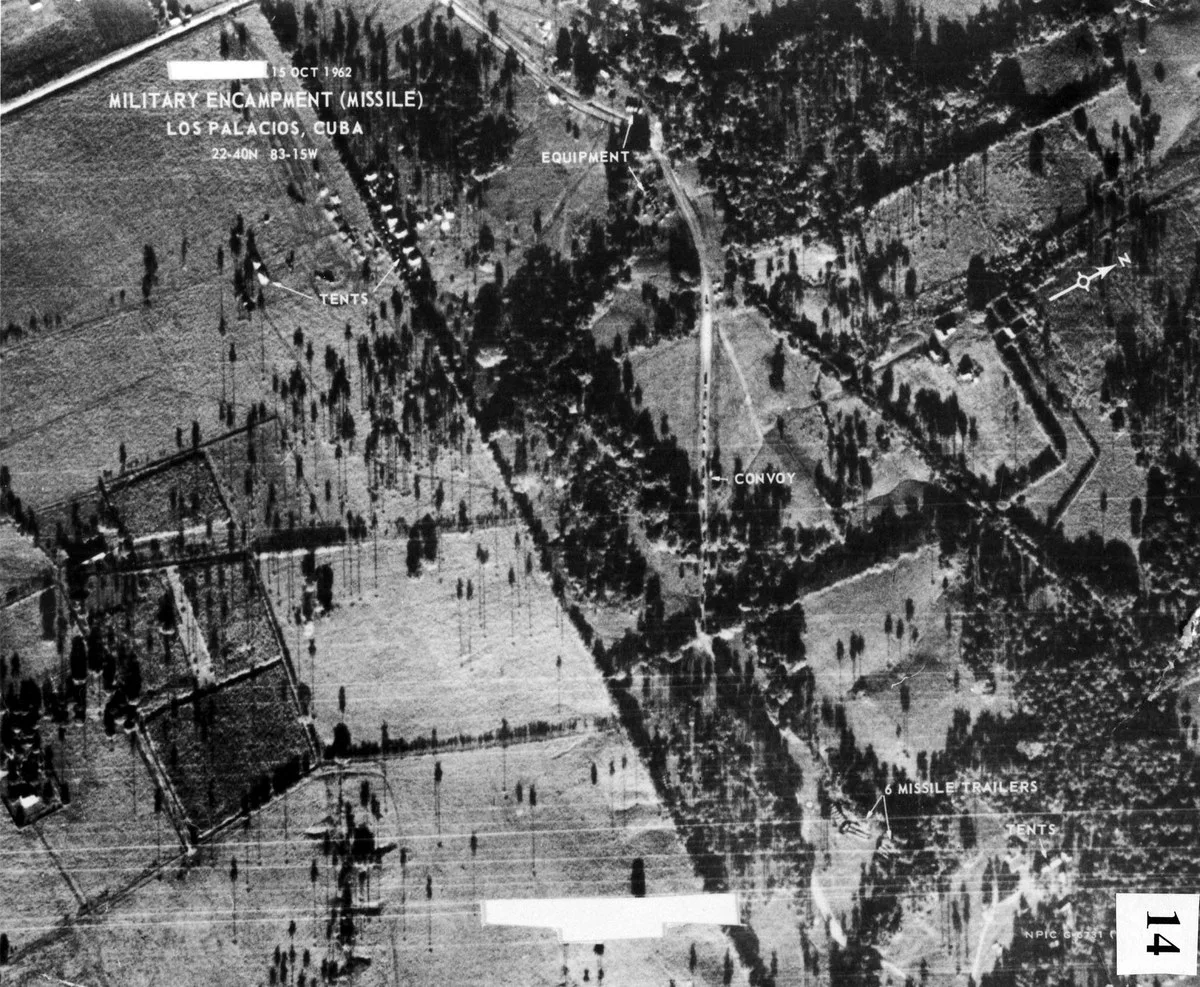
A U-2 reconnaissance photograph taken near San Cristobal, Cuba, on Oct. 14, 1962, as described in the Wikimedia Commons record. Photo: U.S. Air Force, Public domain.
A week of secret meetings
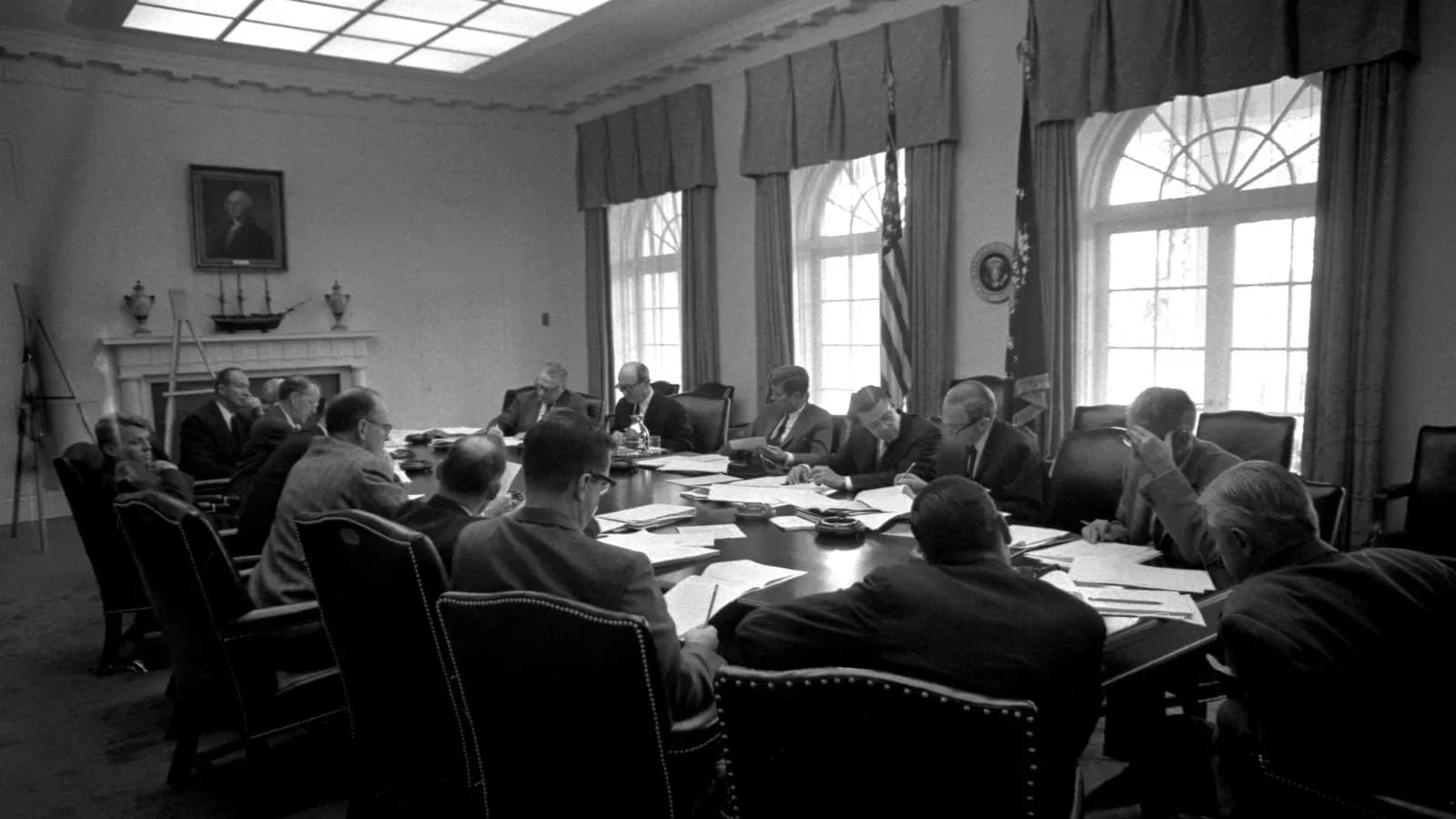
Kennedy did not go on television right away. He first summoned his closest advisers to weigh the options, the State Department historian writes.
His advisers were divided. Some, including all of the Joint Chiefs of Staff, argued for an air strike to destroy the missiles followed by an invasion of Cuba, the State Department historian notes. Others favored stern warnings. Kennedy chose a middle course: a naval "quarantine" of Cuba. The word was chosen carefully. A blockade assumed a state of war; a quarantine did not, and the distinction helped win the support of the Organization of American States.
On the evening of October 22, Kennedy told the nation. His warning was unmistakable: "It shall be the policy of this nation to regard any nuclear missile launched from Cuba against any nation in the Western Hemisphere as an attack by the Soviet Union on the United States, requiring a full retaliatory response upon the Soviet Union." The military moved to DEFCON 3.
The brink
Khrushchev called the quarantine an "act of aggression." Some Soviet ships turned back; others were stopped and allowed through because they carried no offensive weapons. Meanwhile, reconnaissance showed the missile sites nearing readiness. U.S. forces went to DEFCON 2, meaning war involving the Strategic Air Command was imminent.
On October 26, Kennedy told his advisers it appeared only an attack on Cuba would remove the missiles, but he insisted on giving diplomacy a little more time. That evening a long, emotional message arrived from Khrushchev. "If there is no intention," he wrote, "to doom the world to the catastrophe of thermonuclear war, then let us not only relax the forces pulling on the ends of the rope, let us take measures to untie that knot."
The next day was the worst of the crisis. Khrushchev sent a second message demanding that the United States also remove its Jupiter missiles from Turkey. An American U-2 was shot down over Cuba. Kennedy and his advisers prepared for an attack within days.
How it ended
Kennedy made a risky choice: he answered the first message and ignored the second. He offered a guarantee not to invade Cuba in exchange for the supervised removal of the missiles. His brother, Attorney General Robert Kennedy, met secretly with the Soviet ambassador and indicated the Jupiters would come out of Turkey soon, but that could not be part of any public deal. On the morning of October 28, Khrushchev announced the missiles would be dismantled.
The naval quarantine continued until the Soviets agreed to remove their IL-28 bombers, and the United States ended it on Nov. 20, 1962. The Jupiters were removed from Turkey in April 1963. Afterward a direct telephone link between the White House and the Kremlin was set up, known as the "Hotline," and the two powers took the first steps toward a nuclear Test Ban Treaty, the State Department historian writes.
What it still teaches
First, strength and restraint are not opposites. Kennedy drew a hard line in public and refused to back down on the missiles. He also refused the advice to bomb first. Firmness kept the Soviets from winning; patience kept millions from dying.
Second, leaders can misread each other badly. The State Department historian notes that despite a flurry of messages, both sides struggled to understand each other's true intentions while the world hung on the brink. That should humble anyone who thinks wars only start on purpose.
Third, no nation is safe because it is clever. The men in that room had the best intelligence, the most powerful military on earth and a fair amount of luck. "Except the Lord keep the city, the watchman waketh but in vain" (Psalm 127:1). Americans who lived through those thirteen days prayed, and many of them knew exactly why.
The world has new flashpoints today, and Dock Line has covered some of them, including Russia's war on Ukraine. The lesson of October 1962 has not expired. Peace is kept by people willing to be strong, honest and patient at the same time, and by a God who still restrains the hand of man.
Hero photo: Cecil Stoughton, White House / John F. Kennedy Presidential Library, via Wikimedia Commons, public domain.